Historical context and significance
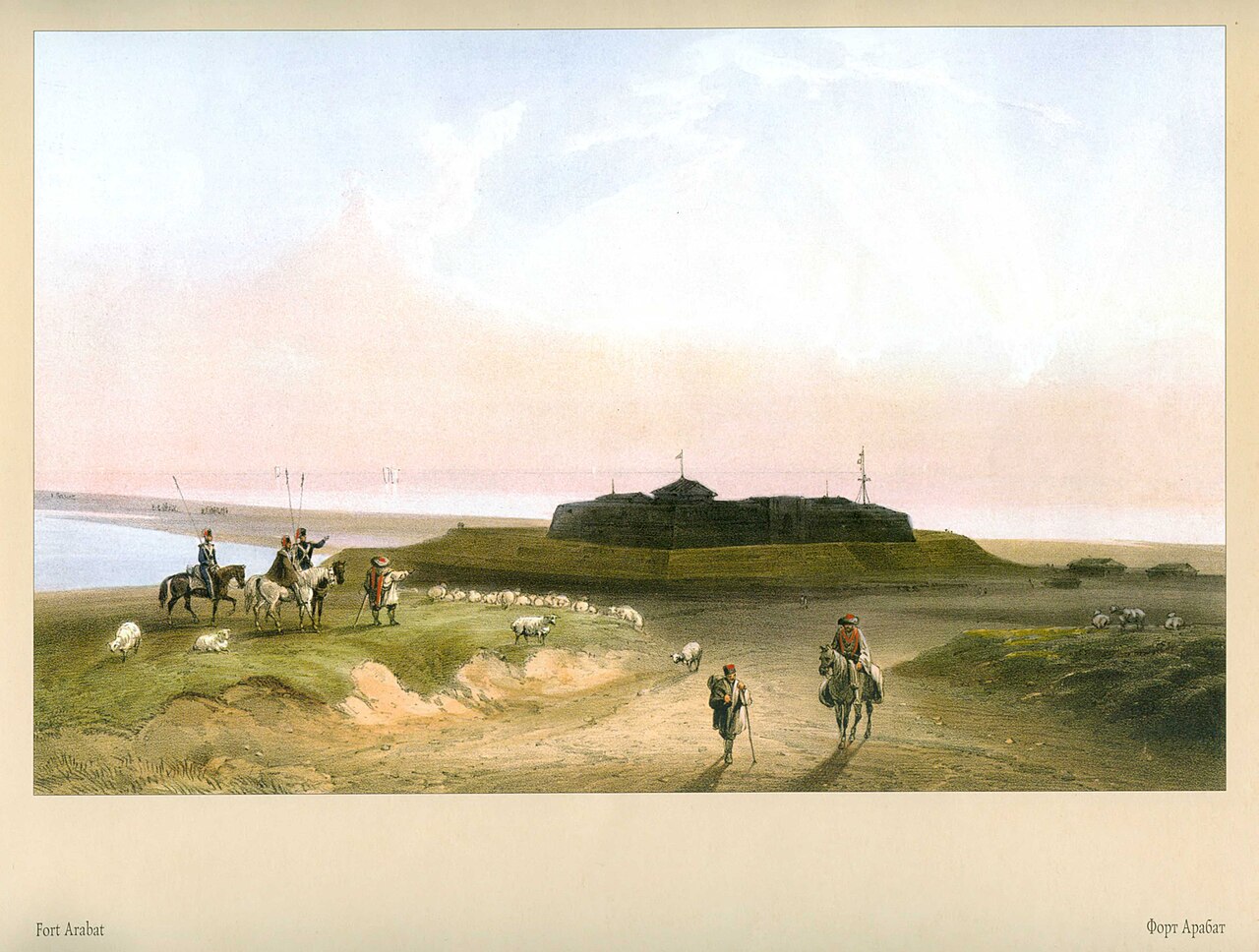
The fortress was established during a period of intense commercial expansion by the Genoese in the Black Sea region. Kaffa was one of the most important Genoese colonies, acting as a gateway for trade between Europe and Asia. The fortress was designed to protect the colony from various threats, including rival powers and local nomadic tribes. Its role in securing the Genoese trading interests contributed to the economic prosperity of the region during the High Medieval era.
Architectural features and design
The Kaffa Genoese fortress is classified as a bastioned fortress, a style that incorporates angled bastions projecting from the curtain walls. This design allowed defenders to cover adjacent walls with crossfire, enhancing the fortress's defensive capabilities. The bastioned layout was a response to the evolving nature of siege warfare and the increasing use of artillery in the late medieval period, although the fortress predates widespread gunpowder use.
The fortress walls were constructed using local stone materials, thick and high enough to withstand assaults. The bastions provided platforms for archers and later for artillery placements. Inside the fortress, there would have been various structures such as barracks, storerooms, and command centers, although much of the internal layout is now lost or in ruins.
Defensive structures
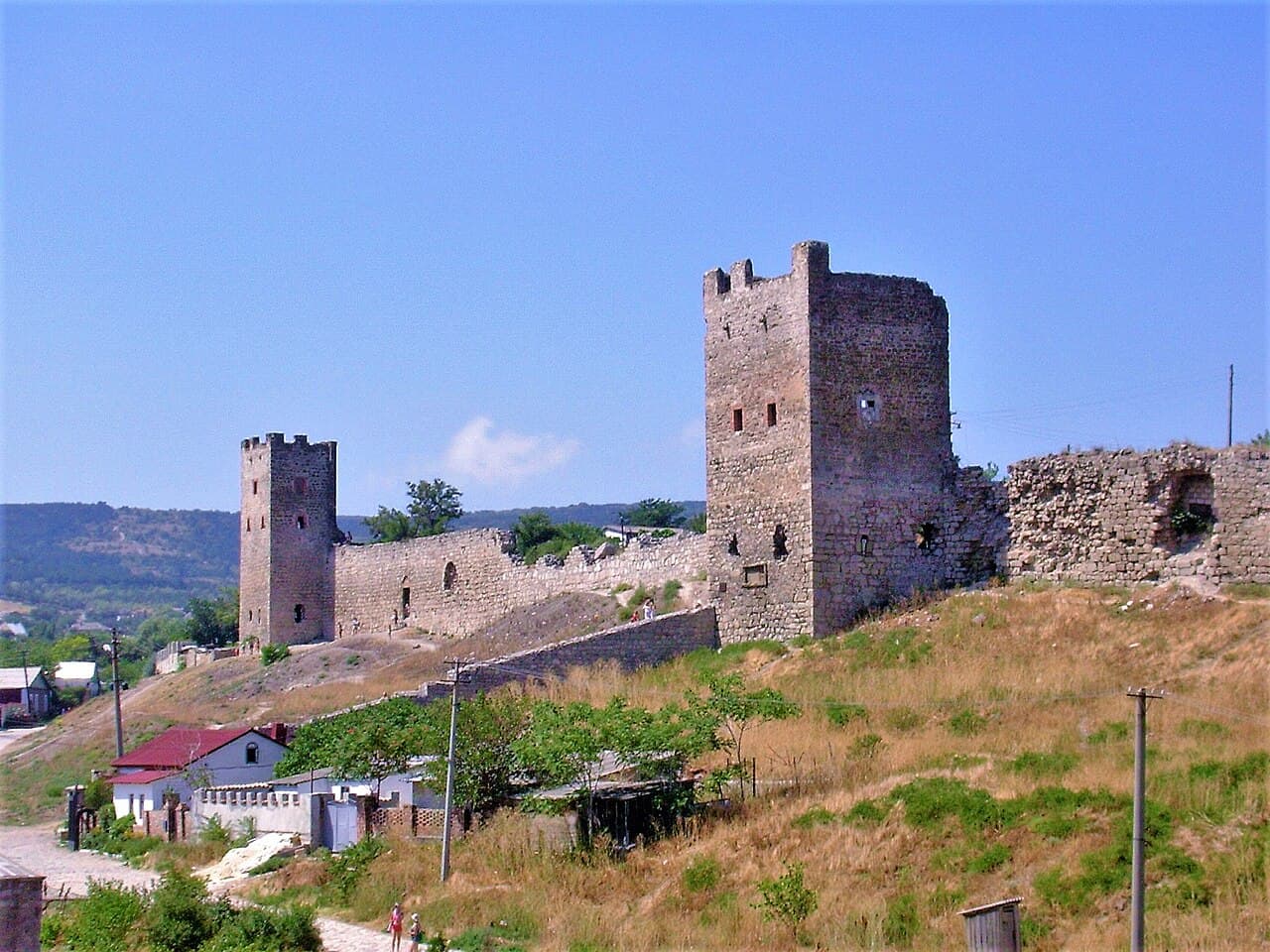
The bastions were connected by curtain walls equipped with battlements and walkways for guards. The fortress likely featured a main gatehouse fortified with towers and possibly a moat or ditch surrounding the walls to hinder attackers. These features were typical of Genoese fortifications, designed to maximize defense and control access points.
Role in regional history
Throughout its history, the Kaffa Genoese fortress witnessed numerous conflicts and sieges, especially during the struggles between the Genoese, the Mongols, the Crimean Khanate, and later the Ottoman Empire. The fortress's strategic location on the Crimean Peninsula made it a focal point in regional power dynamics. It was instrumental in maintaining Genoese influence in the Black Sea until the decline of their colonial presence in the 15th century.
Current condition and preservation
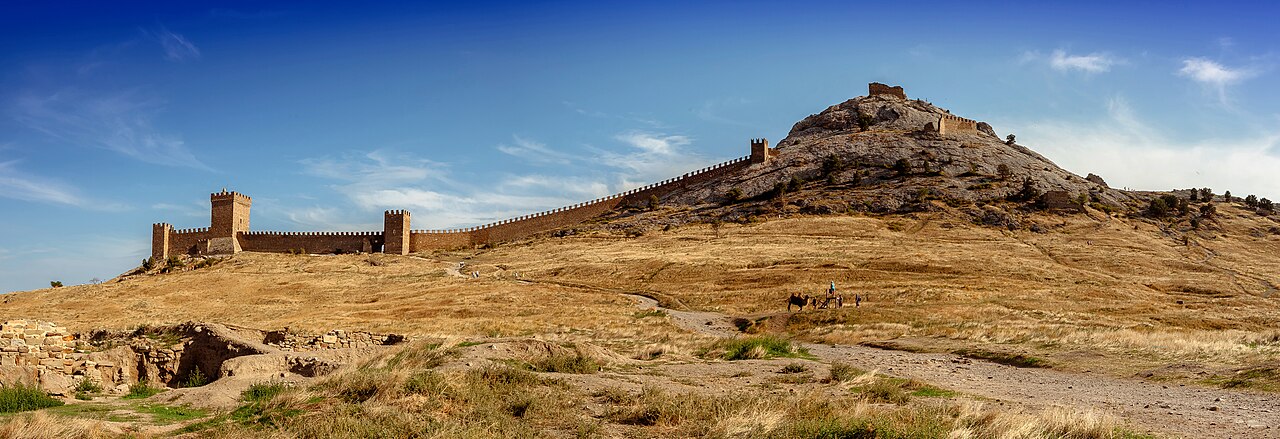
Today, the Kaffa Genoese fortress is mostly in a state of ruins. While some sections of the bastioned walls and towers remain, much of the original structure has been lost due to centuries of warfare, neglect, and natural decay. The site is an important archaeological and historical landmark, attracting researchers and visitors interested in medieval fortifications and Genoese history.
Efforts have been made to preserve what remains of the fortress, although extensive restoration has not been undertaken. The ruins provide valuable insights into the military architecture of the period and the Genoese presence in Eastern Europe.
Visiting the fortress
Visitors to the site can explore the remnants of the bastioned walls and gain an understanding of the fortress's layout and defensive features. The location offers a glimpse into the medieval past of the region and the role of the Genoese in shaping the history of the Black Sea coast. Interpretive signage and guided tours may be available to enhance the visitor experience, depending on local management.

Information
Loading map...
Visitor reviews
No reviews yet. Been here? Write the first review and help other travelers!
Write the first reviewVisited this castle? Share your experience
Your review helps other travelers and adds first-hand knowledge to our encyclopedia.