Kadifekale Castle
Kadifekale Castle, prominently situated on Pagos Hill in the city of Izmir, Turkey, stands as a monumental testament to the region's rich and complex history. Known locally simply as Kadifekale, this hill castle overlooks the modern city and the Gulf of İzmir, embodying layers of architectural and cultural heritage that span from ancient Greek origins through Byzantine, Seljuk, and Ottoman periods.
The castle's history is deeply intertwined with the ancient city of Smyrna, originally established on the slopes of Pagos Hill around the 3rd century BC. Smyrna's relocation to this defensible height is traditionally attributed to Lysimachus, a successor of Alexander the Great, who fortified the acropolis as part of a strategic urban shift. Ancient sources like Pausanias and Strabo recount the divine inspiration and practical considerations behind this move, although the majority of Smyrna's population remained near the harbor. The fortifications on Pagos Hill formed the city's acropolis and were integral to its defense.
Ancient foundations and hellenistic origins
The earliest fortifications on Pagos Hill date back to the late 4th or early 3rd century BCE. These initial walls and structures were constructed primarily from stone and brick, serving as the acropolis for Smyrna. This period marks the castle's foundation as a military and civic stronghold. The Hellenistic masonry, though largely obscured by later medieval additions, is believed to survive in fragments beneath the current walls, indicating the site’s long-standing strategic importance.
The role of lysimachus and alexander the great
Lysimachus, one of Alexander the Great's generals and successors, is credited with establishing the fortified settlement atop Pagos Hill. According to tradition, Alexander the Great received a prophetic vision from the oracle at Klaros, directing the relocation of Smyrna to this elevated site for better defense and prosperity. This move was significant in shaping the city's urban and military landscape, although the harbor area remained the center of commercial and daily life.
Roman and byzantine transformations
In 197 BC, Smyrna came under the control of the Kingdom of Pergamon, and later, following the death of King Attalos II, it fell to the Roman Empire. The city suffered a catastrophic earthquake in 178 AD, prompting extensive rebuilding under the orders of Emperor Marcus Aurelius. This reconstruction included restoration of the castle's fortifications and urban infrastructure.
With the division of the Roman Empire in 395 AD, Smyrna became part of the Byzantine Empire. The Byzantines undertook further restoration of Kadifekale, maintaining its role as a defensive bastion. The castle's walls and cisterns were repaired and expanded during this era, reflecting the ongoing military and civic significance of the site.
Medieval conflicts and changing rulers
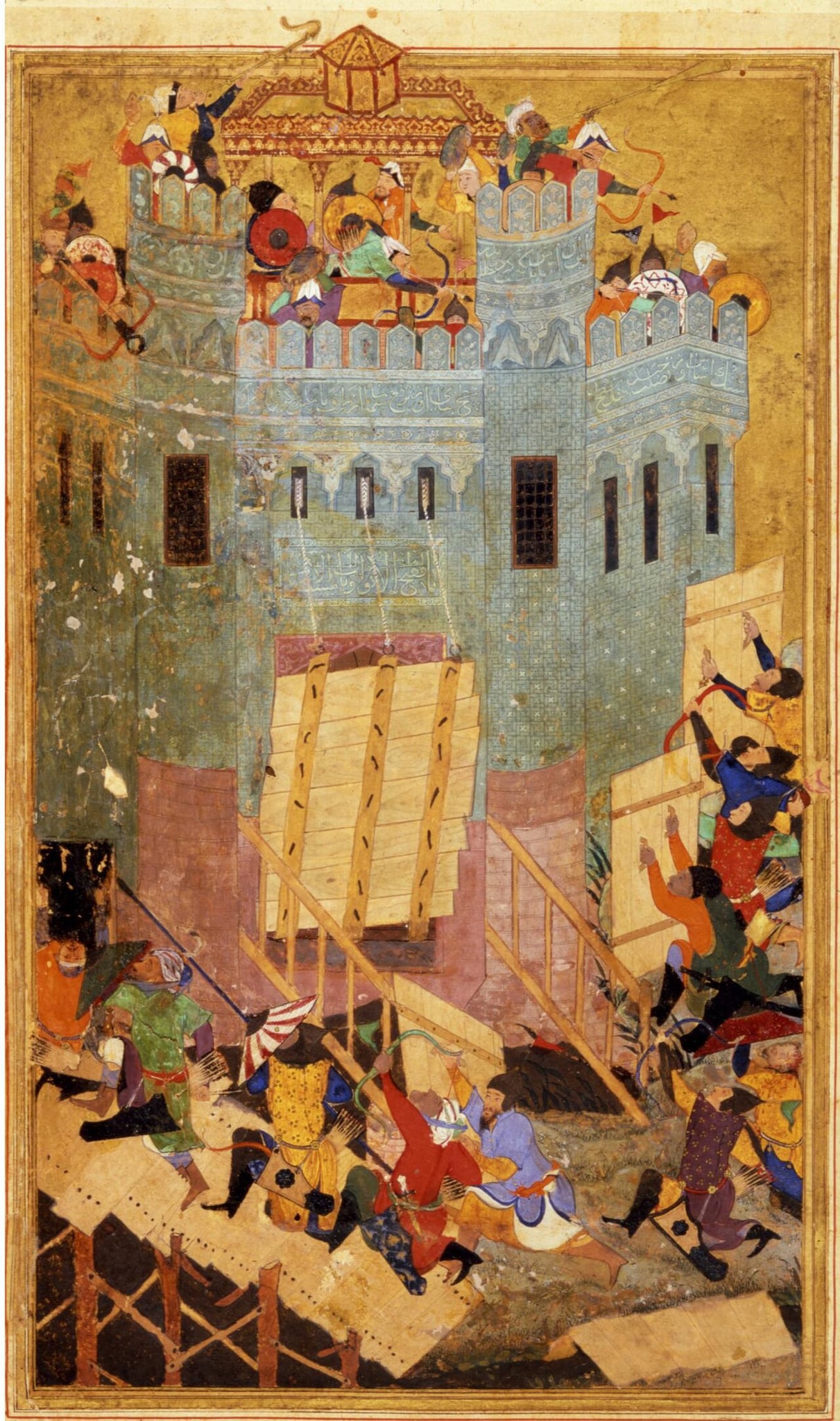
Throughout the medieval period, Smyrna and Kadifekale experienced a turbulent history marked by multiple conquests. The castle was controlled by Byzantines, Arabs, Seljuks, Crusaders, and Genoese at various times. In 1317, the castle, then known as Yukari Kale, was captured by Aydınoğlu Mehmet Bey, though the lower city remained out of reach until his son, Ghazi Umur Bey, took it in 1329. The Crusaders briefly seized the lower city in 1344, and in 1402, the warlord Timur (Tamerlane) united the upper and lower fortifications under his control.
Ottoman restoration and later history
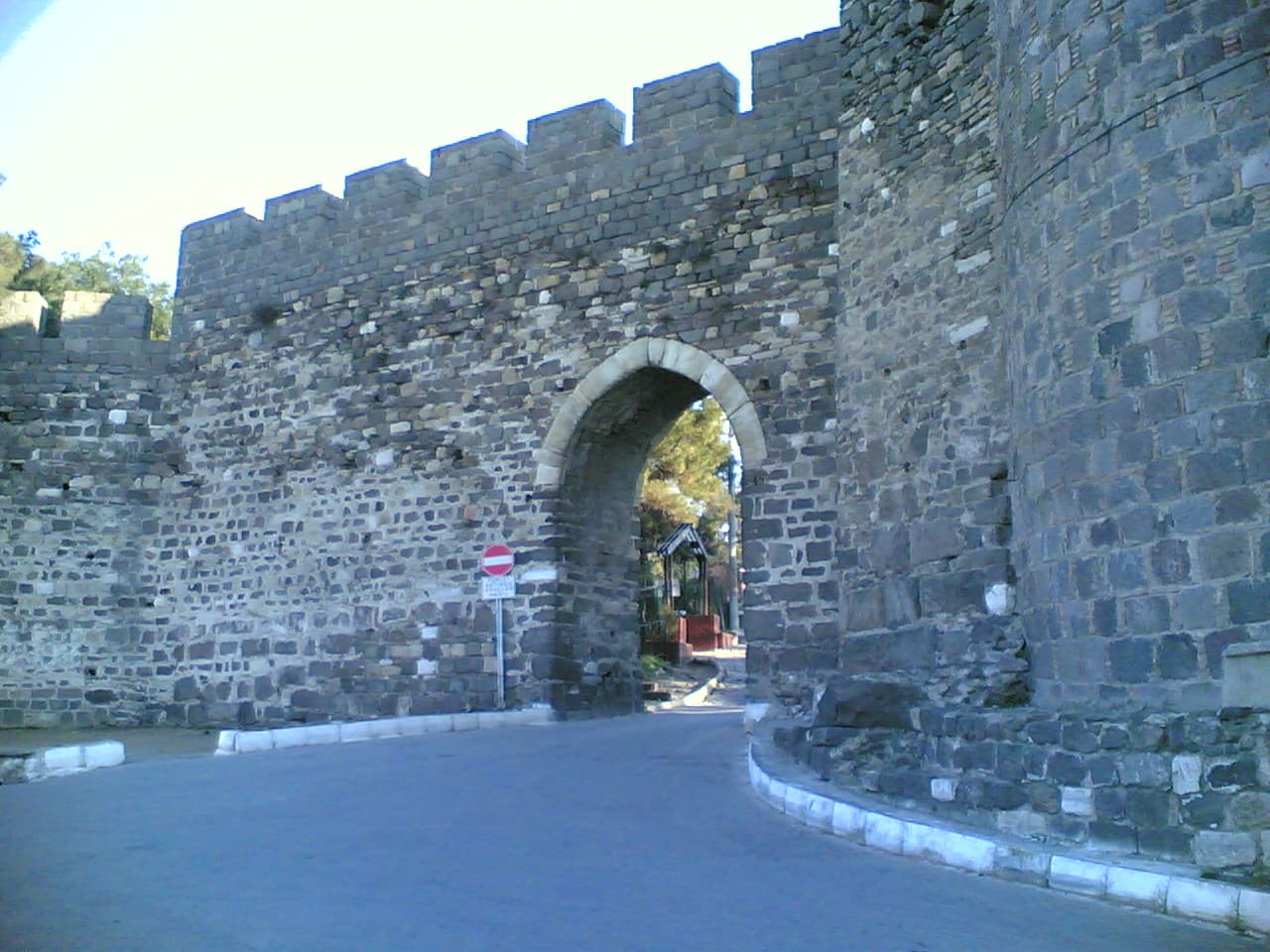
The Ottoman Sultan Murat II conquered Smyrna in 1422, and the castle underwent significant restoration during the reign of Mehmed II the Conqueror in the 1440s. The majority of the surviving walls and towers visible today date from this Ottoman restoration phase, highlighting the castle's continued military importance into the early modern period.
By the 17th century, as recorded by the Ottoman traveler Evliya Çelebi in 1671, Kadifekale had declined in prominence. Only a few houses, vineyards, and gardens remained within its walls, inhabited by a small number of Janissaries and their families. The once vibrant inns, baths, bazaars, and mosque had fallen into ruin.
Architectural features and archaeological remains
Kadifekale's layout is characteristic of a fortified acropolis, with robust stone and brick walls encompassing the summit of Pagos Hill. The most prominent surviving structures include the western and southern walls, which feature five towers rising between 20 and 35 meters in height. These defensive constructions exhibit medieval techniques, but some incorporate fragments of earlier Hellenistic masonry.
Roman cisterns and water management
One of Kadifekale's most remarkable features is its extensive system of Roman-era cisterns, carved directly into the andesite bedrock beneath the castle. The largest cistern covers approximately 2,650 square meters and is supported by forty columns beneath a roof of rectangular arches resting on massive pillars. This underground reservoir had a capacity of nearly 750 cubic meters and played a vital role in supplying water to ancient Smyrna.
These cisterns were maintained and restored through Byzantine and Ottoman periods, underscoring their enduring importance. Aqueducts and pipelines connected the cisterns to the city's agora and other urban centers, ensuring a reliable water supply even during sieges or droughts.
Other notable ruins and features
Within the castle grounds lie the ruins of a 14th-century mosque and parts of a Byzantine cistern, reflecting the site's layered history. The ancient stadium once located west of the fortress is now fully built over, but its long depression remains a subtle reminder of Smyrna's civic life. East of the main gate, remnants of an ancient theater survive, primarily from rebuilding efforts following the earthquake of 178 AD.
Modern significance and conservation efforts
In the 19th and 20th centuries, Kadifekale became part of a ring of hills surrounding Izmir's predominantly Turkish neighborhoods. The area was historically inhabited by Kurdish migrants and regarded as a slum, undergoing significant urban renewal in recent decades.
Restoration projects began in 2007, focusing on preserving the castle walls, historic cisterns, and the mosque. Lighting installations along the walls have enhanced the site's visibility and appeal. Since 2019, Kadifekale has hosted a weekly producers' market, fostering community engagement and cultural tourism.
In 2020, Kadifekale was included on UNESCO's tentative list as part of the "Historic Port City of İzmir" nomination, recognizing its outstanding cultural and historical value.
Kadifekale Castle remains freely accessible to visitors, offering panoramic views of Izmir and a tangible connection to the city's ancient and medieval past. Despite its mostly ruined state, the castle's enduring walls, cisterns, and scattered architectural remnants continue to tell the story of a site that has witnessed millennia of history and transformation.
Frequently asked questions (FAQ)
- What is Kadifekale Castle?
- Kadifekale Castle, also known as the Velvet Castle, is a historic fortress located in Izmir, Turkey. It dates back to the Hellenistic period and was later expanded by the Romans and Byzantines, showcasing a blend of architectural styles and a rich history.
- When was Kadifekale Castle built?
- Kadifekale Castle was originally constructed in the 4th century BC, with significant modifications made during the Roman and Byzantine periods. It has stood for centuries, serving as a military stronghold and a symbol of Izmir's historical significance.
- What are the opening hours for Kadifekale Castle?
- Kadifekale Castle is generally open to visitors from 8:00 AM to 7:00 PM, but hours may vary seasonally. It's advisable to check local listings or the castle's official website for the most current information before your visit.
- Can I access Kadifekale Castle by public transport?
- Yes, Kadifekale Castle is accessible via public transport, including buses and taxis that service the area. Additionally, the castle is located near the city center, making it a convenient stop for visitors exploring Izmir.
- Is there an entrance fee to visit Kadifekale Castle?
- There is a small entrance fee to visit Kadifekale Castle, which helps maintain the site. The ticket prices are generally affordable, allowing visitors to enjoy the historical and architectural wonders without breaking the bank.
- When is the best time to visit Kadifekale Castle?
- The best time to visit Kadifekale Castle is during the spring (April to June) and fall (September to November) when the weather is mild and pleasant. These seasons provide a comfortable climate for exploring the castle and taking in the stunning views of Izmir.
- What nearby attractions can I visit after Kadifekale Castle?
- After visiting Kadifekale Castle, you can explore nearby attractions such as the Izmir Archaeological Museum and the Agora Open Air Museum. Both sites offer deep insights into the region's rich history and archaeology.
- Why is Kadifekale Castle significant to Izmir's history?
- Kadifekale Castle is significant as it has played a crucial role in the defense and development of Izmir throughout various historical periods. Its strategic location and architectural features reflect the city's evolution from ancient times to the present.
Photo gallery

Information
Sources & official resources
Verify the information above using these authoritative references.
Loading map...
Visitor reviews
No reviews yet. Been here? Write the first review and help other travelers!
Write the first reviewVisited this castle? Share your experience
Your review helps other travelers and adds first-hand knowledge to our encyclopedia.