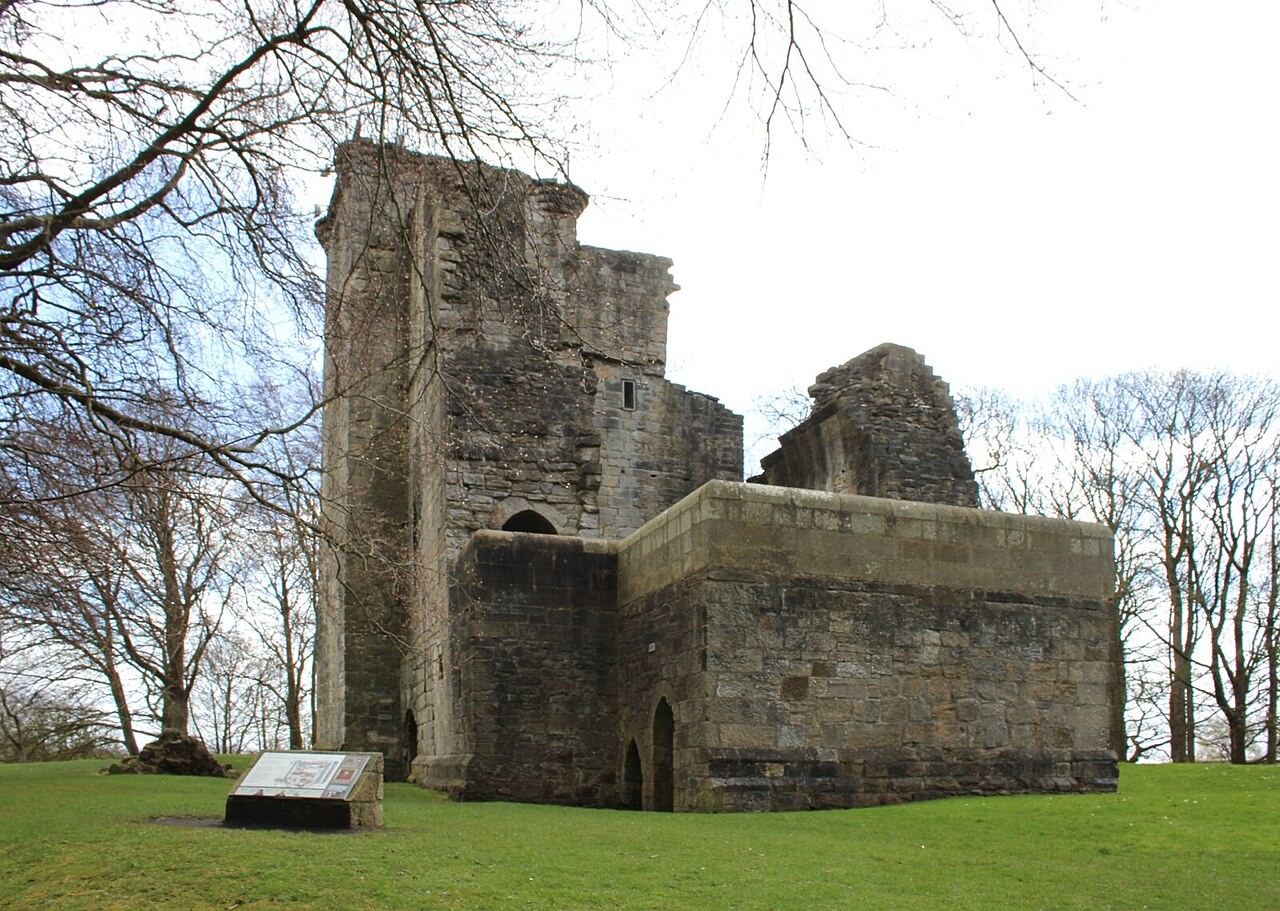
Johnstone Castle
Johnstone Castle stands as a remarkable example of a post-renaissance Scottish castle whose remains are uniquely situated amid a modern urban environment in the town of Johnstone, Scotland. Unlike the typical scenic settings of many historic castles, Johnstone Castle is surrounded by ordinary terraced homes, reflecting its transformation from a grand estate to a central feature within a post-war housing development. This juxtaposition offers a fascinating glimpse into the evolution of land use and architectural heritage within a growing town.
The castle's origins trace back to the 16th century, with its estate historically belonging to the Houstouns of Milliken, who acquired the estate of Easter Cochrane in 1773. The castle underwent significant enlargement and remodeling in 1771 and again in 1812 under the direction of George Houstoun. These renovations transformed the structure into a castellated style residence, featuring notable architectural elements such as a prominent turret on the left-hand side of the front elevation. The remodeling is attributed possibly to the renowned Scottish architect James Gillespie Graham, known for his work in the Gothic revival style, which adds a layer of architectural significance to the castle's design.
Architectural features and style
The castle's design prominently features battlemented decorations that evoke the defensive character of medieval fortifications, although these elements serve a primarily aesthetic purpose in the post-medieval context. One of the most distinctive internal features includes barrel vaulted rooms on the ground floor, which exemplify the robust construction techniques of the period and contribute to the castle's historic ambiance.
Externally, the castle is adorned with a rope-styled string course, a decorative masonry band that encircles the building, adding texture and visual interest to the façade. The surviving structures include the central square tower and a crow-stepped bartizaned section dating from an earlier period, which provide valuable insights into the castle's architectural evolution over centuries.
Historical significance and notable events
Johnstone Castle has a rich history of ownership and usage that reflects broader social and political changes in Scotland. Initially owned by the Laird of Houston, the estate passed through the hands of various aristocrats and ecclesiastical figures, including archbishops, highlighting its importance within regional power structures.
The castle also holds a unique place in cultural history due to its association with notable Polish guests. In 1848, the celebrated composer Frédéric Chopin stayed at the castle, an event that underscores the castle's role as a site of international cultural exchange. During the Second World War, the castle's grounds were repurposed to billet Polish soldiers, and subsequently, it served as a prisoner of war camp, illustrating its strategic military use in the 20th century.
Decline and preservation
Despite its grandeur, the castle and its surrounding policies gradually diminished as the town of Johnstone expanded. By the early 20th century, much of the estate had been lost to urban development. The majority of the house was demolished in 1950, and in 1956, the remaining grounds were acquired by the local authority for housing projects.
Today, only the central square tower and a fragment of the bartizaned section remain. These remnants stand as a testament to the castle's historical and architectural legacy amidst the modern urban landscape. The castle was brought into private ownership and underwent refurbishment in 2001, now serving as a private residence. While the interior is not open to the public, visitors can learn about the castle's history through plaques and information boards displayed outside, preserving its story for the community and visitors alike.
Johnstone Castle in the context of Scottish castles
Johnstone Castle exemplifies the transition from fortified medieval strongholds to more decorative, castellated country houses typical of the post-renaissance period in Scotland. Its architectural features, such as battlements and turrets, reflect a romanticized revival of medieval forms rather than practical military defense, aligning with broader trends in Scottish architecture during the 18th and early 19th centuries.
The castle's history of adaptation—from noble residence to military billet and POW camp, then to private dwelling—illustrates the layered uses of such estates over time. Its survival as a fragment within a modern townscape highlights the challenges of heritage preservation amid urban growth, making it an important case study for conservation efforts in Scotland.
Architectural influences
The involvement of James Gillespie Graham, if confirmed, would place Johnstone Castle within the context of the Gothic revival movement in Scotland, which sought to revive medieval architectural motifs with a romantic sensibility. This style often included features such as turrets, battlements, and decorative stonework, all of which are evident in the castle's design.
Legacy and cultural importance
Johnstone Castle's connections to notable historical figures and events enhance its cultural significance. The stay of Frédéric Chopin adds an artistic dimension to its history, while its role during World War II reflects Scotland's involvement in global conflicts and the integration of international forces within local settings.
Despite its reduced physical footprint, Johnstone Castle remains a symbol of the region's rich history, architectural heritage, and the ongoing dialogue between past and present in Scotland's built environment.
Frequently asked questions (FAQ)
- How do I get to Johnstone Castle?
- Johnstone Castle is easily accessible by public transport, with regular train services from Glasgow Central to Johnstone station. From the station, it's a short walk to the castle grounds, making it convenient for visitors.
- What is the historical significance of Johnstone Castle?
- Johnstone Castle dates back to the 15th century and has a rich history tied to the powerful families of the area. It played a key role in local politics and society during its time, reflecting the architectural trends and social conditions of its era.
- When was Johnstone Castle built?
- Construction of Johnstone Castle began in the late 15th century, with various renovations and expansions taking place over the centuries. The castle's architecture showcases the evolution of building styles from medieval to more modern influences.
- Can I visit Johnstone Castle year-round?
- Yes, Johnstone Castle is open to visitors year-round, although specific opening hours may vary by season. It’s advisable to check the official website for the most current visiting times and any special events that may affect access.
- Why is Johnstone Castle a popular tourist attraction?
- Johnstone Castle attracts visitors due to its stunning architecture, rich history, and beautiful surrounding landscapes. The castle's intriguing past and well-preserved structures provide a fascinating glimpse into Scotland's heritage.
- Is it possible to take guided tours of Johnstone Castle?
- Yes, guided tours of Johnstone Castle are available and offer in-depth insights into its history and architecture. These tours are led by knowledgeable guides who can enhance your experience with interesting anecdotes and facts.
- What are the ticket prices for visiting Johnstone Castle?
- Ticket prices for Johnstone Castle vary based on age and group size, with discounts available for families and seniors. It’s best to check the official website for the latest pricing information and any special offers.
- What are the best times to visit Johnstone Castle?
- The best times to visit Johnstone Castle are during the spring and summer months when the gardens are in full bloom, and the weather is typically pleasant. Visiting during weekdays can also help you avoid larger crowds.
- Are there any nearby attractions to visit along with Johnstone Castle?
- Yes, nearby attractions include the scenic Clyde Muirshiel Regional Park and the charming town of Johnstone itself, which features local shops and cafes. These locations complement your visit to the castle and offer a broader experience of the area’s culture.
Information
Loading map...
Visitor reviews
No reviews yet. Been here? Write the first review and help other travelers!
Write the first reviewVisited this castle? Share your experience
Your review helps other travelers and adds first-hand knowledge to our encyclopedia.