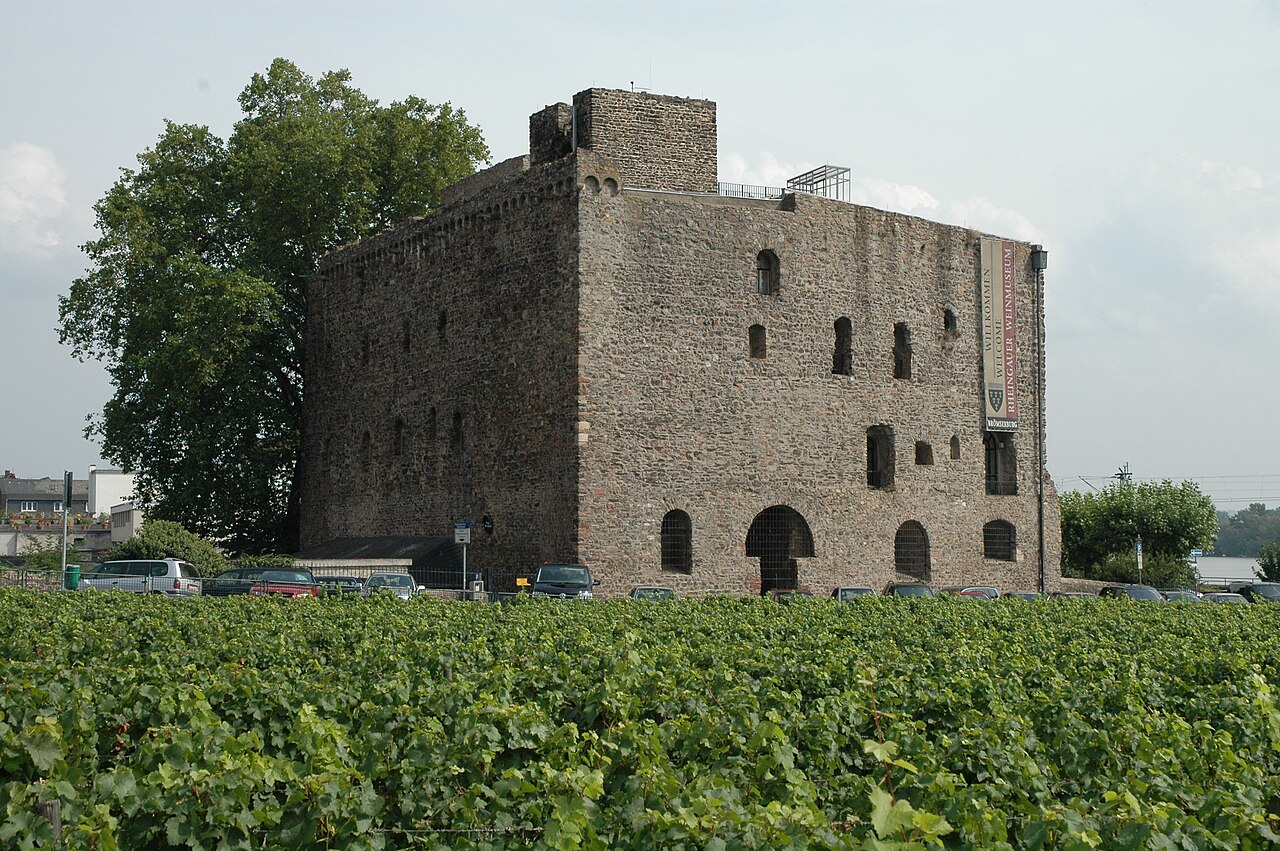
Johannisberg Castle
Johannisberg Castle, located in the Rheingau wine region of Germany, stands as a significant historic site combining architectural grandeur with a rich vinicultural heritage. The castle is renowned not only for its baroque palace but also for its longstanding tradition of winemaking, dating back over 900 years. It holds a special place in the history of wine, particularly for its association with the discovery of late harvest wine, a style that has influenced viticulture worldwide.
Early history and monastic origins
The site of Johannisberg Castle has been linked with viticulture since the Dark Ages. A mountain on the north bank of the River Rhine near Mainz was under the ownership of the estate of Ludwig der Fromme (Louis the Pious), who produced approximately 6000 litres of wine during the reign of Charlemagne. Around 1100, Benedictine monks established a monastery on the hill, then known as Bischofsberg or "Bishop's mountain," recognizing its exceptional suitability for grape cultivation.
About thirty years later, the monks constructed a Romanesque basilica dedicated to John the Baptist, prompting the hill to be renamed Johannisberg ("John's mountain"). The monastery was architecturally modeled on its mother house, St. Alban's Abbey in Mainz, reflecting the Romanesque style prevalent at the time.
This religious complex became a target during the German Peasants' War of 1525, when Anabaptists destroyed the monastery, marking a significant disruption in the site's early history.
Baroque reconstruction and viticultural development
In 1716, the estate was acquired by Konstantin von Buttlar, Prince-Abbot of Fulda, who initiated the construction of the current baroque palace. This period marked a transformation from a monastic site to a noble residence with an emphasis on both architectural elegance and agricultural productivity.
By 1720, Riesling vines were planted on the estate, establishing what is now recognized as the oldest Riesling vineyard in the world. This development was pivotal in shaping the Rheingau region's reputation as a premier wine-producing area.
Ownership changes and historical events
The estate changed hands multiple times during the upheavals of the Napoleonic Wars. In 1816, it was granted by Francis II, Holy Roman Emperor, to the Austrian statesman Prince von Metternich, linking the castle to one of Europe's most influential diplomatic figures.
During World War II, Johannisberg Castle suffered extensive damage from bombing raids on Mainz in 1942, reducing it largely to a shell. The destruction marked a significant interruption in the castle's physical continuity and required substantial restoration efforts in the post-war period.
Post-war restoration and modern ownership
By the mid-1960s, the castle had been largely rebuilt under the direction of Prince Paul Alfons von Metternich and his wife Princess Tatiana. Their efforts restored the castle's baroque character and revived its role as a cultural and vinicultural landmark. The couple had sought refuge at Johannisberg following the advance of Russian forces on their other estates in 1945.
Prince Paul died in 1992 without an heir, leading to the extinction of the House of Metternich. Princess Tatiana continued to reside in the castle until her death in 2006. Due to financial pressures, the estate was sold to the German Oetker family in 1974, who have maintained the property since.
Architectural and cultural significance
Johannisberg Castle exemplifies baroque architecture with its elegant palace structures, integrating the aesthetic principles of the early 18th century. The castle complex includes prominent facades, ornate interiors, and extensive vineyards that continue to produce high-quality Riesling wines.
The castle's long history as a monastic site and later as a noble estate reflects the broader historical shifts in the region, from religious to secular power, as well as the evolution of viticulture in Germany. Its association with notable historical figures such as Ludwig der Fromme, Prince-Abbot Konstantin von Buttlar, and Prince von Metternich adds to its cultural importance.
The discovery of late harvest wine
Johannisberg is particularly famous for its claim to have "discovered" late harvest wine (Spätlese). This style of wine production involves harvesting grapes later in the season, allowing them to develop higher sugar content and richer flavors. This innovation has had a lasting impact on wine production techniques worldwide.
The wine estate today
The winery at Johannisberg continues to operate, producing some of the most prestigious Riesling wines in the Rheingau. The estate balances its historic legacy with modern winemaking techniques, attracting visitors interested in both the castle's history and its wine culture.
Frequently asked questions (FAQ)
- How do I get to Johannisberg Castle?
- Johannisberg Castle is located in Johannisberg, Germany, easily accessible by car and public transport. If you're driving, the castle offers on-site parking, and it's a short walk from the nearest bus stop. Consider using navigation apps for the best routes and local traffic updates.
- What is the historical significance of Johannisberg Castle?
- Johannisberg Castle dates back to the 12th century and has played a crucial role in the region's history, particularly in wine production. It is renowned for its historic vineyards and has been a gathering place for nobility throughout the centuries. The castle is a testament to the architectural and cultural evolution of the area.
- When was Johannisberg Castle built?
- The construction of Johannisberg Castle began in the early 12th century, with various modifications and expansions occurring over the centuries. The castle has undergone significant restoration efforts to preserve its historical architecture. Today, it stands as a symbol of medieval heritage in the Rhine Valley.
- Can I visit Johannisberg Castle year-round?
- Yes, Johannisberg Castle is open to visitors throughout the year, although specific tours and events may vary by season. It’s advisable to check the official website for seasonal hours and special events. Visiting in autumn offers a beautiful view of the vineyards during harvest time.
- Why is Johannisberg Castle famous for its architecture?
- Johannisberg Castle is famous for its blend of Gothic and Renaissance architectural styles, which reflect the periods of its construction and renovation. The castle features stunning towers, arched windows, and beautifully landscaped gardens that enhance its historical charm. It is a popular subject for photography and art due to its picturesque setting.
- Is it possible to tour the interiors of Johannisberg Castle?
- Yes, guided tours of the castle's interiors are available, allowing visitors to explore its rich history and architecture. Tours typically include access to the grand halls, wine cellars, and exhibitions detailing the castle's significance. Check the schedule in advance, as tours may have limited availability.
- What are the opening hours for Johannisberg Castle?
- Johannisberg Castle generally opens to visitors from 10 AM to 6 PM daily, with extended hours during peak tourist season. It's recommended to verify the hours on the official website before your visit, as they may change due to special events or holidays. Guided tours are usually scheduled within these hours.
- What are the ticket prices for visiting Johannisberg Castle?
- Ticket prices for Johannisberg Castle typically range from €8 to €12, depending on the type of tour you choose. There are discounts available for students, seniors, and children, making it an affordable outing for families. Group rates may also apply, so check in advance if you're planning a visit with a larger party.
- Are there any nearby attractions to visit along with Johannisberg Castle?
- Yes, there are several nearby attractions that complement a visit to Johannisberg Castle, such as the charming town of Rüdesheim and the scenic Rhine River. You can also explore local vineyards and partake in wine tasting experiences in the region. The area is rich in culture and history, making it a perfect day trip destination.
Information
Website
Visit websiteSources & official resources
Verify the information above using these authoritative references.
Loading map...
Visitor reviews
No reviews yet. Been here? Write the first review and help other travelers!
Write the first reviewVisited this castle? Share your experience
Your review helps other travelers and adds first-hand knowledge to our encyclopedia.