Jinxianmen Gate Tower
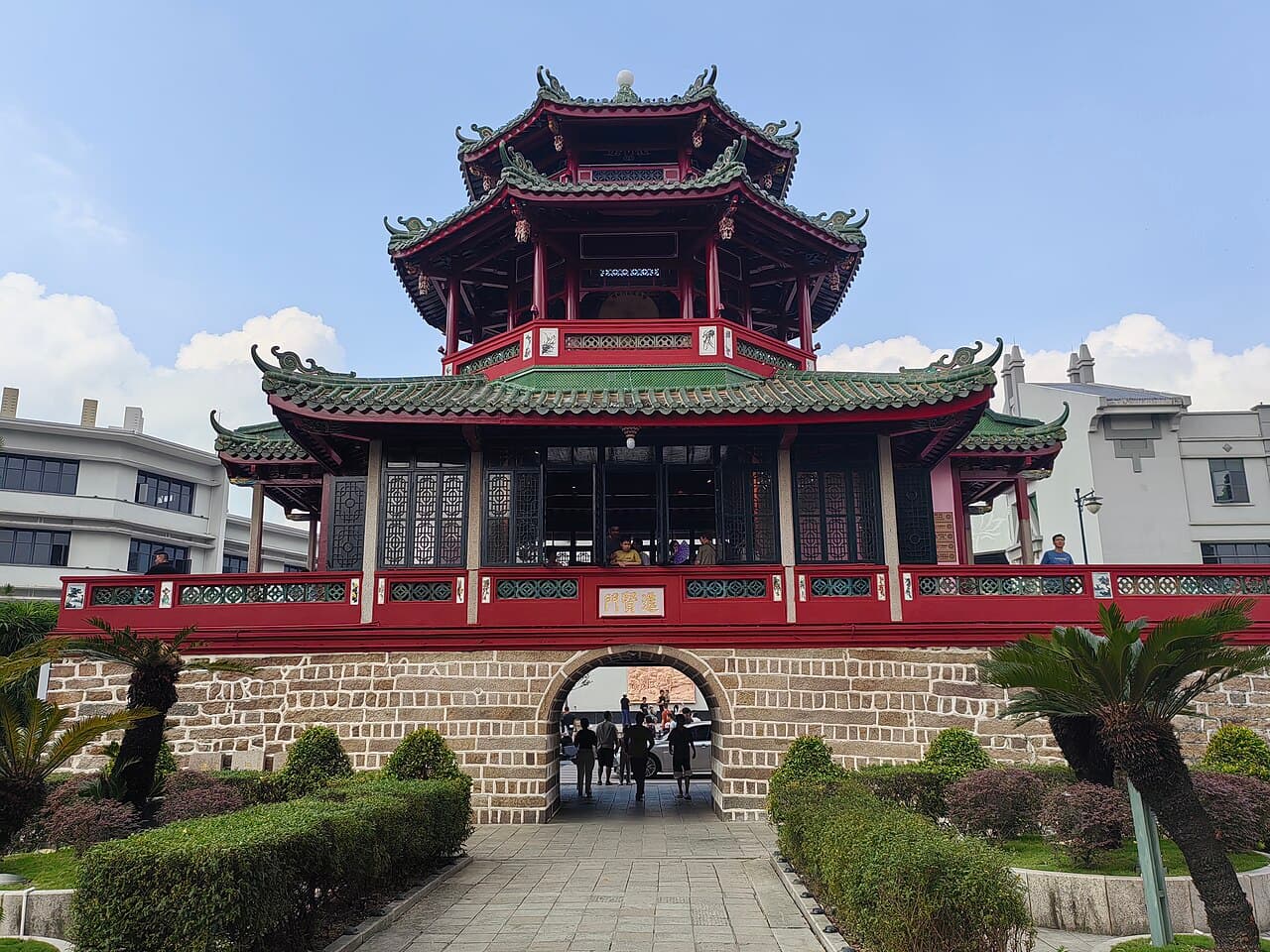
Jinxianmen Gate Tower, also known as Jinxian Gate or the Red Pavilion (红亭), is a historic architectural landmark located in Jieyang City, Guangdong Province, China. This gate tower stands prominently on Huancheng Road in Rongcheng District and serves as a significant cultural relic protected at the provincial level. Constructed primarily from pure fir wood, the tower rises to a height of 16.77 meters, showcasing traditional Chinese wooden architecture of the 17th century.
Architectural features and construction
The Jinxianmen Gate Tower exemplifies traditional Chinese gate tower construction from the late Ming to early Qing dynasties period, roughly corresponding to the 17th century. The structure is primarily composed of fir wood, a material prized for its durability and aesthetic qualities in Chinese architecture. The gate's wooden framework is notable for its intricate joinery and the absence of nails, a hallmark of classical Chinese timber construction.
The tower's design includes multiple tiers with overhanging eaves supported by elaborately carved brackets, a feature typical of Chinese pavilions and gate towers. The vibrant red paint, which has earned it the nickname "Red Pavilion", is both decorative and symbolic, representing good fortune and protection. Although sometimes categorized architecturally as a bastioned fortress, the gate primarily functioned as a ceremonial and defensive city gate rather than a military fortress in the European sense.
Historical context and significance
Jinxianmen Gate Tower was built during a period of regional development in Guangdong Province, when many cities fortified their urban centers with gates and walls to protect against banditry and rival factions. The gate served as a crucial point of entry and exit for Jieyang City, controlling access and symbolizing the city's status and governance.
Its preservation as a provincial-level cultural relic underscores its importance in representing the architectural and cultural heritage of southern China. Unlike many other gates and fortifications that have been lost or heavily modified, Jinxianmen retains much of its original wooden structure, offering valuable insight into construction techniques and urban defense strategies of the time.
Location and cultural role
Situated on Huancheng Road in Rongcheng District, the gate remains a focal point for visitors and locals alike. It is often featured in cultural events and serves as a symbol of Jieyang's historical identity. The gate's proximity to the old city walls and other historic sites makes it a key destination for those interested in the region's history and traditional architecture.
Preservation and current condition
The Jinxianmen Gate Tower is well-preserved, maintaining its original wooden framework and red-painted exterior. Conservation efforts have focused on protecting the timber from weathering and insect damage, ensuring the structure remains stable for future generations. Its status as a protected cultural relic has helped secure funding and expertise for ongoing maintenance.
Visitor information and accessibility
Visitors to Jieyang can access the gate easily via Huancheng Road. While the tower itself is primarily an external viewing site, the surrounding area offers a glimpse into the city's historic core. The gate is accessible year-round, and local guides often provide historical context and architectural explanations for tourists.
Architectural comparisons and influences
The Jinxianmen Gate Tower shares architectural characteristics with other southern Chinese gate towers and pavilions, particularly those from the Ming and Qing dynasties. Its timber construction contrasts with northern Chinese gates that often employed more stone and brick. The use of bright red paint and multi-tiered eaves reflects traditional Chinese aesthetic principles and feng shui considerations.
While not a fortress in the European sense, the gate's design incorporates defensive elements such as elevated observation points and sturdy wooden gates, blending ceremonial grandeur with practical urban defense.
Frequently asked questions (FAQ)
- What is the historical significance of Jinxianmen Gate Tower?
- Jinxianmen Gate Tower served as a key city gate in Jieyang during the 17th century, symbolizing the city's governance and providing defense against bandits and rivals. It represents traditional southern Chinese wooden architecture and is a protected cultural relic.
- Can I visit the interior of Jinxianmen Gate Tower?
- The gate tower is primarily viewed from the outside, as it mainly serves as a historic monument. Visitors can explore the surrounding area and learn about its history through local guides.
- When was Jinxianmen Gate Tower built?
- Jinxianmen Gate Tower was constructed in the 17th century during the late Ming to early Qing period, reflecting architectural styles of that era.
- How is the Jinxianmen Gate Tower preserved?
- The gate tower is well-preserved with its original fir wood structure and red-painted exterior. Conservation efforts focus on protecting the timber from weathering and insect damage.
- Is Jinxianmen Gate Tower accessible year-round?
- Yes, the gate is accessible throughout the year. It is located on Huancheng Road in Jieyang's Rongcheng District, making it easy for visitors to reach.
Photo gallery

Information
Address
Huancheng Road, Rongcheng District
Loading map...
Visitor reviews
No reviews yet. Been here? Write the first review and help other travelers!
Write the first reviewVisited this castle? Share your experience
Your review helps other travelers and adds first-hand knowledge to our encyclopedia.