Jeziorany
Jeziorany Castle stands as a significant example of late-medieval Gothic architecture in the region of Warmia, Poland. Founded in 1338 by the Warmian bishops following the division of Prussian lands conquered by the Teutonic Order, the castle was strategically located near the Symsarna River between two now-vanished lakes, Krokowskie and Ławki. This natural defensive position was enhanced by the construction of a fortified town and castle complex, reflecting the military and administrative importance of the site during the Middle Ages.
The castle's construction began around 1350 under the direction of Bishop Jan I of Meissen, who commissioned a stone fortress to replace an earlier wooden and earthwork structure. Completed by 1400, the castle was designed on a roughly square plan, featuring curtain walls with a defensive wall-walk, multiple towers, and a moat filled with water, which separated the castle from the adjacent town. The castle and town formed an integrated defensive ensemble, crucial for controlling the surrounding territory.
Architectural layout and defensive features
The castle's layout included two main wings: a four-story western wing with vaulted cellars and a cistern for rainwater collection, and a two-story southern wing housing essential domestic facilities such as a kitchen, brewery, refectory, and living quarters. The western wing's vaulted basements were a hallmark of Gothic engineering, providing both storage and water supply capabilities critical for withstanding sieges.
Connecting the wings was a stone cloister that facilitated movement within the castle courtyard. A prominent feature was the high cylindrical tower resting on a square stone base at the northeastern corner, serving as the main defensive stronghold and prison. Its lowest chamber was a dungeon accessible only from above, emphasizing the castle's role in law enforcement and security.
The eastern entrance was protected by a partially drawbridge spanning the moat, leading to a small outer bailey with economic buildings including a smithy, stables, coach house, and barn, all constructed with timber framing typical of the period. Two semicircular bastions flanked the eastern gate, added in the late 17th century, reflecting the evolution of military architecture adapting to new artillery threats.
Historical significance and military engagements
Jeziorany Castle played a pivotal role in the turbulent history of Warmia and the broader Prussian region. It was repeatedly involved in military conflicts, including the Hunger War of 1414, when Polish-Lithuanian forces led by King Władysław Jagiełło captured the castle and set fire to the town. During the Thirteen Years’ War (1454-1466), the castle was seized by the Prussian Confederation and later besieged by the forces of Bishop Paweł Legendorf, resulting in an honorable surrender that preserved the defenders’ arms and property.
In 1472, the castle was contested during the conflict involving Bishop Mikołaj Tungen, who sought to assert control over Warmian castles against the Polish crown's wishes. The castle changed hands after several bloody assaults, illustrating its strategic importance. Later, it suffered damage during the Prussian War of 1520 when forces under Albrecht von Hohenzollern captured and burned Jeziorany.
Post-medieval transformations and decline
Following the military upheavals, the castle underwent significant renovations in the second half of the 16th century under Bishop Marcin Kromer. The addition of the eastern wing with its new gate and bastions in the late 17th century marked the last major architectural development, transitioning the fortress into a more residential episcopal palace while retaining defensive features.
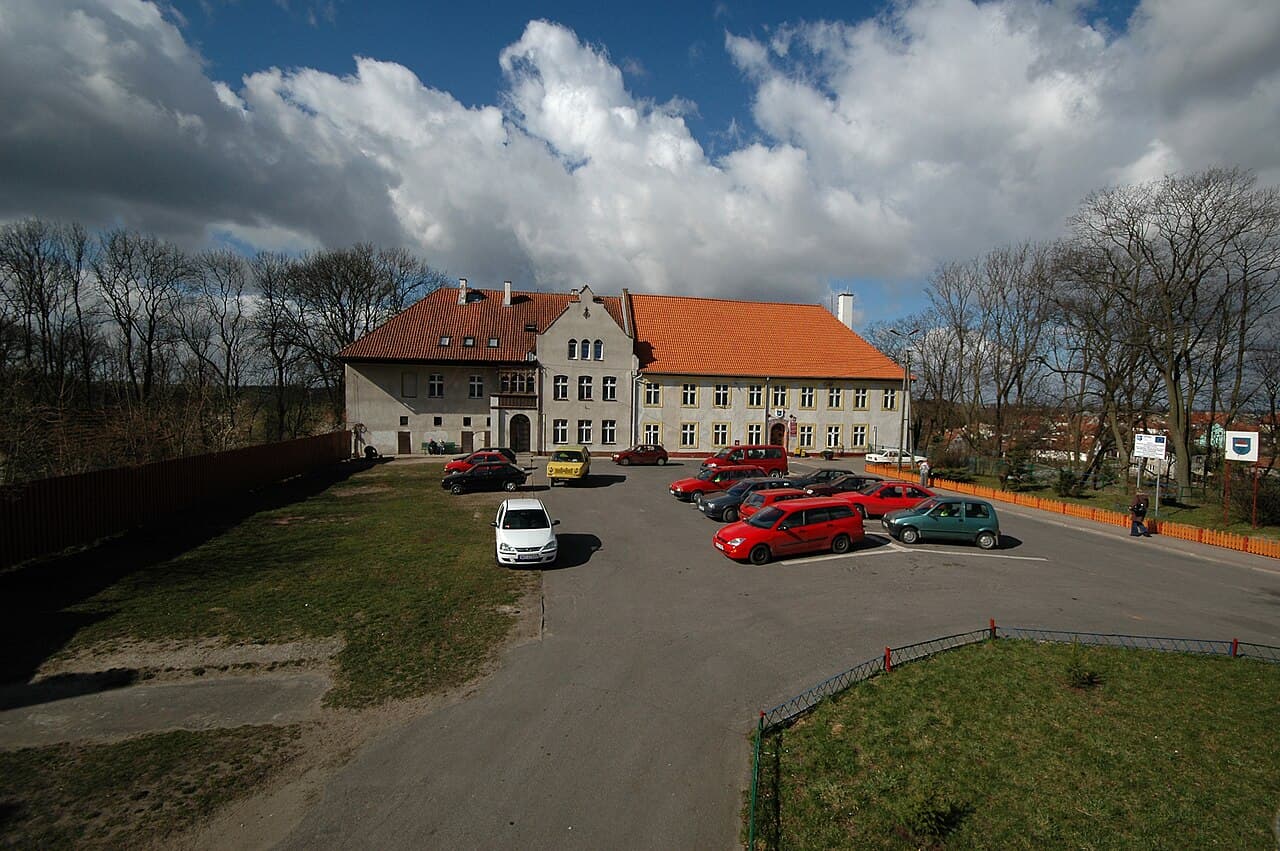
The First Partition of Poland in 1772 brought Jeziorany under Prussian control. A devastating fire in 1783 destroyed much of the castle and town, leading to the dismantling of two wings. The western wing was repurposed as the town hall, later expanded in 1905 with an additional floor and a hipped roof. The original castle tower was replaced by a fire station in the early 20th century, which was demolished in 1925.
Current condition and preservation
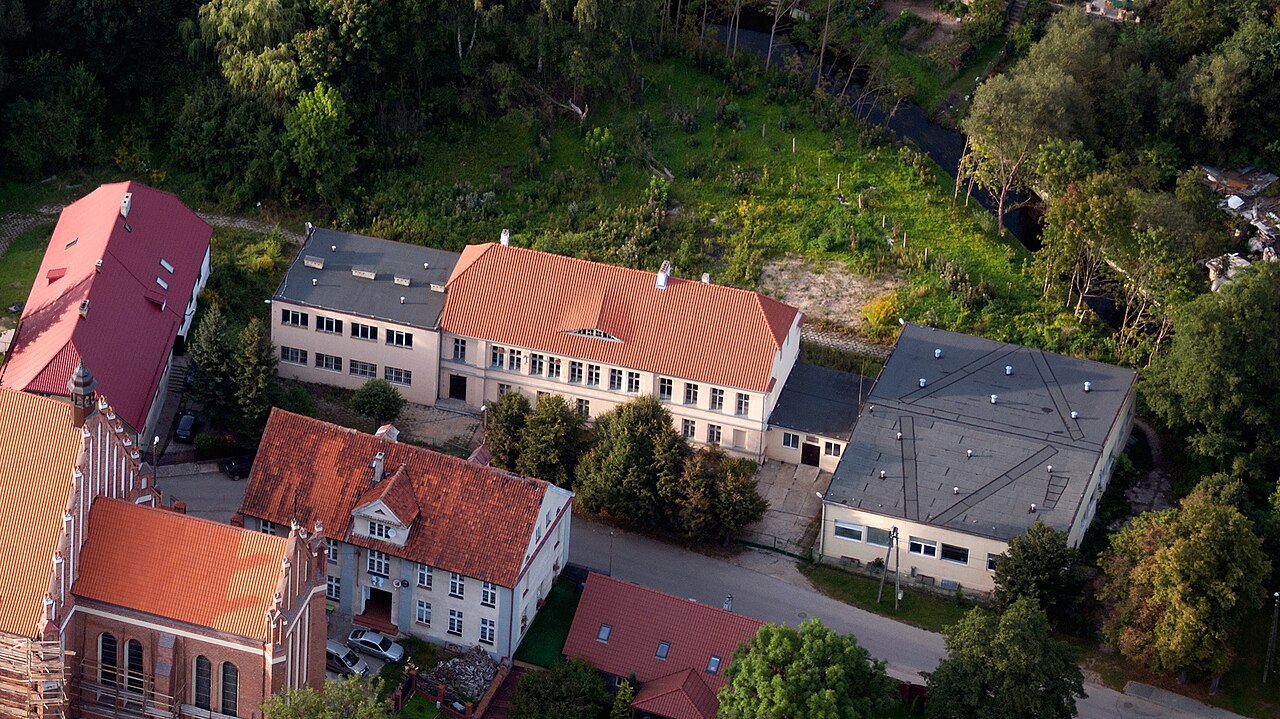
Today, only the heavily modified western wing of Jeziorany Castle remains, standing as a testament to its medieval origins with preserved Gothic stonework and vaulted cellars. This section currently houses the municipal offices, integrating the historic structure into modern civic life.
Archaeological research has uncovered the castle’s original quadrangular plan and key architectural elements such as the northern corner tower's stone base transitioning into a cylindrical upper structure, the moat, and the layout of the outer bailey. The former Italian-style garden established by Bishop Załuski around 1700 has largely reverted to an overgrown park, reflecting the changing landscape and use of the castle grounds over centuries.
Architectural and cultural importance
Jeziorany Castle exemplifies the transition from medieval fortress to episcopal residence, showcasing Gothic defensive architecture adapted for administrative and residential functions. Its history of sieges, renovations, and changing ownership mirrors the complex political and military history of Warmia and the Teutonic Order’s territories.
The castle’s integration with the town’s fortifications and its economic outbuildings illustrate the multifaceted role of such structures in medieval society, serving military, administrative, residential, and economic purposes. The preservation of its Gothic elements amidst later modifications offers valuable insights into architectural evolution from the 14th to the 17th centuries.
Visitors to Jeziorany can explore the surviving medieval architecture within the context of a living town, appreciating the layered history that shaped this unique site. The castle remains a cultural landmark in Warmia, symbolizing the region’s heritage and the enduring legacy of its medieval past.
Frequently asked questions (FAQ)
- What is the historical significance of Jeziorany Castle?
- Jeziorany Castle, dating back to the 14th century, is a notable example of medieval architecture in Poland. It served as a stronghold for local nobility and played a significant role in regional conflicts throughout its history, reflecting the cultural heritage of the area.
- When was Jeziorany Castle built?
- Construction of Jeziorany Castle began in the early 14th century, with significant developments continuing into the following centuries. The castle has undergone various renovations, preserving its historical character while adapting to changing times.
- Is it possible to visit Jeziorany Castle?
- Yes, Jeziorany Castle is open to visitors throughout the year. Guided tours are available, providing insights into the castle's history, architecture, and the surrounding area.
- What are the opening hours of Jeziorany Castle?
- Jeziorany Castle typically opens from 10 AM to 6 PM during the summer months, while winter hours may vary. It is advisable to check the castle's official website for the most current information regarding hours and any special events.
- Can I purchase tickets in advance for Jeziorany Castle?
- Yes, tickets for Jeziorany Castle can often be purchased in advance online or at the castle entrance. Booking ahead is recommended during peak tourist seasons to ensure availability for guided tours.
- What is the best time to visit Jeziorany Castle?
- The best time to visit Jeziorany Castle is during the late spring and early autumn months, when the weather is typically mild and pleasant. This allows visitors to enjoy the surrounding landscapes and the castle’s outdoor areas.
- Is Jeziorany Castle accessible for people with disabilities?
- Jeziorany Castle has made efforts to improve accessibility for visitors with disabilities. There are ramps and designated pathways, though some areas may still present challenges due to the castle's historical structure.
- What nearby attractions can I visit while in Jeziorany?
- While visiting Jeziorany Castle, you can also explore the charming town of Jeziorany, which features local shops and eateries. Additionally, the nearby lakes and nature reserves offer beautiful scenery for outdoor activities.
Photo gallery

Information
Loading map...
Visitor reviews
No reviews yet. Been here? Write the first review and help other travelers!
Write the first reviewVisited this castle? Share your experience
Your review helps other travelers and adds first-hand knowledge to our encyclopedia.