Jelcz-Laskowice
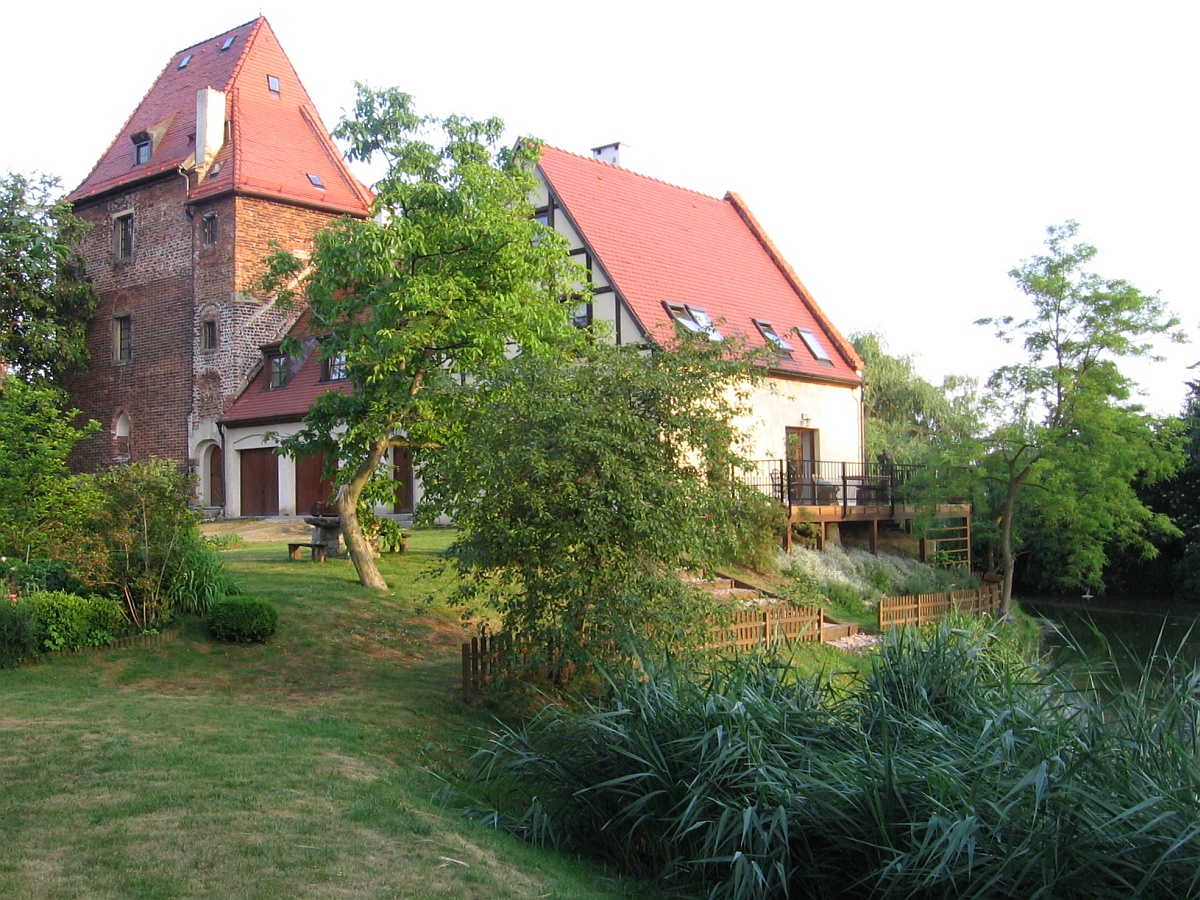
The castle in Jelcz-Laskowice, located in the town of Jelcz-Laskowice in Poland, stands as a remarkable example of a late medieval water castle with a rich history spanning several centuries. Originally constructed on a small island formed by a branch of the Oder River, the castle's strategic position took advantage of natural water defenses, a common feature among water castles designed to resist siege and assault. Its earliest mention dates back to the 13th century, with the village of Jelcz recorded in documents from the mid-1200s, initially under the ownership of bishops and later the Piast dukes of Wrocław.
The initial structure on the site was a modest hunting lodge with limited defensive capabilities, which played a role in regional power struggles, such as the 1277 night raid organized by Duke Bolesław Rogatka. Around 1380, the lodge was expanded into a more substantial fortified manor with a three-winged layout arranged on a square plan. This development marked the castle's transformation into a more defensible residence with brick construction on stone foundations, including multiple chambers and a central hall.
Architectural development and renaissance transformation
In 1508, the castle entered a new phase under the ownership of Konrad von Surma, a noble merchant who initiated a significant renaissance-style remodeling around 1518. This renovation introduced arcaded cloisters around the courtyard, enhancing the residential comfort and aesthetic appeal of the castle while maintaining its defensive features. The addition of gunports and other adaptations for firearms reflected the evolving military technology of the period, allowing the castle to retain its protective functions despite the increasing use of gunpowder weapons.
The castle's layout by this time consisted of a four-winged stone complex enclosing an inner courtyard, with the oldest surviving section being a Gothic residential building in the northeast wing. This wing featured vaulted ceilings supported by central columns, showcasing the architectural techniques of the 13th century. The castle was surrounded by a ring wall with reinforced buttresses and a curtain wall sealing the southwest side, further strengthening its defenses.
Historical challenges and decline
The Thirty Years' War in the 17th century brought significant hardship to the castle. In 1623, a devastating fire damaged the structure, and although plans were made to surround it with modern fortifications, these were never fully realized due to ongoing conflict. The castle changed hands multiple times during the war, occupied by Saxon, Imperial, and Swedish troops, which led to severe damage and eventual abandonment by its noble owners around 1650.
Following its abandonment as a noble residence, the castle's function shifted towards economic uses. The southern wing was replaced by a brewery building in the mid-17th century, while the northern wing was adapted into living quarters for tenants. In the 19th century, the castle underwent partial repairs and alterations, including the addition of a wooden observation tower in 1816 and the installation of a distillery and tavern within the premises.
Architectural remains and current status
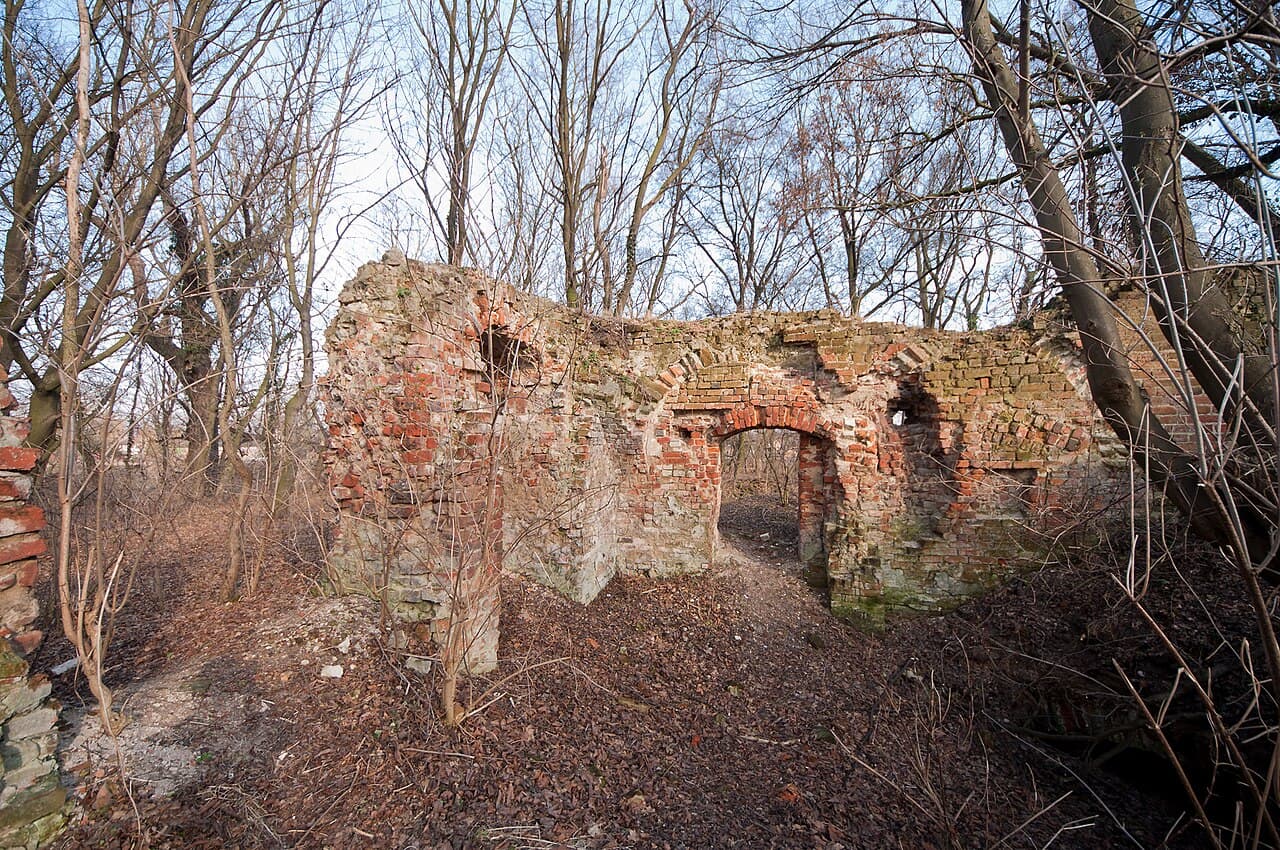
Today, the castle exists as ruins that reveal the footprint of the original four-winged complex. Visitors can observe the preserved ground-floor walls, fragments of vaulted cellars, and the remains of defensive structures such as the ring wall and curtain wall. The castle's site, once a water-surrounded island, is now accessible, allowing for exploration of its historical layers and architectural evolution.
The ruins of Jelcz-Laskowice castle serve as a cultural monument reflecting the region's medieval heritage and the adaptations of a defensive stronghold into a Renaissance residence and later economic facility. Its story encapsulates the broader historical trends of Silesia, including feudal conflicts, Renaissance cultural influences, the impact of early modern warfare, and the eventual decline of feudal fortifications in the face of changing political and military realities.
Significance and preservation
Recognized for its historical and architectural value, the castle ruins have been protected as a historic monument since the mid-20th century. Efforts to preserve the remaining structures help maintain the site's integrity and provide insight into the construction techniques and defensive strategies of medieval and Renaissance periods. The castle's layered history offers a compelling narrative for visitors and scholars interested in medieval architecture, Renaissance adaptations, and the socio-political history of Silesia.
In summary, the Jelcz-Laskowice castle stands as a testament to the dynamic history of fortifications in Central Europe. From its origins as a modest hunting lodge to its development into a fortified residence and later commercial site, the castle embodies the architectural and historical transitions that shaped the region over several centuries.
Frequently asked questions (FAQ)
- What is the historical significance of Jelcz-Laskowice Castle?
- Jelcz-Laskowice Castle is a notable historical site that reflects the architectural styles and cultural heritage of the region. Originally built in the 18th century, it has undergone various renovations that highlight its importance as a residence and local landmark throughout Polish history.
- When is the best time to visit Jelcz-Laskowice Castle?
- The best time to visit Jelcz-Laskowice Castle is during the spring and summer months when the weather is pleasant and the gardens are in full bloom. Guided tours and outdoor events are often scheduled during this time, providing a richer experience of the castle's beauty.
- How do I get to Jelcz-Laskowice Castle?
- Jelcz-Laskowice Castle is easily accessible by car and public transport from nearby cities. If traveling by train or bus, check local schedules for the best routes to ensure a smooth journey to this historical landmark.
- Is it possible to take guided tours of the castle?
- Yes, guided tours of Jelcz-Laskowice Castle are available and provide visitors with in-depth knowledge about its history and architecture. It is recommended to book your tour in advance, especially during peak tourist season, to secure your spot.
- What are the opening hours of Jelcz-Laskowice Castle?
- Jelcz-Laskowice Castle is typically open to visitors from Tuesday to Sunday, with varying hours depending on the season. Always check the official website or contact the castle directly for the most current opening hours before planning your visit.
- Can I bring children to Jelcz-Laskowice Castle?
- Absolutely! Jelcz-Laskowice Castle is family-friendly and welcomes children. There are often special programs and activities designed to engage younger visitors, making it a great educational experience for the whole family.
- What are the ticket prices for visiting the castle?
- Ticket prices for Jelcz-Laskowice Castle vary depending on age and whether you choose a guided tour. Discounts may be available for students, seniors, and families, so it's best to check the official website for the latest pricing information.
- Are there any nearby attractions to visit?
- Yes, the area surrounding Jelcz-Laskowice Castle has several attractions worth exploring, including beautiful parks and local museums. Visitors can also enjoy the scenic landscapes and cultural sites in the nearby towns, making it a great stop on your itinerary.
- Is the castle accessible for visitors with disabilities?
- Jelcz-Laskowice Castle strives to be accessible for all visitors, with facilities designed to accommodate those with disabilities. However, it is advisable to contact the castle in advance to confirm specific accessibility options and any assistance that may be required during your visit.
Photo gallery

Information
Loading map...
Visitor reviews
No reviews yet. Been here? Write the first review and help other travelers!
Write the first reviewVisited this castle? Share your experience
Your review helps other travelers and adds first-hand knowledge to our encyclopedia.