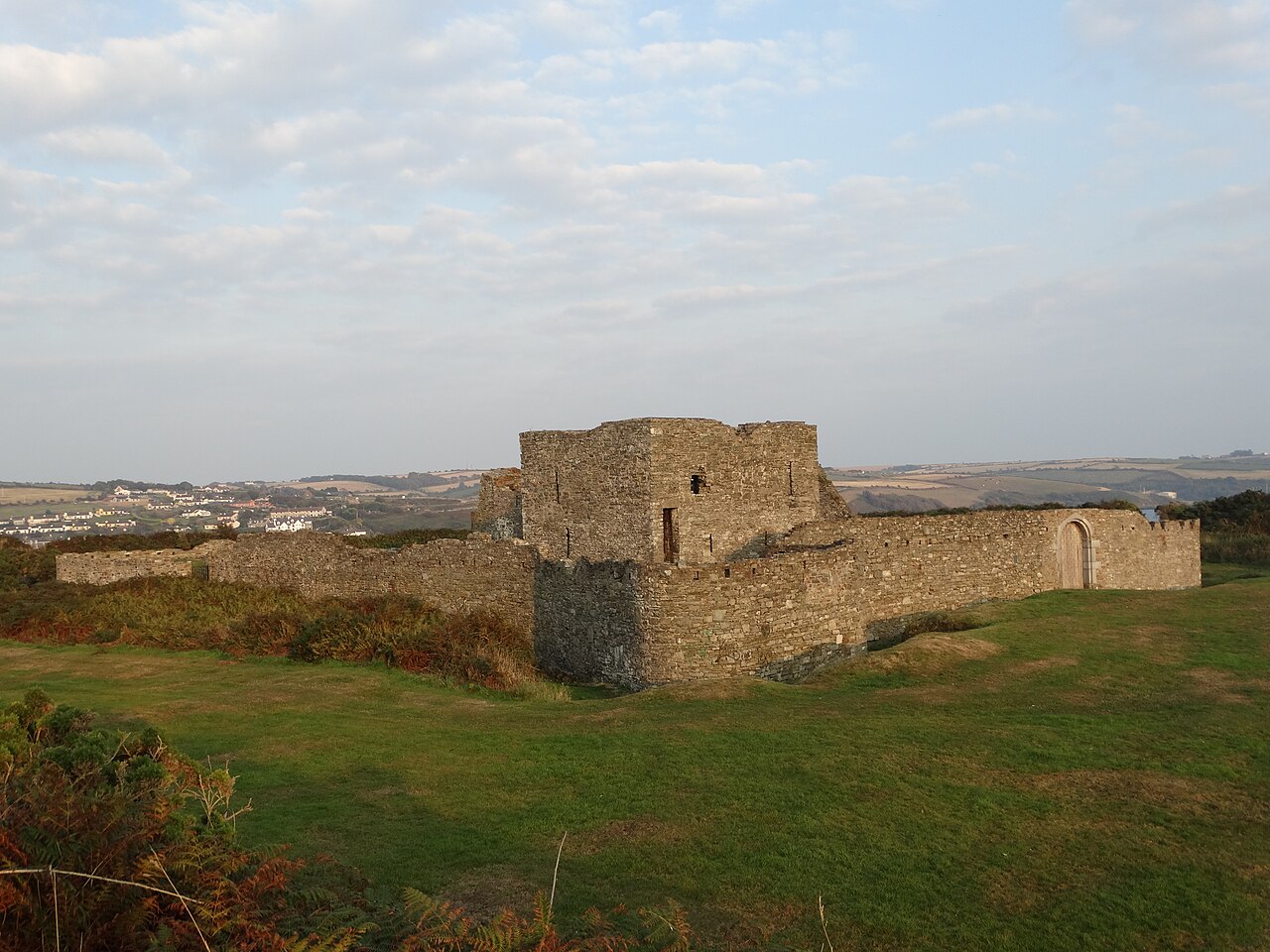
Charles Fort — Ireland castle

Charles Fort

Charles Fort, Kinsale, Ireland
Kinsale, Ireland
Renaissance (15th–17th c.)
Well Preserved

Charles Fort (Irish: Dún Chathail) is a prominent example of a trace italienne fortification, a style characterized by its angular bastions designed to withstand artillery attacks. Located at the southern end of the village of Summer Cove on Kinsale harbour in County Cork, Ireland, the fort was first completed in 1682. It was constructed as a modern replacement for the earlier James' Fort, which had been built before 1607 on the opposite side of the harbour and was known as the "old fort." Charles Fort was sometimes historically called the "new fort" to distinguish it from James' Fort.

Historical context and strategic importance

The construction of Charles Fort took place during a period of significant military innovation in Europe, reflecting the shift towards Renaissance military architecture. This style was developed to counter the increasing power of cannon fire on traditional medieval fortifications. The fort's design incorporates the bastioned fortress principles of the trace italienne style, which allowed defenders to cover all approaches with overlapping fields of fire.

Charles Fort was built to protect the vital harbour of Kinsale, a key naval and commercial port on Ireland's southern coast. Its location at the mouth of the harbour provided control over maritime access and defense against potential naval threats from foreign powers, particularly during the turbulent 17th century when Ireland was involved in various conflicts including the Williamite War.

Architectural features and design

Trace italienne layout

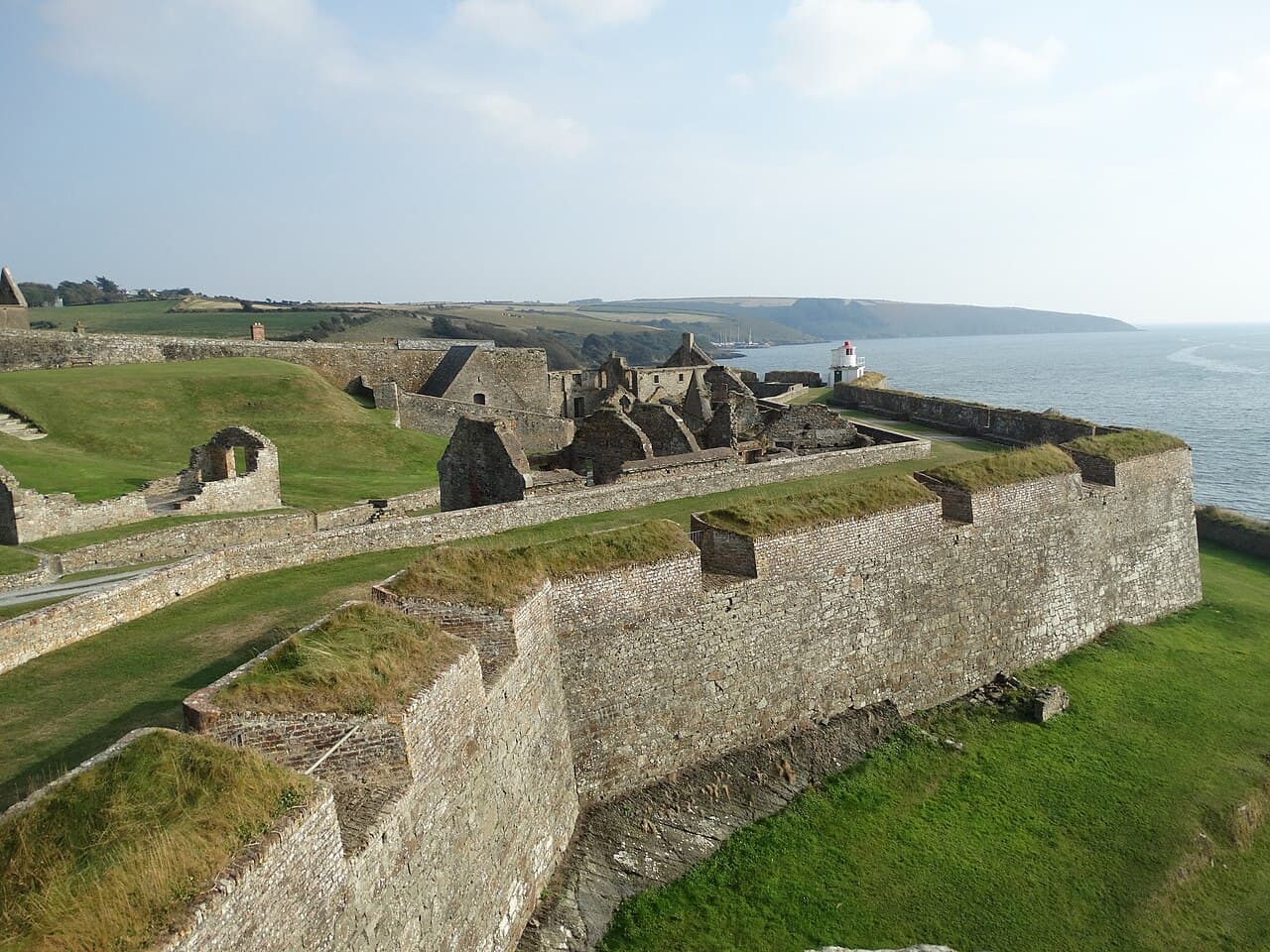
The fort's design is a classic example of the star-shaped fortification system. This layout includes a series of angular bastions projecting outward from the main walls, allowing defenders to fire upon attackers from multiple angles and eliminating blind spots. The bastions are connected by curtain walls, creating a strong defensive perimeter that could resist artillery bombardment.

Outer walls and bastions

One section of Charles Fort's outer wall is built in a distinct star fashion, characteristic of the trace italienne style. The walls are thick and sloped to deflect cannonballs. The bastions themselves were equipped for mounting heavy artillery, enabling the fort to engage enemy ships and forces approaching from land.

Internal structures

Inside the fort, there are barracks, magazines, and various service buildings arranged around a central parade ground. The layout was designed for efficient military operation, with easy access to defensive positions and storage for munitions. The fort also includes a gatehouse and defensive ditches enhancing its security.

Role in Irish military history

Charles Fort played a significant role during the Williamite War in Ireland (1689–1691), serving as a key defensive position for the Williamite forces. Its modern design and artillery placements made it a formidable fortress during sieges and naval engagements.

Following the wars, the fort continued to serve as a military installation for several centuries, though its strategic importance declined with changes in military technology and political circumstances. By the 19th century, Charles Fort was largely obsolete as a defensive structure but remained a symbol of military heritage.

Preservation and visitor experience

Today, Charles Fort is a well-preserved example of a 17th-century bastioned fortress and is managed by Heritage Ireland, part of the Office of Public Works. The site is open to the public as a heritage tourism destination, offering visitors the opportunity to explore the extensive fortifications, learn about its history, and enjoy views over Kinsale harbour.

The fort's layout and defensive features are clearly visible, providing insight into the military engineering of the Renaissance period. Guided tours and informational displays help interpret the site's historical significance and architectural innovations.

Location and accessibility

Charles Fort is situated in the village of Summer Cove, near the town of Kinsale in County Cork, Ireland. Its position on the southern shore of Kinsale harbour makes it accessible by road and within easy reach of Kinsale town center. The fort's coastal location also offers scenic views of the harbour and surrounding landscape.

Visitors can explore the fort year-round, with seasonal opening hours and ticket prices managed by Heritage Ireland. The site is suitable for those interested in military history, architecture, and Irish heritage.

Frequently asked questions (FAQ)

How do I get to Charles Fort?
Charles Fort is located in Kinsale, Ireland, and can be accessed by car or public transport. If you're driving, follow the signs from Kinsale town center; there is ample parking available. Alternatively, local buses operate services to Kinsale from nearby cities.
What is the historical significance of Charles Fort?
Charles Fort is a 17th-century star-shaped fortification that played a crucial role in the defense of Ireland during various conflicts, including the Williamite War. It was strategically important due to its location overlooking Kinsale Harbour, making it a key point for military operations. Today, it stands as a testament to military architecture and Irish history.
When was Charles Fort built?
Construction of Charles Fort began in 1677 and was completed in 1682. It was designed by the military engineer Sir William Robinson and was used for military purposes until the 20th century. The fort has witnessed numerous historical events and changes in ownership throughout its existence.
Can I explore the fort on my own?
Yes, visitors can explore Charles Fort at their own pace. The site offers various walking paths and informational panels that guide you through the fort's history and architecture. Guided tours are also available for those who prefer a more in-depth experience.
Why is Charles Fort a popular tourist destination?
Charles Fort attracts visitors due to its stunning coastal views, rich history, and impressive architecture. It is not only a beautiful place to explore but also provides insights into Ireland's military past. Additionally, the fort's location near Kinsale, a charming town known for its culinary scene, adds to its appeal.
Is it possible to hold events at Charles Fort?
Yes, Charles Fort offers facilities for hosting events, including weddings and corporate gatherings. The stunning backdrop of the fort and its scenic views make it an attractive venue. For more details on event hosting, it's best to contact the management directly.
What are the opening hours of Charles Fort?
Charles Fort is typically open to visitors from 10 AM to 6 PM during the summer months and has reduced hours in the winter. It’s advisable to check the official website for the most current opening hours, especially around public holidays. This ensures you have the latest information before planning your visit.
What are the ticket prices for Charles Fort?
Ticket prices for Charles Fort are generally affordable, with discounts available for students and seniors. Children under a certain age may enter for free, making it a family-friendly destination. For the latest pricing information, it’s recommended to visit the official website or contact the fort directly.
When is the best time to visit Charles Fort?
The best time to visit Charles Fort is during the late spring and summer months when the weather is typically mild and the days are longer. This allows for a more enjoyable exploration of the fort and its surroundings. Additionally, visiting during these months often coincides with various local events and festivals in Kinsale.
Is Charles Fort accessible for people with disabilities?
Yes, Charles Fort is committed to ensuring accessibility for all visitors. There are pathways and facilities designed to accommodate those with mobility challenges, although some areas may have limited access due to the fort's historic nature. It's advisable to check in advance if you have specific accessibility needs.

Photo gallery

Charles Fort
Click to view

Photo by The Speckled Bird•CC BY-SA 4.0

1 photo • Click any image to view in full screen

Information

Bastioned Fortress

Current owner

Heritage Ireland (Office of Public Works)

Loading map...

Visitor reviews

No reviews yet. Been here? Write the first review and help other travelers!

Write the first review

Visited this castle? Share your experience

Your review helps other travelers and adds first-hand knowledge to our encyclopedia.

Write a review

(5/5)

0/2000 characters

Your review will be visible after admin approval

Nearby castles

0 km

Charles Fort

Kinsale, United Kingdom

Charles Fort is a prominent star-shaped coastal fortress located near the village of Summercove, just south of Kinsale in County Cork, Ireland. This fortification stands on a site with a long military history, originally occupied by a medieval castle known as Ringcurran. The medieval castle was destroyed in 1656 under orders from Oliver Cromwell, marking a significant transition in the site's defensive role. Early fortifications and the earthwork defenses Following the destruction of Ringcurran, the strategic importance of Kinsale Harbor prompted renewed defensive efforts. In the summer of 1667, the Earl of Orrery, then Lord President of Munster, initiated the construction of extensive earthwork fortifications on the site. These temporary defenses were intended to protect the harbor but proved difficult to maintain over time due to their earthen construction, which was vulnerable to weathering and erosion. Construction of the permanent stone fort Recognizing the need for a more durable defense, in 1687, Royal Assent was granted to build a permanent stone fortification. The design was commissioned to William Robinson, Surveyor General of Ireland, who created the distinctive star-shaped layout of Charles Fort. The fort was named in honor of King Charles II. Its design incorporated the latest military architectural principles of the post-Renaissance period, emphasizing low, thick walls and bastions angled to provide overlapping fields of fire. Architectural features The fort's star fort design features a series of bastions projecting outward from the curtain walls, allowing defenders to cover all approaches with cannon fire. The walls are constructed of robust stone masonry, with wide parapets and gun platforms designed to mount heavy artillery. A notable feature is the sally port adjoining the Devil's Bastion, which allowed defenders to launch sorties against besieging forces. The fort's layout includes barracks, magazines, and a gatehouse, reflecting its role as a self-contained military installation. Siege and military history In 1689, during the Williamite War in Ireland, James II landed at Kinsale with French support to reclaim his throne. His forces took control of both Charles Fort and the nearby James Fort. The following year, in 1690, Williamite forces under the command of the Duke of Würtemburg and John Churchill (later the 1st Duke of Marlborough) launched an attack on these fortifications. James Fort surrendered quickly, but Charles Fort withstood a siege lasting 13 days before its defenders capitulated. Post-siege modifications After the siege, the fort underwent significant repairs and upgrades. The parapets of the ramparts and bastions were enlarged to accommodate heavier artillery. Gun platforms were improved to enhance defensive firepower, and the sally port was constructed to improve defensive tactics. In the early 18th century, a new gatehouse was built, enhancing the fort's entrance defenses. 18th and 19th century developments Although Kinsale's strategic importance waned as Cork Harbor grew in prominence, Charles Fort continued to see development. Additional buildings were constructed throughout the 18th century, including barracks and storage facilities. During the Napoleonic Wars, the fort was further fortified with new quarters and additional artillery placements to meet evolving military needs. Decline and preservation Charles Fort remained garrisoned throughout the 19th century but was abandoned by British forces in 1921 during the Irish War of Independence. The subsequent Irish Civil War led to the destruction of many of the fort's buildings, and the site fell into decay. In 1973, the fort was taken into state care and underwent consolidation efforts to preserve its structure. Visitor experience Today, Charles Fort is a well-preserved historic site open to the public. Visitors can explore the extensive ramparts, bastions, and internal buildings, gaining insight into its military architecture and history. Its location overlooking Kinsale Harbor offers scenic views, and the nearby James Fort on the opposite shore provides additional context to the area's defensive network.

Post-Renaissance (17th–18th c.)
Details
0.9 km
James's Fort — Ireland castle

James's Fort

Kinsale, Ireland

James Fort (Dún Rí Shéamuis in Irish) is a prominent bastioned fortress constructed in the early 17th century on the Castlepark peninsula in Kinsale harbour, County Cork, Ireland. This pentagonal fortification was strategically positioned to guard the harbour and seaborne approaches to the town of Kinsale, an important naval and commercial port during the period. Historical context and strategic importance The fort's construction was initiated during a time of increasing military tension and naval conflict in Ireland and the British Isles. Built under the reign of King James I of England and Ireland, the fort was designed to strengthen defenses against potential Spanish or other European incursions following the Nine Years' War (1594–1603). Its location on the Castlepark peninsula allowed it to control access to the River Bandon and protect the vital maritime trade routes and military supply lines feeding into Kinsale. Architectural design and features James Fort exemplifies the early modern bastioned fortification style, influenced by continental military engineering principles that emerged during the Renaissance. Its pentagonal layout incorporates five bastions projecting from the curtain walls, allowing overlapping fields of fire and eliminating blind spots that earlier medieval castles often suffered from. This design was particularly effective against artillery siege warfare, which had rendered traditional high-walled castles vulnerable. The fort's walls are constructed of thick stone, designed to withstand cannon fire. The bastions are connected by curtain walls with embrasures for cannon placements. Inside the fort, there were barracks, magazines for storing gunpowder and ammunition, and officer quarters. The fort also featured a dry moat on the landward side to hinder enemy advances. Defensive innovations The bastioned design allowed defenders to cover all approaches with cannon and musket fire. The fort's low, angled walls reduced the impact of cannonballs, while the bastions provided elevated platforms for artillery. The layout reflects the shift from medieval fortifications to modern military architecture designed to meet the challenges of gunpowder warfare. Role in military history James Fort played a significant role during the Siege of Kinsale in 1601–1602, a pivotal conflict in Irish history. The siege involved English forces defending against a combined Irish and Spanish army. James Fort was a key defensive position, helping to secure the harbour and prevent enemy reinforcements from landing. Although the siege ultimately ended in an English victory, the event highlighted the strategic importance of the harbour defenses. In the late 17th century, the construction of the more modern Charles Fort on the opposite side of Kinsale harbour led to James Fort being referred to as the "old fort" (an Seandaingean in Irish). While Charles Fort became the primary defense installation, James Fort remained a significant military site for some time. Preservation and public access Today, James Fort is recognized as a protected National Monument of Ireland. It is managed by the Office of Public Works and is open to visitors interested in military history and early modern fortifications. The site offers insights into 17th-century bastioned fort design and the military history of Kinsale harbour. Visitors can explore the fort's walls, bastions, and internal structures, gaining an understanding of the architectural innovations that shaped coastal defenses in the early modern period. The fort's location also provides scenic views of the harbour and surrounding landscape.

Post-Renaissance (17th–18th c.)
Details
0.9 km

James Fort

Kinsale, United Kingdom

James Fort is a historic military fortification located on the Castlepark peninsula, just south of the town of Kinsale in County Cork, Ireland. This early 17th-century fort was constructed in the aftermath of the Battle of Kinsale, a pivotal conflict that marked the end of the Nine Years' War in Ireland. The fort's strategic position on the peninsula allowed it to control access to Kinsale Harbour, serving as a key defensive installation guarding the estuary. Construction of James Fort began in 1602 under the direction of the notable military engineer Paul Ive. The fort was completed by 1604 at a cost of £645, a significant investment reflecting its military importance. James Fort is designed as a pentagonal bastioned fort, a style characterized by angled bastions projecting outward to cover adjacent walls, enabling defenders to repel attackers more effectively. The fort is enclosed by a substantial rampart of earth and sod topped with a parapet, which provided protection for the garrison and artillery. Architectural features and defensive structures The fort's outer defenses include a deep ditch and a counterscarp, designed to impede enemy advances. On the northeast side, a covered way leads to a water battery positioned at the shore, allowing artillery to command the approach by sea. The main entrance is located in the southern curtain wall, providing controlled access to the interior. In 1611, the fort's defenses were enhanced with the addition of a stone inner fort, which included a gatehouse and a drawbridge. This inner fortification likely incorporated remnants of a small medieval tower that existed on the site prior to the construction of James Fort, suggesting continuity of defensive use at this strategic location. Historical significance and military engagements James Fort played a significant role during the turbulent 17th century in Ireland. In 1649, the fort was captured without resistance by forces loyal to Oliver Cromwell during his campaign in Ireland. This peaceful surrender indicates the fort's strategic value and possibly the overwhelming strength of Cromwell's forces. Further defensive improvements were made in 1667, reflecting ongoing military concerns in the region. The fort's most notable historical episode occurred in 1689 when King James II landed at Kinsale with French support in an attempt to reclaim the English throne during the Williamite War in Ireland. James Fort, along with Charles Fort on the opposite shore of the estuary, came under Jacobite control. In 1690, Williamite forces commanded by the Duke of Würtemburg and John Churchill (later the 1st Duke of Marlborough) launched an assault on both forts. After a siege, James Fort surrendered, marking a crucial moment in the Williamite victory. The fort was held for King James II by Colonel O'Driscoll, a notable Jacobite commander. Current condition and visitor experience Today, James Fort remains a significant historical site with much of its outer earthen ramparts freely accessible to visitors. The inner stone fort can be visited, though access may be restricted at times. The fort's location offers picturesque views of the surrounding coastline and estuary, enhancing its appeal as a heritage attraction. Nearby historic sites include Ringrone Castle and Charles Fort, the latter situated across the estuary, providing visitors with a comprehensive understanding of the area's military history. James Fort's preservation allows insight into early modern military architecture and the strategic defense systems employed in Ireland during the 17th century. Architectural style and classification James Fort is classified as a water castle due to its coastal location and its role in controlling maritime access. Its design reflects the early modern bastioned fortification style, which evolved in response to advances in artillery technology. The fort's pentagonal layout with bastions allowed for overlapping fields of fire, a significant improvement over medieval castle designs. Legacy and cultural importance As a well-preserved example of a 17th-century bastioned fort, James Fort holds cultural and historical significance in Ireland. It exemplifies the military engineering techniques of the period and the geopolitical struggles involving English, Irish, and French forces. The fort's history is intertwined with major events such as the Battle of Kinsale and the Williamite War, making it a key site for understanding Ireland's complex past.

Post-Renaissance (17th–18th c.)
Details