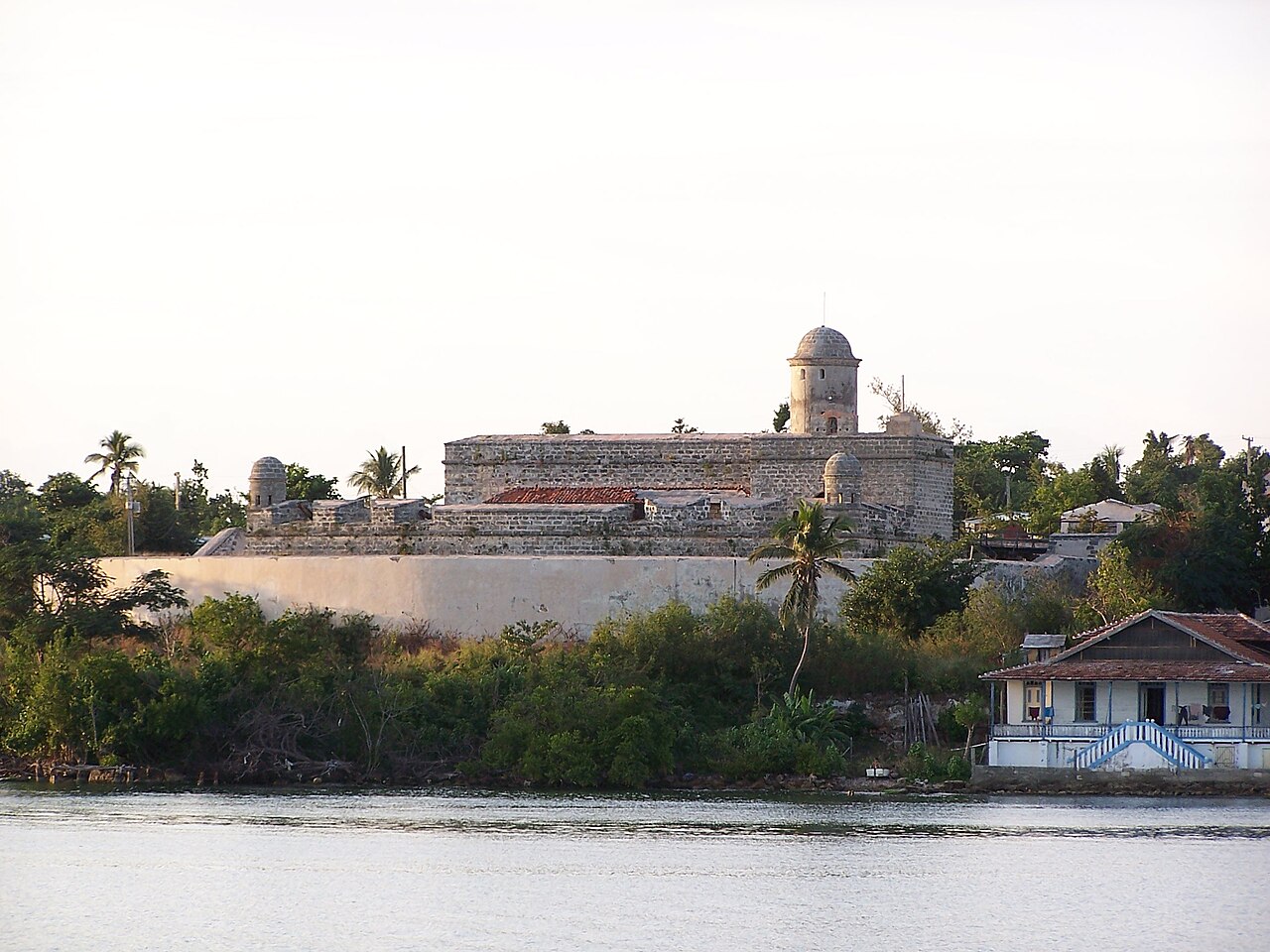
Jagua Castle
Jagua Castle, also known as Castillo de Jagua or by its full name Castillo Nuestra Señora de los Ángeles de Jagua, is a significant 18th-century fortress located on a hill at the entrance of the bay of Cienfuegos, in the small village of Jagua, Cuba. This castle was strategically built to guard the bay against pirate attacks before the establishment of the town of Cienfuegos in 1819.
Construction and design
The castle was constructed between 1733 and 1745 under the direction of the French military engineer Don Jose Tantete Duvillier, commissioned by the Spanish crown. It was built on foundations laid in 1729 by another engineer, Don Bruno Caballero y Elvira. This timeline places the castle firmly in the post-Renaissance period, reflecting the military architectural styles and defensive needs of the early 18th century.
Jagua Castle is notable for its wooden drawbridge that spans a dry moat, a feature that remains functional today, which is uncommon among Caribbean fortifications. The castle's design includes multiple levels armed with heavy artillery: ten large caliber cannons were installed, including four 18-pounders on the upper level and a combination of four 24-pounders and two 8-pounders on the lower level. These armaments were intended to provide a strong defense against pirate ships attempting to enter the bay.
Historical significance and military role
Upon completion, Jagua Castle was ranked as the third most important fortress in Cuba, following the El Morro Castle in Havana and the El Morro Castle in Santiago de Cuba. Its primary role was to protect the bay from pirate incursions, a frequent threat in the Caribbean during the 18th century. The castle successfully repelled several pirate attacks throughout its active military history.
The first commander of the castle was Don José Castilla Cabeza de Vaca, who oversaw its initial defensive operations. Besides its military function, the castle also served as a prison at various points in its history, reflecting its multipurpose use in colonial Cuba.
Architectural features and preservation
The fortress is constructed with thick stone walls typical of Spanish colonial military architecture, designed to withstand cannon fire and sieges. Its elevated position on a hill provided commanding views of the bay and surrounding sea approaches, crucial for early detection of enemy ships.
In the 1990s, Jagua Castle underwent restoration efforts that revived its structure and allowed for the establishment of a small museum and a restaurant within its premises. Today, only the museum remains operational, offering visitors insight into the castle's history and its role in Cuba's colonial defense system. The castle currently shows signs of wear and would benefit from further restoration to preserve its historical fabric.
Visiting jagua castle
Visitors to Jagua Castle can explore the fortress for a small entrance fee. The site offers a peaceful experience in a quiet village setting, away from the busier tourist centers. The castle's unique features, such as the functioning wooden drawbridge and its well-preserved artillery placements, make it an interesting destination for those interested in military architecture and Caribbean colonial history.
The surrounding area near Cienfuegos provides additional cultural and natural attractions, making a visit to Jagua Castle a worthwhile part of exploring southern Cuba.
Frequently asked questions (FAQ)
- When was Jagua Castle built and by whom?
- Jagua Castle was constructed between 1733 and 1745 by French military engineer Don Jose Tantete Duvillier on foundations laid in 1729 by Don Bruno Caballero y Elvira.
- What is unique about Jagua Castle's architecture?
- The castle features a still functioning wooden drawbridge over a dry moat, which is rare among Caribbean fortifications, along with thick stone walls and heavy artillery placements.
- Can visitors enter Jagua Castle and what can they see?
- Yes, visitors can enter the castle for a small fee to explore its museum, see the artillery, and experience the historic drawbridge and defensive structures.
- What was the primary purpose of Jagua Castle?
- The castle was built to protect the bay of Cienfuegos from pirate attacks and served as an important military fortification in colonial Cuba.
- Has Jagua Castle been restored?
- The castle was restored in the 1990s, with a museum and restaurant established; currently, only the museum remains, and the castle would benefit from further restoration.
Information
Ticket prices
Small fee
Architect
Don Jose Tantete Duvillier
Loading map...
Visitor reviews
No reviews yet. Been here? Write the first review and help other travelers!
Write the first reviewVisited this castle? Share your experience
Your review helps other travelers and adds first-hand knowledge to our encyclopedia.