El Morillo Castle

El Morillo Castle in Matanzas, Cuba
Matanzas, Matanzas, Cuba
Post-Renaissance (17th–18th c.)
Well Preserved

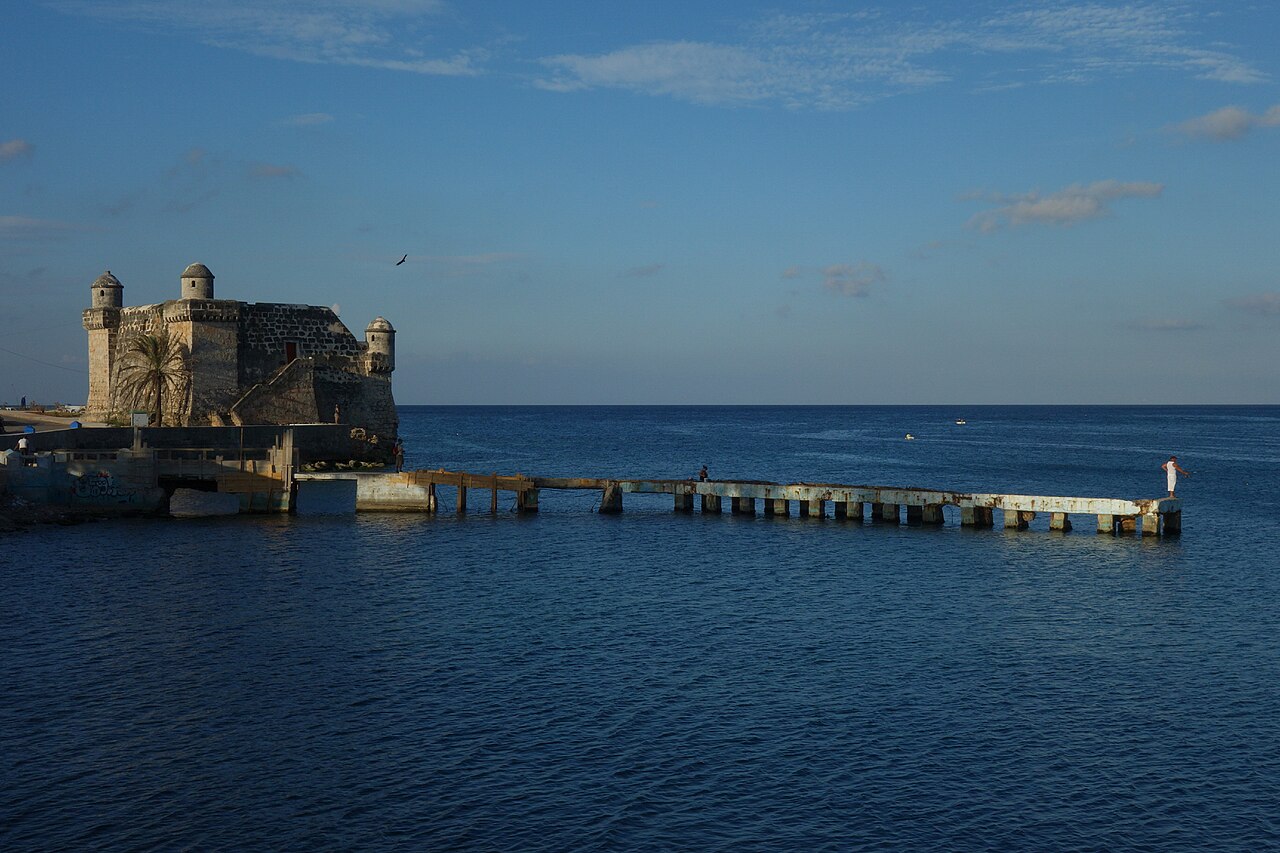
El Morillo Castle, also known locally as Castillo del Morillo, is a historic fortification located several kilometers east of the city of Matanzas in Cuba. It stands strategically at the mouth of the Canímar river, overseeing the bay opposite the San Severino Castle, which guards the other side. This positioning underscores its historical role in coastal defense during the post-Renaissance period, particularly against pirate incursions that threatened the region.

Origins and early construction

The fort was originally constructed in 1720 as a small but vital military installation. Its primary purpose was to protect the entrance to the Canímar river and the surrounding area from pirate attacks, a common threat in the Caribbean during the 18th century. The original structure was modest, reflecting the limited resources and the specific defensive needs of the time.

Reconstruction and architectural evolution

Between 1776 and 1807, El Morillo Castle underwent significant rebuilding. These renovations likely enhanced its defensive capabilities and adapted the fort to evolving military technologies and threats. The current form of the castle, which dates back to around 1830, reflects these changes and represents the fort's final major architectural phase. Although not large or elaborate compared to other Caribbean fortresses, it exhibits typical features of coastal forts of its era, including thick stone walls, bastions, and a strategic vantage point overlooking the water.

Historical significance and notable events

El Morillo Castle is not only significant for its military history but also for its connection to Cuban political history. In 1935, two Cuban revolutionaries, Antonio Guiteras Holmes and Carlos Aponte Hernández, were captured and executed near the nearby bridge over the Canímar river. They had come to the area seeking a boat to escape to Mexico. This event ties the castle to the broader narrative of Cuban resistance and revolutionary movements in the early 20th century.

Current use and visitor experience

Today, El Morillo Castle functions as a small museum that highlights both its own history and the archaeological heritage of the surrounding region. The museum features exhibits dedicated to the lives and legacies of Guiteras and Aponte, as well as displays related to the indigenous peoples who inhabited the area before European colonization. Visitors can explore the fort and its museum for a modest entrance fee.

The museum is managed by local Cuban guides who provide engaging tours in Spanish, offering insights into the castle's past and the cultural context of the region. While the fort itself is relatively small and not as architecturally grand as other Caribbean forts, it offers a meaningful glimpse into Cuba's colonial military history and revolutionary heritage.

Architectural features and layout

El Morillo Castle is classified as a lowland castle, built on flat terrain near the coast. Its design includes thick masonry walls constructed to withstand cannon fire and attacks from pirates. The fort's layout is compact, with bastions positioned to provide overlapping fields of fire across the river mouth and bay. Defensive features such as embrasures for cannons and a central courtyard are present, typical of 18th-century Caribbean fortifications.

Preservation and cultural importance

The castle is currently in a well-preserved state, maintained as a cultural and historical site. Its preservation allows visitors to appreciate the military architecture of the post-Renaissance period in the Caribbean context. Additionally, the site's archaeological exhibits contribute to understanding the pre-colonial history of the Matanzas region, making El Morillo Castle an important location for both military and cultural heritage in Cuba.

Frequently asked questions (FAQ)

How do I get to El Morillo Castle?
El Morillo Castle is located in Matanzas, Cuba, and can be reached by car or public transportation from Havana, which is about 90 kilometers away. Local taxis and buses frequently service the route, making it convenient for visitors. Once in Matanzas, the castle is situated near the waterfront, easily accessible on foot.
What is the historical significance of El Morillo Castle?
El Morillo Castle, built in the late 17th century, was designed to protect the bay of Matanzas from pirate attacks. It showcases the strategic military architecture of its time and reflects the colonial history of Cuba. The castle is an important symbol of the region's defense mechanisms during the colonial era.
When was El Morillo Castle constructed?
Construction of El Morillo Castle began in 1701 and was completed in 1720. It was one of the first fortifications built in the area, aimed at safeguarding the port of Matanzas. Over the years, it has witnessed numerous historical events, contributing to its significant heritage.
Can I visit El Morillo Castle?
Yes, El Morillo Castle is open to visitors, offering a glimpse into its rich history and stunning architecture. Guided tours are available to enhance your experience and provide deeper insights into its past. Be sure to check the current visiting guidelines before planning your trip.
Why is El Morillo Castle considered an architectural landmark?
El Morillo Castle is renowned for its well-preserved fortifications and unique baroque-style architecture. Its strategic design includes thick walls, bastions, and a commanding view of the bay, reflecting the military engineering of the 18th century. These features make it a notable example of colonial military architecture in Cuba.
Is it possible to access El Morillo Castle for people with disabilities?
El Morillo Castle has limited accessibility due to its historical structure and location on elevated terrain. While some areas may be reachable, it is advisable to contact the site in advance to inquire about specific accommodations. Visitor services strive to assist those with mobility challenges as best as possible.
What are the opening hours of El Morillo Castle?
El Morillo Castle typically opens to visitors from 9 AM to 5 PM, Tuesday through Sunday. It is closed on Mondays, so plan your visit accordingly. Always check for any seasonal changes in hours or special holiday closings before you go.
What are the ticket prices for El Morillo Castle?
Admission to El Morillo Castle is generally affordable, with tickets usually costing around 5 CUC for adults. Discounts may be available for students and seniors, so be sure to ask at the entrance. It's a small price to pay for the historical and cultural insights provided by this landmark.
What are some nearby attractions to El Morillo Castle?
Nearby attractions include the beautiful beaches of Matanzas and the historic city center, which features colonial-era architecture. Visitors can also explore the nearby San Juan River and various parks in the area. These sites make for a delightful day trip after visiting the castle.

Information

Lowland Castle

Loading map...

Visitor reviews

No reviews yet. Been here? Write the first review and help other travelers!

Write the first review

Visited this castle? Share your experience

Your review helps other travelers and adds first-hand knowledge to our encyclopedia.

Write a review

(5/5)

0/2000 characters

Your review will be visible after admin approval

Nearby castles

5.9 km

San Severino Castle

Matanzas, Cuba

San Severino Castle, known locally as Castillo de San Severino, is a historic fortress located in the city of Matanzas, Cuba. This 18th-century fortress was built to protect the young town of Matanzas from pirate attacks and foreign invasions, reflecting the strategic military concerns of the Spanish Crown in the Caribbean during the colonial period. Early history and construction The Spanish Crown authorized the construction of a defensive fortification on the Bay of Matanzas in 1682 to safeguard the newly established settlement. Initial construction began in 1693, but progress was halted in 1697 due to insufficient funds and manpower. The project was revived in 1731 under the direction of the military engineer Antonio Arredondo. After years of work, the fortress was completed in 1745, embodying the military architectural principles of the time. Architectural features and design San Severino Castle is characterized by its robust bastioned fortress design typical of Spanish colonial military architecture. It is surrounded by a dry moat, which originally was filled with water, providing a defensive barrier against attackers. The main entrance, once lapped by the bay's waters, became separated from the water by a road constructed in 1910. The fortress includes thick stone walls, defensive battlements, and strategically placed gun emplacements designed to repel naval assaults and pirate raids. Military engagements and damage In 1762, during the British occupation of Cuba in the Seven Years' War, the castle suffered significant damage. The Spanish commander Antonio Garcia Solis deliberately damaged the fort using dynamite to prevent it from falling intact into British hands. This act reflects the castle's importance as a military asset and the desperate measures taken during wartime. Later uses and modifications Following the British occupation, reconstruction efforts began in 1772 led by engineer Joaquin de Perazas. Between 1774 and 1793, the fortress served as a customs office, highlighting its role in controlling maritime trade and taxation. From 1821 until the 1980s, the castle was repurposed as a prison, marking a significant shift from military to civil use. This long period as a penitentiary altered the internal structure to accommodate inmates. Current status and museum Today, San Severino Castle is a partially preserved historical site that houses a small museum dedicated to its own history and the broader context of slavery in Cuba. Visitors can explore limited areas of the fortress, including some courtyards and ground floors, although access is restricted in parts. The site charges a modest entrance fee, with an additional charge for photography permissions. Visitor experience and accessibility The castle's location near the city center of Matanzas makes it accessible to tourists interested in colonial history and military architecture. However, the restricted access to certain sections limits the visitor experience. Despite this, the museum provides valuable insights into the fortress's role in Cuban history and the legacy of slavery. Historical significance San Severino Castle stands as a testament to the defensive strategies employed by the Spanish Empire in the Caribbean. Its construction and use reflect the geopolitical tensions of the 17th and 18th centuries, including threats from pirates and European rivals. The castle's later adaptation as a prison also offers a window into the social and political changes in Cuba through the 19th and 20th centuries.

Late Medieval (14th–15th c.)
Details
82.1 km
Cojímar Tower — Cuba castle

Cojímar Tower

Cojímar, Cuba

Cojímar Tower, locally known as Torreón de Cojímar, stands as a significant 17th-century coastal fortress located at the seafront of the village of Cojímar in Cuba. It is strategically positioned east of the old town of Havana, guarding the mouth of the Cojímar river. This tower played a vital role in the defensive network protecting Havana from maritime attacks during the Renaissance period. Historical context and strategic importance The origins of Cojímar Tower are closely tied to the evolving military needs of Havana in the early 17th century. The idea to fortify the mouths of the Cojímar and La Chorrera rivers, located east and west of Havana respectively, was first proposed by Governor Don Pedro Valdés. This initiative aimed to safeguard Havana from potential English naval incursions during a period of intense colonial rivalry in the Caribbean. Although the initial project was halted following the end of hostilities with England, renewed concerns about threats from the Dutch navy prompted further action. In 1633, Captain-General Marquess de Cadereyta and Admiral Carlos de Ibarra inspected Havana's existing fortifications, including La Fuerza, La Punta, and El Morro. They identified vulnerabilities along the eastern and western river mouths where enemy landings could bypass the main fortresses. Following their recommendations, Governor Francisco Riaño Gamboa received a royal decree in 1635 mandating the construction of Cojímar and Chorrera Towers. However, actual construction was delayed until 1646, when fears of Dutch naval aggression intensified under Governor Don Álvaro de Luna y Sarmiento. The towers were intended to prevent enemy forces from landing troops who could launch surprise attacks on Havana's defenses. Architectural features and design Cojímar Tower exemplifies typical coastal fortress architecture of the Renaissance era in the Caribbean. It was designed to serve as a watchtower and artillery platform, commanding clear views over the sea approaches and the river mouth. Its robust masonry walls were built to withstand cannon fire and to provide a defensible position for a small garrison. The tower's compact, circular or polygonal structure allowed for 360-degree surveillance and firing range. It likely featured battlements and embrasures for cannons and muskets. Its location on the seafront enabled it to coordinate with other fortifications in Havana's defensive system, creating overlapping fields of fire to deter enemy ships. While specific architectural details are limited due to restricted access, the tower's enduring presence reflects the strategic military engineering principles of the period, emphasizing functionality and resilience against naval threats. Military role and historical significance Throughout its history, Cojímar Tower functioned as a critical sentinel point guarding Havana's eastern maritime approaches. Its primary role was to detect and repel enemy landings by English, Dutch, or other hostile forces seeking to exploit less defended coastal areas. The tower's construction was part of a broader Spanish colonial strategy to fortify Havana, a key port and naval base in the Caribbean. By securing the river mouths, the Spanish aimed to prevent surprise attacks that could circumvent the main fortresses and threaten the city. Although there are no records of significant battles involving Cojímar Tower, its presence contributed to the deterrence of enemy incursions and the overall security of Havana during a volatile period of colonial competition. Current status and cultural relevance Today, Cojímar Tower remains a prominent historical landmark, though it is not generally accessible to the public as it is reportedly still used by military or police forces. Its preservation status is generally considered well preserved, maintaining its structural integrity despite centuries of exposure to the maritime environment. The tower also holds cultural significance as part of the village of Cojímar, a location famously associated with the American writer Ernest Hemingway. Hemingway often launched his fishing expeditions from Cojímar, adding a layer of literary heritage to the site. Visitors to the area can appreciate the tower's commanding position overlooking the sea and the village's picturesque coastal charm, linking Cuba's colonial past with its vibrant cultural present. Relationship with Chorrera Tower and Havana's fortifications Cojímar Tower is closely linked historically and functionally with Chorrera Tower, located at the mouth of the La Chorrera river west of Havana. Together, these towers formed a defensive pair guarding strategic river entrances that were vulnerable to enemy landings. This defensive strategy complemented the more massive fortresses of La Fuerza, La Punta, and El Morro, which protected Havana's harbor and city center. The smaller towers like Cojímar and Chorrera filled critical gaps in the defensive perimeter, enhancing the overall security network. The coordinated defense system reflects the Spanish Crown's comprehensive approach to colonial military architecture in the Caribbean during the Renaissance and early colonial periods.

Renaissance (15th–17th c.)
Details
85.5 km
Castillo de Averhoff — Cuba castle

Castillo de Averhoff

, Cuba

Castillo de Averhoff is a historic hill castle located in Cuba, known for its strategic position and colonial military architecture. Though the exact city location is not widely documented, the castle is an important example of Spanish colonial fortifications in the Caribbean region. Historical context and significance The castle was constructed during the period of Spanish colonial rule, likely in the 17th or 18th century, when fortifications were essential for protecting valuable territories and trade routes from pirates and rival colonial powers. Castillo de Averhoff served as a defensive stronghold designed to guard the surrounding area and provide a vantage point over the landscape, which is typical of hill castles built to exploit natural elevation for military advantage. Its strategic location allowed for early warning of approaching threats and facilitated communication with other nearby fortifications. The castle's role in regional defense reflects the broader military and geopolitical dynamics of the Caribbean during the colonial era, including conflicts between Spain, Britain, and other European powers. Architectural features and design The castle exhibits characteristics common to colonial military architecture in the Caribbean, including thick stone walls designed to withstand cannon fire and a compact layout optimized for defense. The use of local materials and adaptation to the terrain are notable features of its construction. Castillo de Averhoff likely includes bastions or angled walls to cover multiple approaches, a central courtyard, and possibly a keep or main tower serving as the last line of defense. The elevated position enhances visibility and defensive capabilities, consistent with the hill castle classification. While detailed architectural plans are scarce, the castle's surviving elements demonstrate a blend of functional military design and colonial aesthetics, reflecting the practical needs of defense combined with the stylistic influences of the period. Preservation and current status The current condition of Castillo de Averhoff is not extensively documented, though it is generally considered to be partially preserved or in a state of ruins. Efforts to maintain or restore such colonial fortifications in Cuba vary, often depending on local resources and tourism development priorities. As a historic site, the castle holds cultural and heritage value, representing the colonial military history of Cuba and the broader Caribbean. Visitors interested in colonial fortifications and Caribbean history may find the site significant, though access and facilities might be limited due to its less prominent status compared to other well-known forts. Castillo de Averhoff in the context of Cuban fortifications Cuba is home to several important colonial fortresses, including the famous Castillo del Morro and Fortaleza de San Carlos de la Cabaña in Havana. Castillo de Averhoff contributes to this network of defensive structures that protected the island from naval attacks and invasions. Its location on a hill is typical of many Spanish fortifications, which favored elevated sites for their defensive advantages. This castle complements the larger system of forts by covering strategic inland or coastal approaches, depending on its exact location. Visiting information and accessibility Due to limited documentation, specific visiting hours and ticket prices for Castillo de Averhoff are not well known. Potential visitors should seek local guidance or tourism offices for the most current information. The site may appeal to those interested in off-the-beaten-path historical locations and colonial military architecture. Nearby attractions Visitors to the region may also explore other colonial-era sites and natural landmarks, enriching their understanding of Cuba's historical landscape and cultural heritage.

Post-Renaissance (17th–18th c.)
Details