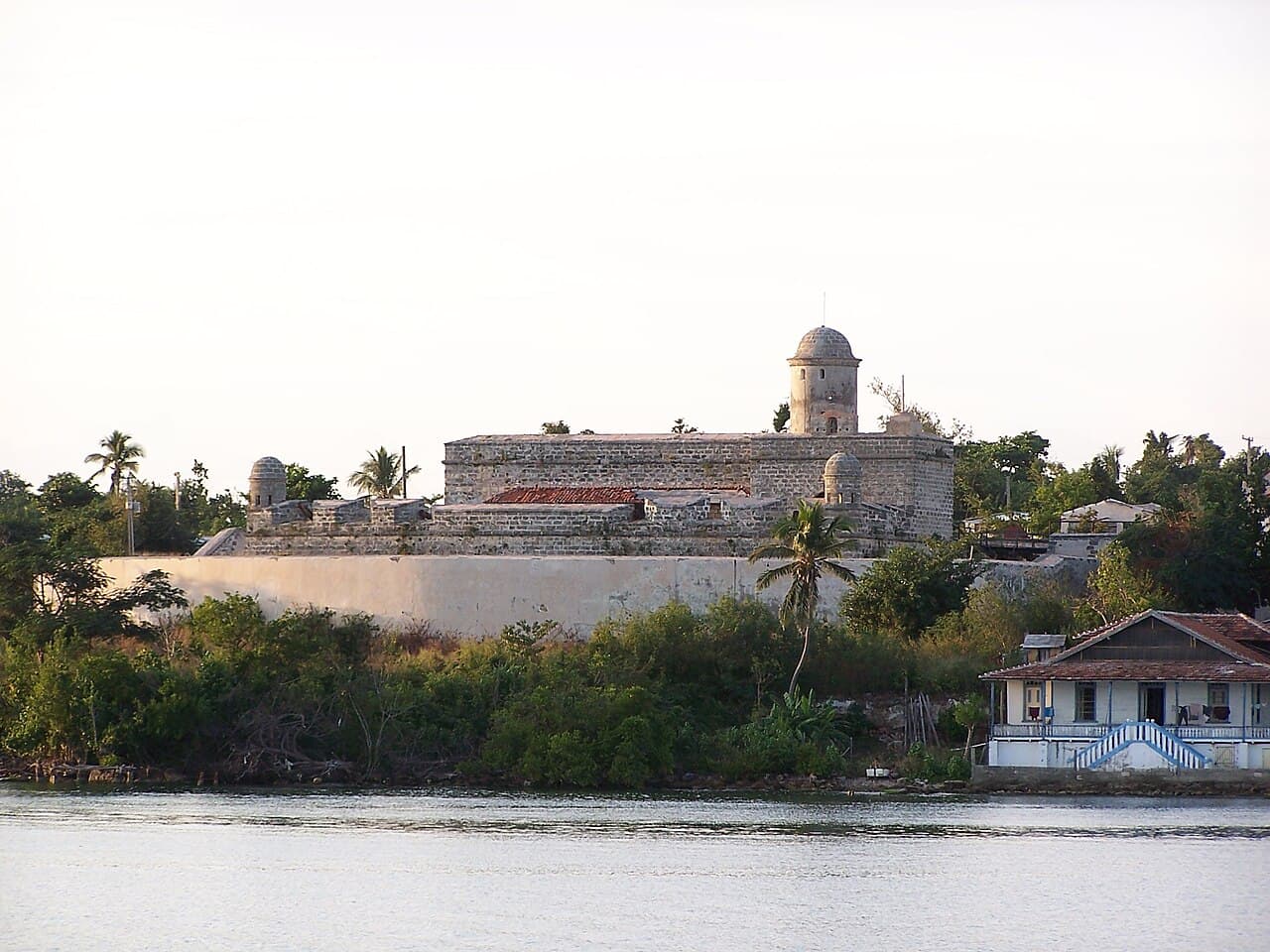
Castillo de Jagua
Castillo de Jagua, also known as the Castle of Our Lady of the Angels of Jagua, is a prominent 18th-century fortress situated near the entrance to Cienfuegos Bay on the southern coast of Cuba. Constructed in 1742, this castle was strategically placed to guard the bay and the nearby port of Jagua against pirate attacks and foreign invasions during the post-Renaissance period. Its location near the water made it a critical defense point for the growing Spanish colonial interests in the Caribbean.
Historical background and strategic importance
The castle was commissioned by the Spanish Crown as part of a broader effort to fortify the Caribbean coastline during the 18th century. At that time, the region was vulnerable to frequent pirate raids and naval conflicts between European powers. Castillo de Jagua served as a military stronghold to protect the valuable port of Jagua and the city of Cienfuegos, which was an important hub for trade and shipping.
Its original name, Castillo de Nuestra Señora de los Ángeles de Jagua, reflects the common practice of dedicating fortresses to religious figures for protection. The castle's presence helped secure Spanish control over the bay and deterred attacks, contributing to the stability and economic development of the area.
Architectural features and design
Castillo de Jagua is classified as a hill castle, built on elevated terrain overlooking the bay, which provided commanding views of the surrounding sea and land approaches. This vantage point was essential for early detection of enemy ships and for coordinating defensive actions.
The fortress exhibits typical characteristics of 18th-century military architecture in the Caribbean, combining functionality with robust construction. It features thick stone walls designed to withstand cannon fire, bastions for mounting artillery, and a moat that enhanced its defensive capabilities. The layout includes a central courtyard, barracks, and storage areas for weapons and supplies.
The castle's design reflects the influence of European fortification principles adapted to the tropical environment. The use of local materials and the integration of natural landscape elements helped the fortress blend into its surroundings while maintaining its defensive strength.
Defensive structures
The fortress includes several key defensive elements such as bastions positioned at strategic points to provide overlapping fields of fire. The entrance gate is heavily fortified, and the walls are punctuated by embrasures for cannons and muskets. The moat, which surrounds the castle on three sides, was originally filled with water from the nearby bay, adding an additional obstacle for attackers.
Role in Cuban history
Throughout the 18th and 19th centuries, Castillo de Jagua played a vital role in the defense of the southern coast of Cuba. It was actively used during periods of conflict, including skirmishes related to piracy and colonial power struggles. The fortress also served as a symbol of Spanish authority in the region.
Over time, as naval technology and military tactics evolved, the castle's strategic importance diminished. However, it remained a significant historical monument and a reminder of Cuba's colonial past.
Preservation and current status
Today, Castillo de Jagua is well preserved and functions as a cultural and historical site open to visitors. Its preservation allows for the study and appreciation of Spanish colonial military architecture and the history of Cuba's coastal defenses.
The castle is accessible to tourists and offers panoramic views of Cienfuegos Bay and the surrounding landscape. Efforts have been made to maintain its structural integrity and to provide interpretive information to enhance public understanding of its historical context.
Visitor information
Visitors to Castillo de Jagua can explore the fortress grounds, including the bastions, walls, and interior courtyards. The site often hosts guided tours that explain the castle's history, architecture, and role in regional defense. The location is also popular for photography due to its scenic views and historic ambiance.
Frequently asked questions (FAQ)
- What is the historical significance of Castillo de Jagua?
- Castillo de Jagua, built in the late 17th century, served as a key defensive structure to protect the city of Cienfuegos from pirates and foreign invasions. It reflects the colonial military architecture of the time and is a UNESCO World Heritage Site, showcasing Cuba's rich cultural heritage.
- When was Castillo de Jagua constructed?
- Construction of Castillo de Jagua began in 1700 and was completed in 1745. The castle was strategically built on the entrance of the Bay of Cienfuegos, making it a vital point for maritime defense during the colonial period.
- What are the opening hours for Castillo de Jagua?
- Castillo de Jagua is typically open to visitors from 9 AM to 5 PM daily. However, it's advisable to check ahead for any changes in hours, especially during holidays or special events.
- Can I visit Castillo de Jagua year-round?
- Yes, Castillo de Jagua is open for visitors throughout the year. However, the best time to visit is during the dry season from November to April, when the weather is more pleasant for exploring the grounds.
- How do I get to Castillo de Jagua?
- You can reach Castillo de Jagua by taking a short boat ride from Cienfuegos, which offers a scenic view of the bay. There are also local taxis and guided tours available that provide transportation to the castle.
- What are the ticket prices for visiting Castillo de Jagua?
- The entrance fee to Castillo de Jagua is relatively affordable, usually ranging from 3 to 5 CUC for foreign visitors. This fee includes access to the castle and its scenic viewpoints, making it a worthwhile experience.
- Is Castillo de Jagua accessible for individuals with mobility challenges?
- While Castillo de Jagua has some pathways that are accessible, the historic nature of the site means that certain areas might be challenging for those with mobility issues. It’s best to contact the site in advance to inquire about specific accessibility options.
- What nearby attractions can I visit while at Castillo de Jagua?
- While visiting Castillo de Jagua, you can also explore the beautiful city of Cienfuegos, known for its colonial architecture and vibrant culture. The nearby Parque José Martí and the Palacio de Valle are also popular attractions that complement your visit.

Information
Loading map...
Visitor reviews
No reviews yet. Been here? Write the first review and help other travelers!
Write the first reviewVisited this castle? Share your experience
Your review helps other travelers and adds first-hand knowledge to our encyclopedia.



