Iraj Castle
Iraj Castle stands as one of the most remarkable examples of Sasanian military architecture in Iran, located near the historic municipality of Ray in the Gilan region. Constructed in the late 4th or early 5th century AD, this fortress was a critical defensive and administrative center during the Sasanian Empire, serving as a bulwark against northern nomadic invasions and a hub for military operations. Its immense scale and sophisticated design reflect the strategic importance of the site within Greater Iran during late antiquity.
The fortress's name, Iraj, evokes deep cultural and mythological roots, referencing Iraj, the son of the legendary king Fereydun from Iranian mythology. This connection is further supported by historical texts such as the Zoroastrian Vendidad, which mentions a citadel called Varena that scholars associate with Iraj Castle. The fortress was also linked to the influential House of Mihran, a noble family that played a significant role in the Sasanian political and military hierarchy.
Historical significance and role in the sasanian empire
Iraj Castle functioned primarily as a military stronghold throughout the Sasanian period, strategically positioned to control vital communication routes and serve as a base for military campaigns. Its location near Ray, an important city in ancient Iran, allowed it to monitor and repel nomadic incursions from the north, which were a persistent threat during the empire's later centuries. The fortress also served as a training ground and assembly point for troops, facilitating the mobilization and coordination of Sasanian forces.
Archaeological excavations have uncovered a wealth of material culture, including pottery shards and administrative clay documents such as ostraca and bullae, which attest to the site's active use and administrative functions. These findings highlight the fortress's dual role as both a military installation and a center of governance. Despite its prominence, the castle was abandoned by the end of the Sasanian era, with no significant reconstruction in subsequent periods.
Architectural features and fortress layout
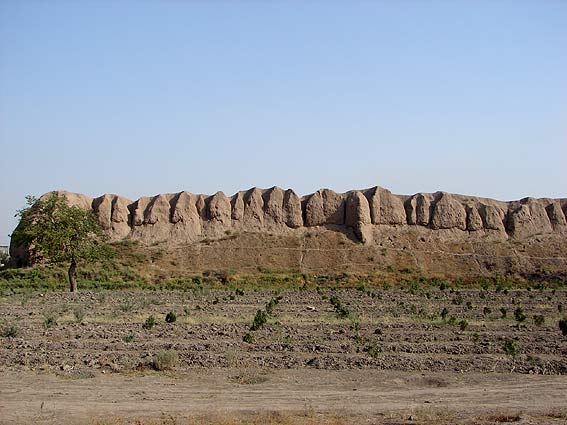
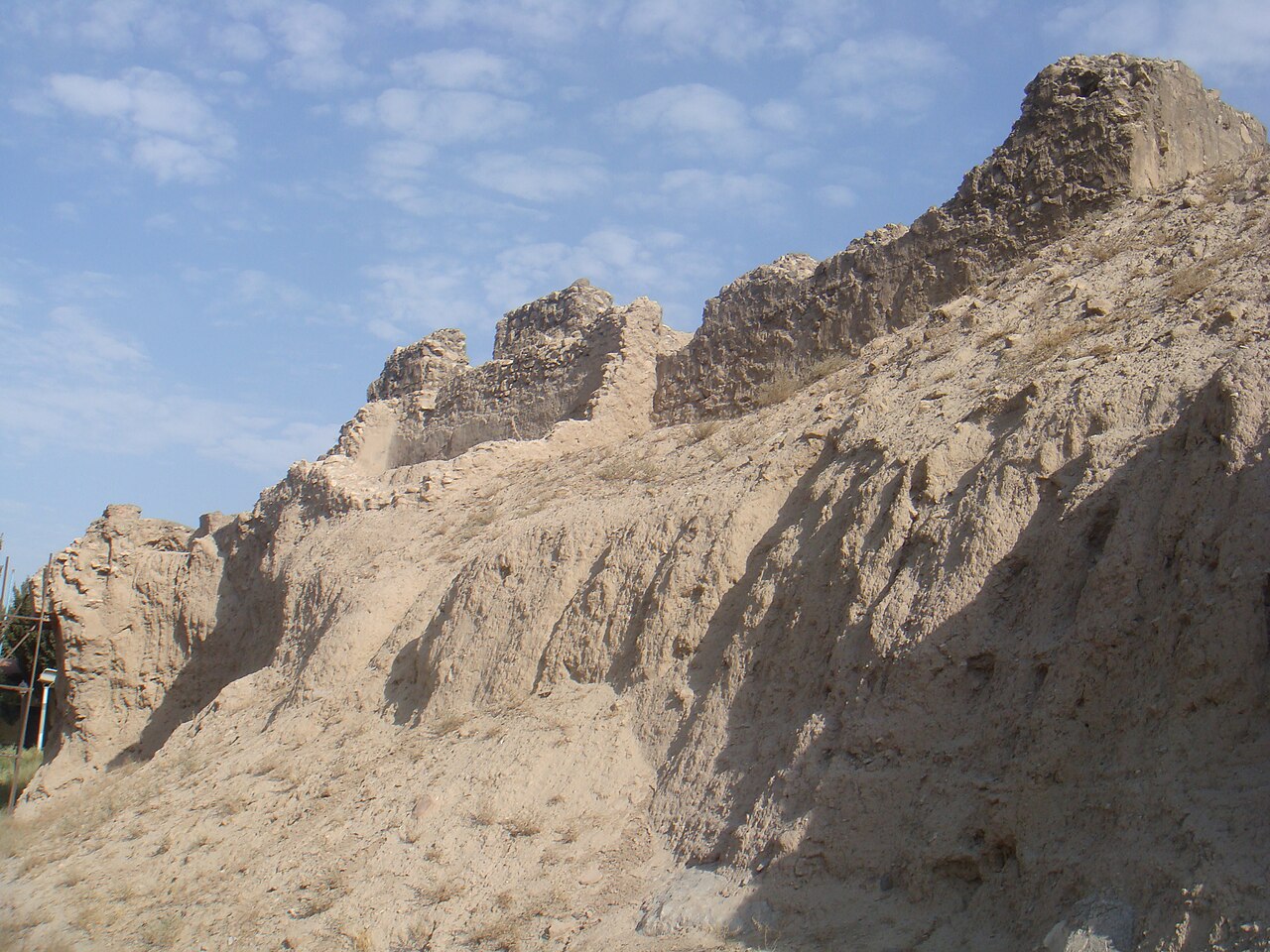
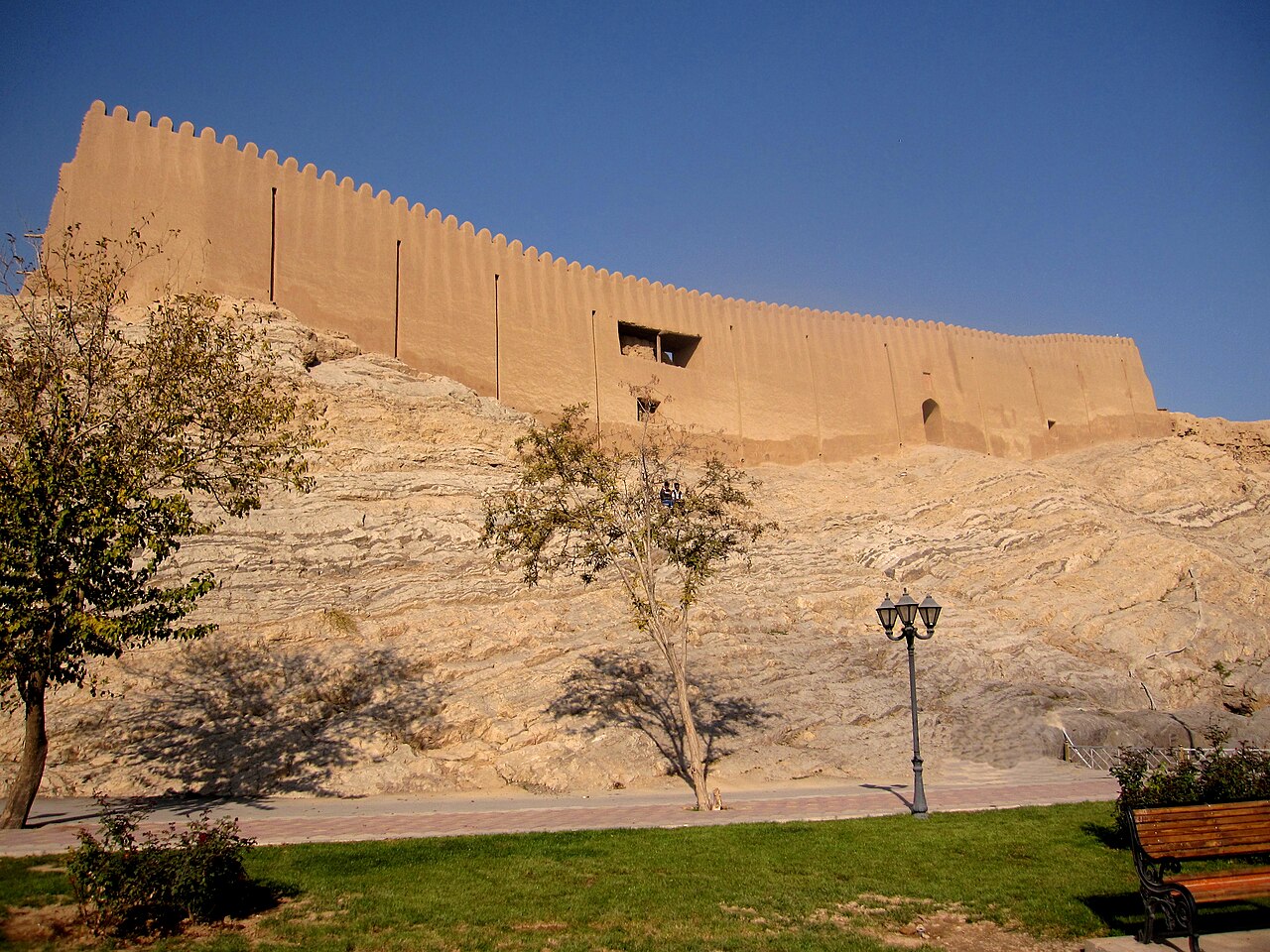
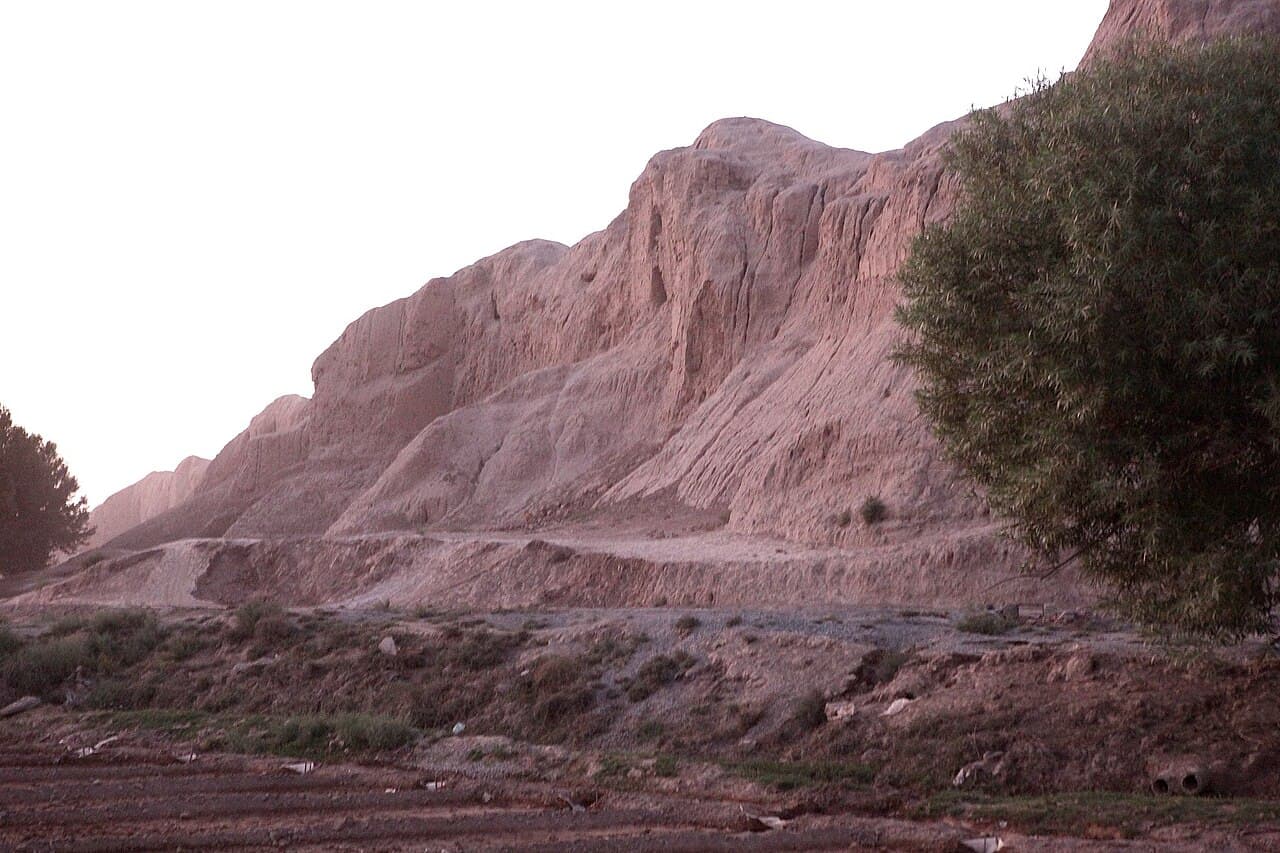
Covering an expansive area of approximately 190 to 200 hectares, Iraj Castle is recognized as the largest known fortress constructed primarily of mud-brick (adobe) worldwide. Its rectangular enclosure measures about 1,440 meters by 1,150 meters, underscoring its monumental scale as a pre-modern fortified complex. The fortress is encircled by massive defensive walls that reach heights of 16 to 25 meters and thicknesses between 15 and 22 meters, designed to withstand prolonged sieges and assaults.
The walls are reinforced by approximately 146 to 148 semicircular towers, spaced closely to provide overlapping fields of fire and enhanced defensive coverage. These towers are a distinctive feature of Sasanian military architecture, reflecting advanced knowledge of fortification principles. Embedded within the thick walls are about 828 small rooms, each roughly 12 square meters in size, connected by a network of corridors. These rooms likely served various purposes, including housing for guards, storage, and lookout posts.
The fortress's interior is predominantly an open space without permanent buildings, designed to accommodate large-scale military assemblies and encampments. It is estimated that the site could house between 2,000 and 6,000 permanent occupants within its walls, with the capacity to host up to 50,000 warriors temporarily during major military gatherings or campaigns. This flexibility highlights the fortress's role as a strategic military hub rather than a residential palace.
Originally, Iraj Castle featured four monumental gates, one on each side of the rectangular enclosure, facilitating controlled access and efficient troop movements. Today, only the main gate on the southern wall remains intact, showcasing intricate architectural details including four-tiered decorative arches between towers. The fortress was further protected by defensive ditches and outer trenches, enhancing its resilience against attackers.
Construction materials primarily included locally sourced mud-brick and clay bricks, bonded with a mortar made from mud and brick fragments. This technique was characteristic of Sasanian engineering and allowed for the rapid construction of large-scale fortifications adapted to the region's environmental conditions.
Archaeological research and preservation challenges
Modern archaeological investigations by European scholars such as Jean Deshayes and Claeys have significantly contributed to understanding Iraj Castle's historical and architectural importance. These studies have documented the fortress's layout, construction methods, and the artifacts recovered from the site, providing valuable insights into Sasanian military infrastructure.
Despite its significance, Iraj Castle faces considerable preservation challenges. The site has suffered from ongoing agricultural use, which has damaged sections of the enclosure and interior. Unauthorized excavations have further compromised the fortress's integrity, with a notable incident occurring in 2018 at the northern entrance. Additionally, a modern irrigation canal running through the site has contributed to erosion and structural instability.
Efforts to secure international heritage protection through UNESCO in 2008 were unsuccessful, largely due to these preservation issues and the continued use of the land for agriculture. These factors complicate conservation efforts and highlight the need for sustainable management to protect this unique cultural monument for future generations.
Comparative significance and related sasanian sites
Iraj Castle shares architectural and functional characteristics with other prominent Sasanian military sites, reflecting a broader pattern of fortress construction across the empire. Notable parallels include Qaleh Pol Gonbad in Iran, Torpakh Kala near present-day Derbent, and the siege camp at Hatra. These sites collectively illustrate the Sasanian emphasis on large-scale fortified complexes designed for defense, troop assembly, and regional control.
Moreover, Iraj Castle's design echoes earlier fortresses such as Akchakhan-Kala in Chorasmia, suggesting continuity and adaptation in military architecture from preceding cultures. This continuity underscores the strategic and cultural importance of fortress complexes in maintaining imperial stability and responding to external threats during late antiquity.
Today, Iraj Castle remains a testament to the engineering prowess and military organization of the Sasanian Empire. Its vast scale, sophisticated defensive features, and historical associations make it a critical site for understanding the region's ancient military history and architectural heritage.
Frequently asked questions (FAQ)
- When was Iraj Castle built and by whom?
- Iraj Castle was constructed in the late 4th or early 5th century AD by the Sasanian civilization, serving as a significant military fortress in ancient Iran.
- What is the architectural significance of Iraj Castle?
- Iraj Castle is the largest known mud-brick fortress worldwide, featuring massive walls, semicircular towers, and a vast rectangular enclosure typical of Sasanian military architecture.
- Can visitors see the original gates of Iraj Castle?
- Originally, Iraj Castle had four monumental gates, but today only the main gate on the southern wall remains intact and can be viewed by visitors.
- What challenges does Iraj Castle face in terms of preservation?
- The fortress faces preservation challenges due to ongoing agricultural use, unauthorized excavations, erosion from a modern irrigation canal, and damage from past incidents, complicating conservation efforts.
- How large is Iraj Castle and what was its capacity?
- Iraj Castle covers about 190 to 200 hectares with walls up to 25 meters high and could house between 2,000 and 6,000 permanent occupants, accommodating up to 50,000 warriors temporarily.
Photo gallery

Information
Loading map...
Visitor reviews
No reviews yet. Been here? Write the first review and help other travelers!
Write the first reviewVisited this castle? Share your experience
Your review helps other travelers and adds first-hand knowledge to our encyclopedia.