Braemar Castle
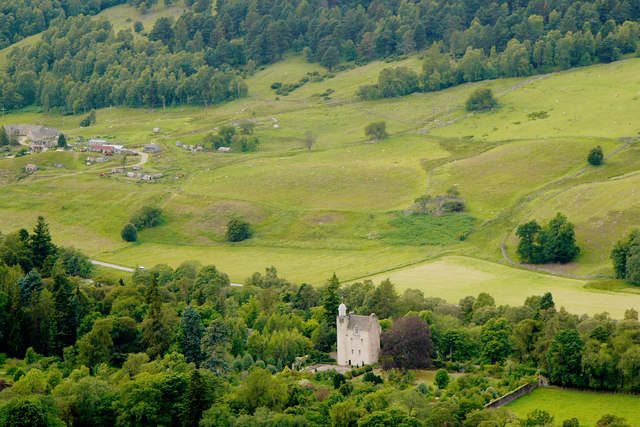
Braemar Castle stands prominently in the village of Braemar, nestled within the scenic Scottish Highlands. This historic hill castle was constructed in the early 17th century by John Erskine, 18th Earl of Mar, serving both as a fortified hunting lodge and a symbol of the Earls of Mar's regional authority. The castle's strategic location overlooking the River Dee allowed its owners to control vital routes and assert dominance over the surrounding lands.
The site of Braemar Castle holds a deep historical legacy dating back to the 11th century with the nearby Kindrochit Castle, considered one of Scotland's earliest stone fortifications. The present castle replaced earlier structures and was designed to meet the defensive needs of a turbulent era marked by clan rivalries and political upheaval.
Architectural design and defensive features
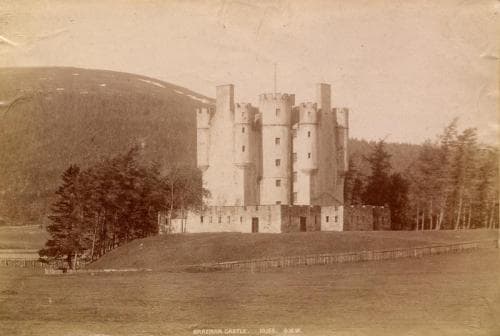
Braemar Castle is a striking example of 17th-century Scottish Renaissance military architecture, built primarily of granite and arranged in a distinctive L-plan. The castle rises five storeys high and is encircled by a star-shaped curtain wall featuring six sharply angled salients, a design influenced by contemporary European fortifications aimed at deflecting artillery fire.
The curtain wall is complemented by three-storey angle turrets at key points, enhancing the castle's defensive capabilities. The central tower incorporates a round stair tower that provides vertical access. The main entrance retains its original iron yett, a latticed gate that offered formidable protection against intruders, while many windows are secured with heavy iron grilles.
The ground floor contains stone-vaulted rooms situated within the salients of the outer wall. These rooms historically functioned as the guardroom, ammunition store, and the original kitchen. A second kitchen was added during Victorian renovations, reflecting the castle's transition from a military stronghold to a family residence. Notably, a passage floor features an iron grill granting access to the Laird's Pit, a dungeon used for detaining prisoners.
Interior rooms and historical details
The upper floors are organized with a large and a small room on each arm of the tower. The first floor houses the Dining Room and Morning Room, while the second floor contains the Laird's Day Room, the Rose Room, and a small bathroom installed in 1901. The Drawing Room on this level is notable for graffiti carved into the window shutters by British soldiers stationed at the castle, including inscriptions dating back to 1797.
The third floor features the Four Poster Bedroom, and the fourth floor contains several bedrooms: the Ladies Guest Bedroom, Gentleman's Guest Bedroom, and the Principal Bedroom. These rooms were used by the Farquharson family during their visits in the 19th and early 20th centuries.
Historical significance and jacobite involvement
Braemar Castle played a pivotal role in Scotland's turbulent history, particularly during the Jacobite risings of the late 17th and early 18th centuries. Originally a stronghold of the Earls of Mar, the castle was targeted during the first Jacobite uprising in 1689 when John Farquharson, the Black Colonel of Inverey, set fire to it to prevent its use by government forces.
During the 1715 Jacobite rebellion, the castle served as a rallying point under the leadership of the 6th Earl of Mar, who raised the Jacobite banner in Braemar. The rebellion was short-lived, ending in defeat and the forfeiture of the castle to the Crown. Subsequently, the Farquharson clan acquired Braemar Castle but left it in ruins until 1748.
Following the 1745 Jacobite uprising and the decisive Battle of Culloden, government troops garrisoned Braemar Castle to maintain order in the Highlands. The military presence lasted until 1830, after which the castle returned to the Farquharson family. This period of occupation led to significant repairs and the addition of the star-shaped curtain wall to strengthen defenses.
Restoration and modern stewardship
After the military garrison was withdrawn, the Farquharsons undertook extensive renovations to convert Braemar Castle into a comfortable family home. Architect John Adam was commissioned for restoration work in the 19th century, which included updating living quarters and adding Victorian-era amenities.
The castle gained royal prominence when Queen Victoria visited during the Braemar Gatherings, cementing its status as a notable Highland residence. Over the years, the castle hosted members of the British royal family and became a symbol of Scottish heritage.
Since 2006, Braemar Castle has been leased to the local community through Braemar Community Ltd, which has spearheaded an ambitious restoration program. The castle reopened to the public in 2008 and continues to be preserved as a cultural landmark, offering visitors insight into its rich history and architectural splendor.
Surrounding heritage and archaeological context
Nearby, the ruins of Kindrochit Castle remain a significant archaeological site, believed to be one of Scotland's oldest stone castles. Its proximity to Braemar Castle highlights the area's long-standing strategic importance and continuous occupation since the medieval period.
Braemar Castle's location near historic crossings of the Grampian Mounth underscores its role in controlling movement through the Highlands. The castle's layered history, from medieval stronghold to Jacobite bastion and Victorian residence, reflects the broader narrative of Scottish history and clan dynamics.
Visitor experience and cultural significance
Today, Braemar Castle offers visitors a unique opportunity to explore authentic Scottish history through its well-preserved rooms and evocative atmosphere. The castle's menacing exterior contrasts with its charmingly decorated interiors, where the echoes of past clan leaders and soldiers linger.
Guided tours reveal stories of the castle's turbulent past, including its role in the Jacobite risings and its transformation over centuries. Visitors can see original features such as the iron yett, stone vaults, and prisoner dungeons, providing a tangible connection to Scotland's heritage.
The castle also hosts cultural events and participates in local heritage initiatives, reinforcing its position as a vital part of the Braemar community and Scottish identity.
Frequently asked questions (FAQ)
- How do I get to Braemar Castle?
- Braemar Castle is located in the village of Braemar in Scotland. You can reach it by car via the A93 road, or by public transport with bus services available from nearby towns like Aberdeen and Blairgowrie. Additionally, there is ample parking available on-site for visitors.
- What are the opening hours of Braemar Castle?
- Braemar Castle is typically open to visitors from April to October, with specific hours varying by season. During peak summer months, it often opens from 10 AM to 5 PM. It's advisable to check the official website for the most current opening times before your visit.
- Is there an entry fee for Braemar Castle?
- Yes, there is a small admission fee to enter Braemar Castle, which helps with the maintenance and preservation of the site. Ticket prices are generally affordable, and discounts may be available for children, seniors, and families. Consider purchasing tickets online in advance to save time.
- What is the historical significance of Braemar Castle?
- Braemar Castle has a rich history dating back to the 17th century when it was built to safeguard the area and its residents. It has served various roles throughout history, including a stronghold during the Jacobite risings. Today, it stands as an important symbol of Scottish heritage and culture.
- Can I take guided tours of Braemar Castle?
- Yes, Braemar Castle offers guided tours for visitors who wish to learn more about its history and architecture. Knowledgeable guides provide insights into the castle's past and its role in Scottish history. Self-guided audio tours are also available for those who prefer to explore at their own pace.
- When is the best time to visit Braemar Castle?
- The best time to visit Braemar Castle is during the warmer months from late spring to early autumn when the weather is generally pleasant, and the gardens are in full bloom. Additionally, summer months offer the most extensive opening hours and guided tour options. However, visiting during the off-peak season can provide a quieter experience.
- Is Braemar Castle accessible for visitors with mobility challenges?
- Braemar Castle strives to be accessible to all visitors, with some facilities available for those with mobility challenges. However, because of the castle's historical nature, certain areas may have limitations. It's recommended to contact the castle in advance for specific accessibility inquiries to ensure a comfortable visit.
- What nearby attractions can I explore after visiting Braemar Castle?
- After visiting Braemar Castle, you may want to explore the stunning landscapes of the Cairngorms National Park, which offers hiking, wildlife watching, and breathtaking views. The village of Braemar itself has charming shops and cafes, as well as the annual Braemar Gathering, which celebrates Scottish culture through traditional games. Other nearby attractions include the historic Clunie Castle and the picturesque Linn of Dee.
Photo gallery

Photo by George Washington Wilson•Public domain
Information
Website
Visit websiteSources & official resources
Verify the information above using these authoritative references.
Loading map...
Visitor reviews
No reviews yet. Been here? Write the first review and help other travelers!
Write the first reviewVisited this castle? Share your experience
Your review helps other travelers and adds first-hand knowledge to our encyclopedia.