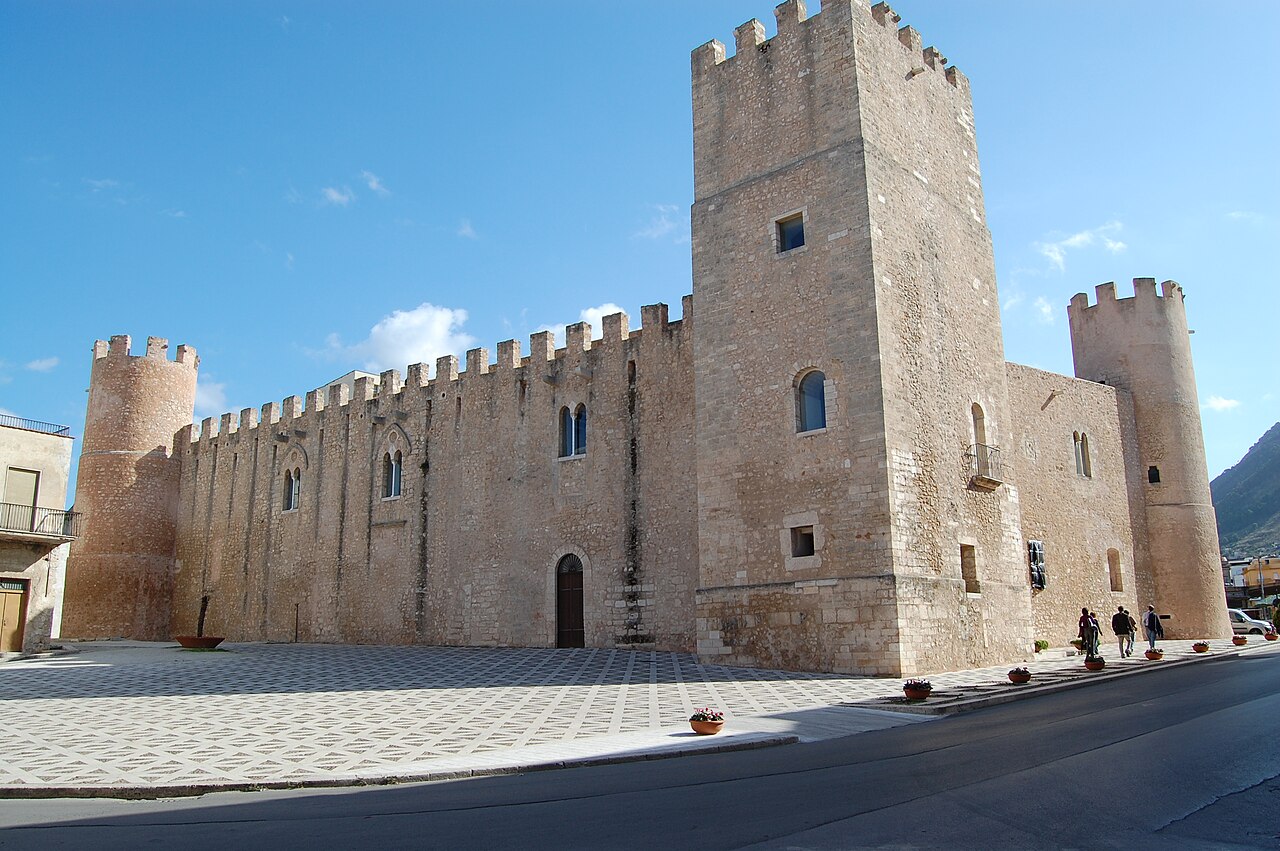
Inici Castle
Inici Castle, located on the southern slopes of Monte Inici within the municipality of Castellammare del Golfo in Sicily, Italy, is a site with a complex history that stretches back potentially to the pre-Roman age. While the current castle structure primarily dates from the 11th century, the area shows evidence of much earlier human activity, linking it to ancient settlements that enrich its historical significance.
The castle's origins are intertwined with local legends and archaeological discoveries. Some historians associate the site with the mythical city of Inico, thought to be a pre-Roman settlement, while others propose a connection to the ancient city of Atala, believed to have been founded by the Trojan figure Aceste. Archaeological finds such as tile fragments, bricks, and column bases found near the southwestern edge of the estate support the presence of earlier civilizations and continuous occupation of this strategic location.
Medieval origins and architectural evolution
The earliest documented element of the castle is its central tower, constructed around the year 1000, which served as the nucleus for subsequent expansions. This tower gained historical prominence when Emperor Charles V of Habsburg stayed there in 1535 after his conquest of Tunis. Unfortunately, the tower collapsed in 1998, but it remains a key symbol of the castle's medieval heritage.
During the Swabian period in 1234, the land around Inici changed hands when Nicoletto Asmundo, falconer to Emperor Frederick II, sold it to Gilberto Abate. The Abate family retained ownership until 1349, after which the castle passed through the Mannina family and then to the Sanclemente family through marriage. The Sanclementes were elevated to barons of Inici, and the castle became a feudal barony under Monte San Giuliano (modern-day Erice). During this time, disputes arose with residents of Erice over hunting and woodcutting rights in the surrounding lands.
17th-century transformations and Jesuit ownership
In 1597, Donna Allegranza Sanclemente donated the castle and its lands to the Jesuit order, who formally took possession after her death in 1599. The Jesuits transformed the estate into a productive agricultural hub, contributing to local economic development. They expanded the castle's facilities, adding a second courtyard in the 17th century to house stables and warehouses, as documented in a 1720 map by Samuel von Schmettau.
The Jesuits also built a chapel within the castle complex, which was remodeled in the distinctive Sicilian Baroque style. This chapel featured elaborate stucco work and fresco decorations, including frescoes painted in 1738 by Domenico La Bruna, a noted painter from Trapani. These frescoes depicted the lives of saints and were later preserved in the Mother Church of Castellammare del Golfo, highlighting their artistic and cultural value.
Later ownership and 20th-century decline
Following the Jesuit expulsion in 1767, the castle passed to Giuseppe Pappalardo in 1780 on behalf of Marquis Agostino Cardillo. The Cardillo family managed the estate until 1870, after which it was acquired by the Alliata family. The Alliatas undertook significant renovations, including enlarging the inner courtyard, reflecting the castle's ongoing importance as a residence and agricultural center.
In the 20th century, the castle remained inhabited, with about fifty to sixty residents as late as the 1960s. It supported a small community with amenities such as a post office, police station, and school. However, the 1968 earthquake caused severe damage, leading to the castle's abandonment. The deterioration culminated in the collapse of the medieval central tower in 1998, marking a significant loss to the site’s architectural heritage.
Architectural features and site layout
The castle's layout is centered around the medieval tower, which originally stood at the heart of the complex. The initial design featured a single courtyard during the 16th century. Expansion in the 17th and 18th centuries introduced a second courtyard, increasing the castle's functional space to accommodate agricultural activities, stables, and storage facilities.
Constructed mainly from stone and brick, the castle's walls and courtyards demonstrate the building techniques typical of the medieval and early modern periods in Sicily. Despite the collapse of the central tower, substantial portions of the defensive walls and courtyards remain, providing valuable insight into the castle's defensive and residential functions.
The Jesuit chapel adjacent to the tower is a notable architectural and artistic feature. Its Sicilian Baroque remodeling with intricate stucco work and 18th-century frescoes by Domenico La Bruna add cultural depth to the site. The chapel’s relocation of frescoes to the Mother Church ensures the preservation of these artworks.
Archaeological significance and cultural heritage
Archaeological remains near the southwestern boundary of the estate include fragments of tiles, bricks, and column bases, which support theories of earlier settlements predating the medieval castle. These findings link the site to the ancient city of Atala or the mythical Inico, enriching the narrative of continuous human occupation in this part of Sicily.
The castle’s layered history, from its possible pre-Roman origins, through medieval feudal ownership, Jesuit agricultural development, and modern habitation, reflects the broader historical and cultural shifts in Sicily. Today, despite its damaged condition, Inici Castle remains an important monument for understanding regional history, medieval architecture, and the impact of natural disasters on heritage sites.
Present condition and preservation challenges
Since the 1968 earthquake, the castle has been largely abandoned and suffered significant deterioration. The collapse of the central tower in 1998 was a major loss, but the remaining structures still convey the castle's historical layout and architectural evolution. Preservation efforts face challenges due to the extent of damage and the site's remote hilltop location.
Photographic and cartographic records, including the 1720 map by Samuel von Schmettau, are crucial for ongoing research and potential restoration initiatives. These documents help historians and architects reconstruct the castle’s past and guide future conservation work.
Frequently asked questions (FAQ)
- How do I visit Inici Castle?
- Inici Castle is located on Monte Inici near Castellammare del Golfo. Visitors should check local tourism resources for access information, as the site is in ruins and may have limited accessibility.
- What is the historical significance of Inici Castle?
- Inici Castle has origins dating back to the 11th century with possible pre-Roman roots. It played roles in medieval feudalism, Jesuit agricultural development, and local governance, reflecting Sicily's layered history.
- When was the central tower of Inici Castle built and what happened to it?
- The central tower was built around the year 1000 and was a key feature until it collapsed in 1998 following earthquake damage.
- Can I see the frescoes from the Jesuit chapel at Inici Castle?
- The frescoes painted by Domenico La Bruna in 1738 were relocated to the Mother Church of Castellammare del Golfo, where they can be viewed today.
- Why was Inici Castle abandoned?
- The castle was abandoned after severe damage caused by the 1968 earthquake, which made continued habitation unsafe.
Information
Current owner
Private owner
Loading map...
Visitor reviews
No reviews yet. Been here? Write the first review and help other travelers!
Write the first reviewVisited this castle? Share your experience
Your review helps other travelers and adds first-hand knowledge to our encyclopedia.