If Castle
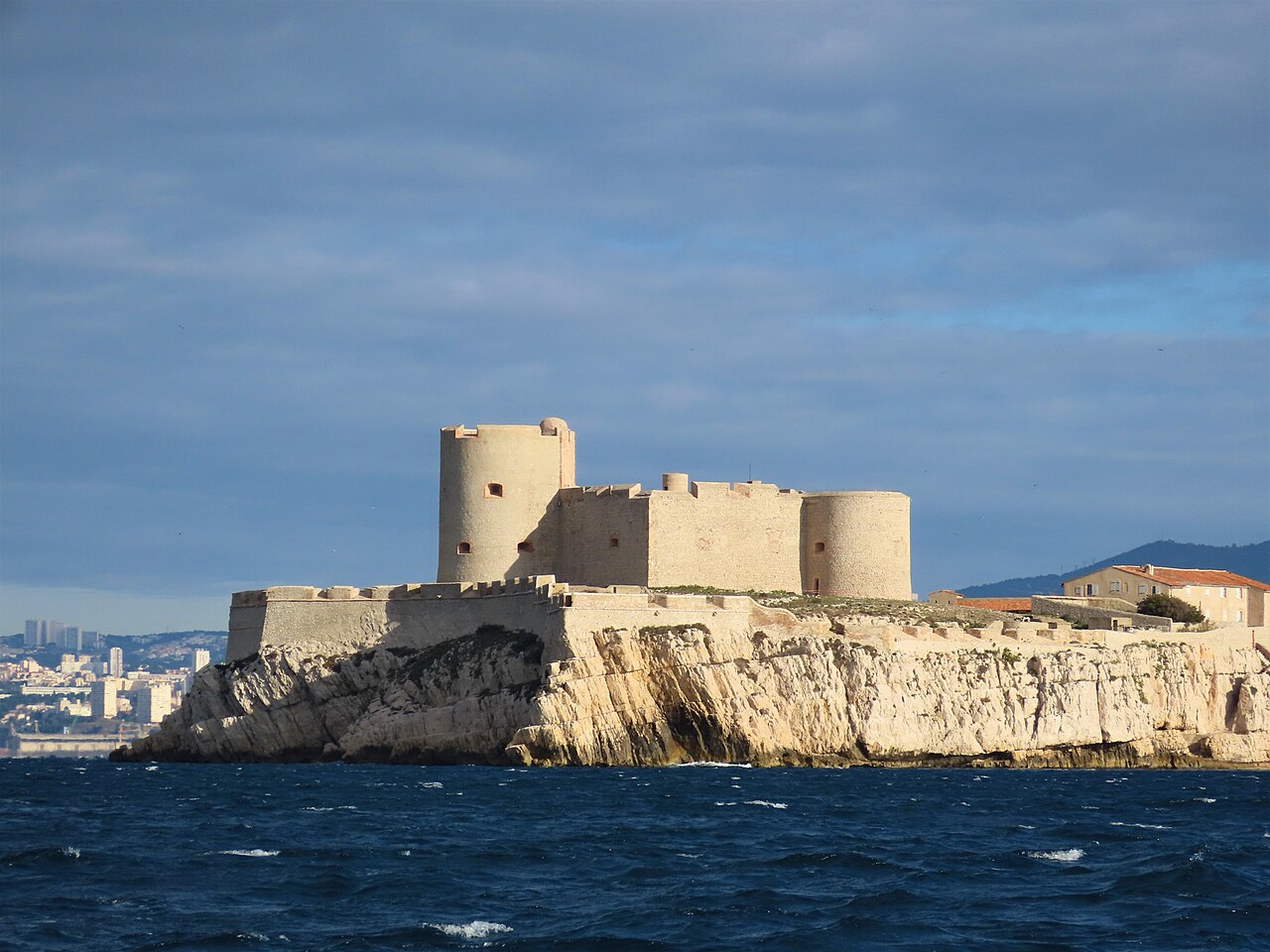
Chateau d'If stands as a remarkable example of a 16th-century Renaissance fortress located on the island of If, the smallest island in the Frioul archipelago in the Mediterranean Sea, just about one mile offshore from Marseille, France. Its strategic position in the Bay of Marseille made it an ideal site for defense and later a notorious prison. The name "If" derives from the French word for the yew tree, which historically grew on the island.
Constructed between 1524 and 1531 under the reign of King Francis I of France, the fortress was originally designed to protect the vital port of Marseille from naval attacks, particularly from the Barbary pirates and other maritime threats. Its robust stone walls, bastions, and towers reflect the military architectural principles of the Renaissance period, emphasizing both defense and control over the surrounding waters.
Architectural features and design
The Chateau d'If is characterized by its compact, rectangular layout, surrounded by thick fortified walls and punctuated by several towers that provided vantage points for surveillance and defense. The fortress includes a central courtyard and a series of underground dungeons and cells, which later served its function as a prison.
Its construction utilized local limestone, giving the fortress a distinctive pale appearance that contrasts with the deep blue of the Mediterranean. The design reflects early Renaissance military architecture, integrating traditional medieval fortification elements with innovations to counter emerging artillery technology.
Historical role as a fortress and prison
Initially built as a coastal defense fortress, Chateau d'If's role evolved over time. By the 17th century, it became infamous as a state prison, particularly for political and religious prisoners. Its isolated location on a rocky island made escape virtually impossible, enhancing its reputation as a secure detention site.
The prison housed a variety of inmates, including Huguenots during the religious conflicts of France, as well as other political prisoners throughout the centuries. The fortress's grim cells and harsh conditions contributed to its fearsome reputation.
Connection to literature and popular culture
The Chateau d'If gained worldwide fame through its prominent role in Alexandre Dumas' classic novel The Count of Monte Cristo. In the novel, the protagonist Edmond Dantès is wrongfully imprisoned in Chateau d'If, and the story of his escape and revenge has immortalized the fortress in literary history.
This association has made the castle a popular tourist destination, attracting visitors eager to explore the historical site and its literary legacy. The fortress's image is often used in films, books, and other media adaptations related to Dumas' work.
Current status and tourism
Today, Chateau d'If is a well-preserved historical monument open to the public. Visitors can reach the island by ferry from Marseille, typically taking about 20 minutes. The site offers guided tours that explore the fortress's architecture, history, and its role in French maritime defense and penal history.
The fortress's well-preserved condition allows tourists to experience the original layout, including the dungeons, courtyards, and defensive walls. The panoramic views of Marseille and the Mediterranean from the island enhance the visitor experience.
Visiting tips and accessibility
- Best time to visit: Spring through early autumn offers pleasant weather and calm seas for ferry rides.
- Access: Regular ferries depart from the Old Port of Marseille.
- Facilities: Limited amenities on the island; visitors should prepare accordingly.
- Educational value: Informative displays and guided tours provide insight into Renaissance military architecture and French history.
Significance in French heritage
The Chateau d'If is an important cultural and historical landmark that embodies key aspects of Renaissance military architecture, maritime defense, and penal history in France. Its enduring presence highlights the evolution of coastal fortifications and the complex history of political imprisonment.
As a symbol of resilience and intrigue, the fortress continues to captivate historians, architects, and visitors alike, preserving the legacy of a bygone era while inspiring contemporary appreciation for France's rich heritage.
Frequently asked questions (FAQ)
- How do I get to If Castle?
- If Castle is accessible by boat from the Old Port of Marseille. Regular ferry services operate, providing a scenic journey with stunning views of the Mediterranean Sea.
- What is the historical significance of If Castle?
- If Castle, constructed in the 16th century, is famous for its role as a fortress and prison. It is best known as the setting for Alexandre Dumas' novel "The Count of Monte Cristo," which has contributed to its popularity.
- When was If Castle built?
- The construction of If Castle began in 1527 and was completed in 1531. It was built to strengthen the defense of Marseille against potential naval attacks.
- Can I explore the interiors of If Castle?
- Yes, visitors can explore various areas of the castle, including its towers and prison cells. Guided tours are available to enrich your understanding of the castle's history and architecture.
- Why is If Castle a popular tourist destination?
- If Castle attracts tourists due to its fascinating history and association with literary works. The stunning views of the Mediterranean and the unique architectural features also enhance its appeal.
- Is it possible to visit If Castle year-round?
- If Castle is generally open to visitors throughout the year, but hours may vary by season. It is advisable to check the official website for the most current opening times before planning your visit.
- What are the ticket prices for If Castle?
- Ticket prices for If Castle are quite reasonable, typically ranging from €6 to €10 for adults. Discounts are often available for students, seniors, and children.
- What is the best time to visit If Castle?
- The best time to visit If Castle is during the spring and fall when the weather is mild. Summer can be quite hot, and the castle tends to be busier with tourists during peak season.
- Are there any nearby attractions to If Castle?
- Yes, nearby attractions include the stunning Calanques National Park and the vibrant Old Port of Marseille. These locations provide additional opportunities for exploration and enjoyment after your visit to the castle.
Information
Website
Visit websiteSources & official resources
Verify the information above using these authoritative references.
Loading map...
Visitor reviews
No reviews yet. Been here? Write the first review and help other travelers!
Write the first reviewVisited this castle? Share your experience
Your review helps other travelers and adds first-hand knowledge to our encyclopedia.