Fort Saint Nicolas
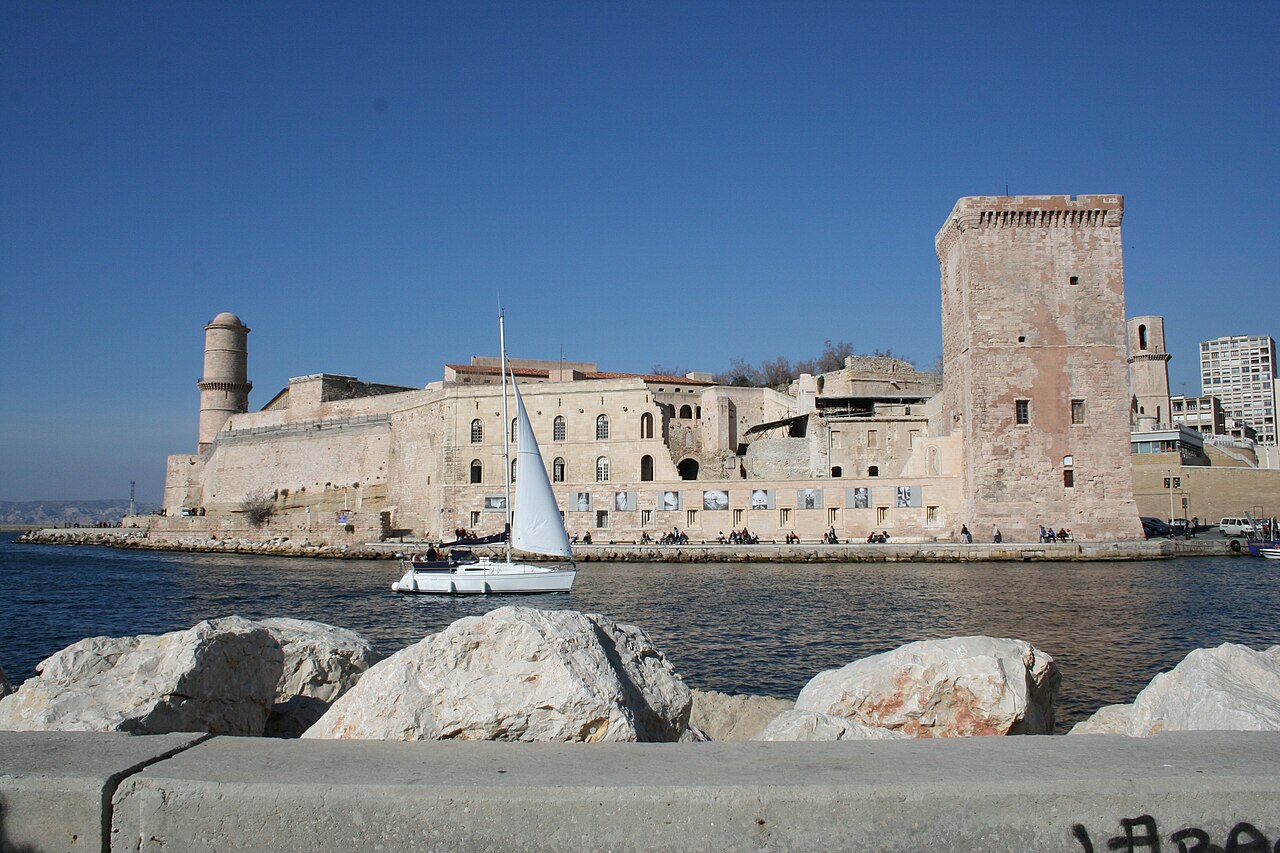
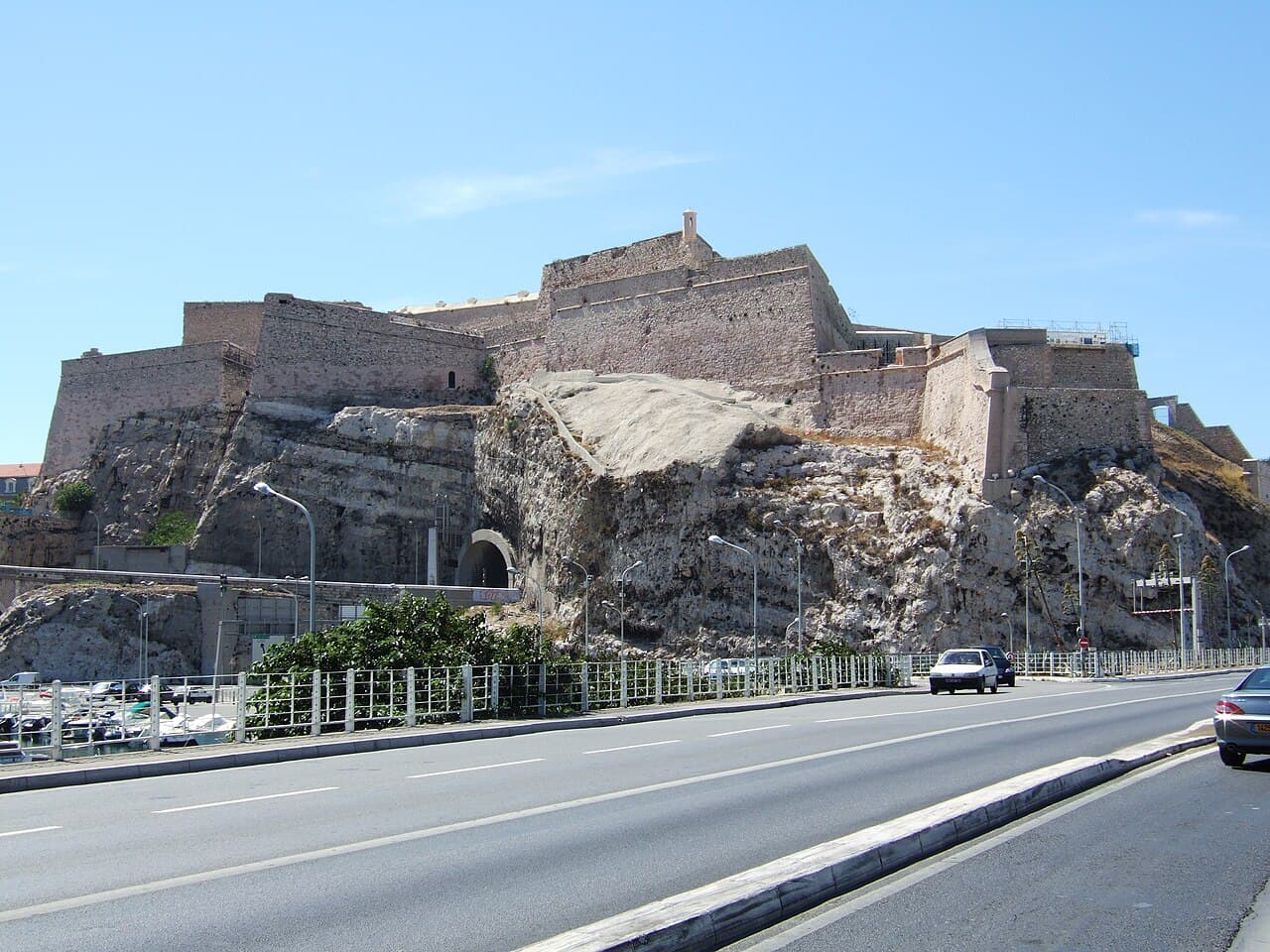
Fort Saint Nicolas stands prominently on the left side of the Old Port of Marseille, facing its counterpart, Fort Saint Jean, located on the opposite side of the harbor entrance. Constructed in the 17th century, this bastioned fortress was not primarily designed to defend Marseille from external naval invasions but rather to exert control over the city's independent and rebellious population. Its strategic placement allowed surveillance over the city and protection against potential threats from the sea.
The political context and construction
The origins of Fort Saint Nicolas are deeply rooted in the political unrest that Marseille experienced in the early to mid-17th century. Following uprisings in 1630–31 and the Fronde civil wars (1648–1652), the young King Louis XIV sought to assert royal authority over the city. In 1660, after a series of revolts, he ordered the construction of two large forts at the harbor entrance: Fort Saint Nicolas on the left and Fort Saint Jean on the right. The king famously remarked, "We noticed that the inhabitants of Marseille were extremely fond of nice fortresses. We wanted to have our own at the entrance to this great port." This statement underscores the dual purpose of the forts — to defend and to control.
The site chosen for Fort Saint Nicolas was behind the Saint-Victor Abbey, an area considered the cleanest part of the city, which allowed for optimal surveillance. Construction began on March 2, 1660, during a visit by Louis XIV. Due to the urgency and scale of the project, the fortress was completed remarkably quickly, within just four years.
Architectural design and features
Fort Saint Nicolas is a classic example of a bastioned fortress typical of Renaissance military architecture. Its design incorporates angled bastions that allowed defenders to cover all approaches with overlapping fields of fire, minimizing blind spots. The fortress's walls are thick and robust, built to withstand artillery bombardment. Unlike many coastal fortifications designed to repel naval attacks, the cannons at Fort Saint Nicolas were notably positioned to face inward toward the city rather than outward to sea, emphasizing its role in internal control.
The complex originally consisted of two main parts: the sea-facing section, now called Fort Ganteaume, which houses the military circle and officers' mess, and the landward section, known as Fort d'Entrecasteaux. These two parts were separated in 1860 by the construction of the Boulevard Charles Livon, which cut through the fortress grounds.
Historical significance and events
Throughout its history, Fort Saint Nicolas has played a complex role in Marseille's military and civic life. During the French Revolution, the fortress became a symbol of royal oppression. The local population, suspicious of its purpose and power, began to demolish parts of the structure. However, the Assemblée Nationale intervened to halt the destruction, recognizing the fortress's strategic importance for the city's defense, and ordered its restoration.
On April 30, 1790, the fort was besieged during revolutionary unrest, resulting in the massacre of many soldiers inside. Later, during the Battle of Marseille in August 1944, Fort Saint Nicolas became the main center of German resistance. French artillery bombarded the fortress for two days, leading to the surrender of the German garrison on August 27. Subsequently, marines from the US cruisers USS Augusta and USS Philadelphia accepted the German surrender on the fortified harbor islands on August 29.
Modern status and public access
Today, Fort Saint Nicolas is recognized as a Monument historique since 1969, reflecting its cultural and historical significance. The fortress remains partially accessible to the public, with visitors able to explore parts of the ramparts and enjoy panoramic views of the Old Port and the city of Marseille. The division of the fortress by Boulevard Charles Livon means that only certain sections are open, with the sea-facing Fort Ganteaume serving military functions and the landward Fort d'Entrecasteaux being more accessible.
The fortress's imposing presence continues to be a reminder of Marseille's turbulent history, royal authority, and the city's strategic maritime importance. Its architectural features and historical layers make it a valuable site for those interested in military architecture and French history.
Frequently asked questions (FAQ)
- What is the historical significance of Fort Saint Nicolas in Marseille?
- Fort Saint Nicolas was built in 1660 by order of King Louis XIV to control the rebellious population of Marseille and to protect the city from internal uprisings rather than external invasions.
- Can visitors access Fort Saint Nicolas today?
- Yes, parts of Fort Saint Nicolas are open to the public, including the ramparts which offer panoramic views of the Old Port and Marseille city. However, some areas remain restricted due to military use.
- When was Fort Saint Nicolas constructed and how long did it take?
- Construction began in 1660 and was completed in just four years, reflecting the urgency of establishing royal control over Marseille.
- What architectural style characterizes Fort Saint Nicolas?
- Fort Saint Nicolas is a bastioned fortress built in the Renaissance style, featuring angled bastions designed for overlapping fields of fire and strong defensive walls.
- Why was Fort Saint Nicolas built facing inward towards the city rather than outward to sea?
- The fortress's cannons were positioned to face inward to control the city's population and prevent internal revolts, rather than to defend against naval attacks from the sea.

Information
Current owner
Military and local authorities
Loading map...
Visitor reviews
No reviews yet. Been here? Write the first review and help other travelers!
Write the first reviewVisited this castle? Share your experience
Your review helps other travelers and adds first-hand knowledge to our encyclopedia.