Fort Saint-Jean
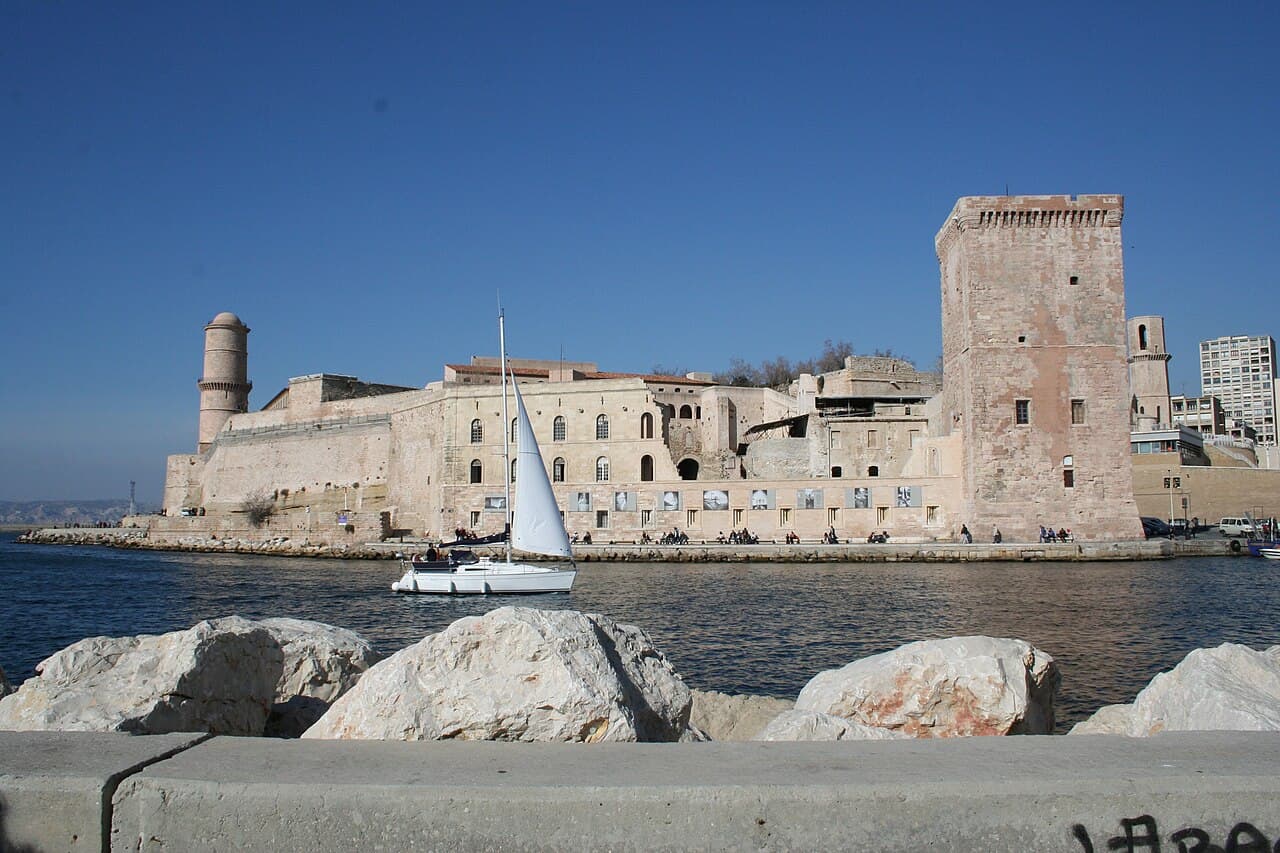
Fort Saint-Jean is a prominent bastioned fortress located at the entrance to the Old Port of Marseille, France. Constructed in 1660 under the orders of King Louis XIV, the fort was strategically positioned to control access to the harbor and to assert royal authority over the city. Its location marks a significant point where maritime defense and urban governance intersected during the Renaissance period.
The fort's origins trace back to an earlier site occupied by the Military Order of the Knights Hospitaller of Saint John, a medieval religious and military order that maintained a commandry here. This historical connection is reflected in the fort's name, Saint-Jean, which honors the order's patron saint. Two earlier structures were incorporated into the fort's design: the 12th-century Commandry of the Knights Hospitaller, which functioned as a monastic hospice during the Crusades, and the 15th-century tower of René I, King of Provence. These elements provide a tangible link to the medieval heritage of Marseille and underscore the site's long-standing military and religious significance.
Architectural design and fortifications
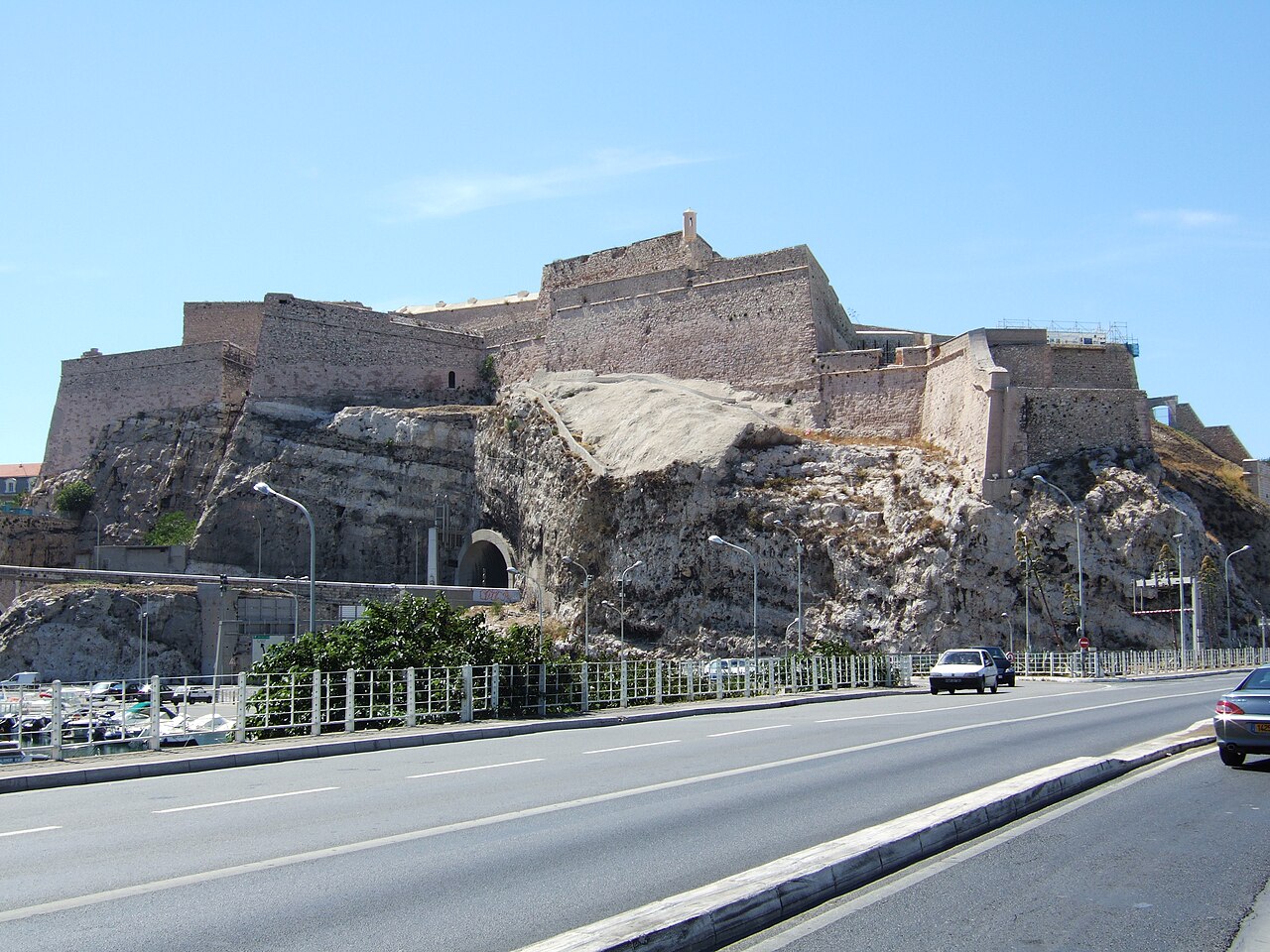
Fort Saint-Jean exemplifies the bastioned fortress style typical of the Renaissance military architecture, characterized by angular bastions designed to withstand artillery fire and provide overlapping fields of defensive fire. The fort's walls and bastions were constructed to face inward towards the city rather than outward to sea, a deliberate choice reflecting its original purpose: to control and suppress local uprisings rather than defend against external naval threats. This internal orientation was a response to unrest against the governor of Marseille, illustrating the fort's role as a tool of royal power and urban control.
The fort is complemented by Fort Saint-Nicolas on the opposite side of the harbor, built simultaneously to provide a crossfire that further secured the port area. Fort Saint-Jean's layout includes multiple defensive layers, with thick walls, ramparts, and bastions that allowed defenders to repel attackers effectively. The design incorporates both medieval structures and modern bastioned elements, creating a complex architectural ensemble.
Historical significance and events
Early modern period and revolutionary era
In April 1790, during the turbulent years leading up to the French Revolution, Fort Saint-Jean was seized by a revolutionary mob. The commander of the royal garrison, the chevalier de Beausse, was captured and executed by decapitation after refusing to surrender the fortress. This event marked the fort's transition from a royal stronghold to a revolutionary symbol.
During the French Revolution, the fort was repurposed as a prison. It held notable prisoners such as Louis Philippe II, Duke of Orléans, and his sons, Louis-Charles, Count of Beaujolais, and Antoine Philippe, Duke of Montpensier. The fort also witnessed darker episodes, including the massacre of about one hundred Jacobin prisoners following the fall of Robespierre in 1794. These events highlight the fort's role in the political upheavals that shaped modern France.
19th and 20th centuries
Throughout the 19th century and into the early 20th century, Fort Saint-Jean was under the control of the French Army. It served as a barracks and a clearing station for troops, particularly those of the Army of Africa. During the period when the French Foreign Legion was primarily based in North Africa (1830-1962), the fort functioned as a key staging post for recruits heading to basic training in Algeria.
During World War II, the fort was occupied by the German military in November 1942. In August 1944, during the liberation of Marseille, an explosion in a munitions depot within the fort caused extensive damage to its historic battlements and buildings. This destruction marked a significant loss to the fort's architectural heritage.
Post-war restoration and modern use
After the war, Fort Saint-Jean was returned to the French Army but gradually fell into disuse and neglect. In 1960, control of the fort was transferred to the Ministry of Cultural Affairs. Recognizing its historical and architectural value, the fort was classified as a historical monument in 1964. Restoration efforts took place between 1967 and 1971, focusing on reconstructing the damaged portions of the fort and preserving its medieval and Renaissance elements.
In 2013, Fort Saint-Jean was linked by two pedestrian foot-bridges to the historic Le Panier district and the Museum of European and Mediterranean Civilisations (MuCEM). The museum, notable for being the first French national museum located outside Paris, has enhanced the cultural significance of the fort. The connection integrates Fort Saint-Jean into Marseille's vibrant cultural landscape, making it accessible to visitors and locals alike.
Architectural features and visitor experience
The fort's architecture is a blend of medieval and Renaissance military design. Visitors can explore the Commandry of the Knights Hospitaller, the tower of René I, and the extensive bastioned walls. The fort's position offers panoramic views over the Old Port and the Mediterranean Sea, providing a unique perspective on Marseille's maritime heritage.
Today, Fort Saint-Jean serves not only as a historical monument but also as a cultural venue. Its proximity to MuCEM and the pedestrian bridges invites visitors to experience the layered history of Marseille, from medieval times through the Renaissance and into the modern era. The fort's preserved structures and restored battlements offer insight into the evolution of military architecture and the complex history of this Mediterranean port city.
Frequently asked questions (FAQ)
- How do I visit Fort Saint-Jean and the Museum of European and Mediterranean Civilisations?
- Fort Saint-Jean is accessible via two pedestrian foot-bridges linking it to the historic Le Panier district and the Museum of European and Mediterranean Civilisations (MuCEM). Visitors can explore the fort as part of a cultural tour that includes MuCEM, which is open daily except Tuesdays.
- What is the historical significance of Fort Saint-Jean?
- Fort Saint-Jean was built in 1660 by Louis XIV to control the Old Port of Marseille and suppress local uprisings. It incorporates medieval structures and played roles during the French Revolution, serving as a prison and witnessing significant historical events.
- Can I see medieval architecture at Fort Saint-Jean?
- Yes, the fort includes the 12th-century Commandry of the Knights Hospitaller and the 15th-century tower of René I, offering visitors a glimpse into medieval military and religious architecture within a Renaissance fortress.
- Is Fort Saint-Jean open year-round?
- While specific visiting hours can vary, Fort Saint-Jean and the adjacent MuCEM are generally open throughout the year except on certain holidays. It's advisable to check official websites for current opening times before planning a visit.
- Why does Fort Saint-Jean have cannons facing the city rather than the sea?
- The fort's cannons were deliberately oriented inward to control and suppress local uprisings against the governor of Marseille, reflecting its role in maintaining royal authority rather than defending against naval attacks.
Photo gallery

Information
Current owner
Ministry of Cultural Affairs
Loading map...
Visitor reviews
No reviews yet. Been here? Write the first review and help other travelers!
Write the first reviewVisited this castle? Share your experience
Your review helps other travelers and adds first-hand knowledge to our encyclopedia.