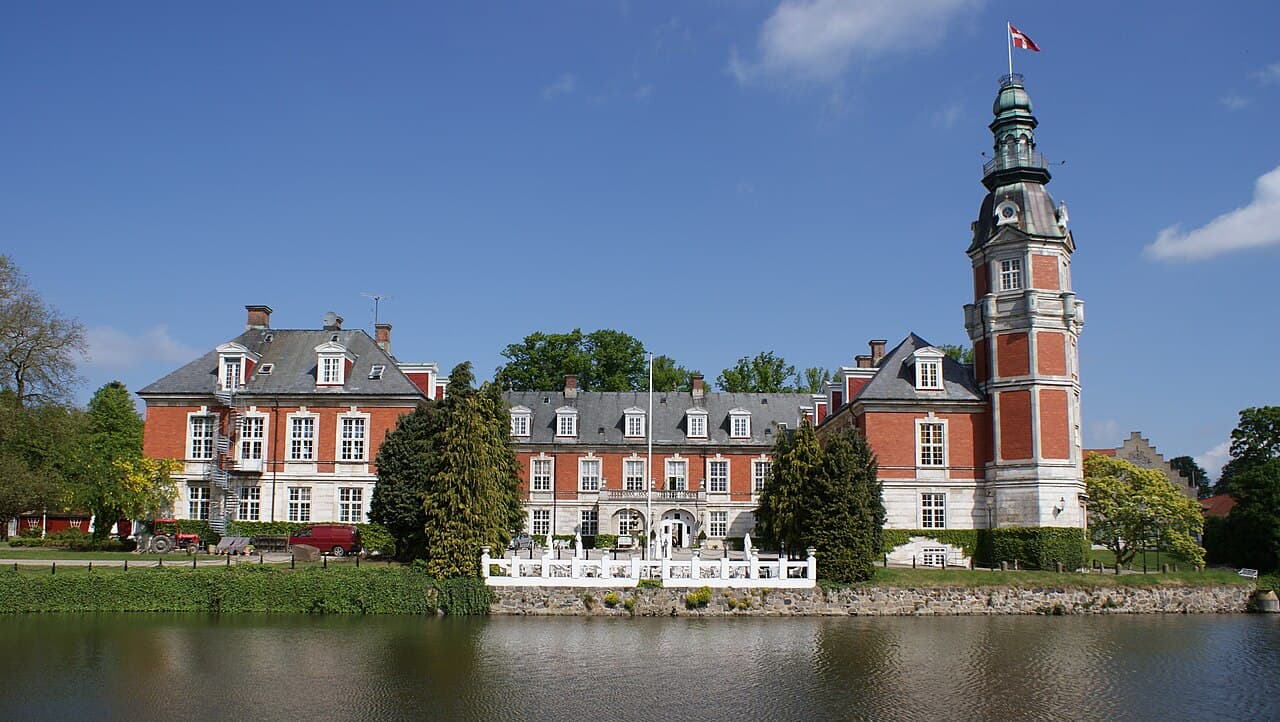
Hvedholm Castle
Hvedholm Castle is a historic estate located near the town of Faaborg on the island of Funen in Denmark. The castle's origins trace back to the 15th century, making it a significant example of Danish medieval aristocratic residences. Over the centuries, it has undergone various architectural modifications and ownership changes, reflecting the social and political shifts in Denmark.
Historical background and ownership
The castle was originally built in the late medieval period, serving as a fortified manor for noble families. It was successively owned by prominent Danish families including the Banke, Hardenberg, and Brahe families. The Brahe family was particularly influential, holding the estate for generations and playing a key role in the region's governance and economy.
In 1919, the Danish government imposed a substantial tax burden on the then owners, compelling them to sell the castle to the state for approximately 175,000 Danish kroner. Despite this, the castle was eventually returned to the Brahe family, who are historically recognized as the rightful rulers of the estate and surrounding villages.
Architectural features and style
While the castle's core dates to the 15th century, the current main building largely reflects renovations and reconstructions carried out between 1878 and 1882. These works introduced elements characteristic of the historicist architectural movement prevalent in the late 19th century, blending traditional medieval motifs with modern construction techniques.
The castle features a combination of defensive and residential architectural elements typical of a hill castle setting, including robust stone walls, towers, and a courtyard. The structure's silhouette is marked by steep roofs and ornate gables, reflecting the romanticized medieval style popular in the period of its renovation.
Castle grounds and surrounding estate
The castle is set within extensive parkland and gardens, which have evolved over centuries. The grounds include formal gardens, wooded areas, and agricultural land that historically supported the estate's economy. The location near Faaborg provides scenic views over the surrounding countryside of Funen.
Modern use and preservation
Today, Hvedholm Castle functions as a hotel known as Hvedholm Slotshotel, offering visitors the opportunity to experience the historic atmosphere of a Danish noble estate. The hotel preserves many of the castle's original architectural features and interiors, allowing guests to appreciate the blend of medieval heritage and 19th-century renovations.
The castle is well preserved and maintained, serving as a cultural landmark and a testament to Denmark's aristocratic history. Its adaptive reuse as a hotel ensures ongoing conservation and public engagement with this significant historic site.
Cultural significance and tourism
Hvedholm Castle is an important cultural monument on Funen, attracting visitors interested in Danish history, architecture, and heritage tourism. Its connection to the Brahe family adds to its historical allure, as the family is notable in Danish history. The castle's location near Faaborg also makes it accessible for tourists exploring the island's rich cultural landscape.
Visitors to the castle can enjoy guided tours, events, and the surrounding natural beauty, making it a multifaceted destination that combines history, architecture, and hospitality.
Frequently asked questions (FAQ)
- How do I visit Hvedholm Castle and what are the opening hours?
- Hvedholm Castle operates as a hotel, so visitors can book accommodations or dine on-site. Opening hours for the hotel and restaurant vary seasonally, so it is best to check their official website for current times.
- What is the historical significance of Hvedholm Castle?
- Hvedholm Castle dates back to the 15th century and was owned by prominent noble families including the Brahe family. It reflects Denmark's medieval aristocratic history and later 19th-century architectural renovations.
- Can I tour the interior of Hvedholm Castle?
- As a functioning hotel, some areas of Hvedholm Castle are accessible to guests and visitors. Guided tours may be available by appointment, offering insights into the castle's history and architecture.
- What architectural styles are represented at Hvedholm Castle?
- The castle combines medieval defensive features with 19th-century historicist renovations. Its architecture includes elements typical of a hill castle, with stone walls, towers, and romanticized medieval motifs from the late 1800s.
- Is Hvedholm Castle accessible for visitors with mobility issues?
- Accessibility may be limited in certain historic parts of the castle due to its age and structure. Visitors with mobility concerns should contact the hotel in advance to inquire about accommodations and accessible areas.
Photo gallery

Information
Loading map...
Visitor reviews
No reviews yet. Been here? Write the first review and help other travelers!
Write the first reviewVisited this castle? Share your experience
Your review helps other travelers and adds first-hand knowledge to our encyclopedia.



