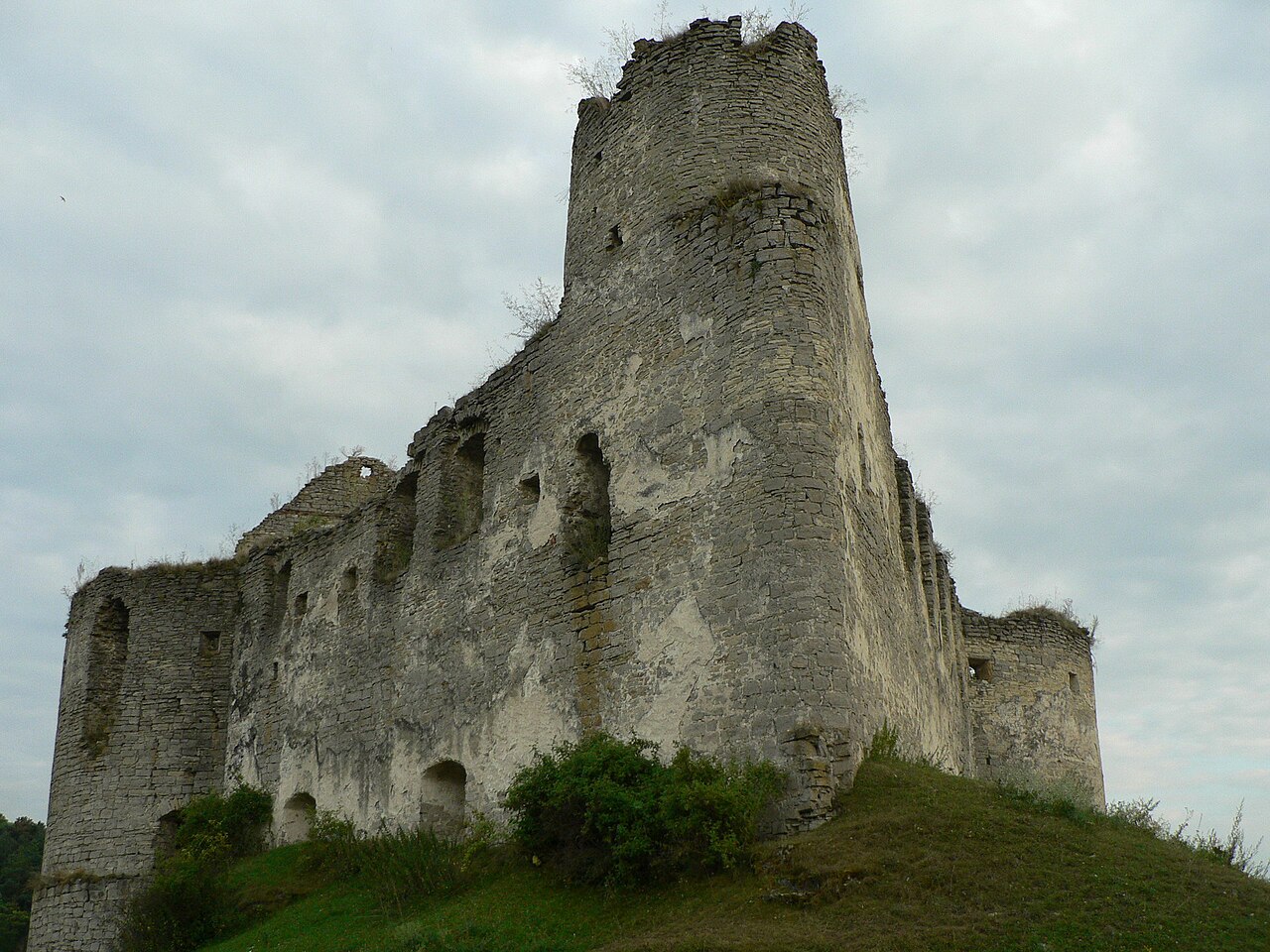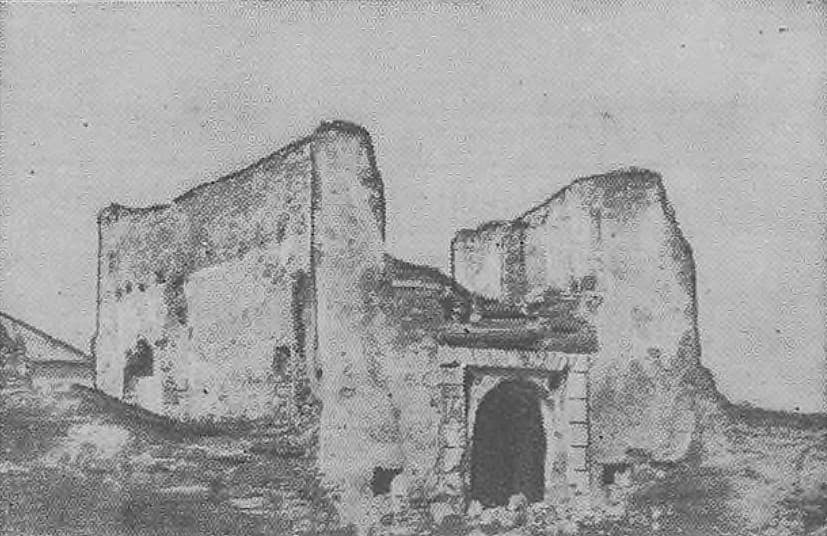
Husiatyn castle — Ukraine castle

Husiatyn castle

Husiatyn castle in Ternopil Oblast, Ukraine
Husiatyn, Ukraine
Renaissance (15th–17th c.)
Partially Preserved

Husiatyn Castle is a significant example of a 17th-century Renaissance hill castle situated in Husiatyn, within the Ternopil Oblast of Ukraine. Built in 1630 on the steep northern bank of the Zbrucz River, the castle occupies a strategic position that provided natural defense advantages. This location allowed it to control river traffic and oversee the surrounding landscape, which was crucial during the turbulent times of its construction.

Historical context and construction

The castle was constructed during the early decades of the 17th century, a period marked by frequent conflicts in Eastern Europe, including wars involving the Polish-Lithuanian Commonwealth and the Ottoman Empire. Its establishment in 1630 reflects the strategic military and administrative needs of the time, serving both as a fortress and a noble residence.

The architectural design of Husiatyn Castle embodies the Renaissance style prevalent in the region during that period, blending defensive features with residential elements. The castle's layout was adapted to the hilltop terrain, utilizing the natural steep slopes to enhance its fortifications.

Architectural features

Fortifications and defensive structures

The castle's fortifications include thick stone walls that follow the contours of the hill, providing robust protection against invaders. The walls were complemented by bastions and towers positioned to cover all approaches, allowing defenders to monitor and repel attacks effectively.

Its location on a steep bank of the Zbrucz River added a natural moat-like barrier on one side, reducing the need for extensive artificial water defenses. The castle's entrance was likely fortified with a gatehouse and possibly a drawbridge, typical of Renaissance military architecture, although specific details of these features are limited due to the current condition of the ruins.

Residential and functional spaces

Within the defensive perimeter, the castle housed residential quarters, storage facilities, and possibly a chapel, reflecting its dual role as a fortress and noble residence. The internal layout would have been organized around a courtyard, providing space for daily activities and gatherings.

Later history and current condition

Over the centuries, Husiatyn Castle experienced various phases of use, damage, and neglect. It was involved in regional conflicts and changed hands multiple times, which contributed to its gradual deterioration. Today, the castle stands as partially preserved ruins, recognized as an architectural monument of local importance.

Efforts to preserve the remaining structures have been undertaken to maintain the site's historical and cultural value. The castle ruins attract visitors interested in the military architecture of the Renaissance period and the rich history of the Ternopil region.

Visiting Husiatyn castle

The castle is accessible to visitors who can explore the ruins and enjoy views of the Zbrucz River valley. Due to its condition, visitors should exercise caution when navigating the site. The castle's location north of the Husiatyn city center makes it a reachable destination for those interested in Ukrainian heritage and Renaissance military architecture.

Frequently asked questions

  • When was Husiatyn Castle built? Husiatyn Castle was constructed in 1630 during the Renaissance period.
  • What type of castle is Husiatyn? It is a hill castle, built on a steep bank overlooking the Zbrucz River.
  • Is Husiatyn Castle open to visitors? Yes, visitors can explore the ruins, but should be cautious due to the site's partial preservation.
  • What architectural style characterizes Husiatyn Castle? The castle reflects Renaissance architectural features common in 17th-century Eastern Europe.
  • Where is Husiatyn Castle located? It is located in Husiatyn, Ternopil Oblast, Ukraine, north of the city center along the Zbrucz River.

Frequently asked questions (FAQ)

What is the historical significance of Husiatyn Castle?
Husiatyn Castle, built in the late 19th century, is a remarkable example of neo-Gothic architecture. It served as a residence for the noble family of Tyszkiewicz and reflects the region's rich cultural heritage and historical narratives. Today, it stands as a testament to the area's past and attracts history enthusiasts.
When is the best time to visit Husiatyn Castle?
The best time to visit Husiatyn Castle is during the spring and early autumn months, from April to October. During these months, the weather is generally mild and pleasant, making it ideal for exploring the castle and its surroundings. Additionally, you can enjoy the beautiful scenery as the landscape comes alive with vibrant colors.
Is it possible to access Husiatyn Castle by public transport?
Yes, Husiatyn Castle is accessible by public transport. Visitors can take a bus or train from larger cities like Ternopil or Lviv to Husiatyn, followed by a short walk to the castle. However, it is recommended to check local schedules in advance for the most convenient travel options.
Can I take guided tours of Husiatyn Castle?
Yes, guided tours of Husiatyn Castle are available and highly recommended for a more enriching experience. Knowledgeable guides provide insights into the castle's history, architecture, and the lives of its former inhabitants. Tours can be booked on-site or in advance through local tourism offices.
What are the opening hours for Husiatyn Castle?
Husiatyn Castle is typically open to visitors from 9 AM to 6 PM, Tuesday through Sunday. It is closed on Mondays, so plan your visit accordingly. Always check for any seasonal changes in hours, especially around holidays.
What are the ticket prices for Husiatyn Castle?
The ticket prices for Husiatyn Castle are quite affordable, generally ranging from 30 to 50 UAH for adults, with discounts available for students and children. Special rates may apply for guided tours. It's a good idea to bring cash, as card payments may not be accepted.
Are there any nearby attractions to visit while at Husiatyn Castle?
Yes, there are several nearby attractions to explore, including the picturesque landscapes of Husiatyn itself and the charming local parks. Visitors may also want to check out other historical sites in the region, such as the nearby town of Ternopil, which features a lovely lake and vibrant city center. Combining these visits can make for a delightful day trip.

Photo gallery

Husiatyn castle
Click to view

Photo by Unknown authorUnknown author•Public domain

1 photo • Click any image to view in full screen

Information

Hill Castle

Loading map...

Visitor reviews

No reviews yet. Been here? Write the first review and help other travelers!

Write the first review

Visited this castle? Share your experience

Your review helps other travelers and adds first-hand knowledge to our encyclopedia.
Write a review

(5/5)

0/2000 characters

Your review will be visible after admin approval

Nearby castles

7.2 km
Lychkivtsi Castle — Ukraine castle

Lychkivtsi Castle

Lychkivtsi, Ukraine

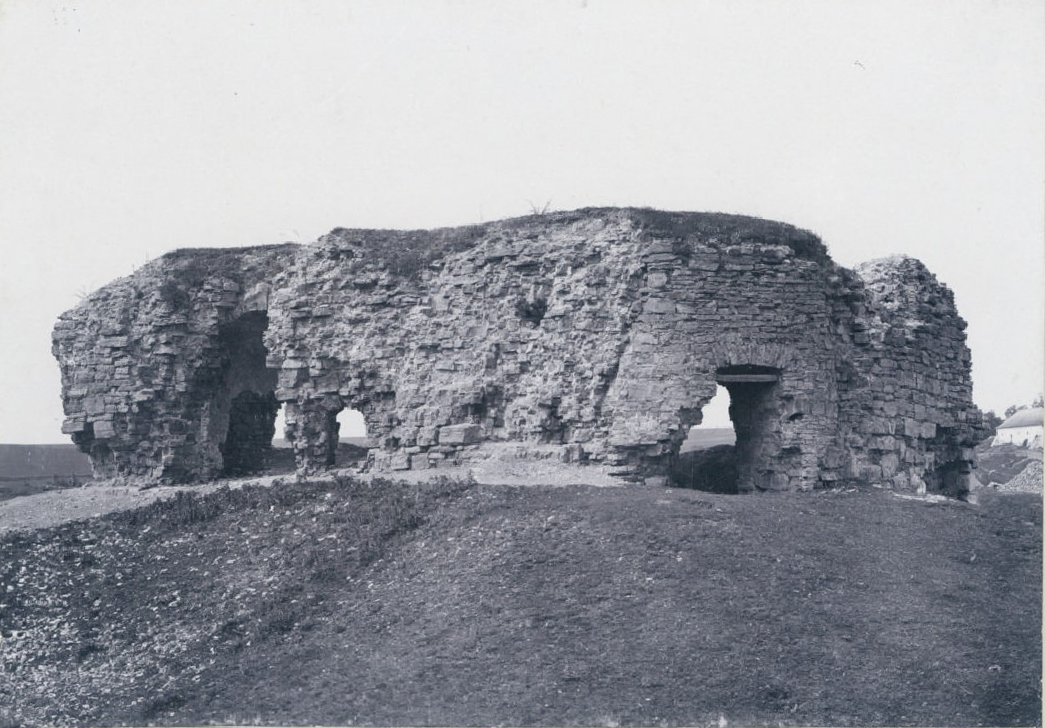
Lychkivtsi Castle, known in Ukrainian as Личковецький замок, is a historic hill castle situated in the village of Lychkivtsi within the Ternopil Oblast of western Ukraine. This fortress was constructed by the noble Kalinowski family, an influential lineage in the region, during the early modern period. The castle's strategic location atop a hill provided natural defensive advantages, typical of many fortifications designed to oversee and control the surrounding landscape.Historical background and constructionThe exact date of Lychkivtsi Castle's construction remains uncertain, but it is generally attributed to the 16th or 17th century, a time when the region was part of the Polish-Lithuanian Commonwealth. The Kalinowski family, known for their military and political roles, established the castle as a fortified residence and defensive stronghold. The castle's primary purpose was to protect the local population and assert control over trade routes and territorial boundaries.Throughout its history, Lychkivtsi Castle witnessed various military conflicts and changes in ownership, reflecting the turbulent history of western Ukraine. The castle's fortifications were adapted over time in response to evolving military technology and threats, including the introduction of artillery.Architectural features and layoutLychkivtsi Castle exemplifies the characteristics of hill castles with its elevated position and defensive structures. The castle complex originally included robust stone walls, towers for surveillance and defense, and a gatehouse controlling access. The walls were likely equipped with battlements and arrow slits, allowing defenders to repel attackers effectively.The castle's internal layout featured residential quarters, storerooms, and possibly a chapel, arranged around a central courtyard. The design balanced defensive needs with the requirements of noble habitation, combining military architecture with elements of Renaissance influence common in the region's noble residences.Defensive adaptationsAs military technology advanced, particularly with the use of cannons, Lychkivtsi Castle underwent modifications to strengthen its defenses. These may have included the thickening of walls, the addition of bastions or earthworks, and the reinforcement of towers. Such adaptations were typical of castles transitioning from medieval fortresses to early modern strongholds.Current condition and cultural significanceToday, Lychkivtsi Castle stands as a partially preserved monument reflecting the architectural and historical heritage of the Ternopil region. While some structures remain intact, others have fallen into ruin due to centuries of neglect and the impact of warfare.The castle is an important cultural landmark for Ukraine, attracting historians, archaeologists, and visitors interested in the region's medieval and early modern history. Efforts to preserve and study the site contribute to a deeper understanding of the area's past and the role of noble families like the Kalinowskis in shaping local history.Visiting Lychkivtsi CastleVisitors to Lychkivtsi Castle can explore the surviving fortifications and enjoy panoramic views of the surrounding countryside. The site offers insight into the defensive strategies and residential life of a noble family during a formative period in Ukrainian history. While facilities may be limited, the castle's historical ambiance provides a compelling experience for those interested in architecture and heritage.

Post-Renaissance (17th–18th c.)
Details
9 km
Sydoriv Castle — Ukraine castle

Sydoriv Castle

, Ukraine

Sydoriv Castle (Ukrainian: Сидорівський замок; Polish: Zamek w Sidorowie) stands as a significant example of a 17th-century Renaissance fortress located in the village of Sydoriv, approximately 7 km south of Husiatyn in Ukraine. This castle, now in ruins, was originally constructed by Marcin Kalinowski, a notable Polish military commander and magnate, during the 1640s. Its strategic placement atop a hilltop, surrounded on three sides by a river, provided natural defenses that were enhanced by its architectural design. Historical context and construction The construction of Sydoriv Castle took place in the midst of the turbulent Renaissance period in Eastern Europe, a time marked by frequent conflicts involving the Polish-Lithuanian Commonwealth, the Ottoman Empire, and local Cossack uprisings. Marcin Kalinowski, who was a voivode of Podolia, chose the site for its defensible position, which was typical of hill castles designed to control surrounding territories and river routes. The castle's original layout included seven towers arranged along a fortified wall stretching approximately 178 metres from north to south. These towers served both as lookout points and defensive bastions. The walls were constructed with thick masonry typical of Renaissance military architecture, combining functionality with the style of the era. Architectural features Sydoriv Castle was designed as a hill castle, utilizing the natural elevation to enhance its defensive capabilities. The river enclosing the hill on three sides acted as a natural moat, complicating any siege attempts. The castle’s walls and towers were built to withstand artillery fire, reflecting the evolving military technologies of the 17th century. The fortress included a main gate, curtain walls, and several towers of varying sizes. Its Renaissance architectural style is evident in the symmetry and proportionality of the fortifications, as well as in the decorative elements that would have adorned the castle's interiors and facades, although much of these details have been lost due to the castle's ruinous state. Siege and decline In 1672, Sydoriv Castle suffered severe damage during the invasion of the Ottoman Turks. This event was part of the larger conflict known as the Polish-Ottoman War (1672–1676), which saw many fortresses in the region besieged or destroyed. The castle's fortifications were breached, and the stronghold was significantly weakened. Following this devastation, the castle gradually fell into disuse and was eventually abandoned by its owners in the 18th century. Over the subsequent centuries, the structure deteriorated due to neglect and natural decay, leaving behind only ruins that testify to its former grandeur. Current condition and archaeological significance Today, Sydoriv Castle exists as archaeological ruins, with remnants of its walls and towers still visible. The site is important for understanding the military architecture of the Renaissance period in Ukraine and the historical conflicts that shaped the region. Archaeological studies have helped to document the castle's layout and construction techniques, providing insights into the defensive strategies employed during the 17th century. Visitors to the site can observe the remains of the fortifications and appreciate the castle's commanding position overlooking the surrounding landscape. Visiting Sydoriv Castle The castle ruins are accessible to visitors interested in history and architecture. Its location near Husiatyn makes it a notable destination for those exploring the cultural heritage of western Ukraine. While the site is in a ruinous state, it offers a glimpse into the region's past and the challenges of fortress construction in a period marked by frequent warfare.

Renaissance (15th–17th c.)
Details
13.4 km
Kotsiubyntsi Castle — Ukraine castle

Kotsiubyntsi Castle

, Ukraine

Kotsiubyntsi Castle (Ukrainian: Коцюбинський замок, romanized: Kotsiubyns'kyi zamok) is a lost defensive hill castle located in the village of Kotsiubyntsi, within the Vasylkivtsi rural hromada, Chortkiv Raion, in the Ternopil Oblast of western Ukraine. This site represents a significant medieval fortification whose remains have only recently been identified through archaeological efforts, shedding light on the region's historical military architecture and settlement patterns. Historical context and significance The castle's origins are believed to date back to the High to Late Medieval periods, a time when the area was marked by frequent conflicts and shifting political boundaries. The fortress likely served as a local stronghold, providing defense against invasions and controlling important routes in the region. Its strategic placement on a hill allowed for surveillance over the surrounding landscape, a common feature of hill castles designed to maximize defensive advantage. Although no detailed historical records survive that explicitly describe the castle's construction or its builders, the site aligns with the typical characteristics of medieval Ukrainian fortifications, which were often constructed from wood and earthworks initially, and sometimes later reinforced with stone. The castle's function would have included military defense, administrative control, and possibly serving as a residence for local nobility or military commanders. Archaeological discovery and research The castle site was only recently rediscovered through archaeological surveys and excavations. These investigations have revealed remnants of defensive structures such as ditches, ramparts, and possibly foundations of buildings. The findings confirm the location as a fortified settlement, providing valuable insights into the construction techniques and defensive strategies employed in the region during the medieval era. Excavations have uncovered artifacts that help date the site and illustrate the daily life of its inhabitants. These include fragments of pottery, metal objects, and tools typical for the period. The archaeological work continues to clarify the castle's layout and the extent of its fortifications, contributing to a broader understanding of medieval fortresses in western Ukraine. Architectural characteristics As a hill castle, Kotsiubyntsi Castle was strategically positioned to exploit natural elevation for defense. The castle likely featured typical medieval fortification elements such as earthen ramparts, wooden palisades, and a moat or ditch encircling the site. The defensive earthworks would have been supplemented by wooden towers or keeps, although no standing structures remain today. The layout probably included a central courtyard surrounded by defensive walls and possibly residential and service buildings within the enclosure. The use of local materials and construction methods reflects the adaptation to the regional environment and available resources. The castle's role in regional history Kotsiubyntsi Castle's presence indicates the historical importance of the area in controlling local trade routes and providing defense against incursions. The castle would have been part of a network of fortifications that protected the western frontiers of medieval Ukrainian lands, particularly during periods of conflict involving neighboring states and nomadic groups. Although the castle fell into ruin and was eventually lost to history, its rediscovery enriches the cultural heritage of Ternopil Oblast and offers a tangible link to the medieval past of Ukraine. It serves as a reminder of the region's strategic significance and the architectural ingenuity of its medieval inhabitants. Current status and preservation efforts Today, Kotsiubyntsi Castle exists primarily as an archaeological site with no standing structures. Preservation efforts focus on protecting the earthworks and archaeological remains from natural erosion and human disturbance. The site is of interest to historians, archaeologists, and visitors keen on exploring Ukraine's medieval heritage. Ongoing research and conservation aim to better document the castle's features and promote awareness of its historical value. The site contributes to the broader understanding of medieval fortifications in Eastern Europe and highlights the need to preserve such cultural landmarks for future generations.

High Medieval (11th–13th c.)
Details