Husen Castle Ruins
Husen Castle stands as a significant hill castle ruin overlooking the town of Hausach in the Black Forest region of Germany. Originally constructed in the 12th century by the dukes of Zähringen, it was first documented in 1246 as "castrum Husen." This strategic fortress was built to control the Kinzig valley and served as a noble residence and military stronghold through the High Medieval period.
Early origins and medieval ownership
The castle's initial construction likely dates back to the 12th century, coinciding with the rise of the Zähringen dynasty, who were influential in establishing fortifications across southwestern Germany. Husen Castle's location on a hilltop provided natural defensive advantages, with steep slopes and commanding views over the valley below.
By the mid-13th century, Husen Castle was under the control of the counts of Freiburg. In 1303, ownership transferred to the counts of Fürstenberg through the marriage of Verena of Freiburg, marking a new era of development and fortification. The counts of Fürstenberg were prominent nobles who invested in expanding and modernizing the castle to meet evolving military and residential needs.
Architectural expansions and military role
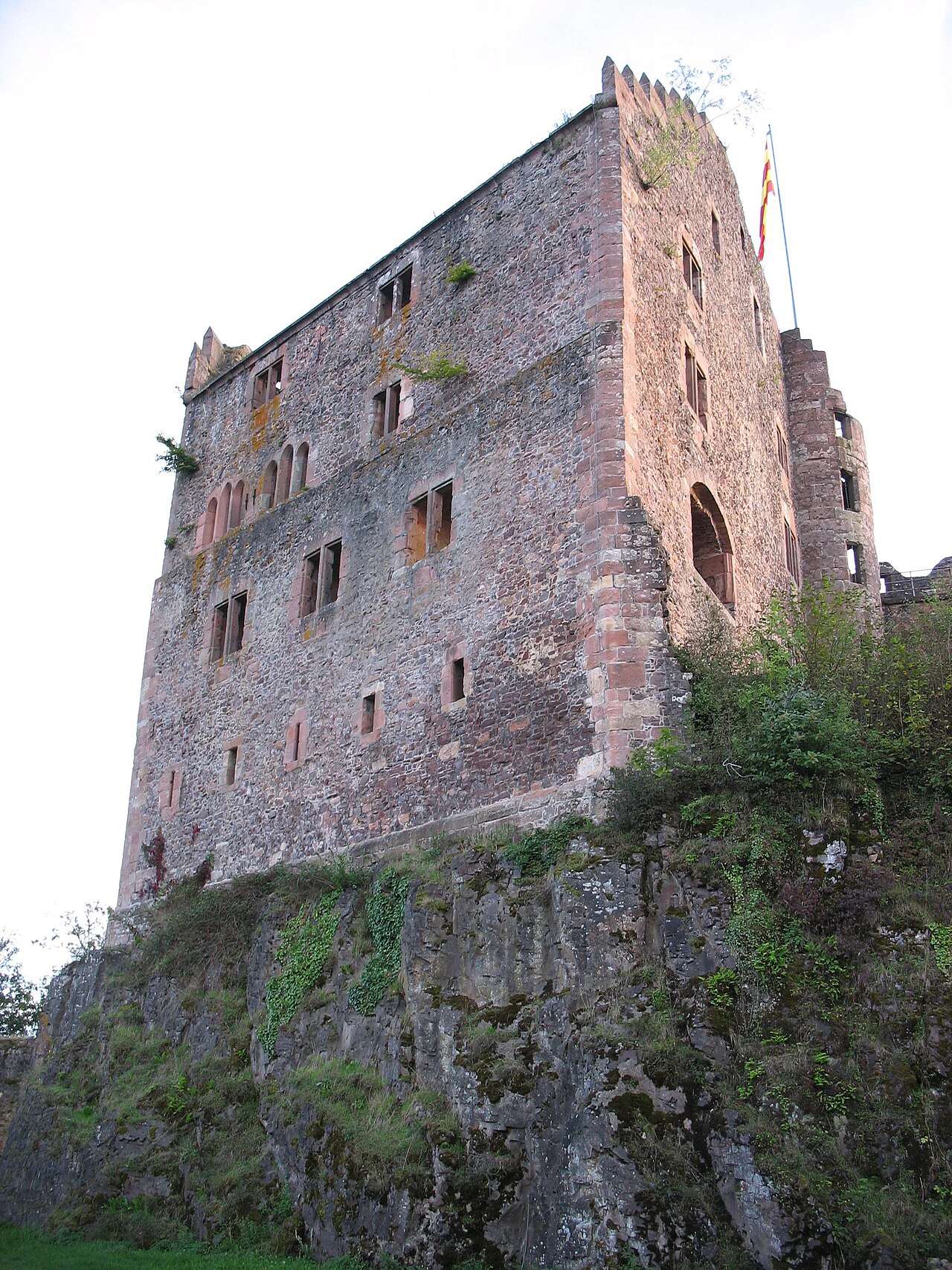
Between 1453 and 1477, Count Henry IV of Fürstenberg undertook extensive remodeling and expansion of Husen Castle. These works included the construction of a neck ditch (Halsgraben) and an outer ward (Vorburg) that enhanced the castle's defensive perimeter. The core of the castle comprised a palas—the main residential building—and a bergfried, a tall defensive tower serving as a lookout and refuge.
The bergfried, originally topped with a conical roof, was a typical feature of German medieval castles, symbolizing strength and offering a vantage point for surveillance. The palas housed the castle's inhabitants and administrative functions, reflecting the dual role of Husen as both fortress and noble residence.
Destruction and military significance in the 17th century
In 1632, during the turmoil of the Thirty Years' War, Husen Castle suffered a devastating fire but was promptly rebuilt, underscoring its continued strategic importance. However, in 1643, the castle was captured and destroyed by French-Weimar troops under the command of Jean Baptiste Budes de Guébriant. This destruction marked the end of Husen Castle as a fully functioning noble residence and fortress.
Following its ruin, the site was adapted for military use by incorporating the remains into a series of fortified earthworks called schanzen. These fortifications were designed to defend the Kinzig valley against enemy advances, demonstrating the enduring tactical value of the castle's location even after its structural decline.
Later modifications and preservation efforts
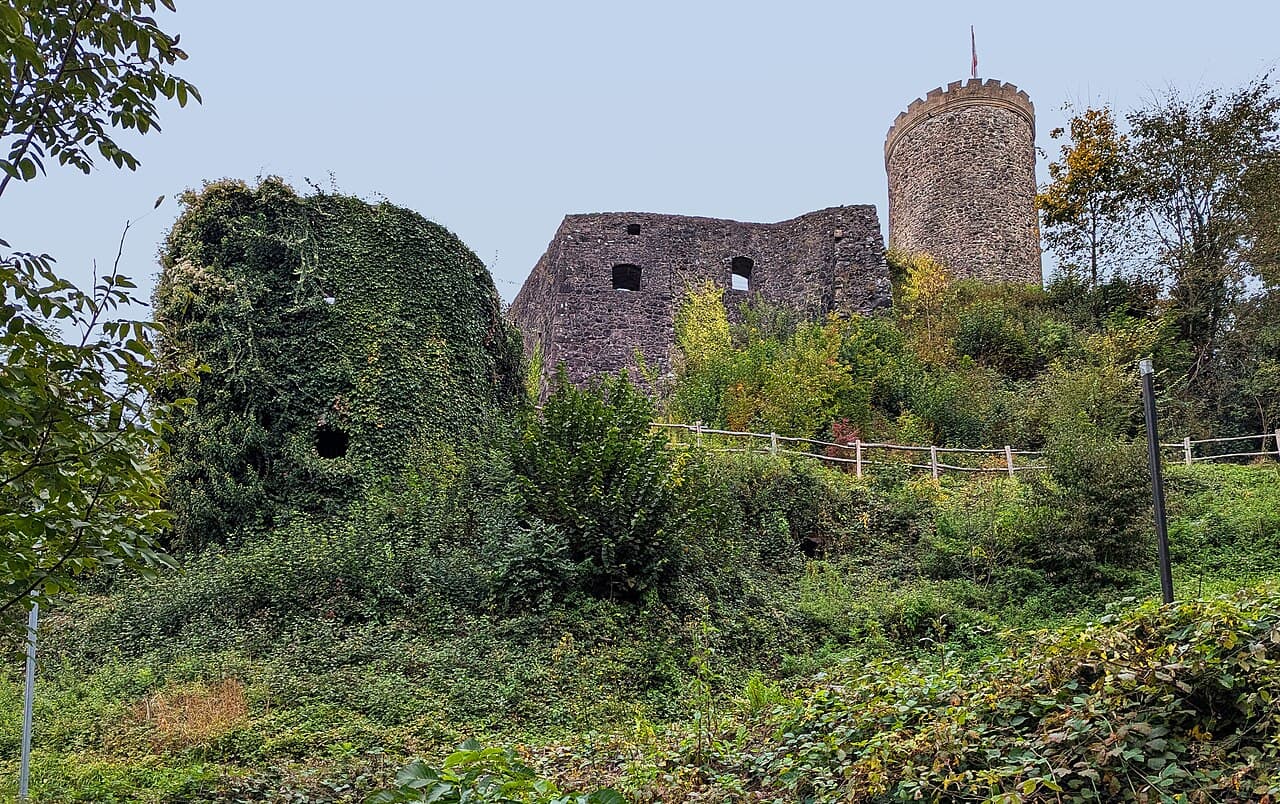
In 1896, the castle's bergfried was restored with the addition of battlements, replacing its original conical roof. This alteration not only enhanced the tower's defensive appearance but also reflected 19th-century romanticized views of medieval architecture. The battlements provided crenellations typical of castle fortifications, allowing defenders to shield themselves while observing or firing upon attackers.
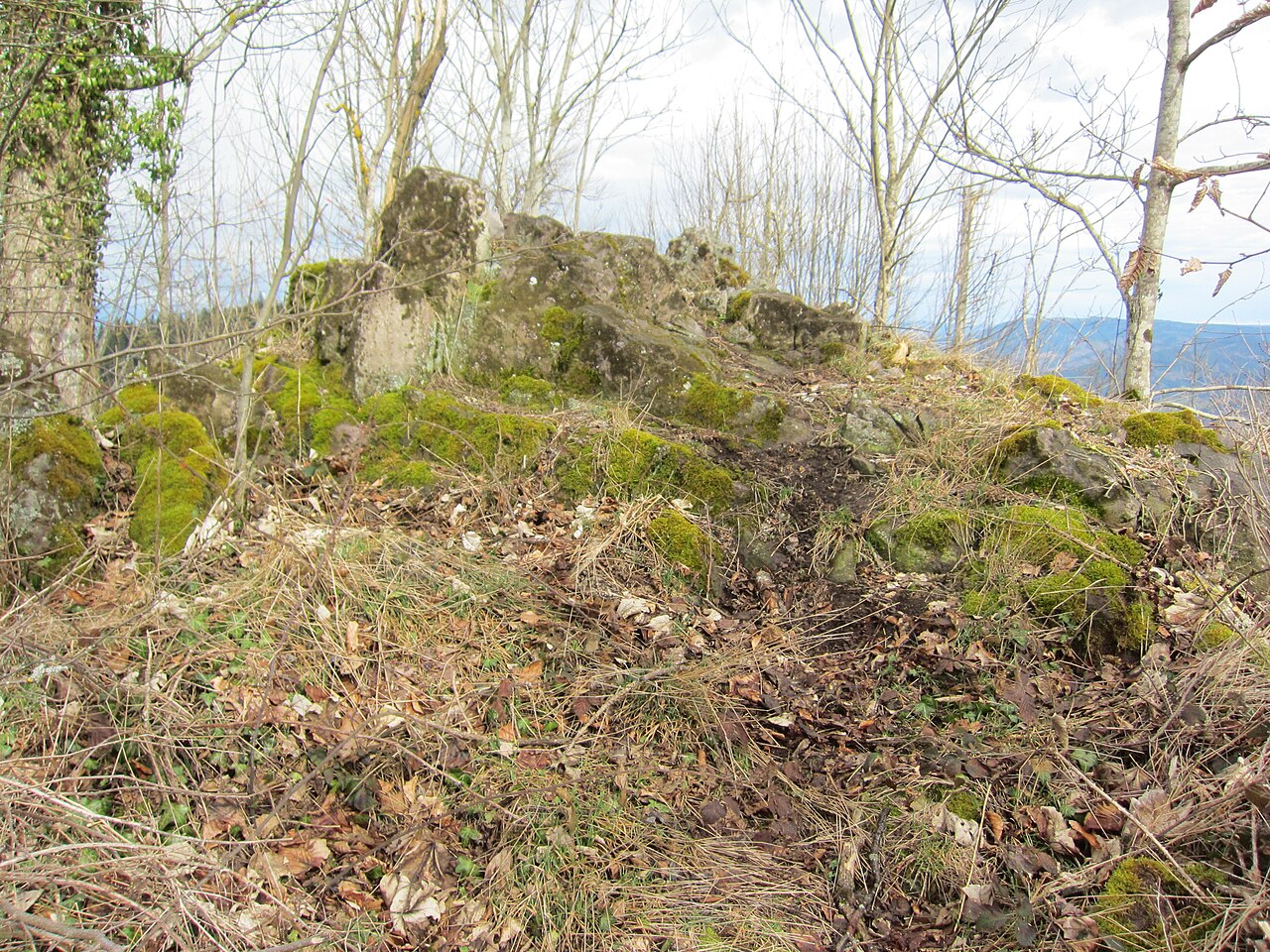
By 1968, the town of Hausach acquired the ruins from the House of Fürstenberg, signaling a commitment to preserving this historic site. Today, the remains include significant portions of the palas walls, the battery tower (Batterieturm), and the bergfried, which together convey the castle's medieval origins and its evolving military role through centuries.
Architectural features and layout
Husen Castle exemplifies a typical High Medieval hill castle design, strategically situated on elevated terrain to maximize defense and visibility. The neck ditch cut through the ridge, isolating the castle's core from the surrounding land and impeding enemy approach.
The outer ward served as a buffer zone containing auxiliary buildings and spaces necessary for the castle's operation. The palas was the heart of daily life, with living quarters and halls for administration and social functions.
The battery tower, partially preserved, suggests adaptations for artillery or enhanced defense, though specific historical records of its use remain limited. The bergfried dominates the site with its imposing height and fortified structure, symbolizing the castle's martial purpose.
Cultural and historical significance
Husen Castle's history is intertwined with the noble families of the Black Forest region and reflects broader trends in medieval military architecture and feudal politics. Its transformations mirror the shifting needs from feudal stronghold to Renaissance residence, and later to a military outpost during the Thirty Years' War.
Today, the ruins serve as a cultural landmark and tourist attraction, offering visitors insight into medieval fortification techniques and the region's turbulent history. The preservation of the site by Hausach municipality ensures that Husen Castle remains a tangible connection to Germany's medieval heritage.
Visiting husen castle ruins
Visitors to Husen Castle can explore the surviving structures and enjoy panoramic views of the Kinzig valley. The site is accessible via hiking trails from Hausach, making it a popular destination for history enthusiasts and nature lovers alike. Interpretive signage helps explain the castle's history and architecture, enhancing the visitor experience.
The castle ruins are open year-round, though visiting hours may vary seasonally. There is no entrance fee, allowing free exploration of this evocative historic site. Guided tours may be available through local tourist offices, providing deeper historical context and architectural insights.
Frequently asked questions (FAQ)
- How do I get to Husen Castle ruins from Hausach town center?
- Husen Castle ruins are accessible by a well-marked hiking trail starting from the center of Hausach. The hike takes about 30 minutes and offers scenic views of the surrounding Black Forest.
- What remains can I see at Husen Castle ruins?
- Visitors can see the partially preserved bergfried, sections of the palas walls, and the battery tower. The neck ditch and earthworks of the outer ward are also visible, illustrating the castle's medieval defensive layout.
- When was Husen Castle built and by whom?
- Husen Castle was likely built in the 12th century by the dukes of Zähringen. It was first documented in 1246 and later owned by the counts of Freiburg and Fürstenberg.
- Is there an entrance fee to visit Husen Castle ruins?
- No, there is no entrance fee to visit the Husen Castle ruins. The site is open to the public year-round and can be explored freely.
- Why was Husen Castle destroyed?
- Husen Castle was destroyed during the Thirty Years' War in 1643 by French-Weimar troops led by Jean Baptiste Budes de Guébriant. It was never fully rebuilt as a residence after this event.
Photo gallery

Information
Website
Visit websiteSources & official resources
Verify the information above using these authoritative references.
Loading map...
Visitor reviews
No reviews yet. Been here? Write the first review and help other travelers!
Write the first reviewVisited this castle? Share your experience
Your review helps other travelers and adds first-hand knowledge to our encyclopedia.