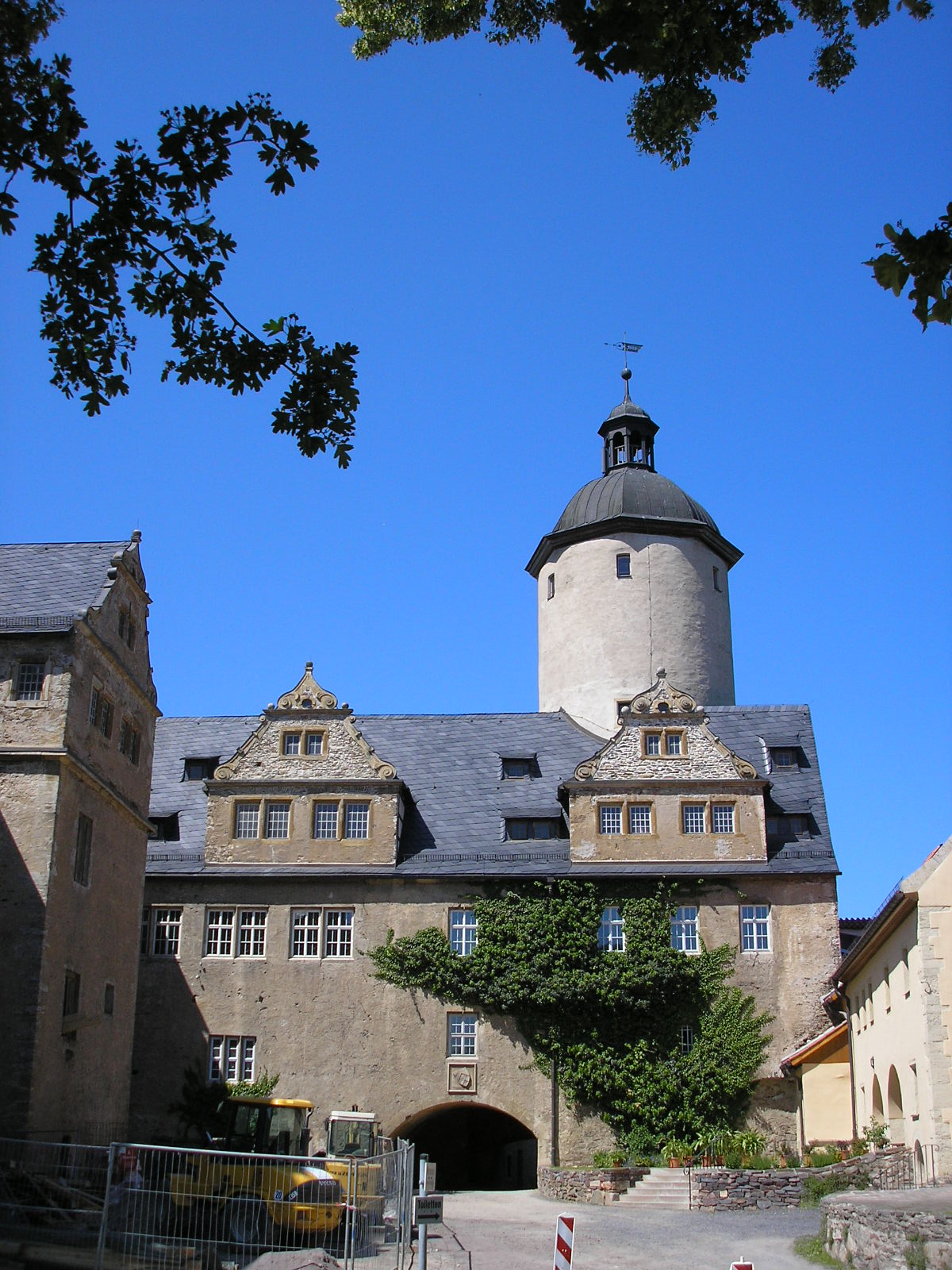
Hummelshain Castle
Neu-Hummelshain Castle stands as a remarkable example of historicist architecture in the Thuringian region of Germany. Constructed between 1880 and 1885, this castle was designed as a hunting lodge and residence for the Dukes of Saxe-Altenburg by the renowned Berlin architects Ernst von Ihne and Paul Stegmüller. It represents the last newly built state residence in Thuringia, symbolizing the close of a significant cultural era in the region's aristocratic history.
Historical background and significance
The area around Hummelshain has a long-standing tradition as a sovereign hunting ground, rich in forests and game, dating back to the late Middle Ages. Initially, it served the Electors and Dukes of Wettin, and later the Dukes of Saxe-Gotha and Altenburg. Historical records indicate the presence of an electoral hunting lodge in Hummelshain since at least the 15th century. In 1509-10, Elector Johann Friedrich the Magnanimous commissioned a new hunting lodge, and later, between 1668 and 1670, Duke Friedrich Wilhelm of Saxe-Altenburg constructed what is known as the Old Palace.
Following the reconstitution of the Duchy of Saxe-Altenburg in 1826, the site gradually evolved into a summer residence. The Old Palace suffered a significant fire in 1872, destroying one of its wings, which prompted Duke Ernest I of Saxe-Altenburg to initiate plans for a new palace. The chosen location for the new castle was a romantic hilltop surrounded by ancient oak and beech forests, a site recommended by the distinguished garden artist Eduard Petzoldt.
Architectural features and design
Neu-Hummelshain Castle exemplifies the historicist architectural style prevalent in the late 19th century, characterized by a revival and eclectic approach to past architectural traditions. The castle's design by Ernst von Ihne and Paul Stegmüller combines elements that evoke grandeur and aristocratic prestige suitable for its function as a ducal hunting lodge and summer residence.
The structure features an imposing façade, intricate stonework, and expansive interiors designed to accommodate the ducal family and their guests during the hunting season. The castle's setting on a hill amidst dense forest enhances its romantic and secluded atmosphere, aligning with the 19th-century aristocratic appreciation for nature and leisure pursuits like hunting.
Role as a ducal residence and hunting center
Until the end of the monarchy in Germany, Neu-Hummelshain Castle served as the favored summer residence for the Dukes of Altenburg and their families. It was also the focal point for the annual court hunts, prestigious social events that attracted notable figures, including Kaiser Wilhelm II, who participated in hunts at the castle in 1891 and 1894.
The castle's location in a forested and game-rich area made it an ideal setting for hunting, a pastime deeply embedded in aristocratic culture. The estate's facilities and grounds were tailored to support this activity, reinforcing its status as a cultural and social hub for the ducal court.
20th-century history and changing uses
Following the abdication of the monarchy, the castle changed hands several times. In 1920, it was purchased by Carl Gustav Vogel, a trade magazine publisher from Pößneck. During World War II, specifically in 1944, the castle was confiscated and repurposed as a REIMAHG hospital until the war's end in 1945.
From 1947 to 1992, the castle served as a youth home and was later converted into a youth labor camp, reflecting the socio-political changes in post-war East Germany. The closure of the labor camp in 1992 marked the end of this chapter in the castle's history.
Recent developments and conservation efforts
In 1998, the Free State of Thuringia sold Neu-Hummelshain Castle to a Leipzig-based company with plans to establish a research center. Unfortunately, the company failed to fulfill its renovation obligations, leading to the castle's gradual decay.
Recognizing its cultural and architectural significance, in 2017, the castle was classified as an architectural monument of national importance by the Federal Commissioner for Culture and the Media. It was included in the conservation program "Cultural Monuments of National Value" to support sustainable preservation efforts and prevent further deterioration.
The castle's condition remains precarious, but ongoing awareness and conservation initiatives aim to secure its future as a heritage landmark reflecting the rich history of Thuringia's ducal past and 19th-century aristocratic architecture.
Legacy and cultural importance
Neu-Hummelshain Castle stands as a testament to the cultural and historical evolution of aristocratic residences in Germany. Its historicist style, combined with its role as the last new state residence built in Thuringia, encapsulates a pivotal moment in architectural and social history. The castle's connection to the hunting traditions of the Wettin dynasty and the Dukes of Saxe-Altenburg enriches its narrative, making it a significant site for understanding regional heritage.
Today, the castle's story continues to attract historians, architecture enthusiasts, and conservationists dedicated to preserving this emblematic monument for future generations.
Frequently asked questions (FAQ)
- What is the historical significance of Hummelshain Castle?
- Hummelshain Castle, built in the late 19th century, is a stunning example of neo-Gothic architecture in Germany. It has served various purposes throughout its history, including as a private residence and a cultural landmark, showcasing the region's rich heritage.
- When was Hummelshain Castle constructed?
- Hummelshain Castle was constructed between 1885 and 1888. It was designed by architect Wilhelm Giers in the style of medieval fortifications, reflecting the romantic ideals of the period.
- Can I visit Hummelshain Castle?
- Yes, Hummelshain Castle is open to the public for tours. Visitors can explore its beautiful grounds, learn about its history, and appreciate its architectural features.
- What are the opening hours for Hummelshain Castle?
- Hummelshain Castle is typically open to visitors from 10 AM to 6 PM from April to October. During the winter months, the opening hours may vary, so it's advisable to check the official website before planning your visit.
- Is it possible to access Hummelshain Castle for individuals with mobility challenges?
- Yes, Hummelshain Castle aims to be accessible to all visitors. Ramps and designated pathways are available, but it's recommended to contact the castle in advance for specific accessibility inquiries.
- What is the best time to visit Hummelshain Castle?
- The best time to visit Hummelshain Castle is during the spring and summer months when the gardens are in full bloom. Additionally, the mild weather allows for a more enjoyable outdoor experience.
- Are there any nearby attractions to visit alongside Hummelshain Castle?
- Yes, visitors can explore several nearby attractions, including the picturesque village of Hummelshain and scenic hiking trails in the surrounding countryside. The region is rich in natural beauty and historical sites, making it an ideal destination for a day trip.
- How much are the ticket prices for Hummelshain Castle?
- Ticket prices for Hummelshain Castle are generally affordable, with discounts available for students and seniors. Family tickets may also be offered, providing a budget-friendly option for groups.
Information
Loading map...
Visitor reviews
No reviews yet. Been here? Write the first review and help other travelers!
Write the first reviewVisited this castle? Share your experience
Your review helps other travelers and adds first-hand knowledge to our encyclopedia.