Hukvaldy Castle
Hukvaldy Castle stands as a monumental testament to medieval fortification and regional history in the Czech Republic. Constructed in the second half of the 13th century by the counts of Hückeswagen, this hill castle was strategically positioned to oversee a crucial trade route between Olomouc and Kraków. Its location atop an elongated hill summit provided natural defensive advantages, which were further enhanced by robust architectural features developed over centuries.
Medieval origins and early history
The castle’s foundation by the medieval counts of Hückeswagen marks its initial role as a fortified stronghold designed to protect commerce and assert territorial control. These counts, who also owned nearby Starý Jičín Castle, established Hukvaldy to secure the vital trade artery traversing the region. The castle’s earliest surviving structure is the imposing Kulatina tower, a round tower measuring 34 meters in height and 25 meters in diameter, constructed in the 13th century by Arnold von Hückenswagen. This tower exemplifies early medieval military architecture, serving both as a lookout and a final defensive refuge.
Ownership under the bishops of olomouc
From the mid-14th century, Hukvaldy Castle came under the authority of the bishops of Olomouc, an ecclesiastical power that used the fortress as both a defensive bastion and an administrative center. Despite its strategic importance, the bishops faced ongoing financial difficulties, leading to the castle being mortgaged and redeemed multiple times. This period highlights the castle’s dual role in regional defense and church governance.
Architectural evolution and fortification enhancements
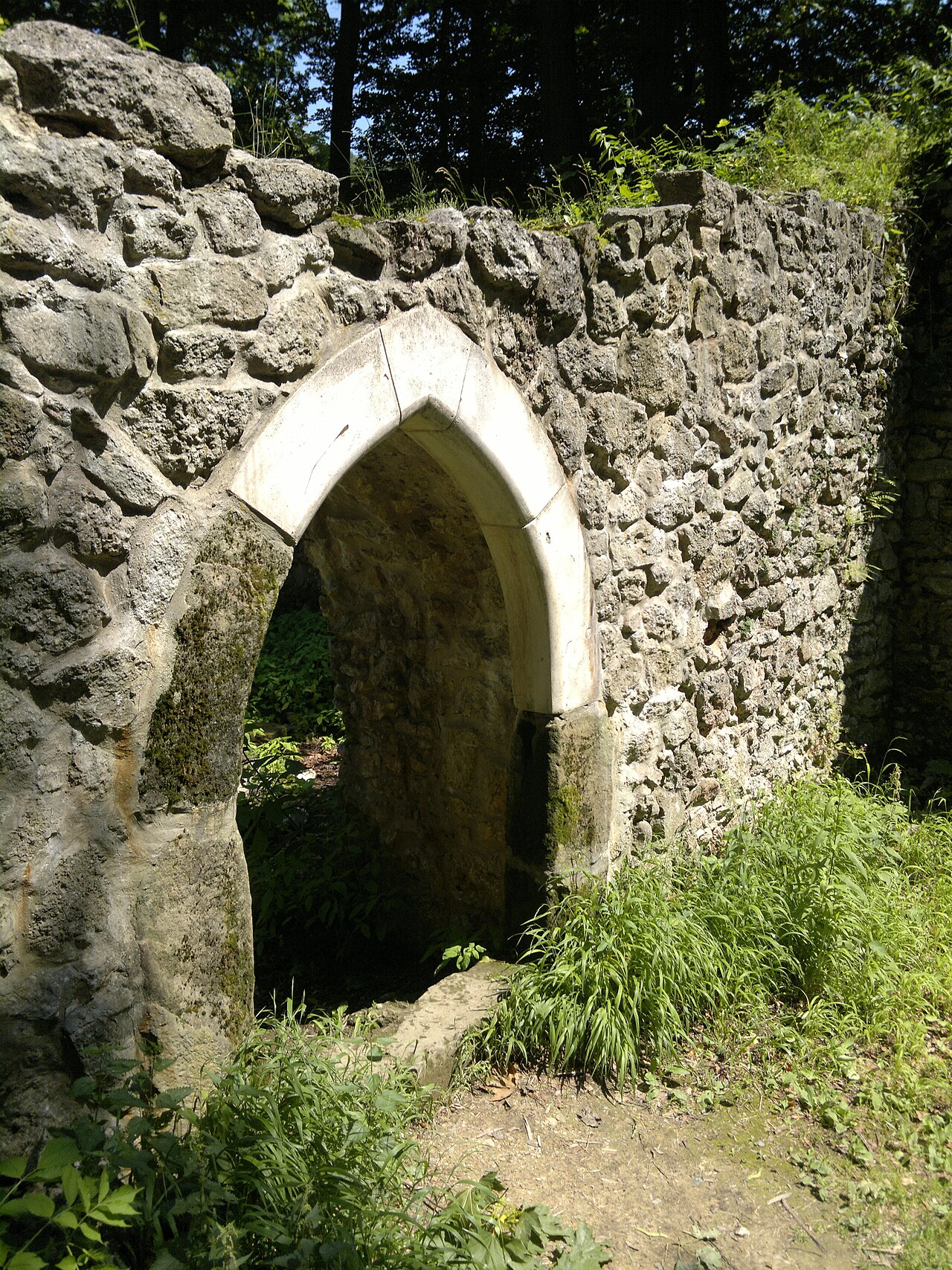
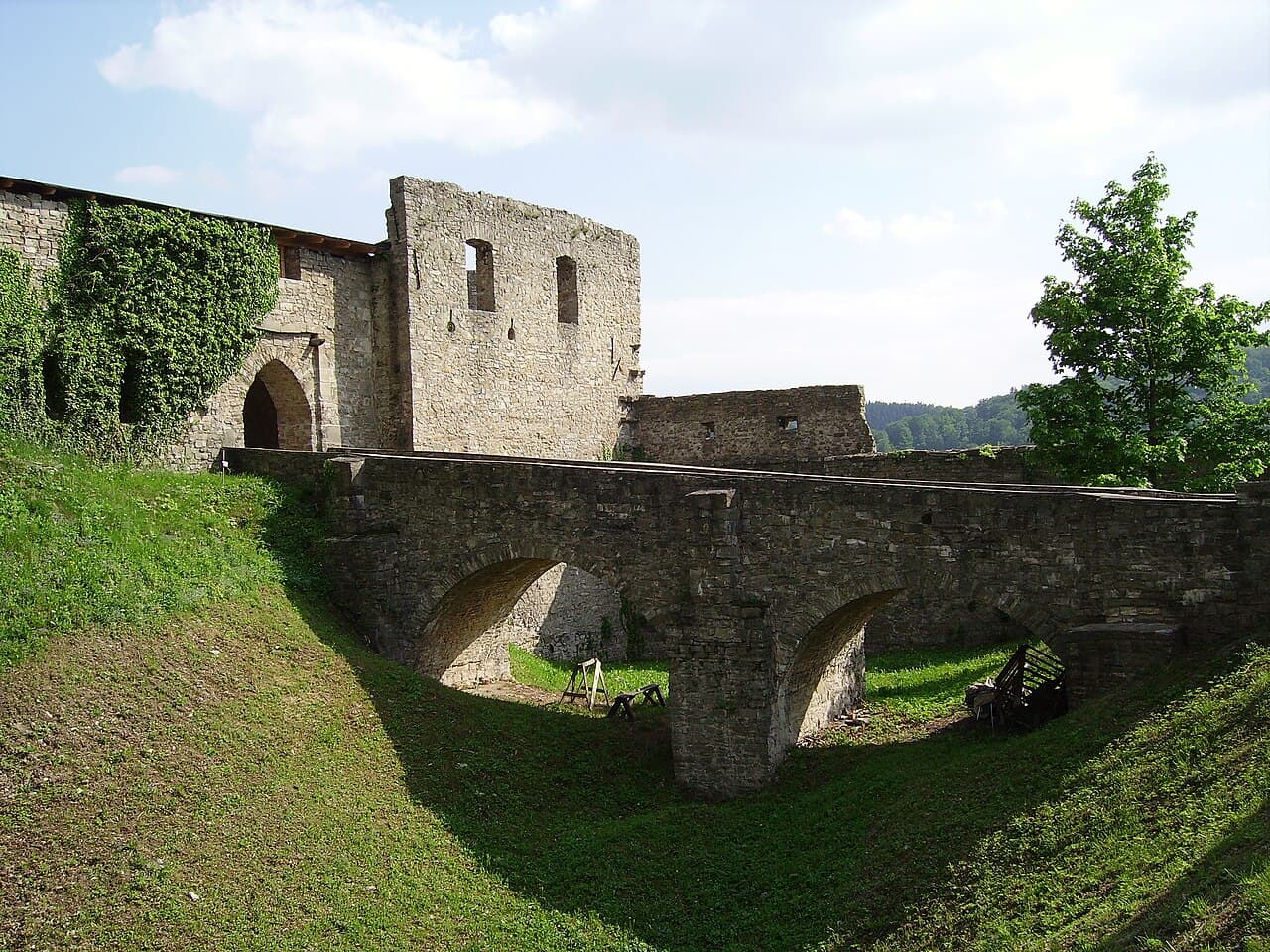
Throughout the 15th and 16th centuries, Hukvaldy Castle underwent significant architectural modifications reflecting advances in military technology and changing political circumstances. The Boskovic family, notable owners during this era, undertook extensive repairs and upgrades to the castle’s fortifications. Defensive walls were thickened to approximately two meters, and nine bastions were constructed to provide comprehensive protection around the perimeter, which extends roughly 800 meters. The castle’s layout is divided into six successive sections, each secured by individual gates, with the second gate currently serving as the main entrance leading into the central courtyard.
Additional fortifications included a guard tower above the entrance gate and strategically placed guardhouses, while the main access road was rerouted to optimize security. The use of sandstone from the nearby Kazničov quarry was instrumental in these construction efforts, contributing to the castle’s enduring structural integrity.
The renaissance chapel of saint andrew
Within the main courtyard stands the Renaissance chapel dedicated to Saint Andrew, built in 1602. This chapel, the best-preserved building on the site, was restored in the 19th century and is renowned for its excellent acoustics. It reflects the cultural and religious transformations the castle experienced during the Renaissance, serving as a spiritual center for the castle’s inhabitants and visitors.
Sieges and military resilience
Hukvaldy Castle’s history is marked by its remarkable ability to withstand military assaults. Notably, it was never captured despite enduring a grueling nine-month siege by Danish forces in 1626 during the Thirty Years’ War. Later, it also resisted a blockade by Swedish troops, further emphasizing its strategic strength and well-designed defenses.
Water supply challenges and innovations
A persistent challenge for the castle was securing a reliable water supply, critical for sustaining its occupants during sieges. The first deep well, excavated in 1581 to a depth of 150 meters, marked a significant technological achievement. Additional wells were dug later in the century, including a notable 16th-century well in the final courtyard, originally 170 meters deep. This well was partly filled after the devastating fire of 1738 but remains a significant testament to the castle’s efforts to maintain water access.
Decline and preservation
The castle’s decline began following two catastrophic fires: one in 1738 that destroyed essential water pumping equipment, and another in 1762 caused by lightning, which destroyed all wooden buildings and the castle archive. These disasters led to the abandonment of Hukvaldy Castle, which gradually fell into ruin over the following centuries.
In the 20th century, the castle was taken into state ownership following the nationalization efforts of 1948. Today, Hukvaldy Castle is preserved as a significant historical monument, with its ruins accessible to visitors and maintained as part of Czechia’s cultural heritage.
Architectural layout and surrounding landscape
The castle complex stretches approximately 320 meters along the hilltop, enclosed by thick defensive walls and fortified by nine bastions. The six successive sections of the castle each have separate gates, creating a layered defense system. The large Kulatina tower dominates the skyline, symbolizing the castle’s medieval origins.
Surrounding the castle is a vast English-style park covering over 450 hectares, enclosed by a 19th-century boundary wall with a neo-Baroque gate. The park features mature trees such as oaks, lindens, elms, and chestnuts, and serves as a habitat for wildlife including mouflons, fallow deer, and sika deer. This natural setting complements the historic ruins, offering visitors a serene environment to explore both nature and history.
Materials and construction techniques
The primary building material was locally quarried sandstone from Kazničov, which was used extensively in the walls and structural elements. The robust masonry and strategic use of bastions illustrate the castle’s adaptation to evolving military needs from the medieval period through the Renaissance.
Cultural significance and tourism
Today, Hukvaldy Castle is an important cultural landmark in Czechia, attracting visitors interested in medieval architecture, history, and natural beauty. The site hosts various cultural events, including concerts in the chapel known for its acoustics, enhancing its role as a living heritage site. The castle’s dramatic ruins and scenic parkland provide a compelling destination for history enthusiasts and tourists alike.
Frequently asked questions (FAQ)
- How do I get to Hukvaldy Castle?
- Hukvaldy Castle is located near the village of Hukvaldy in the Moravian-Silesian Region of Czechia. It is accessible by car and public transportation, with local bus services connecting from nearby cities such as Ostrava.
- What are the opening hours of Hukvaldy Castle?
- The castle ruins are generally open to visitors year-round, but specific opening hours may vary seasonally. It is advisable to check the official website or local tourist information for current visiting times.
- Is there an entrance fee to visit Hukvaldy Castle?
- Visiting the castle ruins is often free of charge, but some special exhibitions or events held on-site may require a ticket. Confirm ticket prices in advance through official channels.
- What architectural styles are represented at Hukvaldy Castle?
- Hukvaldy Castle features a mix of architectural styles, including early medieval military architecture seen in the 13th-century Kulatina tower and Renaissance elements such as the chapel of Saint Andrew.
- Can I explore the surrounding park near Hukvaldy Castle?
- Yes, the castle is surrounded by a large English-style park covering over 450 hectares. Visitors can enjoy walking trails, observe mature trees, and spot local wildlife including deer species.
- Why was Hukvaldy Castle never captured despite sieges?
- The castle’s strategic hilltop location, thick defensive walls, multiple bastions, and layered gate system contributed to its resilience. Its well-planned fortifications allowed it to withstand prolonged sieges during the Thirty Years’ War.
Photo gallery

Photo by Tedmek•Public domain
Information
Website
Visit websiteSources & official resources
Verify the information above using these authoritative references.
Loading map...
Visitor reviews
No reviews yet. Been here? Write the first review and help other travelers!
Write the first reviewVisited this castle? Share your experience
Your review helps other travelers and adds first-hand knowledge to our encyclopedia.