Stramberk Castle
Štramberk Castle is a significant medieval fortress located in the town of Štramberk in the Moravian-Silesian Region of the Czech Republic. The castle's origins are somewhat shrouded in legend and mystery, with an old tale suggesting that its original planned location was on the opposite hill called Kotouč. According to this legend, dwarves from the nearby cave known as the Devil's hole prevented its construction there. While this story adds a mythical dimension to the castle's history, archaeological and documentary evidence points to a more pragmatic purpose: Štramberk Castle was built primarily to protect the country's boundaries during the turbulent High Medieval period.
Historical research indicates that the castle was likely constructed in the 13th century either by the aristocratic Benešovic family or more precisely under the auspices of the Přemyslid princes, who ruled the region at the time. The castle's strategic position on a hill overlooking the surrounding landscape made it an ideal defensive stronghold. Its early owners included the knights of the Templar order, who held the castle during the 13th century. The Templars were a powerful and wealthy military order, and their presence at Štramberk is documented in historical texts such as T. J. Pešina's Prodromus Moraviographiae from 1663.
Medieval ownership and royal connections
Following the dissolution of the Templar order in 1312, ownership of Štramberk Castle transferred to the Czech king John of Luxembourg. Between 1333 and 1346, the castle was held by the Moravian margrave Charles, who later became King Charles IV of Bohemia. This period marked an important phase in the castle's history, as it was integrated into the royal domain and likely underwent enhancements to its fortifications.
From 1350, the castle was officially known as castrum Strallenberg. It was owned by Moravian margrave John Jindřich, the founder of the town of Štramberk, and later passed to his son, Margrave Jošt of Luxembourg, in 1375. After 1380, the castle came under the control of the Moravian-Silesian branch of the Benešovic family, the lords of Kravaře, who held it until 1433.
Architectural features and structural evolution
Štramberk Castle originally featured a two-palace complex with associated farm buildings and was protected by two prismatic ramparts, as depicted in its earliest known illustration dating from 1722. The castle's most prominent surviving structure is its cylindrical Gothic tower, locally known as the "Trúba", which rises approximately 40 meters high with a diameter of 10 meters. This tower served as a lookout and a symbol of the castle's defensive strength.
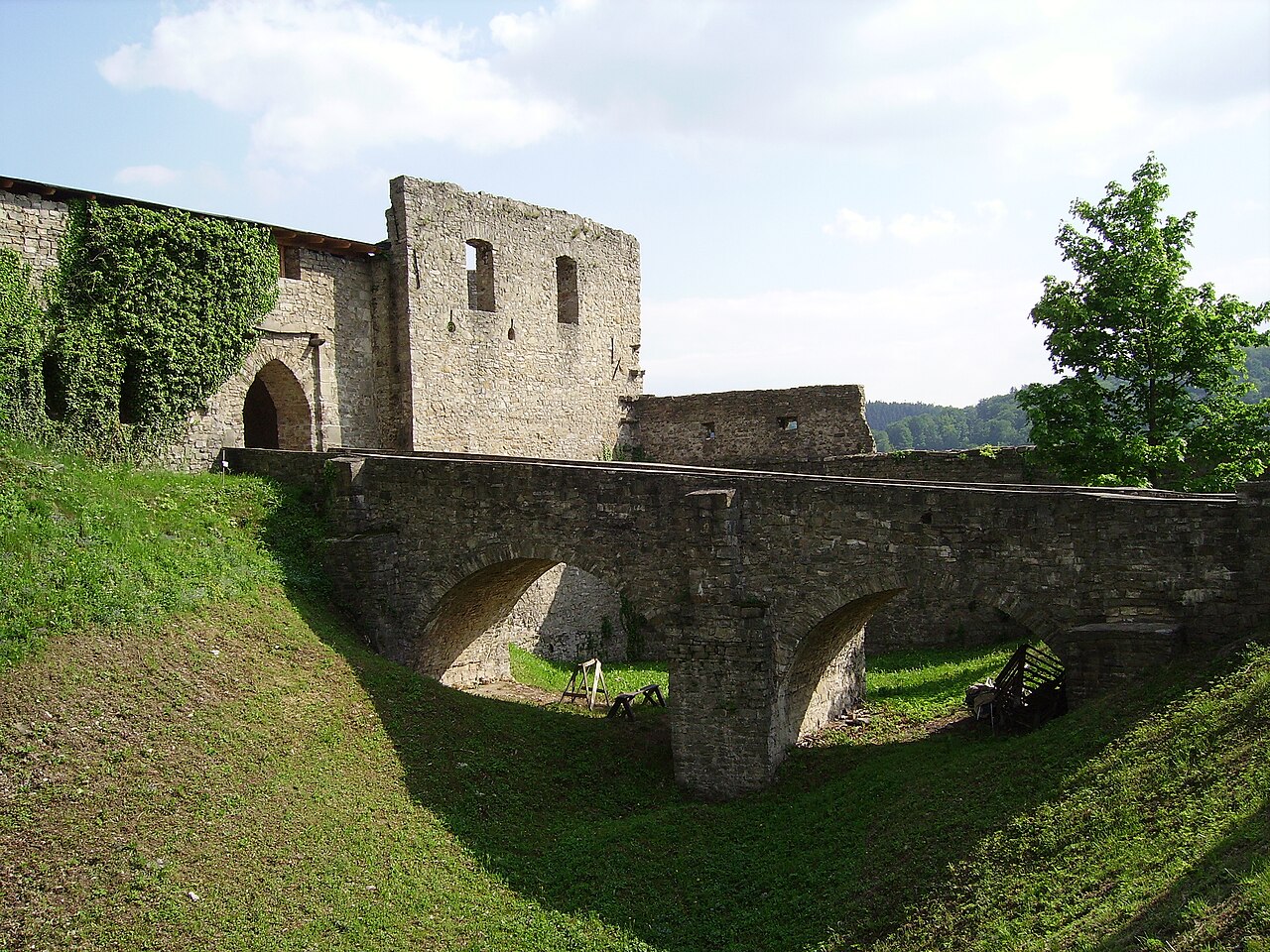
In 1783, the outer parts of the castle collapsed, and much of the masonry was repurposed for local building projects. Despite this, the inner fortifications, particularly the northeast rampart and the tower, remained largely intact. Between 1901 and 1903, the tower underwent restoration and was roofed, transforming it into a lookout tower designed by the renowned Prague architect Kamil Hilbert. During this restoration, the outer ramparts were partly repaired and enhanced with two gates, reviving some of the castle's defensive character.
Fortifications and layout
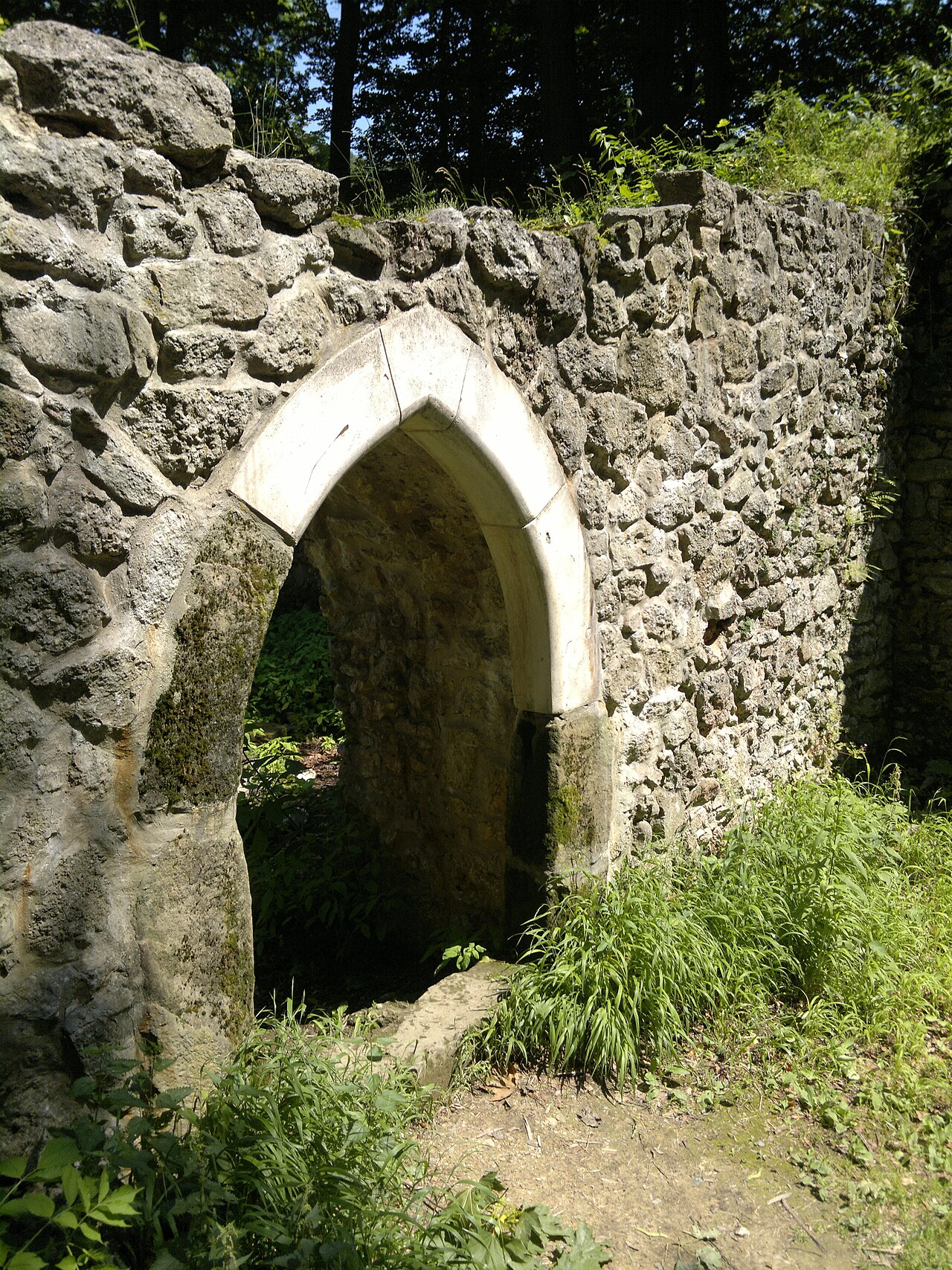
The castle's fortifications include thick stone walls and ramparts designed to withstand sieges typical of the High Medieval era. The ramparts are prismatic in shape, a defensive feature intended to deflect projectiles and resist battering. The layout of the castle on a hilltop allowed defenders to monitor the surrounding landscape and control important trade and military routes.
Later history and preservation
After 1533, Štramberk Castle gradually fell into disrepair as its military importance declined. By the 18th century, it was largely a ruin, with only the inner fortifications and the tower remaining structurally sound. The castle's historical and cultural significance was recognized in the 20th century, leading to preservation efforts.
A commemorative plaque designed by sculptor František Juráň was installed on the fortification in memory of Adolf Hrstka M.D., a physician and former mayor of Štramberk who was a dedicated promoter of the castle and town. Today, the castle ruins, including the Gothic tower and adjoining fortifications, are protected as a National Cultural Monument of the Czech Republic.
Štramberk castle in the modern era
Currently, Štramberk Castle is owned by the town of Štramberk since 1994 and stands as a prominent historical landmark. Its Gothic tower serves as a popular lookout point offering panoramic views of the surrounding Moravian landscape. Visitors can explore the ruins and appreciate the castle's medieval architecture and its role in regional history.
The castle's location in the Moravian-Silesian Region makes it accessible for tourists interested in medieval history, architecture, and Czech cultural heritage. The preservation of the tower and ramparts allows for a tangible connection to the High Medieval period and the various noble families and rulers who influenced the region.
Architectural style and significance
Štramberk Castle exemplifies Gothic military architecture typical of the 13th century in Central Europe. Its cylindrical tower is a distinctive feature, combining defensive functionality with symbolic presence. The castle's fortifications reflect the evolving needs of medieval defense, including the use of prismatic ramparts and strategic hilltop placement.
The castle's association with the Templar knights and later royal and noble owners adds layers of historical importance. As a National Cultural Monument, Štramberk Castle contributes to the understanding of medieval fortification techniques and the political history of Moravia.
Frequently asked questions (FAQ)
- What is the historical significance of Stramberk Castle?
- Stramberk Castle, also known as the "Stramberk Truba," dates back to the 13th century and played a crucial role in the defense of the region. It is a symbol of the town of Štramberk and reflects the medieval architecture of the era, making it a significant landmark in Czech history.
- When was Stramberk Castle built?
- Stramberk Castle was established in the 13th century, likely around the year 1260. It was constructed as a royal fortress and has undergone various modifications throughout the centuries, reflecting changes in architectural styles and defensive needs.
- Can I visit Stramberk Castle?
- Yes, visitors are welcome to explore Stramberk Castle. The site offers guided tours that provide insights into its history, architecture, and the surrounding area, making it an enriching experience for history enthusiasts and casual visitors alike.
- What are the opening hours for Stramberk Castle?
- Stramberk Castle is typically open to visitors from April to October, with varying hours depending on the season. It’s advisable to check the official website or contact local tourism information for the most current opening times before planning your visit.
- Is it possible to access Stramberk Castle with limited mobility?
- While Stramberk Castle is a historic site with some accessibility challenges, efforts have been made to accommodate visitors with limited mobility. It's recommended to contact the castle administration in advance to discuss specific needs and available options for a more comfortable visit.
- When is the best time to visit Stramberk Castle?
- The best time to visit Stramberk Castle is during the spring and early autumn months when the weather is mild and the surrounding landscape is particularly beautiful. Visiting during these seasons also allows you to enjoy various local events and festivals held in Štramberk.
- What are the ticket prices for Stramberk Castle?
- Ticket prices for Stramberk Castle vary depending on age and tour type, with discounts available for children, students, and seniors. For the most accurate pricing and any special offers, it’s best to check the official website or inquire upon arrival.
- Are there any nearby attractions to visit?
- Yes, there are several nearby attractions to explore, including the charming town of Štramberk itself, known for its picturesque streets and local crafts. Additionally, the area features beautiful nature trails and other historical sites, making it an excellent destination for a full day of exploration.
Information
Loading map...
Visitor reviews
No reviews yet. Been here? Write the first review and help other travelers!
Write the first reviewVisited this castle? Share your experience
Your review helps other travelers and adds first-hand knowledge to our encyclopedia.