Hrusov Castle Ruins
Hrušov Castle stands as a striking example of a High Medieval hill castle perched atop the quartzite hill known as Skalka near the village of Hostie, in the region of Topoľčianky, Slovakia. Its origins trace back to the aftermath of the devastating Mongol invasions of the mid-13th century, with the first written mention dating to 1253. Though the exact founding date remains uncertain, it is widely accepted that the castle was constructed in the 13th century to serve as a strategic fortification guarding the important trade route connecting the Požitavie and Ponitrie regions.
Historical context and ownership transitions
Initially, the castle was under the control of the Levických family from 1321 to 1344. Following this period, it reverted to royal possession, with King Louis I of Hungary granting it in 1347 to the governor Hrušov, from whom the castle derives its name. Over subsequent centuries, Hrušov Castle witnessed numerous changes in ownership, passing through prominent noble families such as the Perényi, Bebek, Kanizsai, and Szapolyai. These transitions often reflected the shifting political landscape of the Kingdom of Hungary and involved complex legal disputes over land and rights, including conflicts with local entities such as the Knezsicz and Maholány families.
15th and 17th century conflicts and renovations
The 15th century was marked by regional strife, with Hrušov Castle becoming a focal point of power struggles, including a notable lawsuit initiated by the nearby Saint-Benoît monastery over territorial claims. In the 17th century, the castle underwent significant fortification efforts under the direction of Count László Rákóczi, reflecting the military demands of the era, particularly concerning the rise of artillery warfare.
Despite these efforts, the castle suffered a devastating blow in 1708 when it was destroyed by the Imperial army during the suppression of Prince Francis II Rákóczi’s kuruc uprising. This event led to the castle’s abandonment and gradual decay, leaving it in ruins ever since.
Architectural features and layout
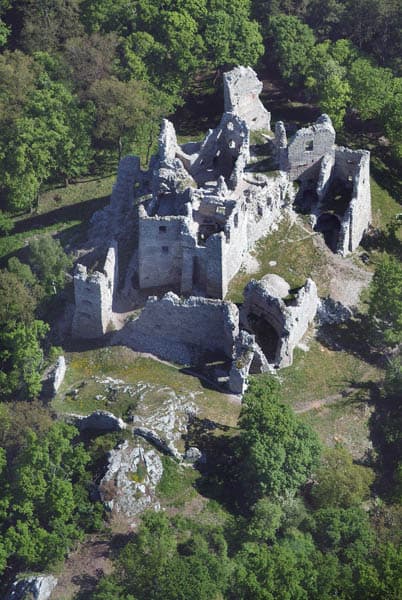
Hrušov Castle originally combined Gothic architectural elements with practical defensive features typical of medieval fortresses. The core of the castle consisted of a main residential area surrounded by a first outer bailey, an enclosed courtyard that provided an additional layer of protection. This bailey housed various functional buildings and spaces necessary for daily life and defense.
A second outer bailey was later constructed as an artillery fortification, demonstrating the castle’s adaptation to the evolution of military technology, particularly the introduction of cannons. Although this second enclosure no longer survives in its entirety, remnants indicate its former extent and purpose.
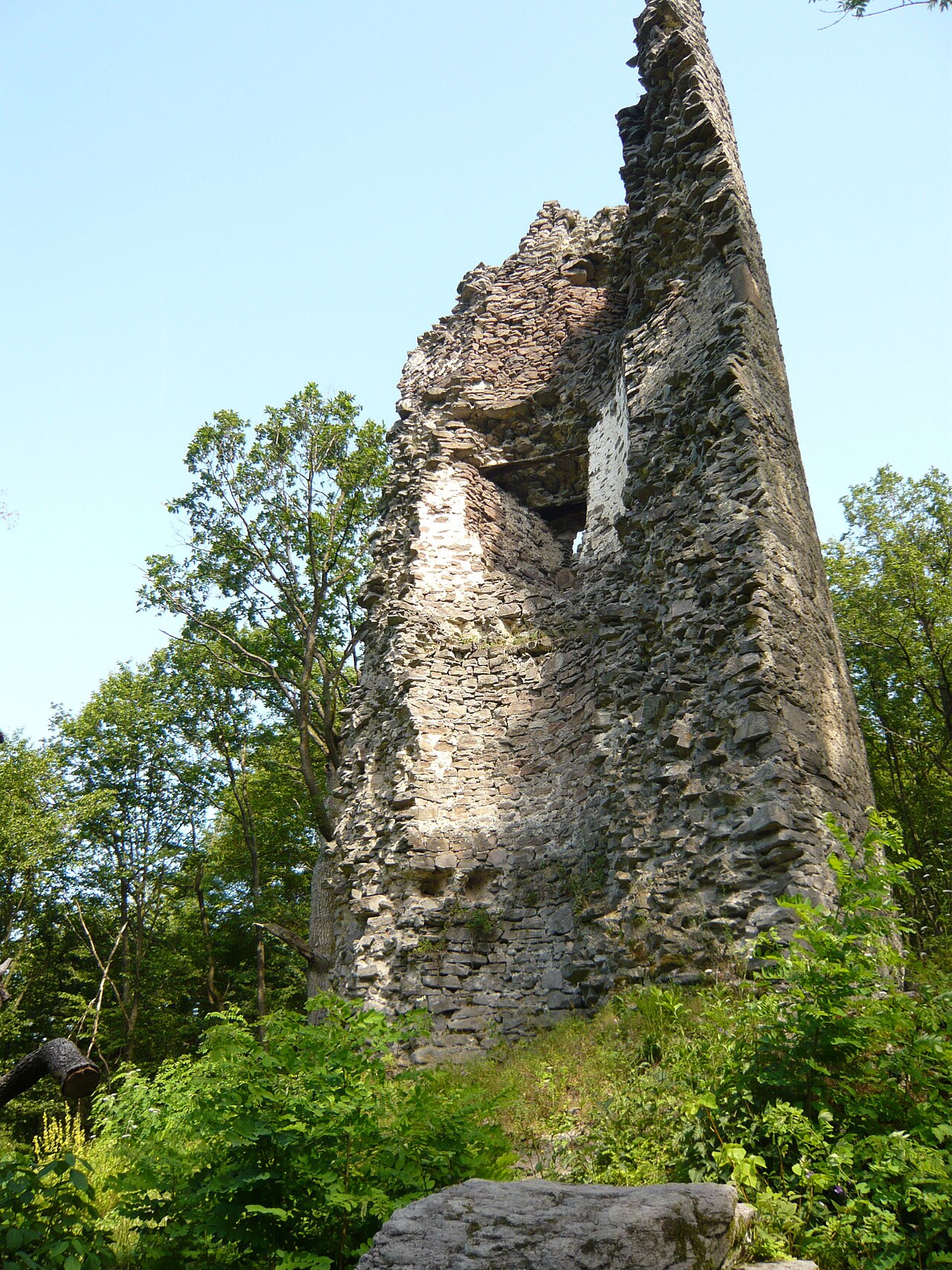
The castle’s defensive system was reinforced by multiple towers and bastions. One prominent tower, marking the entrance to the second outer bailey, features rectangular windows and embrasures—narrow slits designed for archers and later firearm use, allowing defenders to observe and attack while remaining protected.
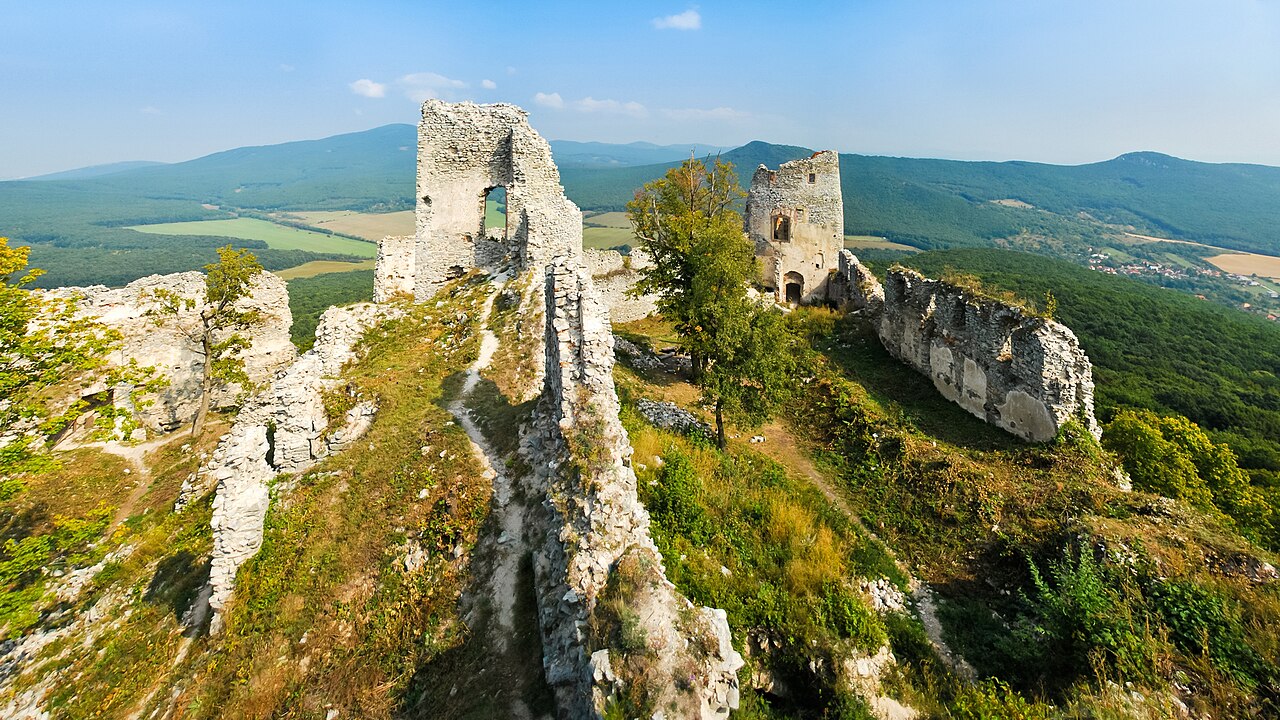
Strategically situated on a quartzite hill, the castle commanded expansive views of the surrounding landscape, enabling surveillance of the vital trade route it was built to protect. This natural elevation was a critical factor in its defensive capabilities.
Preservation and current state
Today, the Hrušov Castle ruins offer visitors a glimpse into medieval fortification techniques and regional history. The site is accessible via marked hiking trails from nearby villages, making it a popular destination for history enthusiasts and hikers alike. Efforts to preserve the ruins began in the early 20th century, notably between 1928 and 1930 under the guidance of Ing. K. Kühn from the National Heritage Institute in Prague, with support from President Tomáš Masaryk. Further restoration and conservation projects have continued into the 21st century to maintain the site’s structural integrity and historical significance.
The remaining walls and towers evoke a romantic atmosphere, offering panoramic views of the surrounding countryside. The ruins stand as a testament to the castle’s historical role as a military stronghold, administrative center, and symbol of regional power throughout the centuries.
Regional significance and cultural heritage
Hrušov Castle played a vital role not only militarily but also administratively, as evidenced by medieval records such as a 1504 contract listing numerous villages and domains under its jurisdiction. This highlights the castle’s importance as a center of regional governance and land management in medieval Slovakia.
Its strategic location and historical legacy contribute to its status as a cultural heritage site, attracting visitors interested in medieval history, architecture, and the turbulent political history of the Kingdom of Hungary and later Slovakia.
Visitor experience and accessibility
Visitors to the Hrušov Castle ruins can explore the remains of the outer baileys, towers, and curtain walls, gaining insight into the castle’s defensive architecture and historical context. The site’s natural setting atop a quartzite hill provides opportunities for hiking and enjoying scenic views.
Interpretive signage and guided tours may be available seasonally, enhancing understanding of the castle’s history and architectural features. The site is open year-round, though weather conditions can affect accessibility.
Frequently asked questions (FAQ)
- What is the historical significance of Hrusov Castle Ruins?
- Hrusov Castle Ruins are a testament to the medieval architecture and strategic importance of the region. Built in the 14th century, the castle played a crucial role in defending the area against invasions and served as a residence for noble families.
- When was Hrusov Castle constructed?
- Hrusov Castle was constructed in the early 14th century, with its first documented mention in 1311. The castle has undergone various modifications over the centuries, reflecting the architectural styles of its time.
- Can I visit Hrusov Castle Ruins?
- Yes, Hrusov Castle Ruins are open to the public and can be visited year-round. Visitors can explore the ruins and enjoy panoramic views of the surrounding landscape.
- What are the opening hours for Hrusov Castle Ruins?
- The opening hours for Hrusov Castle Ruins may vary seasonally, so it is best to check the official website or local tourism information for the most accurate details. Generally, the ruins are accessible during daylight hours.
- Is it possible to access Hrusov Castle by public transportation?
- Yes, public transportation options are available to reach Topoľčianky, where Hrusov Castle Ruins are located. From the town center, visitors may need to walk or use local taxis to reach the castle site.
- What is the best time to visit Hrusov Castle Ruins?
- The best time to visit Hrusov Castle Ruins is during the spring and fall when the weather is mild and the natural scenery is particularly beautiful. Summer months can also be pleasant, but may attract more tourists.
- Are there any nearby attractions to Hrusov Castle Ruins?
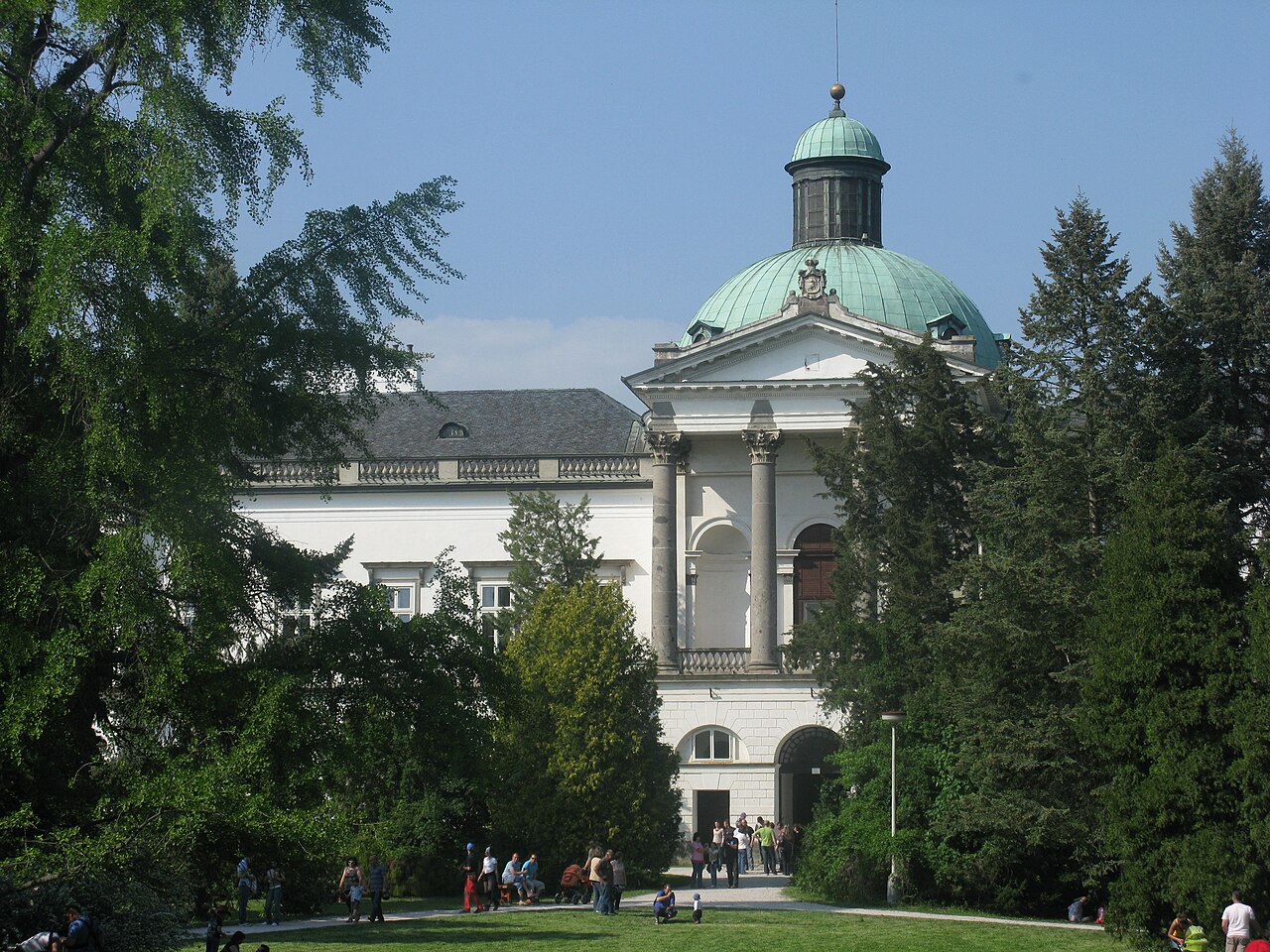
- Yes, nearby attractions include the picturesque Topoľčianky Manor and the peaceful Topoľčianky Park. Visitors can also explore the natural beauty of the surrounding countryside, making it a great destination for a day trip.
- What are the ticket prices for visiting Hrusov Castle Ruins?
- Visiting Hrusov Castle Ruins is generally free of charge, allowing everyone to enjoy the historical site. However, guided tours or special events may have associated fees, so it's advisable to check in advance.
Photo gallery

Information
Loading map...
Visitor reviews
No reviews yet. Been here? Write the first review and help other travelers!
Write the first reviewVisited this castle? Share your experience
Your review helps other travelers and adds first-hand knowledge to our encyclopedia.