Gýmes Castle Ruins — Slovakia castle

Gýmes Castle Ruins

Gýmeš castle ruins in jelenec, slovakia
Jelenec, Slovakia
High Medieval (11th–13th c.)
Ruins

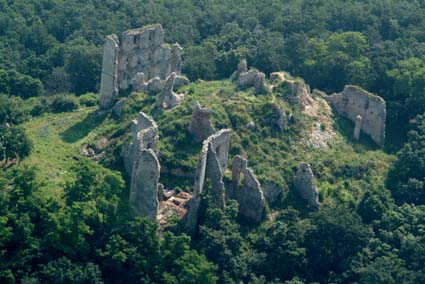
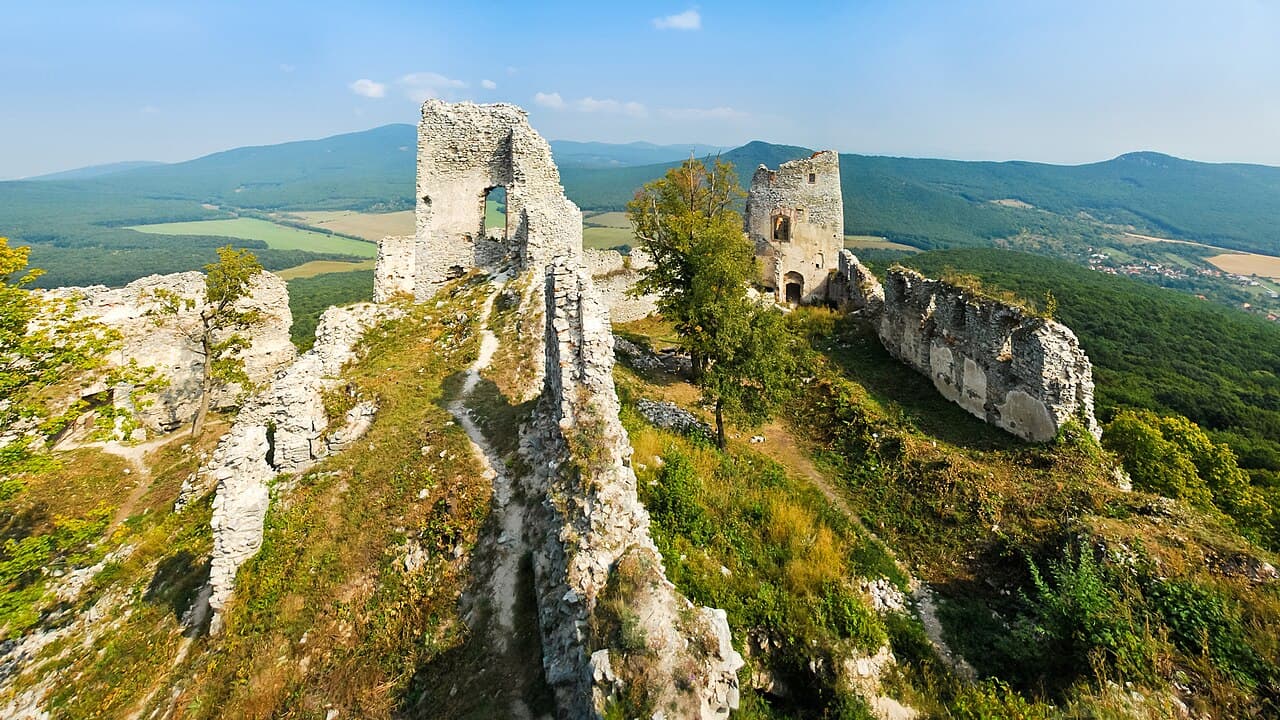
Gýmeš Castle ruins stand as a prominent historical landmark near the village of Jelenec in Slovakia, perched atop the steep quartzite hill known as Dúň in the Tribeč Mountains. This high medieval hill castle was originally constructed in the 13th century by the noble Hungarian family of Hont-Pázmány, replacing an earlier hill fortification. Its strategic location provided commanding views over the surrounding region, making it a significant military and administrative center throughout the Middle Ages and beyond.

The castle’s origins trace back to the mid-13th century, around 1253–1270, when Andrew (Ondrej) Forgách, son of Ivanko of the ancient Hunt–Poznán lineage, established the stone fortress. This replaced a previous wooden or earthwork hill fort, marking a transition to more durable stone construction typical of high medieval fortifications. The castle first appears in written records as Divénykő in 1253. Over the subsequent decades, it witnessed numerous military conflicts, including attacks by Czech forces in 1271 and 1273, reflecting the turbulent political landscape of the region.

Historical significance and ownership

During the early 14th century, the castle came under the control of the influential magnate Matthew Csák of Trenčín, a powerful regional lord who expanded his domains during the interregnum period in Hungary. Csák held Gýmeš until his death in 1312, after which the fortress reverted to the authority of the Hungarian crown. Subsequently, King Louis the Great granted the castle to his queen, Mary, in 1356, reflecting its continued importance as a royal possession.

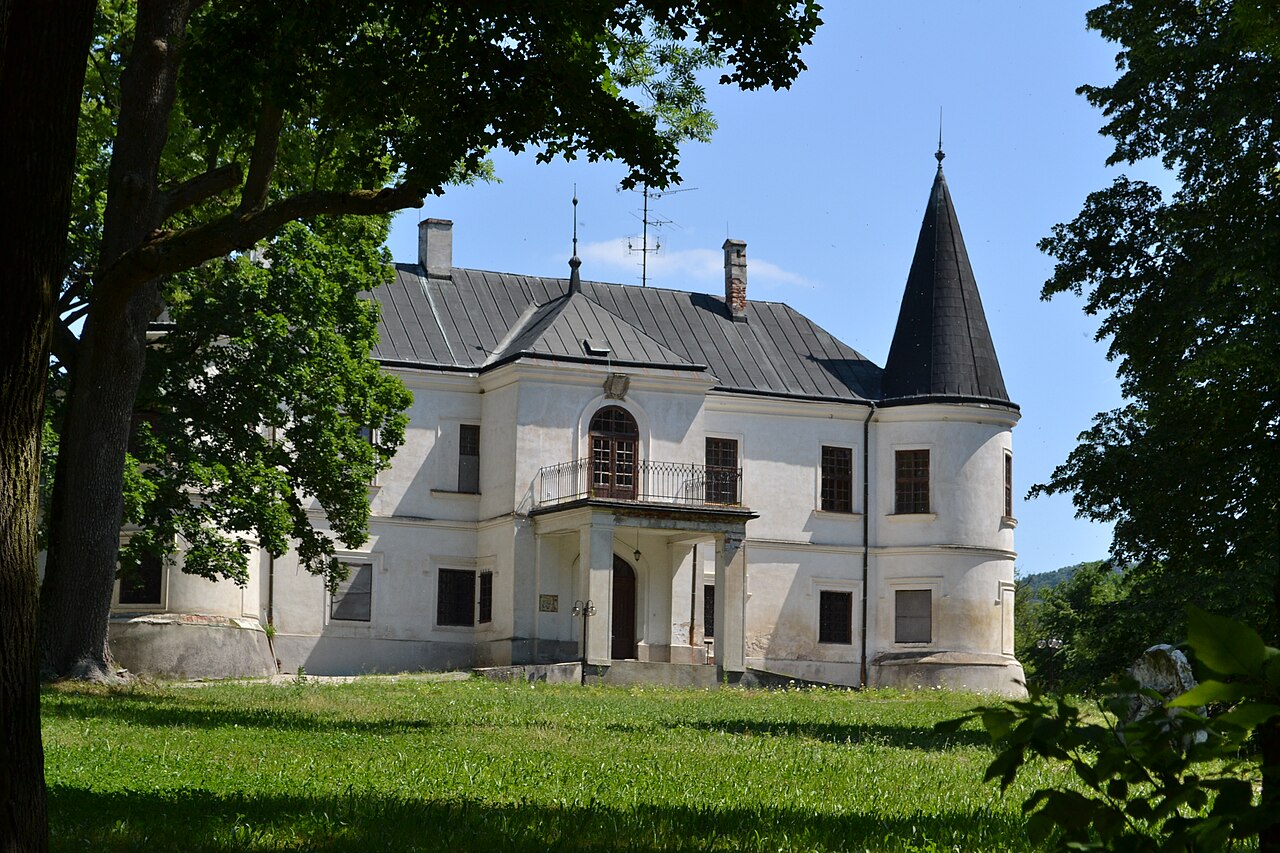
The castle later became associated with the noble Forgách family, who regained ownership after Blažej Forgách, acting on behalf of Queen Mary of Hungary, killed her rival Charles II of Anjou. The Forgáchs maintained the castle and its estates for several centuries, overseeing expansions and renovations. In the 18th century, they built a Baroque manor house in Jelenec village and a church, marking a shift in their residence and signaling the castle’s gradual decline as a primary dwelling.

Architectural evolution and features

Initial construction and layout

The castle’s original layout centered around a late Romanesque triangular courtyard enclosed by defensive walls. A rectangular tower on the southern side served both defensive and residential purposes, forming the core of the fortress. By the end of the 13th century, a second tower and additional residential buildings were added, connected by fortified walls to create a more complex and defensible structure.

Later expansions and fortifications

Throughout the 15th and 16th centuries, the castle underwent significant enlargement. New palatial buildings were constructed alongside robust fortifications, including a large trapezoidal tower and a cylindrical tower near the main entrance. These additions enhanced the castle’s defensive capabilities, adapting it to evolving military technologies such as artillery.

Following damage sustained during Ottoman raids in 1663, the southern defenses were reinforced with new walls equipped with artillery bastions, designed to withstand cannon fire. These enhancements illustrate the castle's adaptation to the changing nature of warfare in the early modern period.

Baroque transformations

In the 18th century, parts of the castle were repurposed for religious and familial use. The Gothic palace was converted into a crypt for the Forgách family, with an attached Baroque chapel dedicated to St. Ignatius of Loyola. This chapel features characteristic Baroque elements such as pilasters and profiled cornices, adding artistic and architectural value to the site. Beneath the chapel lies the family burial vault, underscoring the castle’s role as a noble residence and memorial site.

Military history and conflicts

Gýmeš Castle played a notable role in regional military history. It survived multiple sieges and attacks, including those by Czech forces in the late 13th century and Ottoman incursions in the late 16th and 17th centuries. The castle was a strategic stronghold during the anti-Habsburg uprising led by Francis II Rákóczi between 1704 and 1708, serving as a military base for his forces.

Despite its resilience, the castle’s military significance declined over time, especially as nearby Nitra Castle rose in prominence. By the 18th century, the castle was increasingly overshadowed by newer fortifications and the changing political landscape, leading to its gradual abandonment.

Decline and preservation

After the Forgách family moved their residence to the newly built Baroque manor house in Jelenec village, Gýmeš Castle gradually fell into disuse. It remained inhabited until around 1848 but suffered damage and neglect. The castle’s roof was dismantled in 1833, and its iron supports were repurposed for local industry, including a sugar refinery, accelerating its ruinous state.

Today, the ruins of Gýmeš Castle are well recognized for their historical and architectural significance. The remaining walls, towers, and foundations provide valuable insights into medieval and early modern castle construction in Slovakia. Local preservation groups have been active since 2011 in safeguarding the site, ensuring that this remarkable example of high medieval hill castle architecture continues to be accessible for education and tourism.

Architectural remains and site layout

The castle’s ruins reveal a complex, multi-level structure adapted to the steep terrain of the Dúň hill. The site includes remnants of the original defensive walls, multiple towers, and residential buildings arranged in a vertical hierarchy. The lower sections were designated for guards and horses, the middle for noble living quarters, and the uppermost for watch posts and strong fortifications.

Stone window and door frames survive in several parts of the ruins, offering glimpses into the castle’s original aesthetic and craftsmanship. The water supply was ingeniously managed via a reservoir rather than a well, an important adaptation for a hilltop fortress.

The 18th-century Baroque chapel remains a highlight of the site, with its decorative pilasters and cornices still visible despite centuries of exposure. The burial vault beneath the chapel emphasizes the castle’s dual role as a residence and family mausoleum.

Visitors today can explore the castle’s horizontal silhouette marked by surviving perimeter walls and foundations, tracing the evolution of its architecture from Romanesque origins through Gothic and Baroque modifications. This layered history makes Gýmeš Castle a compelling site for those interested in medieval fortifications and noble heritage in Slovakia.

Frequently asked questions (FAQ)

What is the historical significance of Gýmes Castle Ruins?
Gýmes Castle Ruins date back to the early 14th century and played a crucial role in the defense of the region against invasions. The castle's architecture reflects the medieval fortification strategies of its time, and it stands as a testament to the historical conflicts that shaped Slovakia.
When was Gýmes Castle built?
Gýmes Castle was constructed around the year 1320, during a period when castles were essential for regional control and defense. It underwent various modifications over the centuries, reflecting the changing architectural styles and defensive needs.
Can I visit Gýmes Castle Ruins year-round?
Yes, Gýmes Castle Ruins are accessible to visitors throughout the year. However, it is advisable to check local weather conditions and any seasonal maintenance schedules that may affect access.
What are the opening hours for Gýmes Castle Ruins?
The opening hours for Gýmes Castle Ruins can vary by season, so it's best to check ahead before your visit. Typically, the site is open during daylight hours, allowing visitors to explore the ruins at their leisure.
Is it possible to explore the castle on my own?
Yes, visitors can explore Gýmes Castle Ruins independently, allowing for a personal and immersive experience. Informational signs are usually placed throughout the site to guide you and provide context about its history.
What is the best time to visit Gýmes Castle Ruins?
The best time to visit Gýmes Castle Ruins is during the spring and early autumn when the weather is mild and the surrounding nature is vibrant. These seasons offer a picturesque backdrop for exploring the ruins and taking photographs.
Are there any nearby attractions to visit?
Yes, there are several nearby attractions, including the charming village of Jelenec and other historical sites in the region. Visitors can also enjoy hiking trails that lead through the beautiful Slovak countryside.
What are the ticket prices for visiting Gýmes Castle Ruins?
Admission to Gýmes Castle Ruins is generally free, making it an accessible destination for all visitors. However, donations for the maintenance and preservation of the site are often appreciated.
How do I get to Gýmes Castle Ruins?
Gýmes Castle Ruins are located near Jelenec, Slovakia, and can be reached by car or public transportation. It is recommended to check local transport schedules or use a GPS for the best route to the site.

Photo gallery

Gýmes Castle Ruins
Click to view

Photo by Roman Hraška•CC BY-SA 4.0

1 photo • Click any image to view in full screen

Information

Hill Castle

Sources & official resources

Verify the information above using these authoritative references.

Loading map...

Visitor reviews

No reviews yet. Been here? Write the first review and help other travelers!

Write the first review

Visited this castle? Share your experience

Your review helps other travelers and adds first-hand knowledge to our encyclopedia.
Write a review

(5/5)

0/2000 characters

Your review will be visible after admin approval

Nearby castles

5.6 km
Starý zámek v Horních Lefantovcích — Slovakia castle

Starý zámek v Horních Lefantovcích

, Slovakia

Starý zámek v Horních Lefantovcích is a historic hill castle located in Slovakia, dating back to the 13th century. This high medieval fortress was strategically positioned on elevated terrain, typical of hill castles designed for defense and surveillance during the Middle Ages. Although now in a state of ruins, the castle remains an important site for understanding medieval fortification techniques and regional history. Historical context and origins The castle was established in the high medieval period, a time characterized by the proliferation of fortifications across Central Europe. The 13th century marked a period of territorial consolidation and frequent conflicts, prompting the construction of castles like Starý zámek to secure important routes and assert noble control over the surrounding lands. While detailed records of its founding lords are scarce, the castle likely served as a residence and military stronghold for local nobility or feudal lords. Its location on a hill provided a vantage point for monitoring movements in the region, giving it both defensive and administrative significance. Architectural features and layout Starý zámek v Horních Lefantovcích exemplifies typical high medieval hill castle architecture. The remains suggest a compact fortress with defensive walls adapted to the natural contours of the hill. The castle likely included a keep or donjon—a central fortified tower serving as the last line of defense and the lord's residence. Surrounding the keep, there would have been curtain walls with battlements and possibly a gatehouse controlling access. The castle's elevated position would have been complemented by natural slopes and possibly artificial ditches or moats to enhance its defenses. Construction materials and techniques The castle was constructed primarily from local stone, a common practice in medieval fortifications to ensure durability and resistance to siege weaponry. Masonry techniques of the 13th century involved thick walls and narrow windows or arrow slits for archers, features likely present at Starý zámek. Decline and current condition Over the centuries, Starý zámek v Horních Lefantovcích fell into disuse and eventually ruin. Like many medieval castles, changes in military technology and political shifts rendered such fortifications obsolete. Today, only partial remains of walls and foundational structures are visible, classifying the site as castle ruins. Despite its ruined state, the site attracts visitors interested in medieval history and castle architecture. It offers insight into the defensive strategies employed during the high medieval period in Slovakia. Cultural significance and preservation The castle is part of Slovakia's rich heritage of medieval fortifications, contributing to the understanding of feudal society and regional defense networks. Efforts to preserve the ruins focus on maintaining the structural remnants and preventing further deterioration. Visitors to Starý zámek can explore the remains and imagine the castle's role in medieval times, supported by interpretive signage and local historical research. Visiting information While specific visitor facilities are limited due to the castle's ruined condition, the site is accessible to the public. It is advisable to wear appropriate footwear for uneven terrain and to check local sources for access details and any guided tours available in the area.

High Medieval (11th–13th c.)
Details
6.4 km
Oponice Castle Ruins — Slovakia castle

Oponice Castle Ruins

Oponice, Slovakia

Oponice Castle, perched strategically on the western ridge of the Tribeč Mountains above the village of Oponice in Slovakia, is a remarkable example of a High Medieval hill castle with a layered history spanning several centuries. Built in the second half of the 13th century, it was originally constructed by Peter from the Csák clan, a powerful noble family of the region. The castle was first documented in 1300 as 'Oponh', marking its early significance in guarding the central Nitra area under the dominion of Matúš Čák of Trenčín, one of the most influential lords of medieval Slovakia. The castle's importance continued through the centuries, transitioning ownership to various noble families, most notably the Apponyi dynasty from 1392 onward, founded by Nicholas Ewres. The Apponyis were instrumental in expanding and strengthening the castle, especially during the turbulent times of Ottoman incursions into Central Europe. Their stewardship lasted until the death of the last family member, Henrich Apponyi, in 1935, preserving the castle's aristocratic legacy despite its physical decline. Historical significance and ownership The castle initially served as a defensive stronghold for the Csák clan, guarding their extensive territories. After the death of Matúš Čák in 1321, the castle's control shifted to the royal exchequer before becoming hereditary property of Nicholas Ewres in 1392. The Apponyi family maintained the castle for centuries, overseeing its development and use as both a noble residence and military fortress. In 1430, the castle endured a significant assault by Hussite forces, reflecting the religious and political upheavals of the time. Although damaged, it was promptly repaired, demonstrating its resilience and strategic value. The 16th and early 17th centuries saw the castle playing a critical role in regional defense against the advancing Ottoman Turks. However, internal disputes within the Apponyi family, especially a land conflict beginning in 1612, led to the castle's gradual abandonment. The castle suffered a devastating fire in 1645, accelerating its decline. Subsequently, it was intermittently used by the Kurucs, Hungarian insurgents opposing Habsburg rule, until imperial forces captured and demolished it in the early 18th century. Despite this, the Apponyi family preserved the castle's memory and some architectural elements until the early 20th century. Architectural features and layout Defensive structures Oponice Castle is a classic example of a hill castle, utilizing its elevated position for defense. The ruins reveal the outline of a fortified perimeter wall enclosing the core castle area, resembling a parkán—a fortified courtyard surrounded by protective walls. The western side of the castle retains a well-preserved corner bastion, a crucial defensive feature designed to cover vulnerable angles and repel attackers. Residential and economic buildings Within the defensive walls lie the foundations and partial walls of various structures that once housed the castle's inhabitants and supported its economic functions. The most notable surviving building is the Apponyi palace, a Renaissance-style residence dating to the 16th century. This palace represents the last significant architectural addition to the castle complex, reflecting the transition from purely military fortification to noble residence. The original tallest tower of the castle, which once dominated the small complex, has not survived, but the remaining ruins provide insight into the castle's layout, including a central courtyard surrounded by living quarters and service buildings. Decline and current state The castle's decline began with internal family disputes and was hastened by the fire of 1645, after which the Apponyi family relocated to the village below. The castle was then intermittently used by insurgent forces but was ultimately demolished by imperial troops in the early 18th century to prevent its military use. Today, Oponice Castle stands as partially preserved ruins, offering visitors a glimpse into medieval defensive architecture and noble life. The site is accessible by marked hiking trails starting near the manor house in Oponice village, inviting exploration of the remaining walls, bastions, and building fragments. Cultural and historical legacy Oponice Castle remains a symbol of the region's medieval heritage and the enduring legacy of the noble families who shaped its history. Its strategic location, architectural features, and historical significance make it an important cultural monument in Slovakia. The castle's story reflects broader themes of feudal power, military conflict, and aristocratic life in Central Europe from the High Middle Ages through the Renaissance and early modern periods. Visitors to the ruins can appreciate not only the castle's military and residential architecture but also the historical narratives embedded within its stones, from the Csák clan's dominance to the Apponyi family's long stewardship and the turbulent times of Ottoman threats and Habsburg conflicts.

High Medieval (11th–13th c.)
Details
14.1 km
Topoľčianky Castle — Slovakia castle

Topoľčianky Castle

, Slovakia

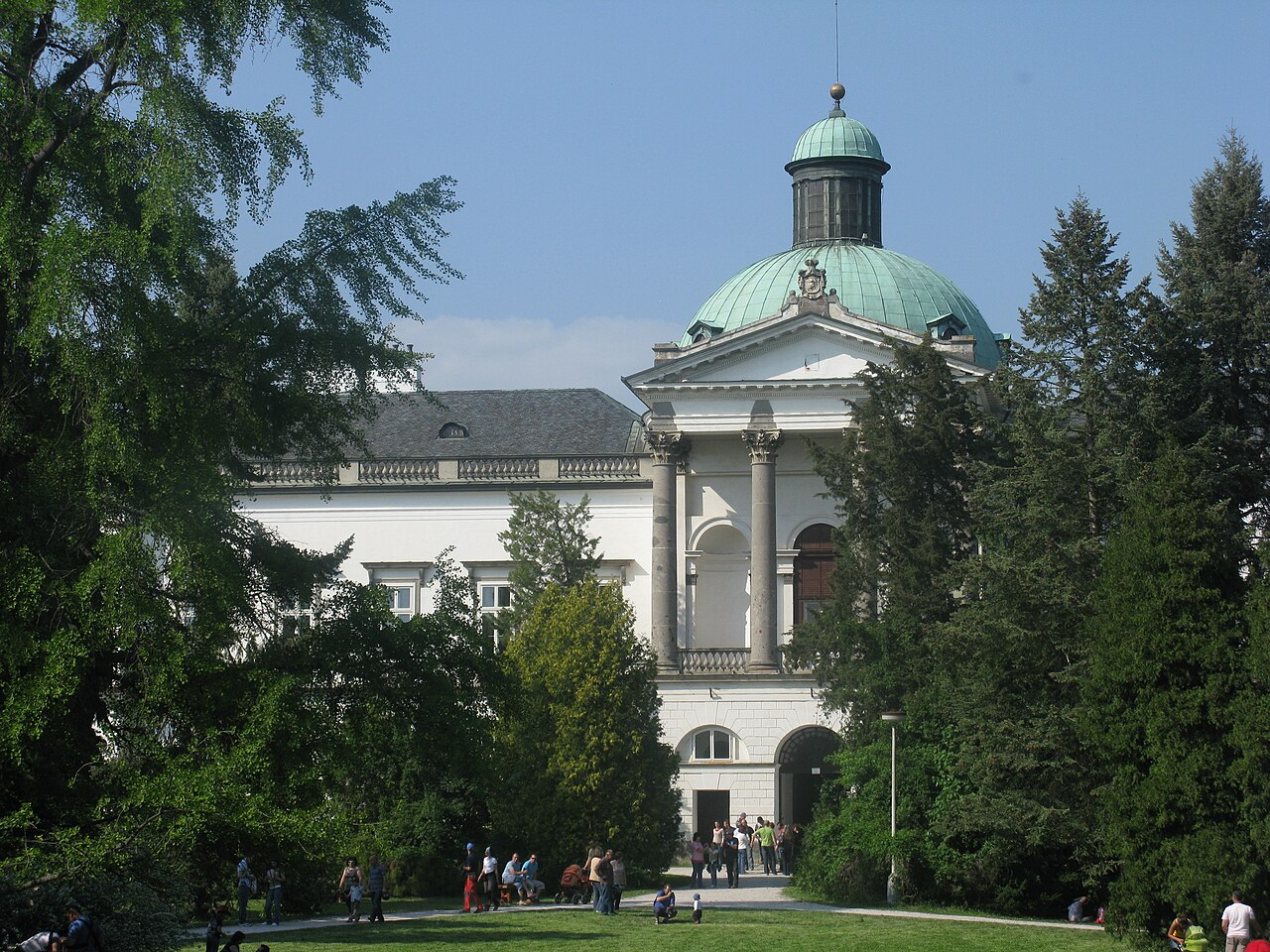
Topoľčianky Castle is a prominent hill castle located in the western part of Slovakia, near the village of Topoľčianky. This castle is renowned for its rich history that spans several centuries and its architectural evolution that reflects the styles of the Renaissance and Baroque periods. Situated on a hill overlooking the surrounding landscape, Topoľčianky Castle offers a commanding view and strategic position that was typical for fortifications built to defend territories in medieval Europe. Historical background and significance The origins of Topoľčianky Castle date back to the 16th century, when it was initially constructed as a Renaissance fortress. Its location on a hill was chosen for defensive advantages, allowing surveillance over the surrounding region. Over the centuries, the castle underwent significant transformations, especially during the Baroque period in the 18th century, when it was remodeled into a more comfortable noble residence rather than a purely military stronghold. One of the most notable chapters in the castle's history is its connection to the Hungarian aristocracy and later the Czechoslovak state. The castle served as a summer residence for several noble families and was famously used by Tomáš Garrigue Masaryk, the first president of Czechoslovakia, who spent time there in the early 20th century. This association adds a layer of national historical importance to the site. Architectural features and style Topoľčianky Castle exhibits a blend of Renaissance and Baroque architectural styles. The original Renaissance fortress elements include robust defensive walls, bastions, and a keep that reflect the military architecture of the time. The later Baroque renovations introduced elegant facades, ornamental details, and spacious interiors designed for comfort and representation. The castle complex includes distinctive features such as arcaded courtyards, ornate gates, and decorative stucco work, which highlight the Baroque influence. The interiors are known for their richly decorated halls, frescoes, and period furnishings that give insight into the lifestyle of the nobility during the castle's peak usage. Gardens and surrounding landscape In addition to the castle itself, the surrounding grounds are an important part of the estate. The castle is set within extensive landscaped gardens and parklands, which were developed in the 18th and 19th centuries. These gardens feature a mix of formal Baroque garden design and naturalistic English-style park elements, including tree-lined avenues, ornamental ponds, and walking paths. Cultural and touristic importance Today, Topoľčianky Castle is a significant cultural monument and tourist attraction in Slovakia. It is well-preserved and open to the public, offering guided tours that showcase its architectural beauty and historical exhibits. Visitors can explore the castle's interiors, view period art and furniture, and enjoy the scenic views from the hilltop location. The castle also hosts cultural events, exhibitions, and educational programs that promote the history and heritage of the region. Its combination of historical architecture, royal connections, and picturesque setting make it a valuable destination for those interested in Central European history and castle architecture. Preservation and current status Topoľčianky Castle is classified as a well-preserved historic site. It has undergone careful restoration efforts to maintain its structural integrity and aesthetic features. The castle is managed by a state or regional heritage organization responsible for its upkeep and public accessibility. These preservation activities ensure that Topoľčianky Castle remains a vibrant part of Slovakia's cultural landscape.

Renaissance (15th–17th c.)
Details