Hrad u Brtníků
Hrad u Brtníků stands as a compelling example of a medieval rock castle ruin in the Czech Republic, located near the village of Brtníky. Established in the late 13th or early 14th century, this fortress reflects the strategic military architecture of the Bohemian nobility during the High to Late Medieval period. Although incomplete and primarily serving as a military refuge, the castle's remains offer valuable insights into medieval defensive design adapted to natural rock formations.
Historical context and origins
The castle was likely founded by the Berka of Dubá family, a prominent noble lineage that controlled extensive territories in the region during the medieval era. Positioned near the borderlands adjacent to Lusatia, Hrad u Brtníků was conceived as a stronghold or outpost to oversee and protect these frontier areas. Its establishment during the late 13th or early 14th century coincides with a period of territorial consolidation and fortification expansion in Bohemia.
Unlike many contemporaneous castles, Hrad u Brtníků appears to have functioned more as a military refuge than a full-scale residential fortress. Archaeological evidence suggests construction was initiated but never fully completed, and the absence of direct historical records implies it may have had a limited operational lifespan or strategic significance. By the 15th century, the castle had fallen out of use, with no documents referencing it during that time.
Interestingly, the original name of the castle was lost over the centuries. A 1736 forestry map identifies the site as "Loupežnický zámek" or "Robber's Castle," reflecting local folklore or a reputation for outlaw activity associated with the ruins. In the 16th century, the surrounding area remained important for travel and trade, with cartographer Matyáš Oeder mapping routes from Lusatia passing near the castle's location.
Architectural layout and defensive features
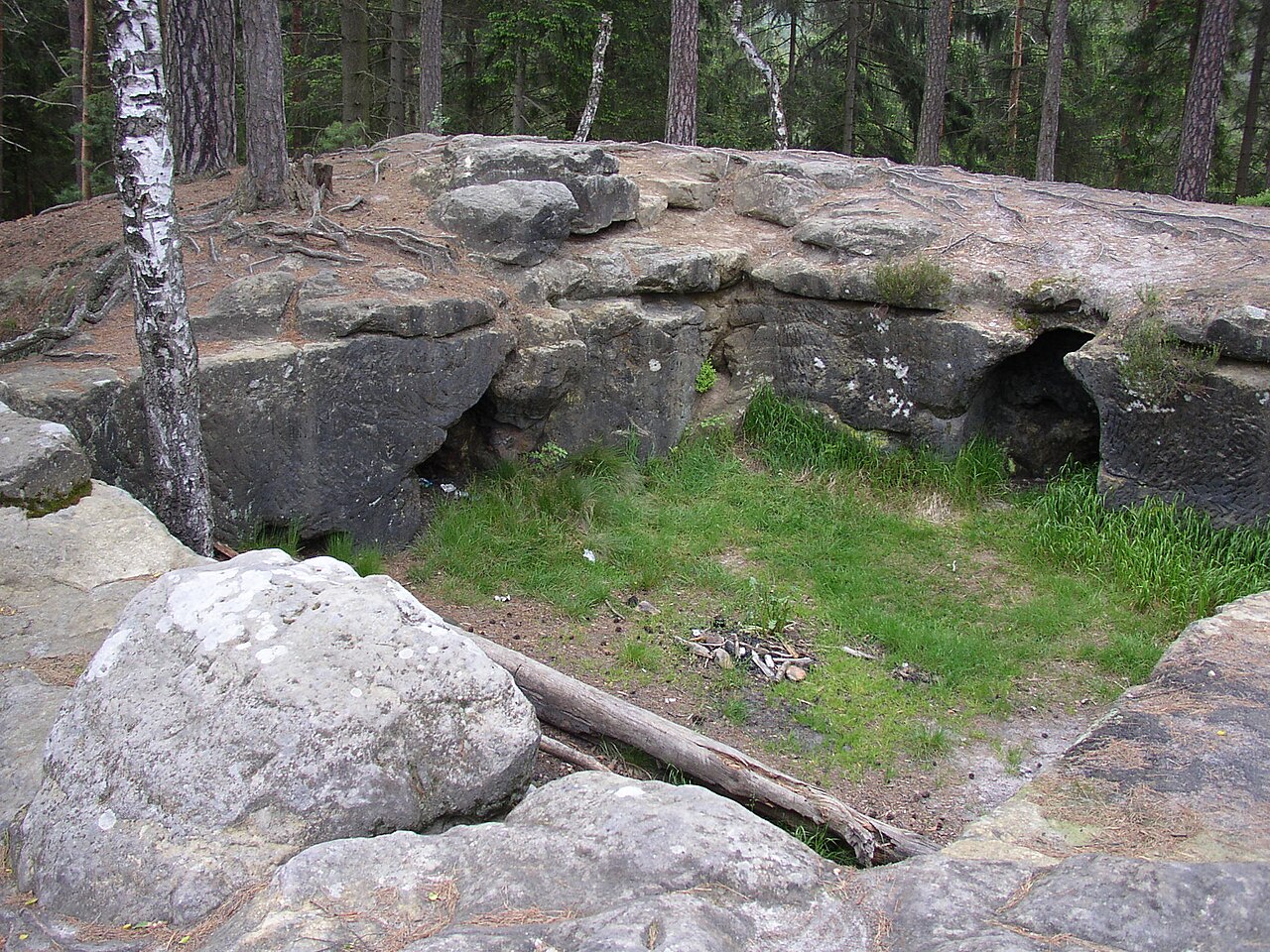
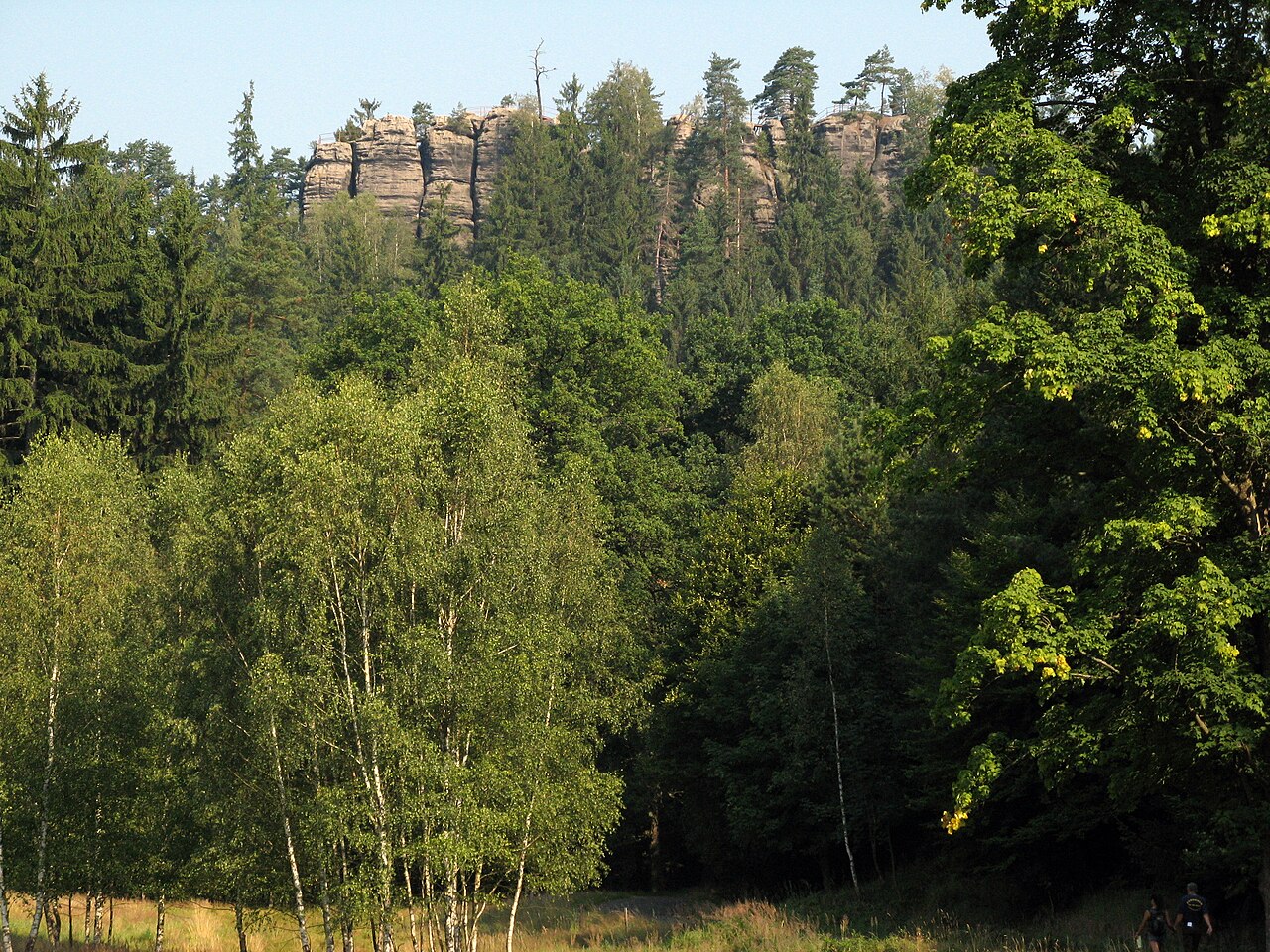
The ruins of Hrad u Brtníků are uniquely integrated into the natural landscape, situated across two prominent sandstone rock blocks separated by natural gaps. These gaps were intentionally widened to form defensive ditches, enhancing the site's natural fortifications. This dual-rock arrangement created distinct functional zones within the castle complex.
The outer bailey
The eastern rock outcrop served as the outer bailey, an enclosed courtyard area that was accessible by two staircases carved into the eastern side of the rock. Remnants of a stone defensive wall remain visible on the southeast portion of this bailey, marking the intended line of fortification to protect the approach to the castle.
The main stronghold
Access to the main defensive area on the second rock block was likely via a bridge spanning the ditch between the two promontories. This central plateau features a large sandstone surface approximately 17 by 10 meters in size, with foundations carved directly into the rock. These footings outline a tower-like structure measuring about 4.5 by 5 meters, with an entrance on the northern side, suggesting this was the key defensive and possibly residential building within the fortress.
Additional construction traces include a carved channel or groove on the southern edge of the core rock, associated with an unidentified building whose function remains unclear. These features highlight the complex interplay of natural and man-made elements in the castle's defensive design.
Significance and preservation
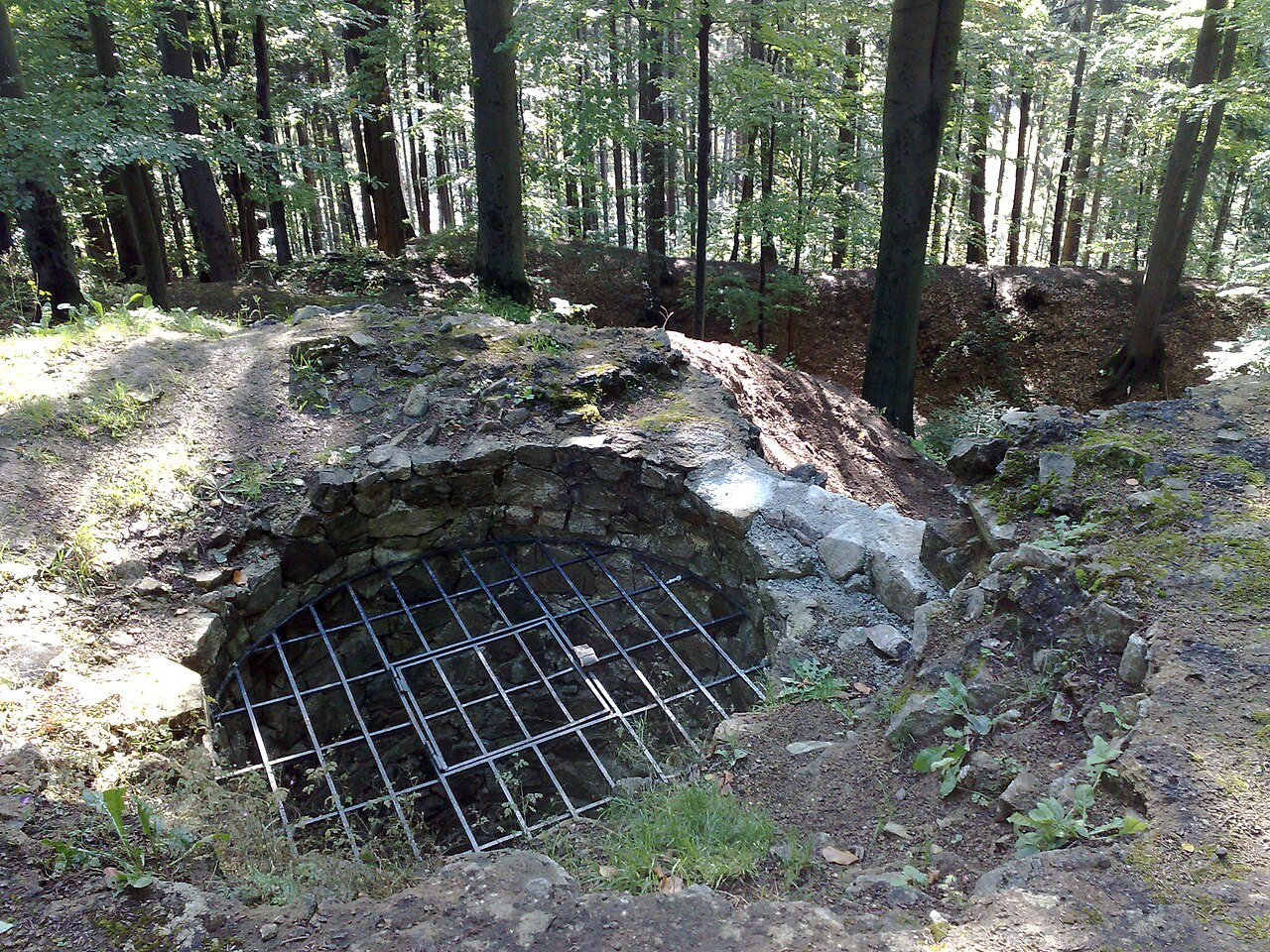
Today, Hrad u Brtníků remains a ruined rock castle offering a tangible glimpse into medieval fortification methods adapted to challenging terrain. Its fragmentary remains, preserved in situ, illustrate the strategic use of natural sandstone formations enhanced by human construction to create defensible refuges in border regions.
The castle's historical obscurity and limited documentation add to its enigmatic character, while local legends and cartographic records from the early modern period provide cultural context to its legacy. Despite its ruinous state, the site attracts interest for its unique architectural features and its role in the medieval landscape of Czechia.
Visitors to the site can explore the remnants of the outer bailey and the foundations of the tower, appreciating the blend of natural rock formations and medieval masonry. The castle's setting amidst sandstone cliffs and its historical ties to the Bohemian nobility make it a noteworthy destination for enthusiasts of medieval architecture and history.
Frequently asked questions (FAQ)
- How do I get to Hrad u Brtníků?
- Hrad u Brtníků is located near the village of Brtníky in the Ústí nad Labem Region of Czechia. Visitors typically reach the site by car or local hiking trails leading from Brtníky, as it is situated on a hill above the village.
- What is the historical significance of Hrad u Brtníků?
- Hrad u Brtníků was a medieval rock castle established in the late 13th or early 14th century, likely by the Berka of Dubá family. It served as a military refuge and outpost near the Lusatian borderlands, reflecting the strategic defensive needs of the Bohemian nobility during the Late Medieval period.
- Can I explore the ruins of Hrad u Brtníků?
- Yes, visitors can explore the ruins of Hrad u Brtníků, which include sandstone rock formations, remains of defensive walls, and foundations of a tower. The site is open to the public, though it is in a ruinous state and requires careful navigation due to uneven terrain.
- When was Hrad u Brtníků built?
- Construction of Hrad u Brtníků began in the late 13th or early 14th century, during the Late Medieval period. Archaeological evidence suggests it was never fully completed.
- Is there an entrance fee to visit Hrad u Brtníků?
- There is no entrance fee to visit Hrad u Brtníků, as it is an open ruin accessible to the public without charge.
Information
Loading map...
Visitor reviews
No reviews yet. Been here? Write the first review and help other travelers!
Write the first reviewVisited this castle? Share your experience
Your review helps other travelers and adds first-hand knowledge to our encyclopedia.