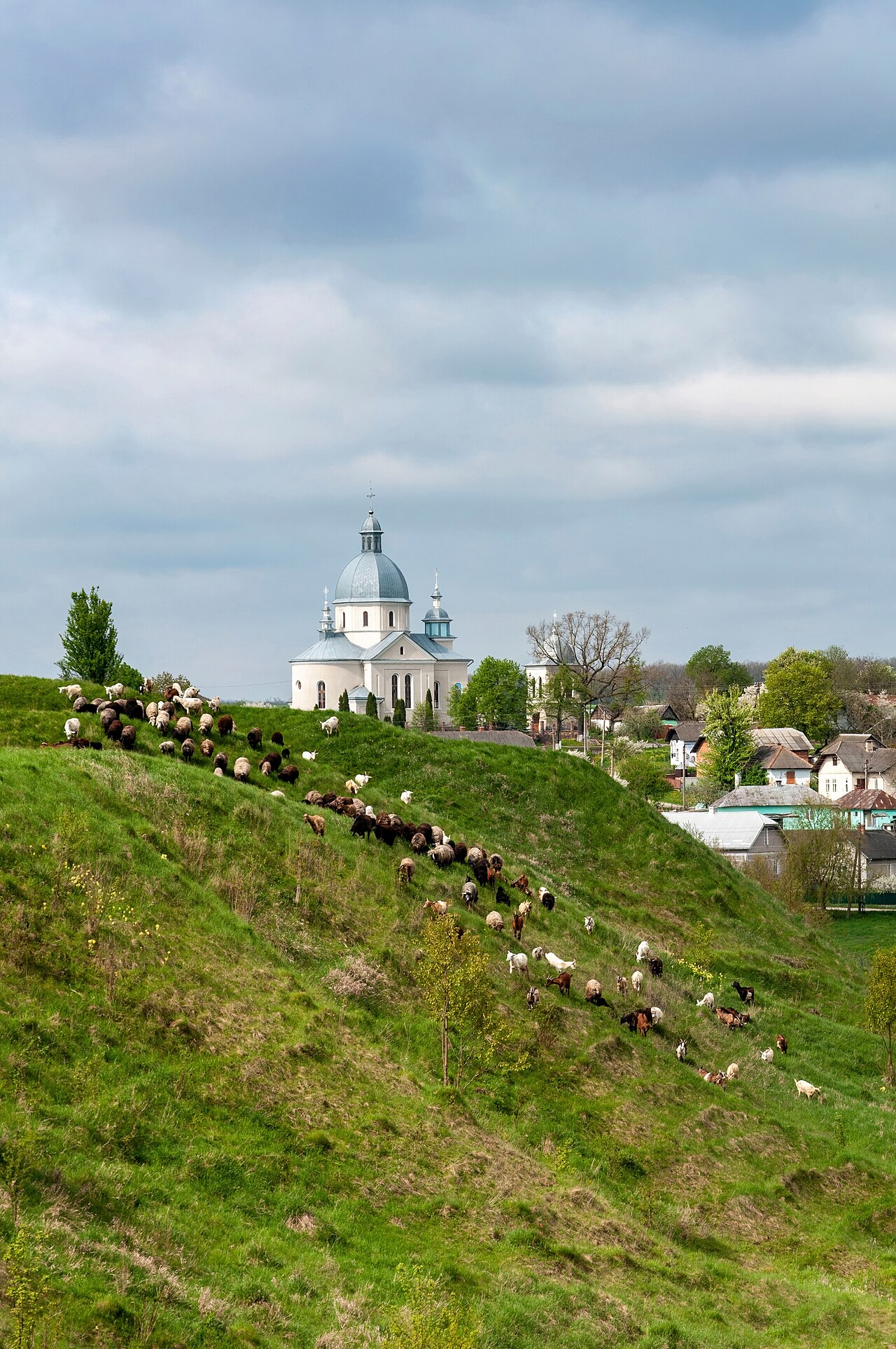
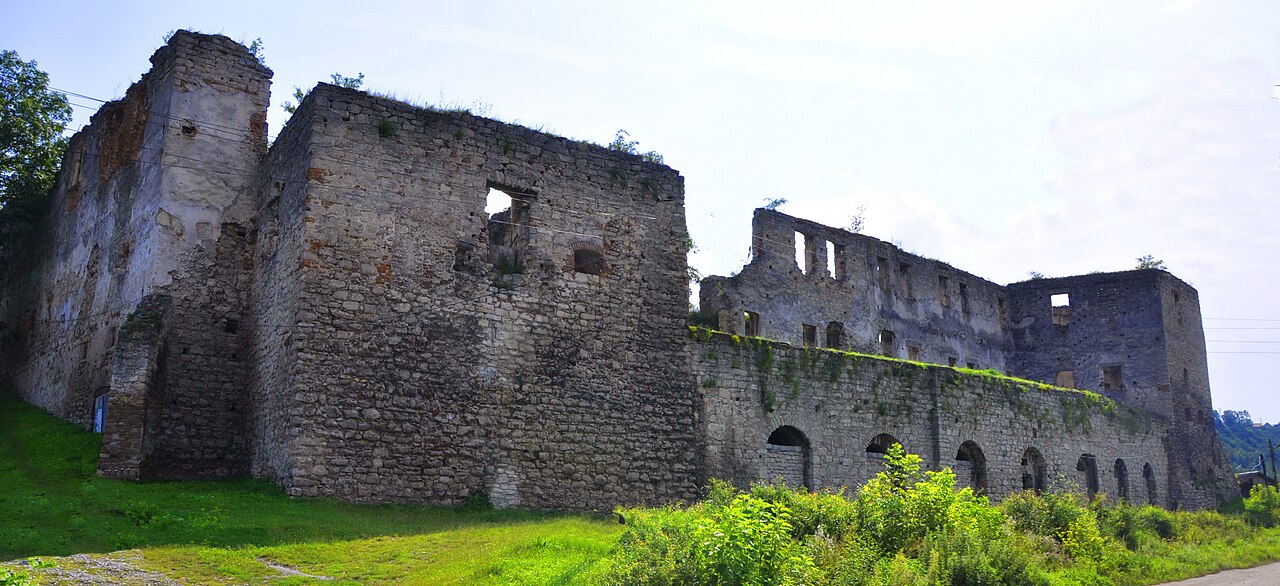
Horodyski Palace stands as a significant historical and architectural landmark in the village of Kolyndiany, Ukraine. This estate uniquely combines elements of a medieval defensive castle with a refined late-classical palace, reflecting centuries of transformation and adaptation. Originally constructed on a steep bank overlooking the Nichlava river, the site has witnessed the rise and fall of noble families, religious influences, and social changes.
Medieval origins and early history
The earliest known phase of the site was a defensive castle built by the Wołodyjowski family, a noble lineage with strong regional influence. This castle occupied a strategic location on a hill, providing natural defense advantages due to its elevated position above the river. Although detailed architectural records of the original fortress are scarce, it is understood that the castle included at least two towers and fortifications typical of medieval hill castles.
The Wołodyjowskis played a pivotal role in the local community, donating the settlement to the Dominican order. This religious connection introduced a spiritual dimension to the site’s history and influenced its development during the medieval period.
Transformation into a late-classical palace
By the mid-19th century, the medieval castle had fallen into ruin, reflecting broader socio-political changes in the region. Around 1840, Kornel Horodyski, a new owner from Volhynia, undertook an extensive reconstruction project. He transformed the dilapidated fortress into a two-story late-classical palace, skillfully integrating remnants of the original castle, notably by converting the medieval towers into elegant pavilions that framed the central building.
The palace’s design emphasized symmetry, proportion, and classical aesthetics. Its interiors were richly decorated, featuring Dutch school paintings that added cultural prestige. Functional yet ornamental tiled stoves and fireplaces provided warmth while enhancing the visual appeal. Chandeliers illuminated the rooms, complementing the luxurious atmosphere. A spacious viewing terrace on the first floor offered panoramic views over the surrounding gardens and landscape.
Landscaped gardens and estate grounds
The palace was set within an extensive landscaped park covering several hectares. This garden was designed to harmonize with the architecture, providing scenic vistas and outdoor leisure spaces. The park’s layout reflected 19th-century tastes for naturalistic landscaping, with pathways, trees, and possibly ornamental plantings enhancing the estate’s grandeur.
20th-century challenges and changing uses
World War I inflicted damage on the palace, affecting both its structure and decorative elements. Following the war, the estate’s function shifted from a noble residence to various social uses. It served as a kindergarten and a community center affiliated with the People’s School Society, reflecting the changing societal landscape.
The last private owner, Ludwik Horodyski, son of Kornel, attempted restoration efforts but was constrained by financial difficulties. Eventually, the property was repurposed for public use, marking a significant transition from private aristocratic ownership to community-oriented functions.
During the Soviet era, the building continued to serve educational purposes, initially as a primary school and later, from 1977, as a vocational school. This period saw further adaptations to the interior spaces to accommodate institutional needs, although some original architectural features were preserved.
Architectural features and preservation status
The current structure of Horodyski Palace retains its late-classical architectural style, characterized by balanced proportions and classical detailing. The integration of the medieval castle’s towers as pavilions flanking the central building is a distinctive feature, visually linking the site’s medieval past with its 19th-century transformation.
Inside, the remnants of the decorative Dutch paintings, tiled stoves, and fireplaces hint at the palace’s former elegance. The chandeliers and the viewing terrace remain notable elements that contribute to the building’s character.
The surrounding landscaped park continues to define the estate’s setting, although its original design may have evolved over time. Despite damage sustained during the First World War and subsequent periods of neglect, much of the palace’s structure remains intact. The site today reflects a layered history, with visible traces of its medieval origins and classical revival.
Cultural significance and future prospects
Horodyski Palace is an important cultural monument in Ukraine, embodying the region’s complex history from medieval fortifications to noble residences and public institutions. Its architectural blend offers insights into changing styles and functions over several centuries.
Since 2010, the palace has been under the ownership of a Ukrainian businessman, opening possibilities for restoration, preservation, and adaptive reuse. The estate’s heritage value, combined with its distinctive architectural features and scenic location, make it a candidate for cultural tourism and educational activities.
Frequently asked questions (FAQ)
- What is the historical significance of Horodyski Palace?
- Horodyski Palace is a notable example of Ukrainian architecture and history, dating back to the 18th century. It served as a residence for local nobility and reflects the cultural heritage of the region, showcasing the blend of Ukrainian and European architectural styles.
- When was Horodyski Palace built?
- The construction of Horodyski Palace began in the early 18th century and was completed in the mid-1700s. Over the years, it has undergone several renovations, preserving its historical features while adapting to modern needs.
- What are the opening hours for visiting Horodyski Palace?
- Horodyski Palace is open to visitors from Tuesday to Sunday, from 10 AM to 6 PM. It is advisable to check for any seasonal changes in hours or special closures before planning your visit.
- Can I take photographs inside Horodyski Palace?
- Yes, visitors are allowed to take photographs inside Horodyski Palace, but it is recommended to be respectful of the space and other guests. Some specific areas may have restrictions, so be sure to check with the staff upon arrival.
- Is it possible to access Horodyski Palace with a wheelchair?
- Horodyski Palace has made efforts to accommodate visitors with disabilities, but accessibility may vary in different areas of the palace. It is advisable to contact the staff in advance to inquire about specific accessibility options available during your visit.
- What is the best time to visit Horodyski Palace?
- The best time to visit Horodyski Palace is during the spring and early autumn when the weather is mild, and the surrounding gardens are in full bloom. This period offers a pleasant experience for exploring the palace and its grounds.
- Are there any nearby attractions to visit along with Horodyski Palace?
- Yes, nearby attractions include the picturesque town of Lviv, known for its rich history and vibrant culture, as well as several beautiful parks and historical sites. Exploring the surrounding area can greatly enhance your visit to Horodyski Palace.
- What are the ticket prices for Horodyski Palace?
- Ticket prices for Horodyski Palace vary depending on the season and visitor age, with discounts often available for children and seniors. It is recommended to check the official website or contact the palace directly for the most current pricing information.
Information
Loading map...
Visitor reviews
No reviews yet. Been here? Write the first review and help other travelers!
Write the first reviewVisited this castle? Share your experience
Your review helps other travelers and adds first-hand knowledge to our encyclopedia.