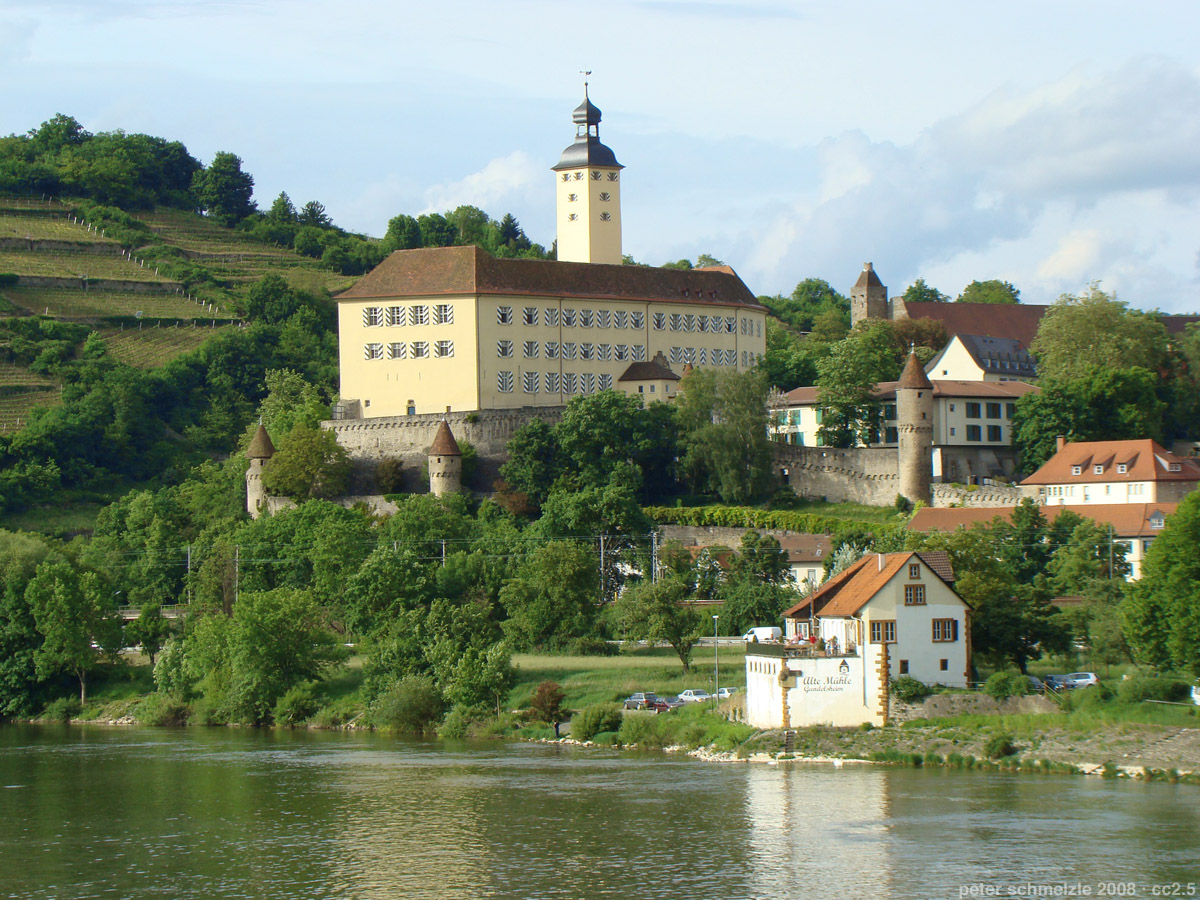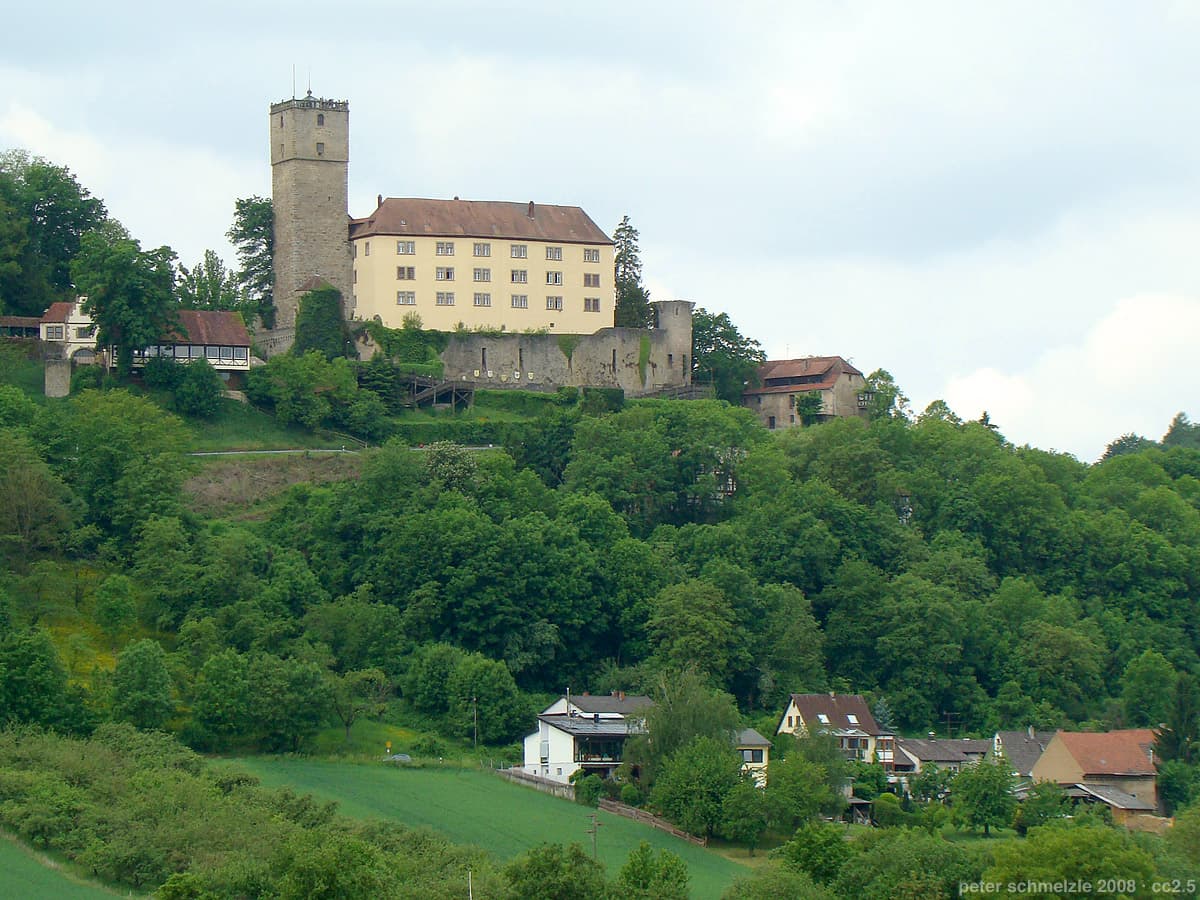
Guttenberg Castle — Germany castle

Guttenberg Castle

Guttenberg Castle in Haßmersheim: medieval hill castle ruins
Haßmersheim, Germany
High Medieval (11th–13th c.)
Ruins

Guttenberg Castle is a striking example of a high medieval hill castle perched above the scenic Neckar River valley in Haßmersheim, Germany. Constructed around 1225, this castle complex is notable for its preservation as one of the few intact medieval castles from the Staufer period. It occupies a commanding position surrounded by vineyards and dense forests, offering strategic views and natural defenses typical of hill castles of the era.

Historical background and ownership

The castle has been under the continuous ownership of the barons of Gemmingen-Guttenberg since 1449. Remarkably, Guttenberg Castle was never destroyed in warfare, which contributes to its significance as a well-preserved medieval site. Its survival through centuries of regional conflicts and political changes makes it an important cultural monument in the Rhineland-Palatinate region.

Architectural features and layout

As a rock castle, Guttenberg is built directly on and integrated with the natural rock formations, a common medieval defensive strategy that enhanced its fortifications. The castle complex includes stone curtain walls, towers, and gatehouses that demonstrate the architectural principles of the Staufer period. The use of the natural terrain for defense is evident in the steep cliffs and rocky outcrops surrounding the site.

The castle’s internal structures include a knight’s hall, residential quarters, and service buildings arranged around a central courtyard. The layout reflects the dual function of the castle as both a military stronghold and a noble residence.

The local history museum: life in a knight’s castle

Guttenberg Castle hosts a local history museum dedicated to life in a knight’s castle. This museum provides visitors with insights into medieval daily life, including the social hierarchy, military equipment, and domestic arrangements of the castle’s inhabitants. Exhibits feature authentic artifacts, reconstructed furniture, and displays about the castle’s history and architecture.

Geographical and cultural significance

Situated in the Palatine Forest region, part of the Wasgau area near the French border, Guttenberg Castle occupies a culturally rich landscape. The castle’s location in the Rhineland-Palatinate state places it within a network of medieval fortifications that once controlled important trade routes and borderlands between German and French territories.

The surrounding vineyards and natural environment contribute to the castle’s romantic and historic ambiance, attracting tourists interested in both nature and medieval heritage.

Preservation and current condition

Although often described as a ruin, Guttenberg Castle remains partially preserved with significant portions of its walls and towers still standing. Its preservation status allows visitors to explore the castle grounds and appreciate the medieval construction techniques firsthand. Conservation efforts have focused on maintaining the structural integrity of the remains and enhancing visitor access.

Visiting information and accessibility

The castle is accessible to the public and offers guided tours through the museum and castle grounds. Visitors can explore the courtyards, gatehouses, and remaining walls, gaining a comprehensive understanding of medieval castle life. The location above the Neckar valley also provides scenic hiking opportunities in the surrounding forests and vineyards.

Frequently asked questions (FAQ)

When was Guttenberg Castle built?
Guttenberg Castle was constructed around the year 1225 during the high medieval period, reflecting typical Staufer architectural styles.
What is the current condition of Guttenberg Castle?
The castle is classified as ruins but remains partially preserved, with significant walls and towers still standing for visitors to explore.
Can I visit a museum at Guttenberg Castle?
Yes, the castle hosts a local history museum called 'Life in a Knight’s Castle' that showcases medieval life and artifacts.
Where is Guttenberg Castle located?
Guttenberg Castle is located near Haßmersheim in the Baden-Württemberg region of Germany, overlooking the Neckar River valley.
Is the castle accessible for hiking and outdoor activities?
Yes, the castle’s location amidst vineyards and forests offers scenic hiking trails and natural surroundings for visitors.

Photo gallery

Guttenberg Castle
Click to view

Photo by p.schmelzle•CC BY-SA 3.0

1 photo • Click any image to view in full screen

Information

Hill Castle

Current owner

Barons of Gemmingen-Guttenberg

Sources & official resources

Verify the information above using these authoritative references.

Loading map...

Visitor reviews

No reviews yet. Been here? Write the first review and help other travelers!

Write the first review

Visited this castle? Share your experience

Your review helps other travelers and adds first-hand knowledge to our encyclopedia.

Write a review

(5/5)

0/2000 characters

Your review will be visible after admin approval

Nearby castles

1.7 km

Ehrenberg Castle

Bad Rappenau, Germany

Ehrenberg Castle is a medieval fortress located in Bad Rappenau, Germany, with origins tracing back to the early 12th century. It was originally constructed by the Counts of Lauffen, a noble family influential in the region during the High Medieval period. The castle's earliest surviving fortifications include parts of the curtain wall surrounding the main castle, which date from the 12th century. This defensive wall was integral to the castle's protection and reflects the typical military architecture of the era. The main castle complex was developed further during the 12th and 13th centuries, with significant additions such as the keep, which is documented to have been built around 1235. The keep served as the stronghold and last line of defense, a common feature in medieval castles designed to withstand sieges. The architectural style of Ehrenberg Castle is characteristic of High Medieval fortifications, emphasizing robust stone walls, narrow windows for archers, and fortified gates. Historical context and significance Throughout its history, Ehrenberg Castle played a strategic role in regional defense and governance. It was part of a network of castles that secured the territories controlled by the Counts of Lauffen and their successors. The castle witnessed various historical events, including military conflicts that shaped the political landscape of southwestern Germany. During the Thirty Years' War (1618–1648), Ehrenberg Castle suffered significant damage. This devastating conflict involved many sieges and battles across the German lands, and the castle was ruined as a result of the warfare. The destruction marked the end of its function as a purely military fortress. Architectural features and later developments Following the war, the castle grounds saw the construction of new residential and farm buildings during the 17th and 18th centuries. These additions reflect a shift from military use to more domestic and agricultural purposes. The newer structures were likely built in styles typical of the post-medieval period, incorporating simpler, more functional architectural elements compared to the original fortifications. The castle complex includes remnants of the original defensive walls, the keep, and various outbuildings that illustrate the evolution of the site over several centuries. Despite the damage and changes, Ehrenberg Castle retains elements that provide insight into medieval castle construction and the adaptations made in later periods. Current status and accessibility Today, Ehrenberg Castle is privately owned and is not open to the public. The castle is preserved in a state that reflects both its medieval origins and the later modifications. While visitors cannot explore the interior, the castle remains a notable historical landmark in the region, visible from nearby areas and contributing to the cultural heritage of Bad Rappenau. Architectural and cultural importance Ehrenberg Castle exemplifies the typical High Medieval castle architecture of southwestern Germany, with its combination of defensive walls, a central keep, and later residential buildings. Its history offers valuable insights into the military, social, and economic transformations from the Middle Ages through the early modern period. The castle's survival, albeit partially ruined, allows historians and architectural scholars to study medieval fortification techniques and the impact of historical conflicts like the Thirty Years' War on such structures. The castle's location and construction reflect the strategic considerations of medieval nobility, emphasizing control over territory and defense against rival forces. Its later adaptation for residential and agricultural use demonstrates the changing role of castles as centers of power transitioned into more peaceful functions. Structural components Curtain walls: The oldest surviving parts dating from the 12th century, forming the defensive perimeter. Keep (donjon): Built circa 1235, serving as the main fortified tower and refuge. Residential buildings: Added in the 17th and 18th centuries, reflecting post-medieval architectural styles. Farm buildings: Constructed alongside residential structures, indicating the castle's role in local agriculture. Preservation and research potential Although Ehrenberg Castle is not accessible to visitors, it remains an important site for archaeological and historical research. Its well-documented history and remaining structures provide a valuable case study for scholars of medieval and early modern fortifications. Preservation efforts focus on maintaining the integrity of the surviving walls and buildings to prevent further deterioration.

High Medieval (11th–13th c.)
Details
1.7 km
Horneck Castle — Germany castle

Horneck Castle

Gundelsheim, Germany

Horneck Castle, located in the town of Gundelsheim in the district of Heilbronn, Baden-Württemberg, Germany, is a significant high medieval hill castle overlooking the Neckar River. Constructed around 1200, it has played an important role in the history of the region, particularly as the seat of the Teutonic Order's German Master ('Deutschmeister') during the 15th and early 16th centuries. Early history and foundation The castle was originally built in the early 13th century, likely as a strategic fortification to control the Neckar valley. Its elevated position on a hill provided natural defensive advantages, a common feature of hill castles of the high medieval period. The name "Horneck" is believed to derive from its location "over the Neckar," referencing the nearby river that was vital for trade and transport. The Teutonic Order era In 1438, Konrad von Horneck granted the castle to the Teutonic Order, a military and religious order prominent in medieval Europe. This transfer marked the beginning of Horneck Castle's role as the administrative center for the Deutschmeister, the German Master of the Order. The castle served as the headquarters for the Order's activities in the region, overseeing estates and military operations. Architectural features during the Teutonic period Under the Teutonic Order, the castle was fortified and adapted for both defensive and residential purposes. The complex included strong curtain walls, towers for surveillance and defense, and living quarters for the knights and administrators. The castle's layout reflected typical medieval military architecture, emphasizing security and control. The destruction and aftermath During the German Peasants' War in 1525, Horneck Castle was severely damaged by fire amid widespread uprisings against feudal authorities. Although efforts were made to rebuild the castle shortly after its destruction, the Teutonic Order decided to relocate its regional headquarters to Mergentheim in 1527, which offered better strategic and administrative advantages. Later uses and preservation In the centuries following its decline as a military stronghold, Horneck Castle underwent various changes in ownership and function. By the 20th and 21st centuries, the castle complex was repurposed for civilian use. Notably, it houses an altenheim (a nursing home for the elderly), providing residential care within its historic walls. Transylvanian Museum Since 2006, part of the castle has been dedicated to the Transylvanian Museum, which focuses on preserving and documenting the cultural heritage of the Transylvanian Saxons. The museum highlights the history, traditions, and coexistence of this ethnic German community in Transylvania, contributing to the castle's cultural significance beyond its medieval origins. Architectural style and condition Horneck Castle exhibits characteristics typical of high medieval hill castles, with robust stone construction, defensive walls, and towers. Although damaged and partially reconstructed after the 1525 fire, the castle remains partially preserved, retaining key architectural elements that reflect its historical phases. Location and significance Situated in southwestern Germany, the castle's position overlooking the Neckar River underscores its strategic importance during the medieval period. Today, it stands as a landmark in Gundelsheim, attracting visitors interested in medieval history, military architecture, and cultural heritage. Visiting information and cultural impact Visitors to Horneck Castle can explore its historic structures and the Transylvanian Museum, gaining insight into both medieval military life and the cultural narratives of the Transylvanian Saxons. The castle's adaptation as a nursing home also illustrates the evolving use of historic sites in modern times. Overall, Horneck Castle represents a layered history spanning from its high medieval origins, through its role in the Teutonic Order, to its contemporary cultural and social functions. Its preservation allows for continued appreciation of its architectural and historical significance in the region.

High Medieval (11th–13th c.)
Details
2.5 km

Heinsheim Castle

Bad Rappenau, Germany

Heinsheim Castle is a notable baroque castle complex located in Bad Rappenau, Germany, with a history that stretches back to the early 18th century. The castle has been under the private ownership of the von Racknitz family since around 1720, marking over three centuries of continuous family stewardship. Its origins are linked to the ancestral seat of the von Racknitz family, Perneck Castle in Styria, first documented in 1180, establishing a deep historical lineage for the estate. Historical background and ownership The earliest references to the von Racknitz family connect them to the medieval Perneck Castle, highlighting their noble heritage. Around 1720, the family extended their influence by acquiring the rule of Heinsheim. In 1727, they secured all pertinent rights from the Bishopric of Worms, consolidating their control over the estate. This period marks the beginning of the castle's transformation into the baroque residence seen today. Architectural development and features The main building of Heinsheim Castle was constructed in the early 18th century, reflecting the post-Renaissance baroque style typical of that era. Over the centuries, the castle complex expanded with the addition of wings and various farm buildings, contributing to its mixed-use character as both a noble residence and an agricultural estate. The castle's baroque chapel is a key architectural and cultural feature, embodying the ornate style and religious significance of the period. Landscaped gardens and surroundings Designed around 1810, the landscaped gardens of Heinsheim Castle enhance its aesthetic appeal and offer a serene environment for visitors. The proximity to the river Neckar adds to the castle's picturesque setting, providing natural beauty and a strategic location historically important for trade and defense. Modern use and hospitality For more than fifty years, Heinsheim Castle has operated successfully as a hospitality venue, initially as an inn and later as a hotel. This adaptive reuse preserves the castle's historic fabric while allowing guests to experience its unique atmosphere. The castle is renowned for its top-standard hospitality, combining historical charm with modern comforts. Significance and visitor experience Visitors to Heinsheim Castle can appreciate its baroque architecture, historical significance, and beautifully maintained gardens. The castle's chapel and the scenic views of the Neckar river contribute to a distinctive ambiance. The estate embodies a blend of noble heritage, architectural evolution, and contemporary use, making it a valuable cultural landmark in the region of Baden-Württemberg. Architectural style and preservation The castle primarily reflects the post-Renaissance baroque style, characterized by elegant facades, symmetrical layouts, and ornamental details. Its condition is well preserved, with ongoing maintenance ensuring the integrity of its historic structures and gardens. The blend of residential, agricultural, and hospitality functions demonstrates the castle's adaptive capacity over time.

Post-Renaissance (17th–18th c.)
Details