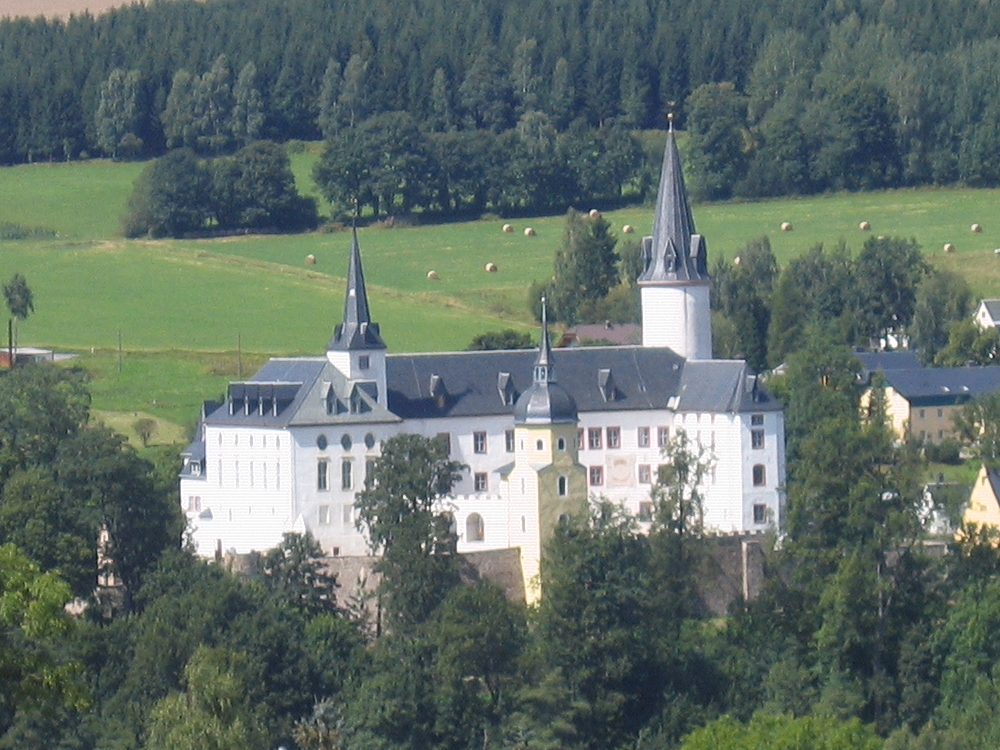
Honberg Castle Ruins
Honberg Castle Ruins stand as a significant historical landmark in Tuttlingen, Germany, embodying the military and political history of the late medieval period. Constructed in the mid-15th century, this hilltop fortress was strategically positioned on Honberg hill, rising to 739 meters above sea level, commanding sweeping views over the Danube valley. Its elevated location was chosen to maximize defensive potential and to assert control over the surrounding territory.
The castle's origins trace back to 1460, when it was built under the direction of Eberhard I, Duke of Württemberg, also known as Count Eberhard V or "the Bearded." This period marked the late medieval era, a time characterized by territorial consolidation and frequent military conflicts in the region. Honberg Castle was part of a network of fortifications designed to protect the Württemberg lands and to symbolize ducal authority.
Historical significance and military role
Honberg Castle quickly rose in prominence after Eberhard V's elevation to Duke of Württemberg in 1495. It became the most important military installation in the southern part of the duchy, serving dual roles as a defensive fortress and a symbol of the duke's power. The castle's strategic importance lay in its ability to oversee key routes and the Danube valley, making it a critical point in regional defense.
During the Thirty Years' War (1618–1648), one of the most devastating conflicts in European history, Honberg Castle played a pivotal role. In 1643, it served as the command center for French and Weimarian forces during the Battle of Tuttlingen. Despite its strategic use, the allied forces were defeated by the Bavarian and Imperial troops. Two years later, in 1645, the castle was deliberately destroyed by its own garrison under orders from Konrad Widerholt, commander of the nearby Hohentwiel fortress. This scorched-earth tactic was intended to prevent the fortress from falling into enemy hands and being used against the town of Tuttlingen.
Architectural features and structural remains
As a hill castle, Honberg was designed primarily for military defense rather than residential comfort. Its construction employed the natural topography to enhance its defensive capabilities. The fortress featured robust defensive walls and multiple towers, which were integral to its fortification system. Although much of the original structure was destroyed, significant portions of the walls and two towers have survived.
In the 19th century, there was a renewed interest in preserving the castle's remains. An association dedicated to the site's conservation undertook restoration efforts focused on stabilizing and partially rebuilding two of the towers. These restorations prioritized preservation over exact historical replication, resulting in towers that differ somewhat from their original medieval appearance but still convey the fortress's imposing character.
The castle's ruins are notable for the presence of an original demolition order displayed on one of the towers, providing a direct historical link to the castle's destruction in 1645. The site is separated from the town of Tuttlingen by a cemetery, reflecting historical spatial arrangements between military and civilian areas.
Post-destruction use and cultural legacy
Following its destruction, the castle's stones were repurposed over the centuries. Notably, materials from the ruins were used in the construction of the Schwäbischen Hüttenwerke metal factory and in rebuilding efforts after the 1803 fire in Tuttlingen. This practice contributed to the gradual erosion of the fortress's fabric but also linked the castle's legacy to the town's industrial and urban development.
In the modern era, one of the restored towers was adapted for contemporary use, housing a regional radio antenna until June 2013. This adaptation illustrates the site's ongoing relevance and the blending of historical preservation with modern utility.
Honberg castle in the context of regional defense
Honberg Castle was part of a coordinated defensive system in the region, closely connected to the Hohentwiel fortress located approximately 23 kilometers to the south. This network of fortifications was essential in controlling the strategic Danube valley and protecting Württemberg's southern borders.
The castle's location, design, and historical role reflect broader trends in late medieval military architecture and the political landscape of southwestern Germany. Its ruins today provide valuable insights into the defensive strategies and feudal power structures of the time.
Frequently asked questions (FAQ)
- How do I get to Honberg Castle Ruins?
- Honberg Castle Ruins are located in Tuttlingen, Germany, and can be accessed by foot from the city center. There are well-marked trails leading to the castle, making it a pleasant hike for visitors. Public transportation options are also available, with nearby bus stops serving the area.
- What is the historical significance of Honberg Castle?
- Honberg Castle, built in the 13th century, played a crucial role in the region's defense during the Middle Ages. It served as a strategic point for the local nobility and has a rich history associated with various territorial conflicts. Today, it stands as a testament to the architectural styles and historical events of that era.
- When was Honberg Castle originally constructed?
- Honberg Castle was constructed in the early 13th century, specifically around the year 1218. Over the centuries, it underwent several modifications and expansions, reflecting the architectural trends of different periods. Its ruins today provide insight into medieval castle construction and design.
- Can I enter the castle ruins?
- Yes, visitors can access the Honberg Castle Ruins, which are open to the public year-round. There are no entrance fees, allowing everyone to explore the historical site and enjoy the stunning views from the castle's vantage point. Be sure to wear comfortable shoes, as the terrain can be uneven.
- Why is Honberg Castle a popular tourist destination?
- Honberg Castle is popular due to its historical significance, scenic location, and panoramic views of Tuttlingen and the surrounding landscape. The ruins offer a glimpse into the past while providing a peaceful escape into nature. Additionally, its proximity to other attractions makes it an ideal stop for tourists exploring the region.
- Is it possible to visit Honberg Castle year-round?
- Yes, Honberg Castle Ruins are open to visitors throughout the year, allowing guests to experience its beauty in every season. However, accessibility may be affected by weather conditions, especially during winter months. It's advisable to check weather forecasts and plan your visit accordingly.
- What are the opening hours for Honberg Castle?
- The castle ruins are accessible at all hours, allowing for flexible visiting times. While there are no specific opening hours, it's best to visit during daylight for a safe and enjoyable experience. Early mornings and late afternoons offer the most picturesque views.
- What are some nearby attractions to visit after Honberg Castle?
- After exploring Honberg Castle, visitors can enjoy nearby attractions such as the Tuttlingen City Museum, which showcases local history and culture. The beautiful Danube River and its walking trails are also within reach, providing opportunities for scenic walks and picnics in nature.
- Are there any ticket prices for visiting Honberg Castle?
- There are no ticket prices for visiting Honberg Castle Ruins, as the site is free to enter. This makes it an excellent option for budget-conscious travelers looking to explore historical sites without the cost. Donations to support the preservation of the castle are appreciated but not required.
Information
Website
Visit websiteSources & official resources
Verify the information above using these authoritative references.
Loading map...
Visitor reviews
No reviews yet. Been here? Write the first review and help other travelers!
Write the first reviewVisited this castle? Share your experience
Your review helps other travelers and adds first-hand knowledge to our encyclopedia.