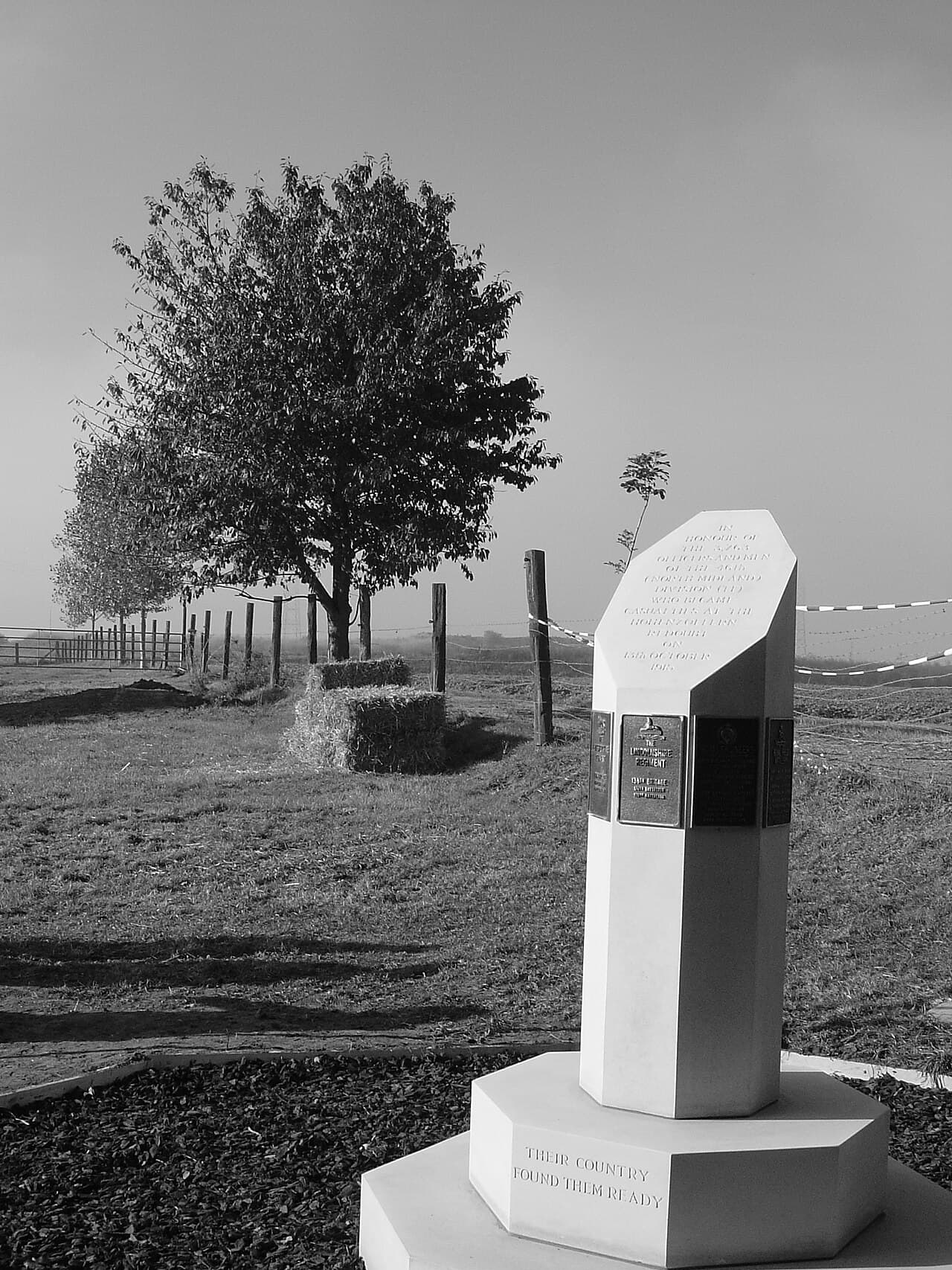
Hohenzollern Redoubt — France castle

Hohenzollern Redoubt

Hohenzollern Redoubt: World War I bastioned fortress in France
Auchy-les-Mines, France
Modern (19th–20th c.)
Archaeological Site

The Hohenzollern Redoubt, also known as Hohenzollernwerk, was a significant bastioned fortress and strongpoint of the German 6th Army during the First World War on the Western Front. Situated near Auchy-les-Mines close to Loos-en-Gohelle in the Nord-Pas-de-Calais region of France, this fortified position was named after the House of Hohenzollern, the ruling dynasty of the German Empire at the time.

Strategic importance and location

The Hohenzollern Redoubt was strategically placed to control key approaches and served as a defensive stronghold for the German forces in this sector of the front. Its location near the industrial towns of Loos-en-Gohelle and Auchy-les-Mines gave it tactical significance, as these areas were vital for coal mining and industrial production, essential to the war effort.

Design and fortifications

As a bastioned fortress, the Hohenzollern Redoubt featured complex defensive works typical of early 20th-century trench and fortress warfare. The redoubt consisted of interconnected trenches, dugouts, barbed wire entanglements, and reinforced concrete bunkers. Its bastions allowed for overlapping fields of fire, providing strong defensive capabilities against infantry assaults and artillery bombardments.

Defensive structures

The fortress included multiple layers of defense, with forward listening posts and machine gun nests to detect and repel enemy advances. The underground tunnel networks enabled safe movement of troops and supplies under heavy fire. These features made the redoubt a formidable obstacle for attacking British forces.

Major battles and engagements

The Hohenzollern Redoubt was the scene of intense fighting between German and British troops during several key engagements on the Western Front. It was first contested during the Battle of Loos (25 September – 14 October 1915), one of the largest British offensives of 1915. The redoubt's defenses were heavily targeted, and fierce hand-to-hand combat occurred in the trenches.

Following this, the redoubt remained a focal point of conflict through early 1916. The British Attack at the Hohenzollern Redoubt from 2 to 18 March 1916 involved repeated attempts by British forces to capture the position, which was staunchly defended by the Germans despite heavy casualties on both sides.

Combat around the redoubt continued until the beginning of the Battle of the Somme on 1 July 1916, when the front lines shifted further south. The sustained fighting around the redoubt exemplified the brutal nature of trench warfare and the strategic importance of fortified positions in the First World War.

Legacy and current state

Today, the Hohenzollern Redoubt remains a symbol of the intense and costly battles fought on the Western Front. While much of the original fortifications have been lost or degraded over time, some remnants of the trenches and concrete structures survive as archaeological sites and war memorials. These serve as poignant reminders of the sacrifices made and the harsh realities of industrialized warfare.

The site is visited by historians, military enthusiasts, and descendants of those who fought there, offering insights into the tactical challenges and human experiences of World War I trench combat. Preservation efforts aim to maintain the historical integrity of the redoubt's remains for educational and commemorative purposes.

Frequently asked questions (FAQ)

How do I get to Hohenzollern Redoubt?
Hohenzollern Redoubt is located in Auchy-les-Mines, France, and can be easily accessed by car or public transport. The nearest major city is Lille, which offers train connections to nearby towns. Local buses also provide transport to the site, making it convenient for visitors.
What is the historical significance of Hohenzollern Redoubt?
Hohenzollern Redoubt is a historic military fortification that played a crucial role during World War I. It was strategically built to defend against enemy advances and has significant historical value due to its involvement in key battles. Today, it stands as a testament to the military architecture of the era.
When was Hohenzollern Redoubt constructed?
Hohenzollern Redoubt was constructed in the late 19th century, specifically between 1882 and 1884. Its construction was part of a larger defensive strategy during a period of heightened military tension in Europe. The redoubt reflects the architectural style and military innovations of its time.
Can I visit Hohenzollern Redoubt?
Yes, Hohenzollern Redoubt is open to visitors who wish to explore its historical grounds. Guided tours are often available, providing insights into its history and architecture. It is advisable to check in advance for any special events or closures.
Why is Hohenzollern Redoubt an important architectural site?
Hohenzollern Redoubt is considered an important architectural site due to its unique design and construction techniques. The fortification showcases the military architectural trends of the late 19th century, including its robust defensive features. Its preservation allows visitors to appreciate historical military engineering.
Is it possible to access Hohenzollern Redoubt with a wheelchair?
Accessibility at Hohenzollern Redoubt may be limited due to the nature of the terrain and historic structures. While some areas may be accessible, it's recommended to contact the site in advance to inquire about specific accessibility options and available facilities. This will help ensure a comfortable visit.
What are the opening hours for Hohenzollern Redoubt?
Hohenzollern Redoubt typically opens to visitors from 9:00 AM to 5:00 PM, but hours may vary depending on the season. It's best to check the official website or contact the site directly for the most up-to-date information on opening hours and any seasonal changes.
What are the ticket prices for Hohenzollern Redoubt?
Ticket prices for Hohenzollern Redoubt are generally affordable, with discounts available for students and seniors. Adult admission usually costs around €5, while children under a certain age may enter for free. Always check the official site for current pricing and special promotions.
What nearby attractions should I visit while in Auchy-les-Mines?
While visiting Hohenzollern Redoubt, consider exploring other nearby attractions such as the Mining History Museum and the beautiful parks in Auchy-les-Mines. The region is rich in history and offers additional sites related to World War I. Enjoying the local cuisine at nearby restaurants is also highly recommended.

Photo gallery

Hohenzollern Redoubt
Click to view

Photo by en:User:Sar2jec•Public domain

1 photo • Click any image to view in full screen

Information

Bastioned Fortress

Loading map...

Visitor reviews

No reviews yet. Been here? Write the first review and help other travelers!

Write the first review

Visited this castle? Share your experience

Your review helps other travelers and adds first-hand knowledge to our encyclopedia.

Write a review

(5/5)

0/2000 characters

Your review will be visible after admin approval

Nearby castles

15.4 km

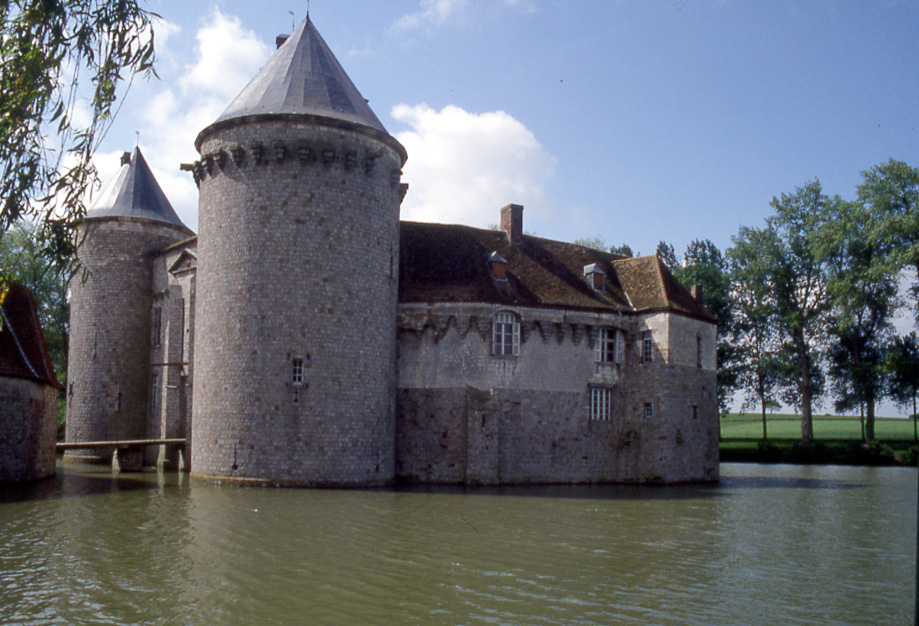
Castle of Olhain

Fresnicourt-le-Dolmen, France

The Castle of Olhain, located in Fresnicourt-le-Dolmen in the historic region of Artois, France, stands as a remarkable example of a late medieval fortified castle renowned for its picturesque setting and architectural significance. This 15th-century castle is uniquely situated on an island, surrounded by a reflective moat formed by a lake, which enhances its visual impact and defensive capabilities. The castle's imposing towers and curtain walls are mirrored in the water, creating a striking image that has captivated visitors and historians alike. Historical significance and origins The Castle of Olhain was a major stronghold in the Artois region during the late medieval period. It served as a symbol of the power and influence of the Olhain family, who were first documented in the 12th century. Over the centuries, the castle played a crucial role in regional defense and local governance, reflecting the turbulent history of the region during the Middle Ages. Its strategic location and formidable defenses made it a key military asset in various conflicts. Architectural features and design Fortifications and defensive elements The castle's design exemplifies typical late medieval military architecture with its robust curtain walls and multiple round towers that provided vantage points for surveillance and defense. The moat, fed by the surrounding lake, added an extra layer of protection against invaders. The drawbridge and fortified gatehouse controlled access, emphasizing security. Residential and functional spaces Within the walls, the castle housed various chambers and halls designed for both defense and domestic life. The living quarters of the Olhain family would have included a great hall, private chambers, and service areas. The integration of residential comfort with military functionality is characteristic of castles from this period. Preservation and current status Today, the Castle of Olhain remains one of the best-preserved examples of a water castle in northern France. Its well-preserved condition allows visitors to appreciate the architectural details and the historical atmosphere of a medieval fortress. The castle is a protected heritage site and a popular destination for tourists interested in medieval history and architecture. Visiting the castle Visitors to the Castle of Olhain can explore the exterior fortifications and enjoy the scenic views of the lake and surrounding landscape. While interior access may be limited due to preservation efforts, the castle's striking silhouette and historical significance make it a must-see landmark in the Artois region. Nearby attractions and cultural context The castle is situated within a region rich in medieval history and cultural heritage. Nearby towns and sites offer additional insights into the history of Artois and its role in French history. The surrounding countryside provides opportunities for hiking and photography, enhancing the visitor experience.

Late Medieval (14th–15th c.)
Details
15.4 km

La Buissière Castle

Bruay-la-Buissière, France

La Buissière Castle, also known locally as Château de La Buissière or simply Le Donjon (the Keep), is a medieval fortress located in Bruay-la-Buissière, in the Pas-de-Calais department of northern France. This castle occupies a strategic position on Mont Royal, a wooded hill overlooking the village of La Buissière. Its origins date back to the early 13th century, placing it firmly within the high medieval period. The castle was originally constructed by the Lords of Béthune, a powerful noble family in the region, who likely used it as a fortified manor house. Its location near the borderlands of Flanders and Artois made it a key defensive site, especially during the turbulent centuries marked by frequent invasions and conflicts involving English and Spanish forces. Medieval origins and strategic importance Built primarily as a hill castle, La Buissière's position on Mont Royal provided a natural vantage point for surveillance and defense. The early construction focused on a strong keep, which served as the main fortified residence and last line of defense. The castle's initial design was typical of high medieval fortifications, with thick stone walls and limited openings to withstand sieges. Strengthening and transformation under countess mahaut During the 14th century, the castle underwent significant fortification enhancements under the direction of Countess Mahaut, a prominent noblewoman of the era. She transformed La Buissière into a more formidable defensive fortress, reflecting the increased military threats in the region. This included strengthening the curtain walls, reinforcing towers, and establishing a permanent garrison commanded by a lord to maintain security. Between 1360 and 1361, the castle walls were completely restored, a testament to the ongoing strategic importance of the site. An inventory from 1380 mentions Broustart de la Tourelle as the castle's keeper, listing furniture, food, and ammunition stored within, indicating the castle's readiness for sustained defense. Late medieval developments and decline In the late 15th century, the castle saw further additions under Charles the Bold, Duke of Burgundy. Around 1470, he added essential facilities such as stables and barns, supporting the castle's role as a noble residence and administrative center for the region of Artois. Ownership by the Courteville family during this period continued the castle's use as a regional stronghold. However, the castle's condition deteriorated due to ongoing wars and neglect. By 1505, it was reported to be in very poor repair. Following its capture by French forces in 1522, La Buissière was deliberately dismantled on the orders of the Duke of Vendôme to prevent its use by enemy forces. Rebirth and modern era changes In 1735, a new castle was constructed on the site by a member of the De Maulde family, who had held the property since the 16th century. This new château incorporated remnants of the original medieval keep and served as the manor house for the Marquess De Maulde. This structure reflected the architectural styles and residential needs of the early modern period rather than medieval military design. Unfortunately, the 18th-century château was demolished in 1964, leaving only the ruins of the original keep standing today. The surviving ruin is located within a residential housing estate, which appears somewhat neglected but remains accessible to visitors. The interior of the keep is not open for exploration, but the exterior ruins provide valuable insight into medieval defensive architecture. Architectural features and surviving remains The remaining keep of La Buissière Castle is a significant example of high medieval military architecture. Its thick stone walls and elevated position illustrate the defensive priorities of the period. While much of the castle's original layout has been lost, the keep's ruins reveal the robust construction techniques used by medieval builders to withstand sieges and attacks. The castle's hilltop location on Mont Royal offered natural defenses, complemented by man-made fortifications. Though the later additions such as stables and barns no longer survive, historical records confirm their presence, indicating the castle's dual role as a fortress and noble residence. Historical significance and legacy La Buissière Castle played a notable role in the military and political history of northern France, especially given its position near the contested border regions of Flanders and Artois. The castle's fortifications and garrison under Countess Mahaut highlight its importance in regional defense during the Middle Ages. The dismantling of the castle in the early 16th century reflects the changing political landscape and military strategies of the time, where fortresses were often slighted to prevent their capture. The subsequent construction of the 18th-century château shows the evolution of the site from a military fortress to a noble residence. Visiting la buissière castle today Today, visitors to La Buissière Castle can view the ruins of the medieval keep situated within a modern residential area. While the interior is not accessible, the exterior offers a glimpse into the castle's medieval past and its architectural significance. The surrounding environment contrasts with the historic ruins, reflecting the challenges of preserving heritage sites within urbanized settings. Despite its modest remains, La Buissière Castle remains an important cultural landmark in the Pas-de-Calais region, representing centuries of French medieval history and architectural development.

High Medieval (11th–13th c.)
Details
15.9 km
Olhain Castle — France castle

Olhain Castle

19 Rue Léo Lagrange, France

Olhain Castle, also known as Château d'Olhain, is a remarkable example of a medieval water castle located in the village of Olhain, within the Pas-de-Calais department in the historic province of Artois, northern France. Surrounded by a lake and moats, this castle's picturesque setting and well-preserved structures make it a significant heritage site in the Hauts-de-France region. The castle's origins trace back to the early 13th century, when Hugues d'Olhain, a nobleman and captain in the Fourth Crusade, established the initial fortress. Hugues notably participated in the fall of Constantinople in 1204, linking the castle's early history to major medieval events. The original structure was primarily a defensive stronghold designed to control the surrounding territory. In 1387, the lordship passed to Jean de Nielles by marriage to Marie d'Olhain. Around 1400, following damage sustained during the Hundred Years' War, Jean and Marie undertook a significant rebuilding project that shaped the castle's current form. Jean de Nielles served as treasurer to John the Fearless, Duke of Burgundy, reflecting the castle's importance within Burgundian domains. Medieval architecture and defensive features Olhain Castle is characterized by its circular plan and its unique location on an artificial island within a lake, classifying it as a water castle. The castle is connected to a partially moated circular outer bailey by a drawbridge, emphasizing its defensive design. The main citadel is protected by two imposing round towers with conical tiled roofs. The tallest tower, reaching approximately 30 meters, served as a stair tower and lookout, providing panoramic views of the surrounding landscape. The castle's curtain walls and battlements were constructed to withstand sieges and artillery attacks, common in its turbulent history. The outer bailey contains essential service buildings such as storerooms, a smithy, a bakery, and stables, enclosed by fortified stone walls. Originally, access to both the citadel and bailey was controlled by drawbridges, which enhanced the castle's security. Some of the moats have been partially filled over time, but the water features remain a defining element. Historical significance and ownership The castle's ownership history reflects the complex political and religious shifts in the region. After the marriage of Alix de Nielles to Jean I de Berghes in the early 15th century, the castle passed to the Berghes-Saint-Winock family, who retained it for over 450 years until its sale in 1900. During the 17th century, the Berghes family converted to Protestantism while the region was under the Spanish Netherlands. This religious change led to tensions, as Protestantism was not tolerated by the Spanish Crown. Consequently, the family was forced to leave the castle. The castle endured multiple sieges and military actions. In 1641, Spanish troops occupied the castle but were massacred after a surprise attack by French forces from nearby Arras. In 1654, during the Battle of Arras, Spanish forces besieged the castle and destroyed one of its towers, which once stood on the terrace overlooking the lake to the west. In 1710, during the War of the Spanish Succession, troops of the Grand Alliance, led by the Dutch, besieged nearby Béthune and inflicted artillery damage on Olhain Castle. Later history and restoration In the 19th century, the Berghes-Saint-Winock family returned to the castle and carried out restoration work, including the construction of a chapel in the southeast tower. However, after 1870, the family relocated to Rânes Castle in Normandy, and Olhain was eventually sold in 1900. During both World Wars, the castle was requisitioned by military forces—first by French troops, then by Canadian and British soldiers—highlighting its ongoing strategic importance. Despite these occupations, the castle survived with only minor damage. Since the 20th century, the castle has been privately owned by the Dutoit family, who have undertaken extensive restoration to preserve its historical integrity. The Château d'Olhain was officially designated as a French historical monument on 12 April 1989, ensuring its protection and recognition. Archaeological discoveries and cultural heritage In 2021, archaeologists uncovered a Neolithic fortified site near Olhain Castle, dating back approximately 6,000 years. This ancient enclosure features three earthen ramparts and ditches spanning roughly 500 meters, underscoring the area's long-standing strategic significance well before the medieval period. Architectural details and notable features The castle complex consists of two main sections on separate artificial islands surrounded by moats. The smaller island hosts the main citadel with noble residences, while the larger island accommodates the outer bailey with service buildings. The citadel's entrance on the east side is guarded by two robust round towers with conical roofs. The tallest tower, about 30 meters high, served as a lookout and stair tower. Although the residential building enclosing the inner courtyard on the west side no longer exists, the remaining structures vividly illustrate the castle's layout. The outer bailey is enclosed by fortified stone walls and contains storerooms, a smithy, bakery, stables, and other outbuildings. Historically, drawbridges provided access to both islands, enhancing defense. Some moats have been partially filled, but water remains a key defensive feature. Defensive elements include curtain walls, round towers, and battlements. Several artillery pieces called couleuvrines, dating from the Spanish attacks, are preserved on site. The castle kitchens are located in vaulted cellars built atop earlier Merovingian walls, indicating layers of historical construction beneath the medieval fabric. Additional features include a 19th-century chapel in the southeast tower, a historic bakery, and a guardroom with a large sandstone fireplace bearing the Berghes-Saint-Winock family coat of arms depicting a lion. The prominent watchtower remains an iconic element of the castle's silhouette. The moat surrounding the castle is partially filled with water and silted in places. Two bridges cross the moat: one leading to the outer bailey and another connecting the bailey to the main castle, preceded by a gatehouse. One wing of the castle facing the widest part of the moat, approximately 80 meters across, was demolished at an unknown date. Thanks to ongoing maintenance and restoration, Olhain Castle remains well preserved, offering visitors a clear understanding of its historical layout, architectural features, and defensive mechanisms. Its picturesque setting and rich history make it a notable destination for those interested in medieval architecture and French heritage. Visiting olhain castle Today, Olhain Castle is privately owned but open to visitors for guided tours on Sunday afternoons from April to November. The castle's unique water setting, well-preserved structures, and historical significance make it a popular attraction in the Hauts-de-France region. Visitors can explore the castle's towers, curtain walls, chapel, and other historic buildings while learning about its role in regional history, including its connections to the Hundred Years' War, religious conflicts, and European wars of succession. The castle's location near Arras and Béthune also allows visitors to combine their visit with other historic sites in the area, enhancing their cultural experience of northern France.

High Medieval (11th–13th c.)
Details