Hohensyburg Castle
The Hohensyburg Castle is a significant medieval fortress located near Dortmund, Germany, perched on a strategic hill overlooking the Ruhr valley. Its origins trace back to a Saxon refuge site, which was overtaken in 775 by the forces of Charlemagne during his campaigns to expand the Frankish Empire. The castle itself was constructed around 1100 using locally sourced Ruhr sandstone, reflecting the typical material choices of the High Medieval period.
Historical background and early significance
The castle complex was originally established by the Lords of Sieberg, a noble family who controlled the region during the early Middle Ages. The location was chosen for its commanding views and natural defensive advantages, which made it a formidable stronghold for controlling the surrounding territory. The site's initial use as a Saxon refuge indicates its long-standing strategic importance even before the castle's construction.
In 1287, the castle suffered partial destruction at the hands of Count Eberhard I von der Mark, a prominent regional ruler who sought to expand his influence. Following this event, the castle became an imperial fief under the control of the von der Mark counts from around 1300. This transition marked a shift in ownership that linked the castle to larger territorial politics in the Holy Roman Empire.
Architectural features and layout
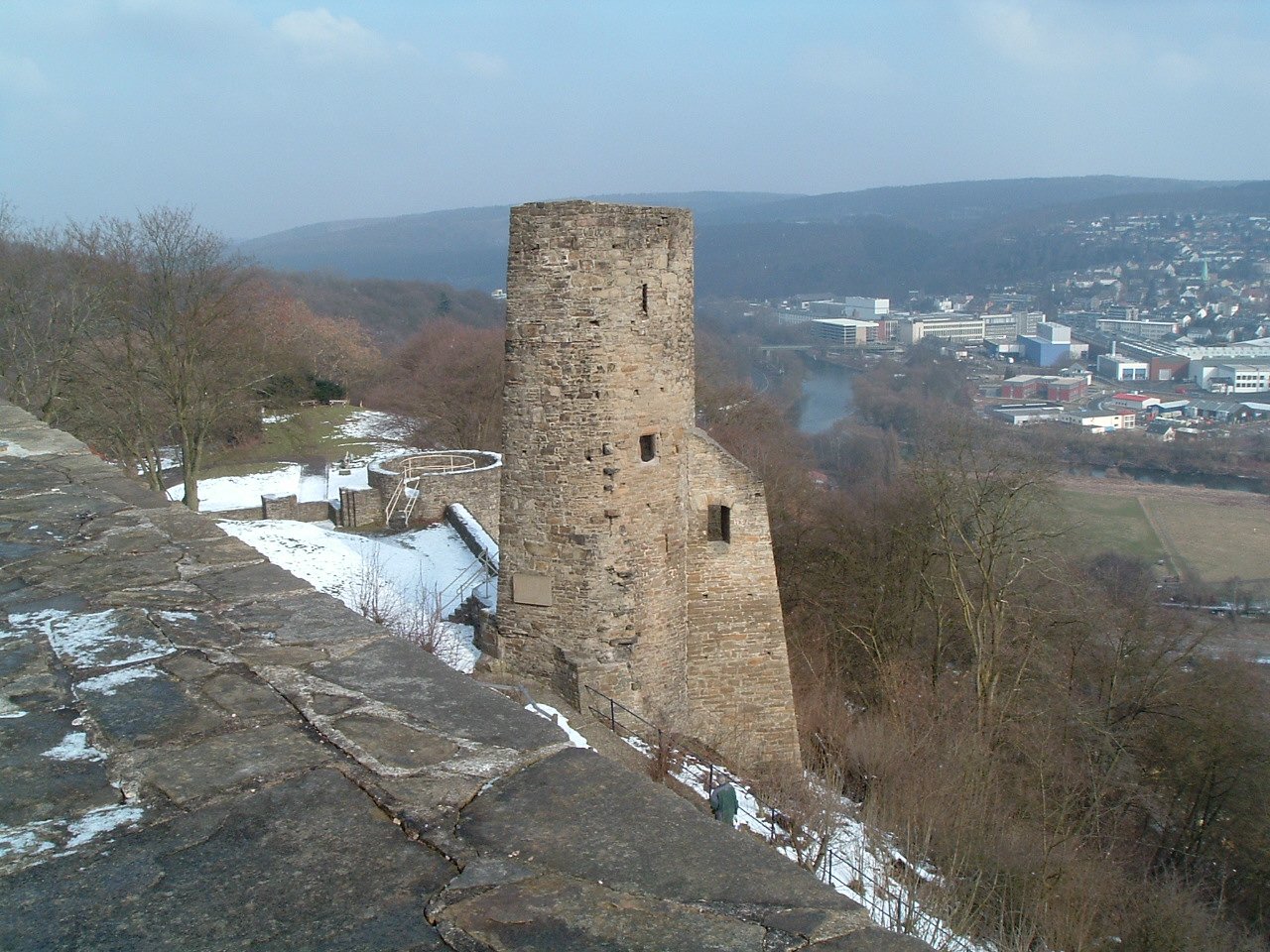
The surviving structures of Hohensyburg Castle include two prominent keeps, which served as fortified towers and last-resort defensive positions. These keeps are complemented by residential quarters arranged in a two-chamber system, a design that provided separate living and service areas within the castle walls.
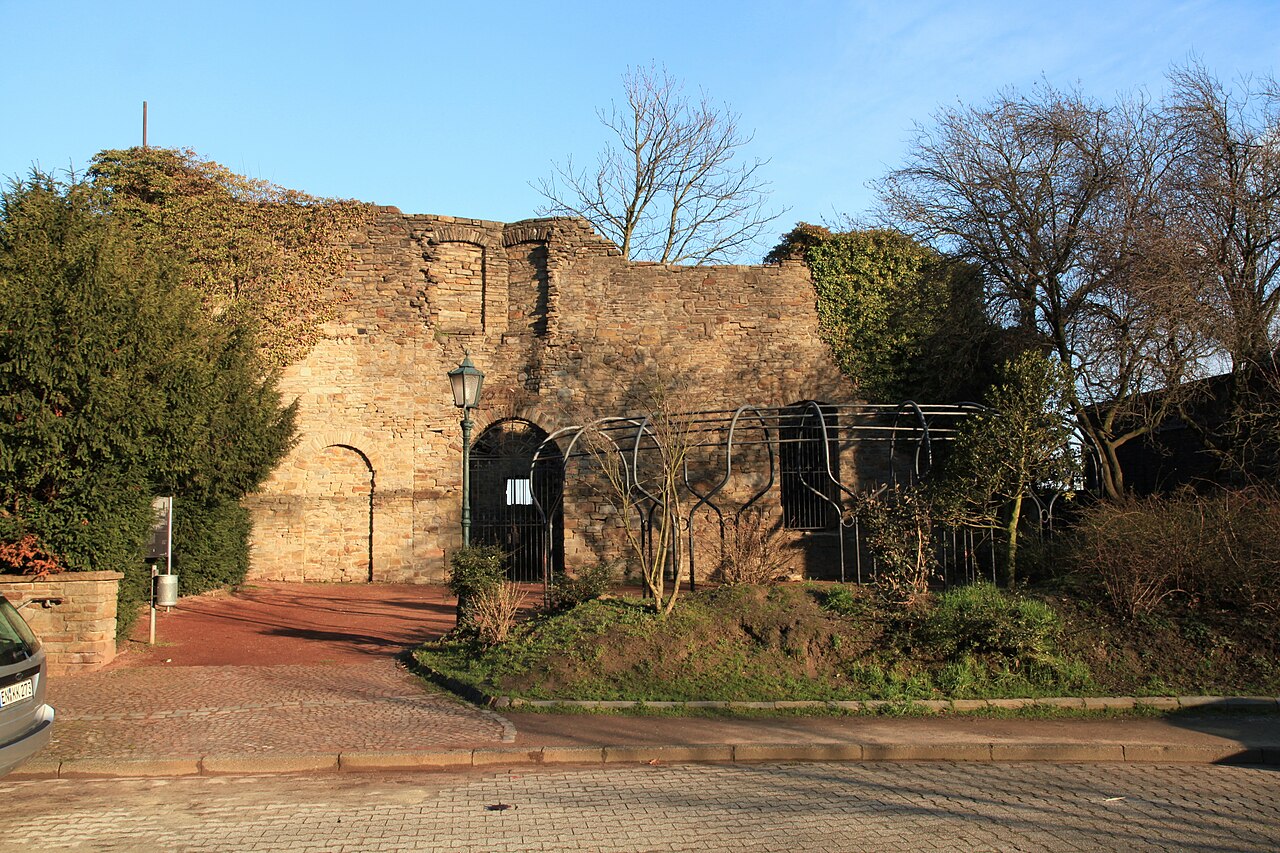
The castle is enclosed by a robust ring wall that defines the perimeter of the complex, with additional walls surrounding the central courtyard. These fortifications reflect typical medieval defensive architecture, designed to withstand sieges and attacks. The use of Ruhr sandstone not only provided durability but also gave the castle a distinctive regional character.
Defensive elements and strategic position
Hohensyburg's hilltop location was carefully selected for its natural defensive benefits, including steep slopes that hindered enemy approach. The castle's walls and towers were constructed to maximize these advantages, featuring battlements and arrow slits for archers. The layout allowed defenders to monitor and control the surrounding landscape, including key trade routes along the Ruhr River.
Later history and ownership changes
In 1609, the castle's fiefdom was transferred from the von der Mark counts to the Margraviate of Brandenburg, which later became part of the Kingdom of Prussia. This change reflected the shifting political landscape of the region during the early modern period. Although the castle lost its military significance over time, it remained a symbol of regional power and heritage.
Present condition and cultural significance
Today, Hohensyburg Castle stands as a partially preserved ruin, with many of its original walls and towers still visible. The site includes a notable war memorial designed by Fritz Bagdons, which commemorates soldiers and adds a modern layer of cultural importance to the historic location.
The castle is a popular destination for visitors interested in medieval architecture and regional history. Its combination of natural beauty, historical depth, and architectural remains offers a compelling glimpse into the military and noble life of the High Medieval period in Germany.
Visitor experience and surroundings
The castle grounds provide panoramic views of the Ruhr valley and the surrounding landscape, making it a favored spot for hiking and historical tours. Interpretive signage helps visitors understand the castle's complex history and architectural features. The nearby town of Dortmund offers additional cultural attractions and amenities, enhancing the overall visitor experience.
Frequently asked questions (FAQ)
- When was Hohensyburg Castle built?
- Hohensyburg Castle was constructed around the year 1100 during the High Medieval period, using Ruhr sandstone.
- What architectural features remain at Hohensyburg Castle?
- The castle retains two keeps, residential quarters with a two-chamber system, a ring wall, and walls around the courtyard complex.
- Who controlled Hohensyburg Castle historically?
- Originally built by the Lords of Sieberg, it became an imperial fief of the von der Mark counts around 1300, later passing to Brandenburg and Prussia.
- Is Hohensyburg Castle accessible to visitors?
- Yes, the castle ruins are accessible to the public and offer panoramic views of the Ruhr valley, with informative signage about its history.
- What is the significance of the war memorial inside the castle?
- The war memorial by Fritz Bagdons inside the castle honors soldiers and adds cultural significance to the historic site.
Information
Loading map...
Visitor reviews
No reviews yet. Been here? Write the first review and help other travelers!
Write the first reviewVisited this castle? Share your experience
Your review helps other travelers and adds first-hand knowledge to our encyclopedia.