Burg Wetter
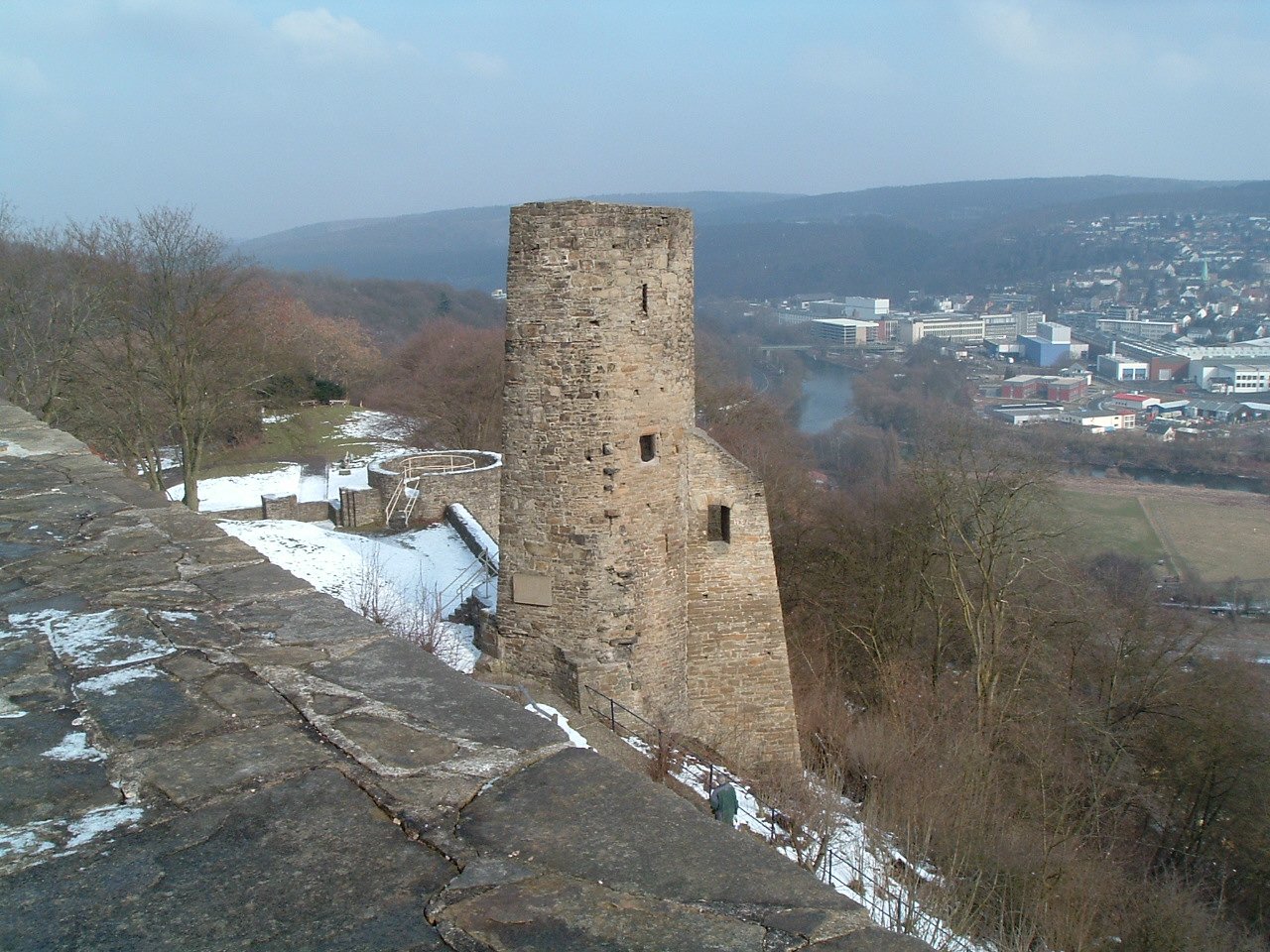
Burg Wetter stands as a significant medieval hill castle ruin located near the town of Wetter in Germany. Founded in the 13th century by the Counts of Mark, this castle was strategically positioned on a ridge of the Ardeygebirge hills, approximately 100 meters above sea level. Its commanding view over the Ruhr River and the Harkortsee reservoir highlights its original military purpose, designed to serve as a stronghold against rival powers such as the Electorate of Cologne and its castle at Volmarstein.
The castle's construction, spanning from around 1250 to 1274, reflects the architectural and defensive needs of the High Medieval period. Its location on elevated terrain classifies it as a hill castle, a common type in the region for controlling important river valleys and trade routes. The castle's core feature, a prominent bergfried, typifies medieval fortification design, serving as a lookout and refuge during sieges. This tower remains the most visible remnant of the castle's once formidable defenses.
Historical context and ownership
The castle was originally established by the Counts of Mark, a noble family influential in the region during the 13th century. On January 28, 1274, Count Engelbert I of Mark gifted Burg Wetter to his son, Eberhard I of Mark, as part of a marriage settlement with Irmgard von Berg. This transfer underscores the castle's role not only as a military asset but also as a symbol of dynastic alliances.
From about 1300, Burg Wetter evolved into an administrative center for the Amt Wetter, the local district government. By 1324, its administrative reach extended to the nearby Amt of Volmarstein. This dual administrative function highlights the castle's importance in regional governance during the Late Medieval period.
The castle and the soest feud
During the mid-15th century, Burg Wetter played a role in the Soest Feud (1444–1449), a conflict involving territorial disputes between the Counts of Mark and the Electorate of Cologne. The castle was held by Craft Stecken, a representative of the Counts of Mark, and endured a siege by forces from Cologne supported by Bohemian troops. This military engagement reflects the castle's strategic significance in the power struggles of the region.
Architectural features and ruins
The surviving remains of Burg Wetter primarily consist of the bergfried, which dominates the site and illustrates typical medieval military architecture. This tower would have been the last line of defense and a vantage point for surveillance. The castle's elevated position on a ridge about 40 meters above the Harkortsee reservoir provided natural defensive advantages and expansive views over the Ruhr valley.
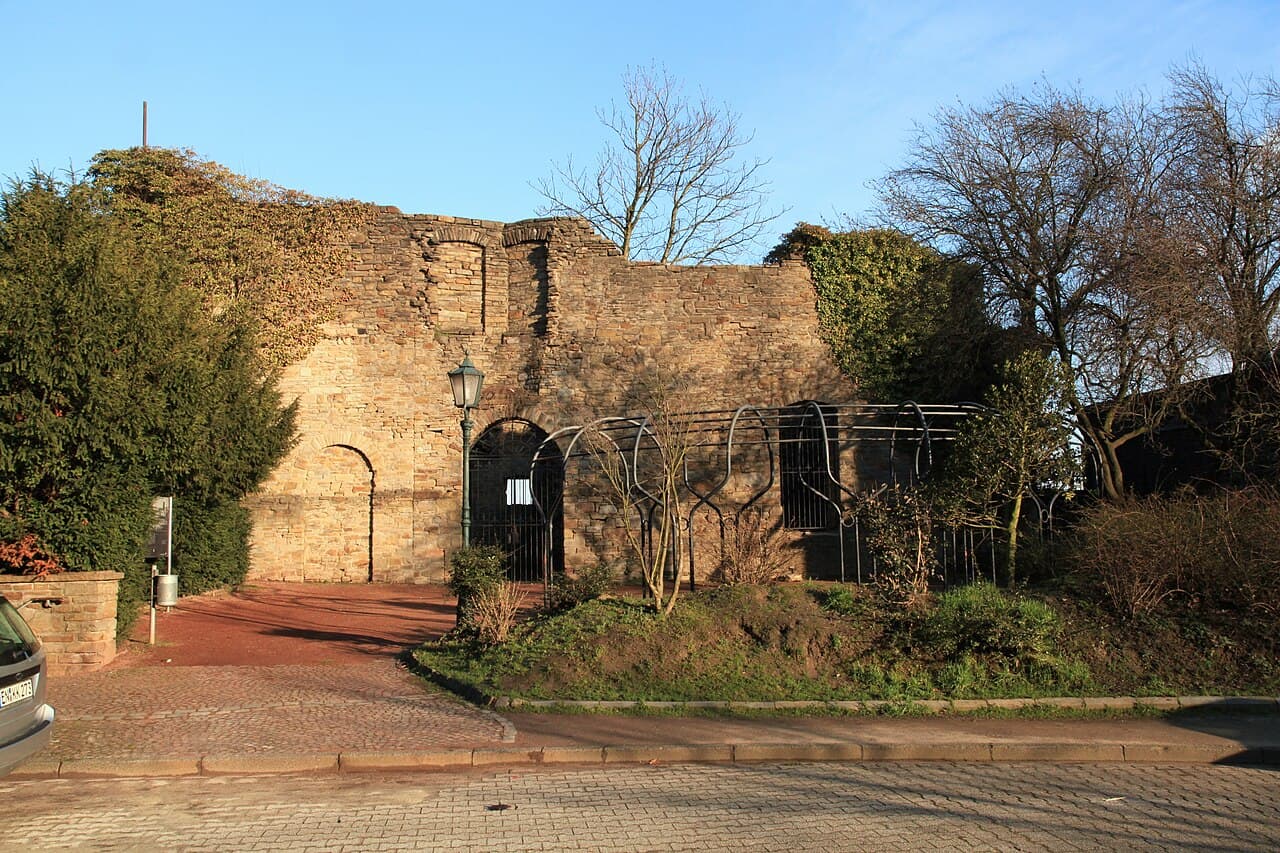
Heraldic symbols are notable features among the ruins. One entrance displays a coat of arms dated 1274, marking the castle's founding or a significant construction phase. Another tower bears a coat of arms from 1714, indicating later modifications or commemorative additions, which suggest continued use or symbolic importance well beyond the medieval period.
Although detailed records of the castle's full architectural layout, construction materials, or decorative elements are scarce, the ruins preserve the essence of a hilltop fortress with defensive walls and towers adapted to the rugged terrain. The site has been maintained as a cultural monument, preserving its historical and architectural legacy.
Industrial transformation in the 19th century
After losing military and administrative importance post-16th century, Burg Wetter experienced a remarkable transformation in the early 19th century. In 1818, industrial pioneers Friedrich Harkort, Heinrich Kamp, and the English engineer Edward Thomas established one of the Ruhr region's first machine factories within the castle grounds. Named initially Mechanische Werkstätten Harkort & Co., the factory specialized in manufacturing steam engines and gas lighting equipment. By 1824, it was known as Harkort, Thomas & Co., marking a significant chapter in the industrial history of the area.
This industrial phase illustrates the adaptive reuse of medieval sites during the Post-medieval period, blending historical heritage with technological progress. The factory contributed to the early industrialization of the Ruhr valley, a region that would become a powerhouse of German heavy industry.
Cultural significance and preservation
Today, the ruins of Burg Wetter are protected as a historical monument, recognized for their cultural and architectural importance. The site offers visitors a glimpse into the layered history of the region—from medieval feudal power and administration to early industrial innovation. The castle's elevated setting continues to provide panoramic views of the surrounding landscape, enhancing its appeal as a heritage site.
While no significant archaeological artifacts such as tools or ceramics have been discovered on-site, the stone ruins themselves serve as a tangible connection to the past. The preservation efforts maintain the castle's identity as a hill castle ruin, allowing for educational and cultural engagement with Germany's medieval and industrial history.
Frequently asked questions (FAQ)
- How do I get to Burg Wetter?
- Burg Wetter is located near the town of Wetter in North Rhine-Westphalia, Germany. Visitors can reach the site by car or local public transportation from nearby cities such as Dortmund or Hagen.
- What is the historical significance of Burg Wetter?
- Burg Wetter was a strategic hill castle built in the 13th century by the Counts of Mark. It served as a military stronghold, administrative center, and later an industrial site, reflecting the region's evolving history.
- Can I visit the ruins of Burg Wetter?
- Yes, the ruins of Burg Wetter are accessible to the public as a protected historical site. Visitors can explore the remains of the bergfried and enjoy panoramic views of the Ruhr valley.
- When was Burg Wetter built?
- Burg Wetter was constructed between 1250 and 1274, during the High Medieval period, reflecting typical hill castle architecture of that era.
- Why was Burg Wetter built on a hill?
- The castle's hilltop location provided strategic advantages, including natural defense, extensive visibility over the Ruhr River, and control over important trade routes.
Photo gallery

Information
Loading map...
Visitor reviews
No reviews yet. Been here? Write the first review and help other travelers!
Write the first reviewVisited this castle? Share your experience
Your review helps other travelers and adds first-hand knowledge to our encyclopedia.