Burg Volmarstein
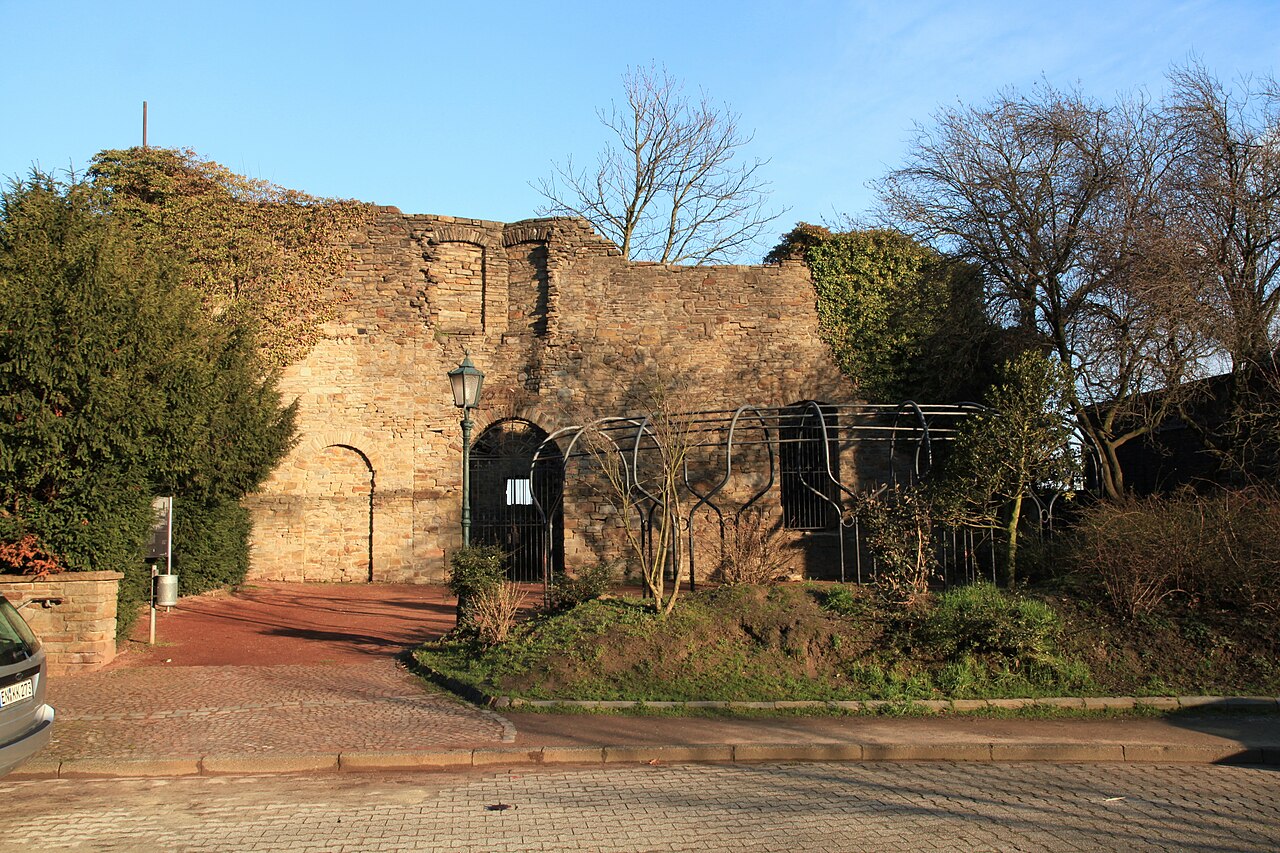
Burg Volmarstein stands as a significant high medieval hill castle ruin located in the municipality of Wetter, within the North Rhine-Westphalia region of Germany. Constructed around 1100 by Archbishop Friedrich I of Cologne, the castle was strategically established to reinforce ecclesiastical territorial control in the Westphalia region. Its commanding position atop a hill ridge overlooking the Ruhr River valley provided both defensive advantages and oversight of key routes.
The castle's initial role was as a fortified residence and administrative center, granted as a fief to the noble family known as the Volmestein or Volmudestede. These lords, serving as ministeriales—unfree knights in service to the archbishops—managed the castle and surrounding lands. The first documented lord, Heinrich I, appears in records from 1134. Over time, a rural settlement developed around the fortress, gaining recognition as a town by 1307. Burg Volmarstein's strategic importance was underscored by its position guarding the archiepiscopal escort route between Ennepetal and Soest.
Historical conflicts and ownership changes
The late 13th century marked a turbulent period for Burg Volmarstein. Following the Battle of Worringen in 1288, the castle was besieged and damaged by Count Eberhard I of the Mark. This conflict led to a significant shift in regional power, as Eberhard I secured rights to fortify his territories and was recognized as an imperial prince by the Archbishop of Cologne. The castle was rebuilt in 1289 after a reconciliation, reflecting its continued military and administrative significance.
Throughout the early decades of the 14th century, Burg Volmarstein became a contested site between the Archbishopric of Cologne and the Counts of Mark. A notable siege occurred in 1324, lasting about two months, culminating in the castle's capture and near destruction by the forces of the Counts of Mark. The defenders ultimately surrendered due to a shortage of water, and the archbishop was taken prisoner. Despite this devastation, the castle was rebuilt in subsequent years, demonstrating its enduring strategic value.
Ownership and use of the castle evolved over the following centuries. The Counts and later Dukes of Kleve intermittently occupied Burg Volmarstein until around 1525, after which the castle gradually fell out of use. The original Volmestein family line ended after 1430, with the estates passing through marriage to the von der Recke family, who retained possession well into the 20th century.
Destruction and restoration efforts
A catastrophic fire in 1754 destroyed both the village of Volmarstein and the castle, leaving it in ruins. Local residents repurposed stones from the castle for rebuilding homes, accelerating its decline. By the early 19th century, the ruins had become a regional landmark, inspiring cultural works such as a poem by the Prussian poet Friedrich de la Motte Fouqué that celebrated the castle's romantic and historical significance.
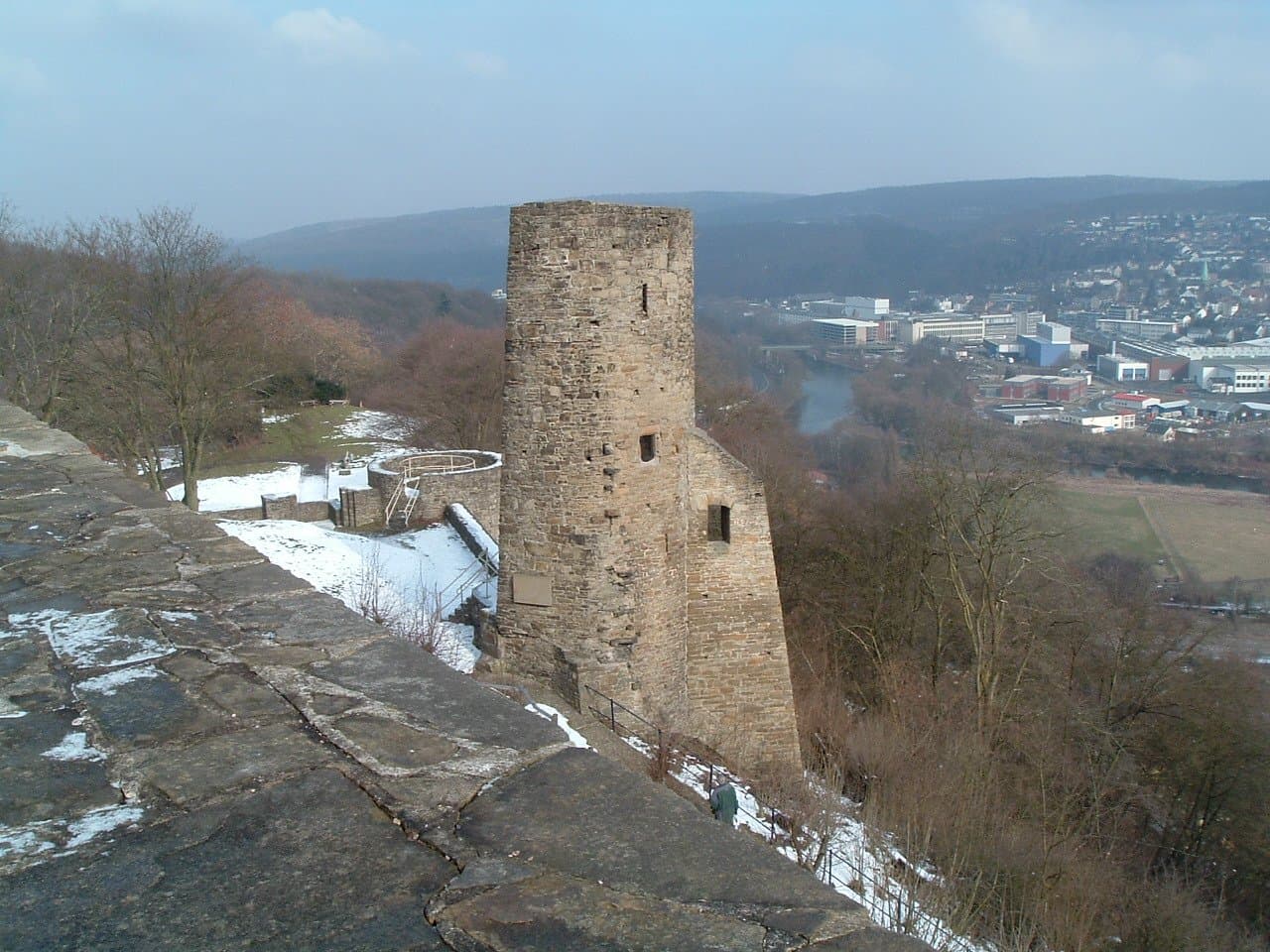
In 1819, the estate passed to Count Philipp von der Recke-Volmarstein, who financed extensive restoration efforts between 1822 and 1854. These included stabilizing the prominent donjon tower with a retaining wall to prevent further deterioration. However, a severe storm in 1830 caused significant damage, destroying half of the eastern tower, which was never rebuilt. The remaining tower stands today as a lasting emblem of the castle's historical presence.
Architectural features and site layout
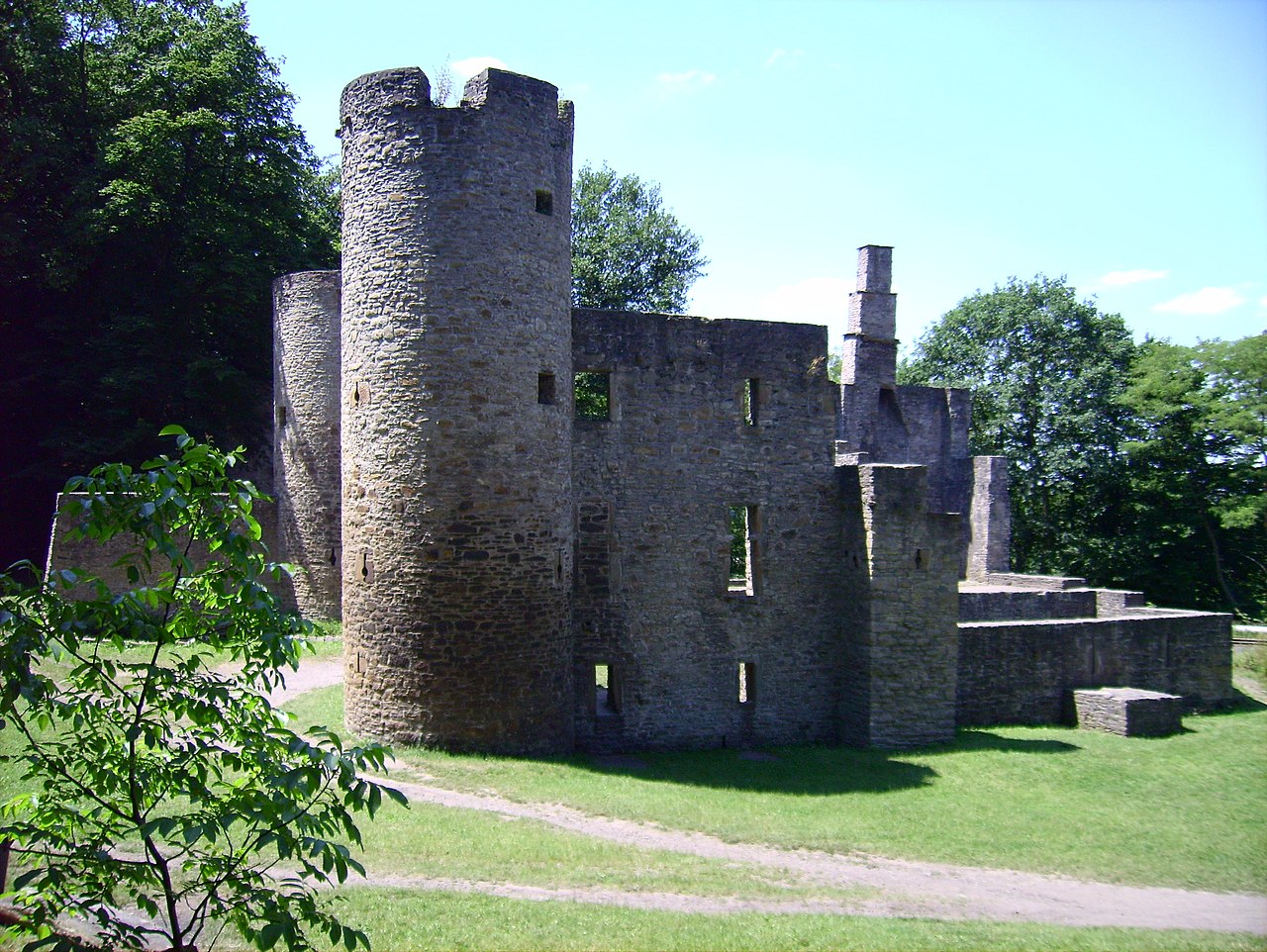
The ruins of Burg Volmarstein occupy a narrow hilltop ridge approximately 100 meters above the Ruhr River, offering broad views over the valley and nearby town of Wetter. The castle's elongated layout follows the ridge's shape, consisting of a central core with three surviving towers and forecourts at each end. This design reflects its dual function as a fortified residence and administrative center.
The most prominent surviving structure is the partially preserved donjon or main keep, which was significantly stabilized during 19th-century restoration. The eastern tower, severely damaged by the 1830 hurricane, remains partially ruined. The castle's masonry was originally constructed from locally quarried stone, much of which was removed by villagers after the 1754 fire for use in local buildings.
Several commemorative stone plaques affixed to the remaining tower mark key historical moments, including its founding by the Archbishop of Cologne in 1100, the destruction after the 1324 siege, and the property's return to the von der Recke family in 1817 by decree of King Friedrich Wilhelm III.
Modern significance and visitor experience
Today, Burg Volmarstein remains under the ownership of the von der Recke family and serves as a cultural and historical landmark within the community. The site features secure, developed pathways that allow visitors to explore the ruins safely. A hotel located at the base of the hill offers accommodations, with public parking available in the village below.
The castle ruins provide tangible links to nearly a millennium of regional power struggles, architectural development, and the shifting influence between ecclesiastical and secular authorities in the Westphalia region. Its enduring structures and panoramic views continue to attract history enthusiasts, scholars, and tourists interested in medieval military architecture and German heritage.
Frequently asked questions (FAQ)
- What is the historical significance of Burg Volmarstein?
- Burg Volmarstein is a medieval castle that dates back to the 13th century, playing a crucial role in the region's history. It served as a defensive stronghold and was a residence for various noble families, contributing to the local heritage and culture.
- When was Burg Volmarstein built?
- Burg Volmarstein was constructed around the year 1250. Its strategic location provided an excellent vantage point for defense against potential invaders and allowed it to thrive during the Middle Ages.
- Can I visit Burg Volmarstein year-round?
- Yes, Burg Volmarstein is open to visitors throughout the year, although specific opening hours may vary by season. It is advisable to check the official website for the latest information on visiting times before planning your trip.
- What are the opening hours for Burg Volmarstein?
- The castle typically opens at 10 AM and closes at 6 PM during the peak season, while winter hours may be reduced. Always verify the current hours on the castle's website or contact them directly for any seasonal changes.
- Is Burg Volmarstein accessible for visitors with disabilities?
- Burg Volmarstein has made efforts to improve accessibility, but certain areas may still pose challenges due to the castle's historical architecture. It's best to contact the site in advance to understand specific accessibility options available during your visit.
- What are the ticket prices for visiting Burg Volmarstein?
- Ticket prices for Burg Volmarstein are generally affordable, with discounts available for students and seniors. Children under a certain age may enter for free, but it’s recommended to check the official site for the most current pricing information.
- When is the best time to visit Burg Volmarstein?
- The best time to visit Burg Volmarstein is during the spring and early autumn months when the weather is mild and favorable for outdoor activities. Additionally, this period often features fewer crowds, allowing for a more enjoyable experience.
- What nearby attractions can I explore when visiting Burg Volmarstein?
- Visitors to Burg Volmarstein can also explore the charming town of Wetter, which features beautiful parks and walking trails. Other nearby attractions include the Ruhr Valley and various hiking routes that showcase the natural beauty of the region.
Photo gallery

Information
Website
Visit websiteSources & official resources
Verify the information above using these authoritative references.
Loading map...
Visitor reviews
No reviews yet. Been here? Write the first review and help other travelers!
Write the first reviewVisited this castle? Share your experience
Your review helps other travelers and adds first-hand knowledge to our encyclopedia.