Hofburg
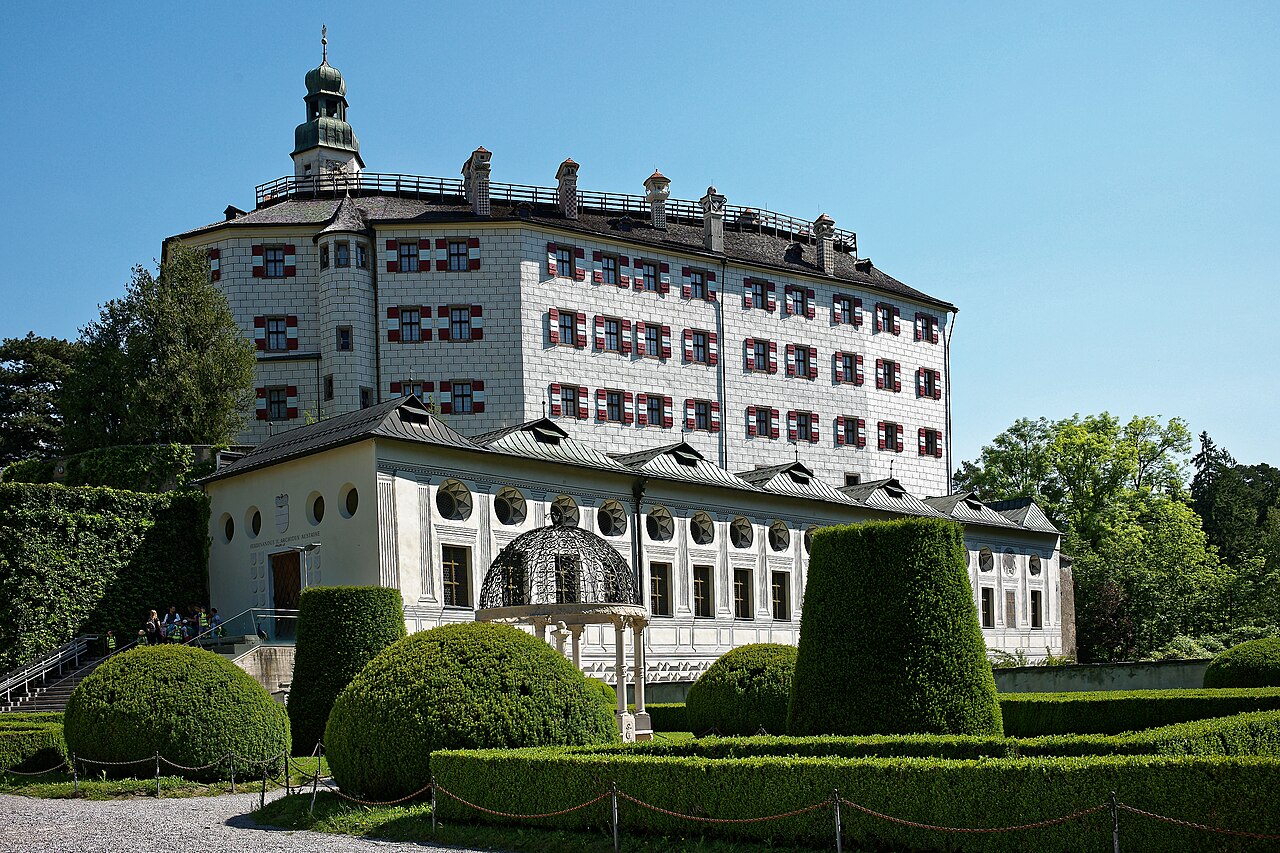
The Hofburg palace in Innsbruck, Austria, stands as a monumental symbol of Habsburg power and architectural evolution across several centuries. Originally constructed around 1460 under Archduke Sigismund, the palace began as a fortified complex incorporating sections of the city's medieval defenses, notably the Rumer Gate. This gate was later transformed into the Heraldic Tower in 1499 by the artist Jörg Kölderer during the reign of Emperor Maximilian I, marking the palace's transition from a defensive stronghold to a prestigious imperial residence.
The Hofburg is considered one of Austria's most significant cultural landmarks, alongside the Vienna Hofburg Palace and Schönbrunn Palace. It serves as the centerpiece of a larger complex that includes the Noblewomen's Collegiate Foundation, the Silver Chapel, the Hofkirche with Emperor Maximilian's cenotaph and the Schwarzen Mandern, the Theological University, the Tyrolean Folk Art Museum, Innsbruck Cathedral, the Congress, and the Hofgarten (Court Garden). This ensemble highlights the palace's multifaceted role as a residential, religious, and cultural hub over centuries.
Early construction and medieval origins
The initial construction phase of the Hofburg around 1460 incorporated existing medieval fortifications along Innsbruck's eastern city wall, reflecting its original defensive purpose. The Rumer Gate, a key element of these defenses, was integrated into the palace structure and later converted into the Heraldic Tower in 1499, adorned with a series of 56 painted coats of arms that visually represent noble lineages and alliances of the time.
During the late 15th century, under Emperor Maximilian I, the palace began to evolve from a purely medieval fortress into a late Gothic residence. This period saw the addition of representative halls and living quarters that reflected the growing status and ambitions of the Habsburg dynasty.
Renaissance transformation and fire reconstruction
In 1534, a devastating fire necessitated a major reconstruction of the Hofburg. Under the direction of the Italian architect Lucius de Spaciis and during the reign of Emperor Ferdinand I, the palace was redesigned in the Renaissance style. This renovation introduced Italian Renaissance architectural elements, such as symmetrical layouts, classical proportions, and refined decorative details, marking a significant stylistic shift from the medieval Gothic origins.
Baroque expansion under maria theresa
The most extensive transformation of the Hofburg occurred in the mid-18th century during the reign of Empress Maria Theresa. Between 1754 and 1773, the palace underwent two major phases of Baroque renovation. The south wing was rebuilt between 1754 and 1756 under architect Johann Martin Gumpp the Younger, introducing new administrative offices, a grand staircase, and a more harmonious exterior with regularly spaced windows.
The main façade facing Rennweg Street was added between 1766 and 1773 by architects C. J. Walter and Nikolaus Pacassi. This façade is distinguished by delicate Rococo decorations, including ornamental cartouches featuring the Austrian striped shield, pilasters, and cornices, which enhance the palace's imperial grandeur.
The Giants' Hall (Riesensaal), a magnificent banquet hall approximately 31 meters long, was completed during this period. Its ceiling features frescoes by Franz Anton Maulbertsch painted in 1775-1776, depicting scenes from the myth of Hercules alongside portraits of Maria Theresa's descendants, blending mythological symbolism with dynastic pride.
Another significant addition is the Hofburg Chapel, constructed in 1765-1766 in the very room where Emperor Francis I died in 1765. This chapel is a long, rectangular two-story space richly decorated in white and gold Rococo style, featuring a large gilded cross, a painted relief by F. A. Leitensdorfer, and a sculptural altar group by Anton Sartori, creating a solemn and ornate memorial.
Historical significance and imperial residence
Throughout its history, the Hofburg served as a residence for numerous members of the Habsburg dynasty, including Emperor Franz Joseph and the famous Empress Elisabeth ("Sisi"). The palace was a stage for important historical events, such as the sudden death of Emperor Francis I during wedding celebrations and its role during the Napoleonic Wars when it housed King Maximilian I Joseph of Bavaria and served as headquarters for the Tyrolean resistance leader Andreas Hofer in 1809.
The palace's interiors were last significantly reorganized in 1858, inspired by the layout of Schönbrunn Palace in Vienna, to modernize the living quarters with contemporary comforts and style. The complex also expanded to include cultural institutions like the Tyrolean Folk Art Museum and the Noblewomen's Collegiate Foundation, reflecting its ongoing cultural and social importance.
Architectural features and layout
The Hofburg is an irregularly shaped complex covering approximately 5,000 square meters and containing around 400 rooms. Its layout centers on a large rectangular courtyard paved with cobblestones, measuring roughly 1,300 square meters, surrounded by the palace wings and accessed through four gateways. The courtyard is adorned with Baroque pilasters, cornices, and ornamental cartouches displaying the Austrian striped shield, emphasizing its imperial identity.
Key medieval defensive elements remain visible in the palace's façade, including the South Roundel (the former Rumer Gate/Heraldic Tower), the North Roundel, and the Corner Cabinet tower. These features form an uneven corner block that visibly contrasts with the later Baroque wings, illustrating the palace's layered architectural history.
Beneath the north wing lies the Gothic Hall, a large vaulted space covering about 650 square meters with characteristic late medieval cross-ribbed vaulting and brickwork. While parts of this hall remain in their original Gothic state, other sections were modified during Renaissance and Baroque renovations, reflecting the building's functional adaptation over time.
Interior highlights
- Maria Theresa's Rooms: These rooms preserve 18th-century imperial furnishings and décor, illustrating the lifestyle of one of Austria's most influential rulers.
- Empress Elisabeth's Apartment: Featuring 19th-century silk textiles and refined decoration, this apartment reflects the tastes of the beloved "Sisi".
- Chinese Room: Decorated with murals painted in 1773 depicting Chinese motifs, this room was restored after damage sustained during World War II.
- Court Furniture Room: Showcases elegant furniture by the Thonet company, renowned for its bentwood craftsmanship.
Chapels and religious spaces
The palace contains two chapels: the Hofburg Chapel, a Rococo masterpiece commemorating Emperor Francis I, and the Silver Chapel (Silberne Kapelle), which adjoins the Hofkirche and houses a Renaissance organ. These chapels highlight the integration of sacred architecture within the imperial complex.
Cultural legacy and current status
Today, the Hofburg palace functions as a museum complex with five themed areas: Maria Theresa's Rooms, Empress Elisabeth's Apartment, a Furniture Museum, an Ancestral Gallery, and a Painting Gallery. These exhibitions present the rich political and cultural history of the former imperial residence, which remained under Habsburg ownership for over 450 years.
The palace, with its blend of late medieval, Renaissance, and Baroque architecture, remains a prominent landmark in Innsbruck. Its careful integration with nearby historical sites like the Hofkirche, the Noblewomen's Collegiate Foundation, and the Hofgarten creates a coherent ensemble that embodies the imperial, religious, and cultural heritage of the region.
Frequently asked questions (FAQ)
- What is the historical significance of Hofburg Castle?
- Hofburg Castle in Innsbruck is a remarkable symbol of Tyrolean history, serving as a former imperial palace of the Habsburg dynasty. This castle showcases the rich cultural heritage and architectural evolution from the Gothic to the Baroque period, making it a vital site for understanding Austria's royal past.
- When was Hofburg Castle built?
- Construction of Hofburg Castle began in the 15th century, with significant expansions occurring over the following centuries. The castle has undergone numerous renovations, particularly during the reign of Empress Maria Theresa in the 18th century, which contributed to its current grandeur.
- What are the opening hours of Hofburg Castle?
- Hofburg Castle is typically open to visitors daily, with hours varying by season. It is advisable to check the official website for the most current opening hours, especially during holidays or special events.
- Can I take a guided tour of Hofburg Castle?
- Yes, guided tours are available at Hofburg Castle, providing visitors with in-depth information about its history and architecture. These tours are led by knowledgeable guides and often include access to areas that are not open to the general public.
- Is Hofburg Castle accessible for visitors with disabilities?
- Hofburg Castle strives to be accessible to all visitors, with ramps and elevators in place to assist those with mobility challenges. However, some historical areas may have limited accessibility due to the castle's age and architecture, so it's best to inquire in advance.
- What are the ticket prices for Hofburg Castle?
- Ticket prices for Hofburg Castle vary depending on the type of tour and age of the visitor. Discounts are often available for students, seniors, and families, so it’s beneficial to check the official website for current pricing and special offers.
- When is the best time to visit Hofburg Castle?
- The best time to visit Hofburg Castle is during the spring and fall when the weather is mild and the tourist crowds are smaller. Visiting during the off-peak months can enhance the experience, allowing for a more relaxed exploration of the castle and its surroundings.
- What nearby attractions can I visit after Hofburg Castle?
- After exploring Hofburg Castle, visitors can enjoy several nearby attractions, including the Golden Roof and the Tyrolean State Museum. The charming old town of Innsbruck is also a short walk away, offering cafes, shops, and stunning Alpine views.
Information
Website
Visit websiteSources & official resources
Verify the information above using these authoritative references.
Loading map...
Visitor reviews
No reviews yet. Been here? Write the first review and help other travelers!
Write the first reviewVisited this castle? Share your experience
Your review helps other travelers and adds first-hand knowledge to our encyclopedia.