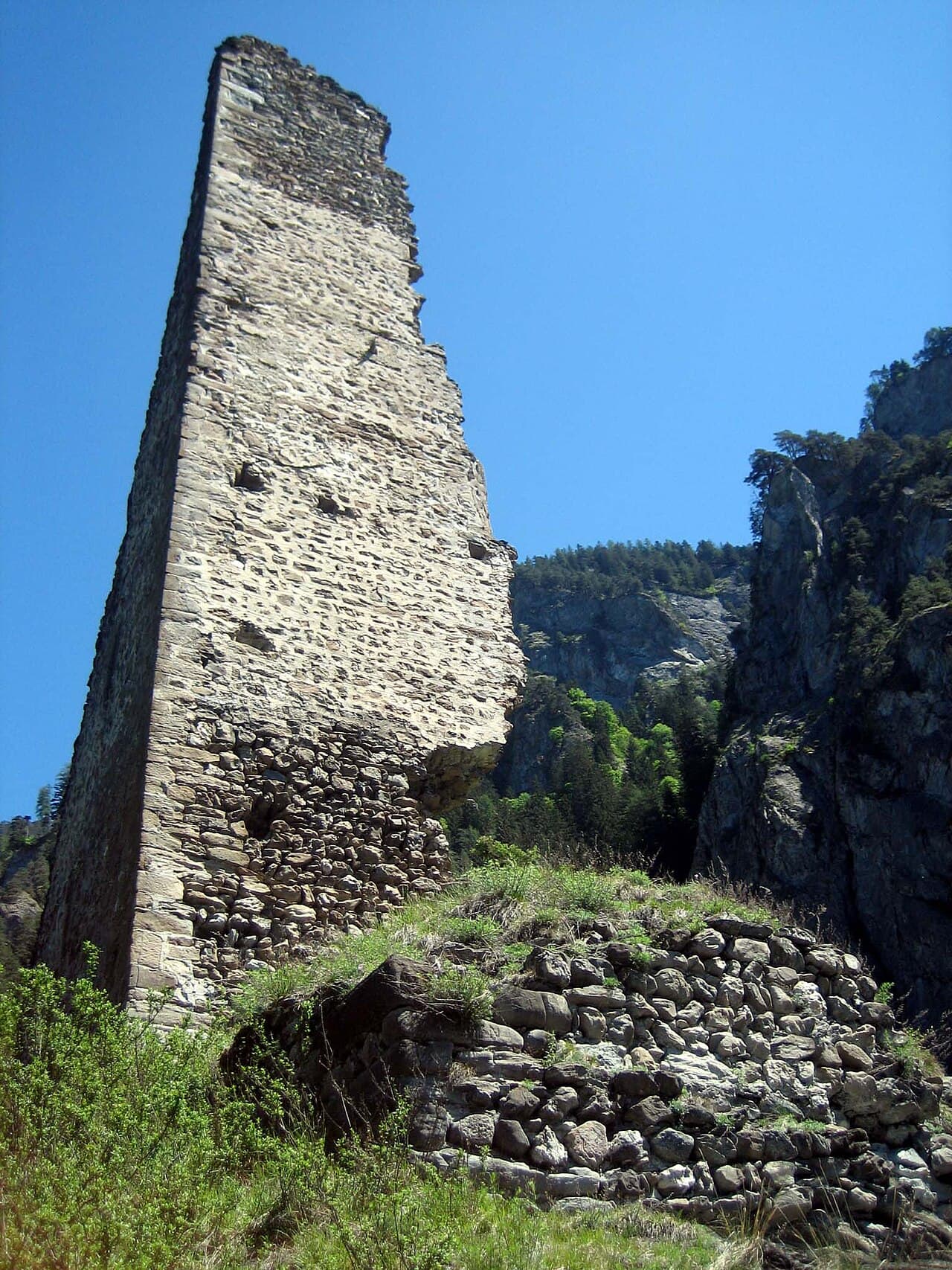
Hochjuvalt Castle — Switzerland castle

Hochjuvalt Castle

Hochjuvalt castle in rothenbrunnen, switzerland
Rothenbrunnen, Switzerland
High Medieval (11th–13th c.)
Ruins

Hochjuvalt Castle, also known as Niderjuvalt or Ausser-Juvalt, is a significant medieval fortress situated in the municipality of Rothenbrunnen in the Canton of Graubünden, Switzerland. This castle complex, now in ruins, played a crucial role in controlling alpine trade routes through the Septimer, Splügen, and San Bernardino Passes during the High Medieval period. The castle's strategic position on a rocky spur overlooking the valley created a natural pinch point, forcing traffic to pass through its customs post located in the lower castle area along the valley floor.

Historical background and ownership

The earliest records of the von Juvalt family, the original builders and owners of Hochjuvalt Castle, date back to 1140, with the castle itself first mentioned in 1149. The family served as vassals to the Bishop of Chur and held extensive estates ranging from Feldis/Veulden to Scharans. Around 1250, to strengthen their regional control, the von Juvalt family constructed Innerjuvalt Castle approximately 2 kilometers southeast of Hochjuvalt.

By the 14th century, Hochjuvalt Castle passed, likely through inheritance, to the Rietberg family. After the death of Johann von Reitberg in 1349, the castle's ownership became contested. The Bishop of Chur claimed the castle and other Reitberg estates, successfully forcing competing claimants such as the Freiherr von Landenberg and the Freiherr of Lumbrein to relinquish their claims by 1352.

During the following century, the Bishops of Chur used the castle and its lands as collateral for loans from wealthy families, reflecting its continued strategic and economic importance. In 1451, a conflict erupted between the residents of the Schams valley and the Counts of Werdenberg-Sargans, resulting in the partial destruction of several regional castles. Although it is unclear if Hochjuvalt was damaged, the castle was last granted to Eberhard Ringg von Baldenstein in 1454. By 1500, Hochjuvalt was abandoned and had fallen into ruin by around 1550.

Architectural features and layout

Upper castle

The oldest and most prominent section of Hochjuvalt is the upper castle, located high on the rocky spur above the valley. The centerpiece is a residential tower originally standing five stories tall. Today, most of the tower has collapsed, leaving an 'L'-shaped wall fragment that measures five stories in height. Surrounding the tower was a ring wall that likely enclosed the entire summit of the spur, although only traces remain today.

Defensive features included two deep ditches cut into the mountain side of the spur, which would have hindered attackers approaching from the landward side. The natural topography combined with these man-made defenses made the upper castle a formidable stronghold.

Lower castle

The lower castle extended between the base of the spur and the banks of the nearby river. It served as the customs post controlling traffic through the valley. The lower castle was enclosed by a substantial curtain wall featuring three gates: one facing Chur, another toward the Viamala road, and a third opening toward the Rhine river. Inside this enclosure, the only surviving building is a 9 by 9 meter tower located in the southwest corner. Foundations of a similar tower are visible in the northwest corner, indicating a symmetrical defensive layout.

Later history and modern preservation

After its abandonment in the early 16th century, Hochjuvalt Castle remained a ruin for centuries. During World War II, the site was reoccupied and fortified with modern defenses including gun emplacements near the upper castle and tank barriers around the lower castle, reflecting its continued strategic importance despite its ruined state.

In 2011-2012, efforts were made to reinforce and repair the castle ruins, improving safety and accessibility. A new footpath was constructed to the upper castle, allowing visitors to explore the site and appreciate its historical significance and commanding views over the valley.

Cultural significance and heritage status

Hochjuvalt Castle is recognized as a Swiss heritage site of national significance. Its ruins provide valuable insights into High Medieval castle architecture and the feudal history of the region. The castle's location and design illustrate the importance of controlling alpine trade routes and the complex political landscape involving local noble families and ecclesiastical authorities.

Today, the site attracts historians, archaeologists, and tourists interested in medieval fortifications and Swiss history. The preservation efforts ensure that Hochjuvalt continues to be an accessible and informative monument to Switzerland's medieval past.

Frequently asked questions (FAQ)

How do I get to Hochjuvalt Castle?
Hochjuvalt Castle is located in Rothenbrunnen, Switzerland, and can be accessed by car or public transport. The nearest train station is in Chur, from where you can take a bus or taxi to reach the castle. Make sure to check the local transport schedules for the most convenient options.
What is the historical significance of Hochjuvalt Castle?
Hochjuvalt Castle dates back to the 13th century and played a crucial role in the defense of the region during the medieval period. It served as a residence for local nobility and has witnessed many historical events that shaped the area. Today, it stands as a testament to the rich history and architectural heritage of Switzerland.
When was Hochjuvalt Castle built?
Construction of Hochjuvalt Castle began in the early 1200s, and it was completed by the late 13th century. The castle has undergone various renovations over the centuries, preserving its historical essence while adapting to modern needs. Its long history makes it an intriguing site for visitors interested in medieval architecture.
Can I explore the interior of Hochjuvalt Castle?
Yes, visitors are allowed to explore certain areas of Hochjuvalt Castle, including its courtyards and some historical rooms. Guided tours are available, providing insights into the castle's history and architecture. It's advisable to check in advance for tour availability and any restrictions.
Why is Hochjuvalt Castle a popular tourist destination?
Hochjuvalt Castle is popular among tourists due to its stunning architecture and scenic location in the Swiss Alps. The breathtaking views and the well-preserved medieval structures attract history enthusiasts and photographers alike. Additionally, the castle's rich history adds to its allure as a must-visit destination.
Is it possible to host events at Hochjuvalt Castle?
Yes, Hochjuvalt Castle can be rented for private events such as weddings, corporate gatherings, and special occasions. The unique ambiance and historical backdrop make it an enchanting venue. It is recommended to contact the castle management for availability and specific arrangements.
What are the opening hours for Hochjuvalt Castle?
Hochjuvalt Castle is typically open from April to October, with varying hours depending on the season. During peak tourist season, the castle is open daily, while off-season hours may be limited. It's best to check the official website for the most up-to-date information on opening hours before your visit.
What are the ticket prices for visiting Hochjuvalt Castle?
Ticket prices for Hochjuvalt Castle vary based on the type of tour and visitor age. Generally, adult tickets are priced around 10 CHF, while discounts are available for students and seniors. Children under a certain age may enter for free, making it an affordable option for families.
What is the best time to visit Hochjuvalt Castle?
The best time to visit Hochjuvalt Castle is during the spring and summer months when the weather is pleasant and the surrounding landscapes are vibrant. This season offers the best conditions for exploring the castle and enjoying outdoor activities. Additionally, many cultural events and festivals may take place during this time, enhancing the visitor experience.
Are there any nearby attractions to visit along with Hochjuvalt Castle?
Yes, there are several attractions near Hochjuvalt Castle worth exploring, including the picturesque town of Chur and the scenic hiking trails of the Swiss Alps. Visitors can also enjoy local Swiss cuisine in nearby restaurants. Make sure to plan your itinerary to enjoy the rich cultural and natural offerings of the region.

Photo gallery

Hochjuvalt Castle
Click to view

Photo by upload by Adrian Michael•CC BY-SA 3.0

1 photo • Click any image to view in full screen

Information

Archaeological Site / Ruins

Loading map...

Visitor reviews

No reviews yet. Been here? Write the first review and help other travelers!

Write the first review

Visited this castle? Share your experience

Your review helps other travelers and adds first-hand knowledge to our encyclopedia.

Write a review

(5/5)

0/2000 characters

Your review will be visible after admin approval

Nearby castles

1.3 km

Innerjuvalt Castle

Rothenbrunnen, Switzerland

Innerjuvalt Castle stands as a remarkable example of a high medieval hill castle strategically perched on a narrow rocky outcrop above the entrance to the Domleschg Valley in the municipality of Rothenbrunnen, Switzerland. Constructed around 1250 by the noble Freiherr von Juvalt family, this castle played a significant role in controlling the valley and served as a fortified residence for the family for nearly two centuries. Its location about two kilometers southeast of the older Hochjuvalt Castle reflects a deliberate choice for enhanced defense and oversight of the surrounding landscape. The castle complex is divided into two main sections: the upper castle built on the rocky plateau and the lower castle situated at the foot of the cliff. The upper castle was initially constructed as a two-story palas, likely used to house workers during the early phases of construction. Around 1273, significant expansions included the addition of a two-story main tower with a high entrance, a defensive architectural feature designed to hinder direct assault. Adjacent to this tower, a residential wing was built on the northeast side, completing the primary living quarters. Architectural features and defensive design The castle's architecture reflects the practical and strategic needs of the high medieval period. The upper castle benefits from natural defenses, with steep cliffs protecting most sides, while a stone curtain wall was constructed along the lower western side of the outcrop. This wall enclosed essential facilities including a bakery and a cistern, the latter crucial for water storage during sieges. The main tower was further enhanced in the late 15th century by adding a third story and a defensive gallery along its east and north sides, improving vantage points for surveillance and defense. The lower castle featured a ring wall with a southern gatehouse guarding entry. A large palas or residential hall was built along this wall, while the northern courtyard was terraced for agricultural use. Today, only fragments of the lower castle remain, notably a surviving wall segment approximately twenty meters long and four meters high. Historical context and family legacy Innerjuvalt Castle's history is closely tied to the fortunes and internal dynamics of the von Juvalt family. In 1342, family members Albrecht and Bertram von Juvalt settled inheritance disputes, with Bertram relinquishing his claim to Innerjuvalt. Later, in 1372, the estate was divided between Eglof and Friedrich von Juvalt, with Eglof receiving the castle along with its meadows, mill, and vineyards. By 1382, Eglof's wife Ursula was recorded as residing at the castle. In the early 15th century, the castle remained a significant family seat. In 1423, Rudolf von Juvalt was mandated to continuously reside there, underscoring its strategic importance. However, by around 1440, the family shifted residence to the more accessible lower castle, reflecting changing priorities or practical considerations. Despite this move, defensive improvements continued, including the late 15th-century addition of the tower's third story. Ownership changed in 1462 when Barbara von Juvalt sold Innerjuvalt to her brother-in-law Pedrutt von Wannis. The castle was abandoned a few decades later and was described as a ruin by 1570. The decline of Innerjuvalt reflects broader regional shifts in military technology, residence preferences, and political power during the late medieval period. Archaeological excavations and restoration efforts Interest in Innerjuvalt Castle was revived in the late 20th century. Excavations took place in 1980, 1982, and 1990, uncovering significant artifacts such as two 15th-century helmets found in the cistern area, highlighting the castle's military role during its final active centuries. These archaeological efforts provided valuable insights into the castle's construction phases, daily life, and defensive features. Beginning in 1979, the local communities of Domleschg and the Burgenvereine Graubünden undertook restoration projects. These included installing a new roof on the main tower and repairing structural elements to stabilize the ruins. Today, the castle grounds are accessible to visitors, and the restored tower is available for rent by small groups, offering a unique historical experience. Access and visitor experience Visitors to Innerjuvalt Castle reach the site via a steep, narrow path ascending through forested terrain to an elevation of approximately 780 meters above sea level. The journey itself reflects the castle's original defensive positioning, emphasizing its commanding view over the Domleschg Valley. The open grounds allow exploration of the upper castle's remains, including the tower, residential wing, and defensive walls. While the lower castle has largely vanished, the surviving upper castle ruins provide a tangible connection to the region's medieval past and the architectural ingenuity of the von Juvalt family. The site offers an evocative glimpse into the life of a high medieval noble family and their strategic efforts to control and protect their domain.

High Medieval (11th–13th c.)
Details
2.4 km

Ortenstein Castle

Tomils, Switzerland

Ortenstein Castle stands as a significant monument of Swiss medieval heritage, located in the municipality of Tomils in Switzerland. This late medieval fortress was originally constructed in the 15th century, embodying the architectural and military design typical of that period. The castle's history is marked by conflict and resilience, most notably during the Schamserfehde in 1451, a regional feud that led to the destruction of the original structure. Historical context and significance The Schamserfehde was a violent conflict impacting the region, during which many castles were destroyed or abandoned. Ortenstein Castle was among those razed but was uniquely granted the privilege to be rebuilt, setting it apart from other contemporary fortifications that were not allowed reconstruction. This privilege underscores the castle's strategic and political importance in the region during the late medieval period. Following its reconstruction, Ortenstein Castle became a notable seat of power and administration. It was first recorded under municipal ownership in 1527, indicating its role within the local governance and community of Tomils. Over the centuries, the castle has transitioned through various owners, reflecting the shifting social and political dynamics of the region. Architectural features and layout Ortenstein Castle is characteristic of late medieval castle architecture in Switzerland. While specific architectural details are less documented, it typically features robust defensive elements such as thick stone walls, battlements, and possibly a keep or donjon, which were common in castles of this era. Its design would have been influenced by the need for defense against sieges and local conflicts, as well as residential and administrative functions. The castle's location in Tomils likely provided a strategic vantage point over the surrounding landscape, which was crucial for surveillance and defense. The presence of courtyards, gatehouses, and possibly a moat or other water defenses would have enhanced its protective capabilities, although these features require further verification. Ownership and current status Today, Ortenstein Castle remains privately owned, a status it has held since leaving municipal control after its early history. Despite private ownership, the castle is recognized as a Swiss heritage site of national significance, highlighting its cultural and historical value. This designation ensures that the castle is protected under Swiss heritage laws and contributes to the preservation of the nation's medieval architectural legacy. The castle's condition is generally well preserved, allowing visitors and scholars alike to appreciate its historical and architectural significance. However, as a private property, public access may be limited, and any visitation should be planned accordingly. Ortenstein Castle in the broader context of Swiss castles Ortenstein Castle is part of Switzerland's rich tapestry of medieval fortifications, which includes a variety of castle types such as hill castles, water castles, and tower houses. Its survival and reconstruction after the Schamserfehde reflect the turbulent history of the region and the importance of such structures in asserting territorial control and local governance during the late medieval period. As a late medieval castle, Ortenstein contributes to our understanding of the architectural evolution from purely military fortresses to multifunctional residences that also served administrative and symbolic roles. Its preservation as a heritage site enables ongoing study and appreciation of medieval Swiss culture and architecture. Visiting information and cultural importance While Ortenstein Castle is privately owned and may not be regularly open to the public, its status as a heritage site encourages interest from historians, architects, and tourists. The castle's location in Tomils places it within a scenic region of Switzerland, known for its natural beauty and historical landmarks. Visitors interested in Swiss medieval castles can explore the surrounding area and other nearby heritage sites to gain a fuller picture of the region's historical landscape. The castle's enduring presence continues to inspire appreciation for Switzerland's medieval past and architectural heritage.

Late Medieval (14th–15th c.)
Details
2.6 km

Rhäzüns Castle

Rhäzüns, Switzerland

Rhäzüns Castle stands as one of the oldest surviving castles in Switzerland, with origins tracing back to the 10th century. Its earliest recorded mention dates to 960, when Emperor Otto I transferred a church located in "in castello Beneduces et Ruzunnes" (the castle of Bonaduz and Rhäzüns) to the Bishop of Chur. This transaction, confirmed again by Otto II in 976, provides the first documentary evidence of the castle's existence. Originally, the site housed a fortified church that gradually evolved into a feudal stronghold over the subsequent centuries. The castle is located strategically on a cliff above the Hinterrhein river, near the village of Rhäzüns in the canton of Graubünden. Its position afforded commanding views and control over the surrounding valley, a key factor in its historical significance. The castle's early defensive structures likely included a ring wall encircling the site, though this original fortification was partly lost due to erosion caused by the river. Medieval origins and noble lineage By the 12th and 13th centuries, Rhäzüns Castle had become the seat of the powerful Rhäzüns family, a Romansh noble lineage first appearing in records in 1139 with Arnoldus de Ruzunne. The castle’s first explicit mention as a fortress dates to 1282. Over the centuries, the Rhäzüns family expanded their influence, acquiring lands in Domleschg and around Heinzenberg Castle. Their growing power culminated in 1343 when a peace treaty between Disentis Abbey and Glarus was signed in the castle's courtyard, underscoring its role as a regional political center. The late 14th century saw tensions rise between the Rhäzüns family and the Bishop of Chur, leading to the formation of the Ober Bund or Upper Alliance in 1395. This alliance, including the abbot of Disentis Abbey and other regional nobles, sought to counterbalance episcopal power. However, the prolonged conflict weakened the Rhäzüns family, who eventually joined the Grey League in 1424, a significant political federation in the region. Ownership changes and architectural evolution The death of Georges Brun von Rhäzüns in 1458 without heirs sparked a dispute over the castle’s inheritance. After a prolonged conflict, the castle and its lands passed to Niclas von Zollern in 1473. Ownership changed hands frequently in the following centuries, involving families such as the von Marmels, von Stampa, von Planta, and the Planta-Wildenstein lineage. The castle also became a Habsburg fief, reflecting the broader political shifts in the region. During the Swabian War in 1499, troops of the Three Leagues occupied Rhäzüns Castle to prevent it from becoming a Habsburg stronghold. In 1553, significant structural changes were necessary when the eastern round bergfried was demolished due to erosion by the Hinterrhein river threatening collapse. The 16th century also saw the addition of a mill, bath houses, a jail, and residential buildings, reflecting the castle’s adaptation to changing needs. 17th-century expansions and Austrian administration Under Austrian control, the castle underwent further modifications. The hereditary fief was dissolved in 1595, and a vogt (bailiff) was appointed to administer the territory. The vogt added a chapel on the north side and an outer gatehouse on the south-west side around 1700. The castle served as the residence for various Austrian vogts over the next two centuries, maintaining its administrative importance. Modern history and preservation Following the Napoleonic Wars, the castle changed hands again. Austria ceded Rhäzüns to Napoleon in 1809, reclaimed it in 1814, but the Congress of Vienna in 1815 transferred it to the Canton of Graubünden. The canton sold the castle to private owners in 1823, and it served various roles including a private residence for the Vieli family and later a girls' school. After a period of neglect, the castle was restored in the early 20th century and converted into a vacation resort by 1929. World War II halted tourism, leading to abandonment of the resort. In 1960, the castle was acquired by Ems-Chemie and later rented by Christoph Blocher, a prominent Swiss politician, until his death. Today, Rhäzüns Castle remains closed to the general public but maintains a unique educational tradition: for over 30 years, fourth-grade students from the local school have been invited annually to tour the historic site. Architectural features and layout Rhäzüns Castle's architecture reflects its long history and the adaptations made over centuries. The original castle likely featured a ring wall encircling the site, though the eastern section was lost due to river erosion. The surviving north and south walls terminate at the cliff edge, with a newer wall along the cliff forming the current eastern boundary. The 14th-century inner gate tower and northern residential wing are notable for their preserved frescoes, including the coat of arms of the Barons of Rhäzüns and a hunting scene. The 16th-century reconstruction introduced the eastern wall after the bergfried's demolition, along with repairs and renovations to existing structures. The 17th-century outer gatehouse and chapel on the north side were later additions under Austrian administration. Residential quarters were expanded during the 16th and 17th centuries, reflecting the castle's evolving function from a feudal fortress to an administrative center and noble residence. Today, Rhäzüns Castle stands as a well-preserved hill castle that embodies the complex feudal and political history of the Graubünden region. Its combination of medieval fortifications, Renaissance modifications, and Baroque-era expansions offer valuable insights into the architectural and historical developments of Swiss castles over the last millennium.

Early Medieval (5th–10th c.)
Details

