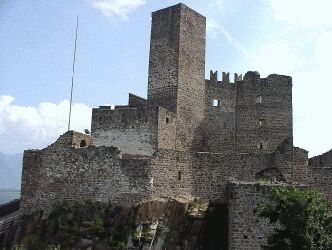
Boymont Castle
Boymont Castle stands as a remarkable example of a High Medieval residential castle located in Eppan, within the Trentino-Alto Adige region of Italy. Perched on a rocky outcrop, the castle ruins offer an enchanting panoramic view of the surrounding landscape, a feature that has drawn visitors and historians alike. Constructed between 1220 and 1240, Boymont Castle was not primarily built for military defense but rather as a prestigious residence, reflecting the architectural and social trends of Tyrolean nobility during the early 13th century.
Historical context and ownership lineage
The castle's origins are closely tied to the powerful families of the region. It was likely commissioned by a relative of the Count of Appiano, a noble lineage influential in the area during the High Medieval period. The Boymont family emerged as prominent owners in the 14th century, playing a significant role in the local aristocracy and governance. Their stewardship marked the castle as a symbol of regional status rather than a fortress of war.
In the early 15th century, ownership passed to the Austrian nobleman Ulrich Kässler through his marriage to Barbara de Boymont in 1413, illustrating the interregional alliances between Tyrolean and Austrian aristocracy. This union brought new influences to the castle's history, though its fate was soon sealed.
In 1425, Boymont Castle suffered a devastating fire, widely believed to be an act of arson. The damage was so severe that the castle was never rebuilt, leading to its gradual decline into the ruins visible today. Despite this, the castle's residential character and historical significance have been preserved in the cultural memory of the region.
Architectural features and significance
Boymont Castle exemplifies the characteristics of Tyrolean residential castles from the early 13th century. Unlike typical military fortresses, its design prioritized comfort and status. The castle was strategically situated on a rocky promontory, providing commanding views of the valley below, which served both aesthetic and practical surveillance purposes.
The surviving ruins indicate a complex layout that included living quarters, defensive walls more symbolic than functional, and possibly courtyards that facilitated daily life and social gatherings. The architecture likely incorporated local stone materials and featured typical medieval construction techniques of the period.
Its non-military nature is significant, as many contemporaneous castles in the region were primarily built for defense against invasions or feudal conflicts. Boymont Castle's focus on residential comfort highlights the social aspirations of its owners and the relative stability of the region during its construction.
Restoration and current status
After centuries of abandonment and deterioration, Boymont Castle changed hands multiple times. In 1977, it was acquired by Fritz Dellago, who undertook efforts to restore and consolidate the ruins. These restoration efforts have stabilized the structure, preventing further decay and allowing visitors to safely explore the site.
Today, Boymont Castle remains a cherished historical monument, attracting tourists interested in medieval architecture, Tyrolean history, and breathtaking views. Its ruins serve as a tangible link to the region's noble past and the architectural trends of the High Medieval period.
Visitor experience and cultural importance
Visitors to Boymont Castle can enjoy not only the ruins themselves but also the spectacular panoramic views from its elevated position. The site offers a unique glimpse into the lifestyle of medieval nobility in Tyrol, emphasizing residential elegance over military might.
The castle's location in the scenic Trentino-Alto Adige region adds to its appeal, combining natural beauty with cultural heritage. It is an important part of the local identity and contributes to the understanding of medieval aristocratic life in northern Italy.
Efforts to maintain and promote Boymont Castle underscore the value placed on preserving historical landmarks that provide educational and tourism opportunities, enriching the cultural fabric of the region.
Frequently asked questions (FAQ)
- How do I get to Boymont Castle?
- Boymont Castle is located in Eppan, Italy, easily accessible by car or public transport. If you are driving, take the A22 motorway and exit at Bolzano/Bozen, then follow signs to Eppan. Public buses also connect the nearby towns to Eppan, making it convenient for visitors.
- What is the historical significance of Boymont Castle?
- Boymont Castle dates back to the 13th century and serves as a testament to the region's medieval history. It was built as a fortress and residence for the nobility, reflecting the architectural styles of its time. The castle has witnessed numerous historical events, making it a key landmark in South Tyrol.
- When was Boymont Castle last renovated?
- The last significant renovations of Boymont Castle took place in the early 21st century. These updates aimed to preserve the castle's historical integrity while making it more accessible to visitors. The restoration efforts have ensured that the castle remains a beautiful and informative site for all who visit.
- Can I take guided tours of Boymont Castle?
- Yes, guided tours are available at Boymont Castle, providing visitors with in-depth information about its history and architecture. These tours are typically conducted in multiple languages and allow guests to explore the castle's fascinating features. It's recommended to check the schedule ahead of your visit to secure your spot.
- Why is Boymont Castle a popular tourist destination?
- Boymont Castle is popular due to its stunning architecture, rich history, and picturesque views of the surrounding landscape. Visitors are drawn to its well-preserved interiors and the opportunity to learn about medieval life in South Tyrol. Additionally, the castle's scenic location makes it an ideal spot for photography and leisure activities.
- Is it possible to host events at Boymont Castle?
- Yes, Boymont Castle offers facilities for hosting various events, including weddings and corporate gatherings. The castle's unique ambiance and beautiful surroundings provide a memorable setting for any occasion. It's advisable to contact the castle administration for specific details and availability.
- What are the opening hours for Boymont Castle?
- Boymont Castle is typically open to visitors from March to November, with varying hours depending on the season. Generally, the castle opens at 10 AM and closes around 5 PM, but it's best to check the official website for the most current information. Special events may affect opening hours, so planning ahead is recommended.
- What are the ticket prices for visiting Boymont Castle?
- Ticket prices for Boymont Castle are reasonably priced, making it accessible for a wide range of visitors. Discounts may be available for children, seniors, and groups, so it's worth inquiring when purchasing tickets. Always check the castle's official website for the latest pricing and any promotional offers.
- What is the best time to visit Boymont Castle?
- The best time to visit Boymont Castle is during the spring and early fall, when the weather is mild and the surrounding gardens are in bloom. This period attracts fewer tourists than the summer months, allowing for a more peaceful experience. Additionally, the autumn foliage enhances the castle's picturesque views, making for a memorable visit.
- Are there any nearby attractions to Boymont Castle?
- Yes, there are several nearby attractions to Boymont Castle, including the picturesque villages of Eppan and Caldaro, known for their wineries and charming streets. The region also offers beautiful hiking trails and scenic lakes, perfect for outdoor enthusiasts. Visiting these nearby sites can enrich your experience in the beautiful South Tyrol region.
Information
Current owner
Fritz Dellago
Loading map...
Visitor reviews
No reviews yet. Been here? Write the first review and help other travelers!
Write the first reviewVisited this castle? Share your experience
Your review helps other travelers and adds first-hand knowledge to our encyclopedia.