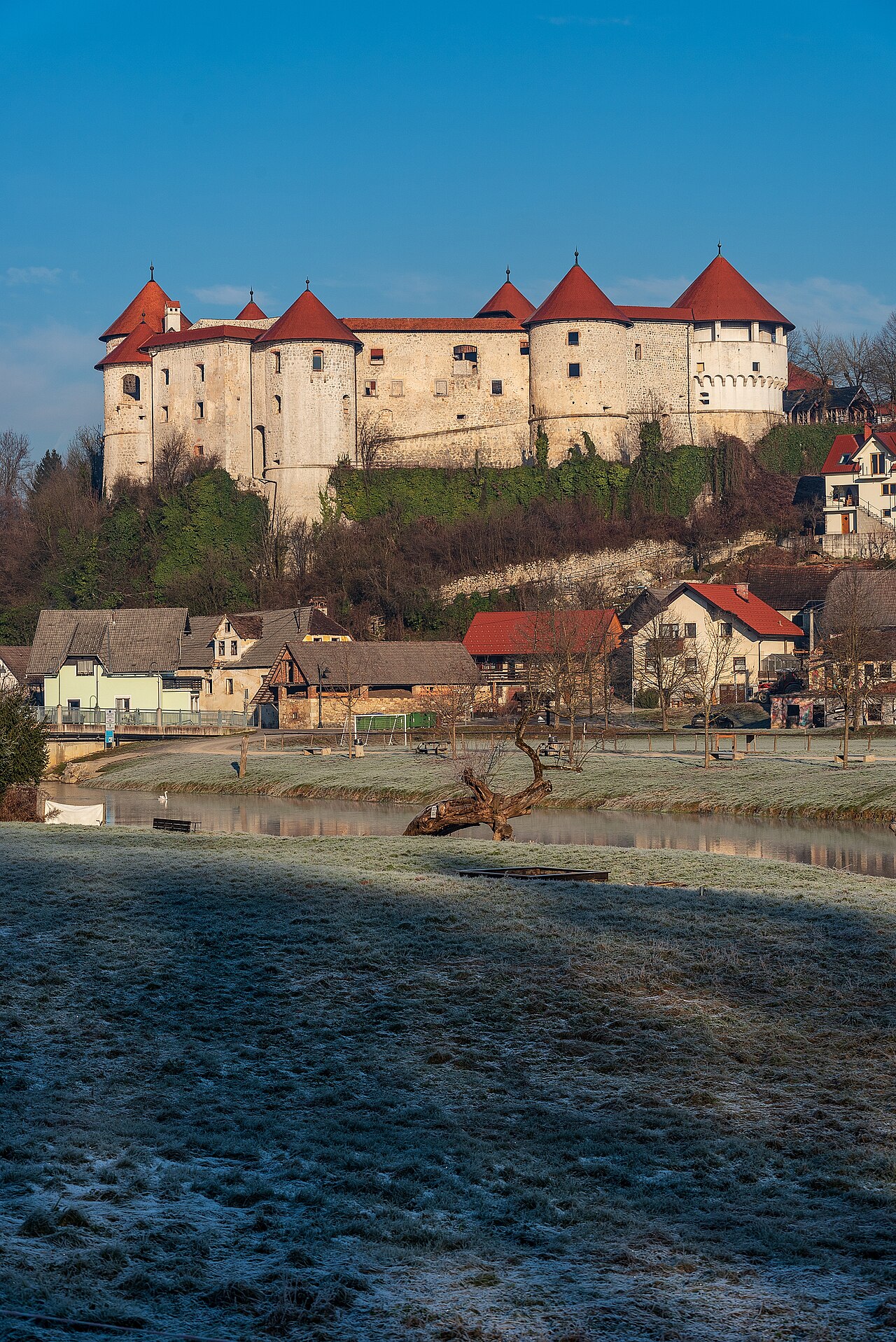
Trebnje Castle
Trebnje Castle stands as a notable medieval fortress in the town of Trebnje, Slovenia, with origins tracing back to the 13th century. The castle was first documented in written sources in 1386, marking its significance in the region's feudal history. Originally owned by the lords of Trebnje from Carinthia, the castle passed through the hands of several prominent noble families, including the Ortenburger family, the Counts of Celje, and later the Habsburg dynasty. Between 1812 and 1824, it was owned by Frederic Irenaeus Baraga, a local missionary known for his cultural and religious contributions.
Medieval origins and architectural evolution
The castle's core structure reflects its high medieval origins, featuring a square tower that incorporates roman foundations, indicating the site's long-standing strategic importance. This tower is one of the oldest surviving elements, showcasing the transition from Roman to medieval fortification techniques. Another distinctive feature is the round tower, which was added during the period of the Ottoman Wars, serving as a defensive measure against incursions during the turbulent 15th and 16th centuries.
The castle's construction and layout were largely completed by the 16th century, reflecting the architectural styles and defensive needs of that era. A notable artistic element is the stone lion statue from Roman times, which is prominently placed above the castle stairs, symbolizing strength and continuity from ancient to medieval times.
Extensions and remodeling through the centuries
During the 17th and 18th centuries, Trebnje Castle underwent significant extensions that adapted the fortress to changing military and residential needs. These expansions included the addition of new wings and the reinforcement of existing walls, blending functional improvements with aesthetic enhancements.
The castle's current appearance owes much to a 19th-century remodeling executed in the historicist style. This renovation sought to revive and emphasize medieval architectural motifs, aligning with the broader European trend of romanticizing the medieval past. The historicist remodeling introduced stylistic details that enhanced the castle's visual appeal while preserving its historical character.
Architectural features and layout
Trebnje Castle's layout includes a combination of defensive and residential structures typical of a high medieval hill castle. The square tower and round tower form key elements of the defensive system, complemented by thick stone walls and battlements designed to withstand sieges. The interior spaces were adapted over time to serve as comfortable living quarters, administrative offices, and storage areas.
The castle's position in the Trebnje region provided strategic oversight of the surrounding landscape, controlling important trade and communication routes. Its proximity to the town of Trebnje allowed it to serve both as a military stronghold and a noble residence.
Historical significance and ownership lineage
The castle's history reflects the complex political dynamics of the region, with ownership passing through influential families and rulers. The lords of Trebnje from Carinthia established the initial fortification, while the Ortenburgers and the Counts of Celje expanded its role within the feudal system. The Habsburgs later incorporated it into their extensive holdings, underscoring its strategic value.
Frederic Irenaeus Baraga's ownership in the early 19th century adds a unique cultural dimension to the castle's history, linking it to religious and missionary activities in the region.
Preservation and current status
Trebnje Castle today is well preserved, retaining many of its medieval and later architectural features. The castle is a protected cultural monument, reflecting its importance in Slovenian heritage. Visitors can observe the blend of medieval fortifications and 19th-century historicist elements, providing insight into the castle's long and varied history.
Frequently asked questions (FAQ)
- What is the historical significance of Trebnje Castle?
- Trebnje Castle, dating back to the late 15th century, is an important example of Renaissance architecture in Slovenia. It has served various purposes throughout history, including as a noble residence and a defensive structure, reflecting the region's rich cultural heritage.
- When was Trebnje Castle built?
- Construction of Trebnje Castle began in the late 15th century, around 1480, and was completed in the subsequent decades. Its structure has been modified over the years, with significant renovations occurring in the 17th and 19th centuries, showcasing the evolution of architectural styles.
- Can I visit Trebnje Castle?
- Yes, visitors are welcome to explore Trebnje Castle and its surroundings. The castle often hosts guided tours, allowing guests to delve into its history and architecture, making it a great destination for history enthusiasts.
- What are the opening hours for Trebnje Castle?
- Trebnje Castle typically opens its doors to visitors from 10 AM to 5 PM during the tourist season, which usually runs from spring to late fall. It’s advisable to check the official website or contact local tourism offices for any updates on seasonal hours or special events.
- Is it possible to access Trebnje Castle with public transport?
- Yes, Trebnje Castle is accessible via public transport, with regular bus services connecting it to major cities in Slovenia. Visitors can take a bus to Trebnje and then walk to the castle, making it convenient for those relying on public transportation.
- What is the best time to visit Trebnje Castle?
- The best time to visit Trebnje Castle is during the spring and early autumn months when the weather is pleasant for outdoor exploration. These seasons also offer fewer crowds compared to the peak summer months, allowing for a more enjoyable experience.
- Are there any nearby attractions to Trebnje Castle?
- Yes, nearby attractions include beautiful natural landscapes and cultural landmarks, such as the picturesque town of Trebnje itself and the scenic Dobrna Spa. Visitors can also explore hiking trails and enjoy local cuisine in the surrounding area, providing a well-rounded experience.
- What are the ticket prices for Trebnje Castle?
- Ticket prices for Trebnje Castle are generally affordable, with discounts available for students and seniors. It’s recommended to check the castle’s official website for the latest pricing and any special offers that may be available during your visit.
Information
Loading map...
Visitor reviews
No reviews yet. Been here? Write the first review and help other travelers!
Write the first reviewVisited this castle? Share your experience
Your review helps other travelers and adds first-hand knowledge to our encyclopedia.