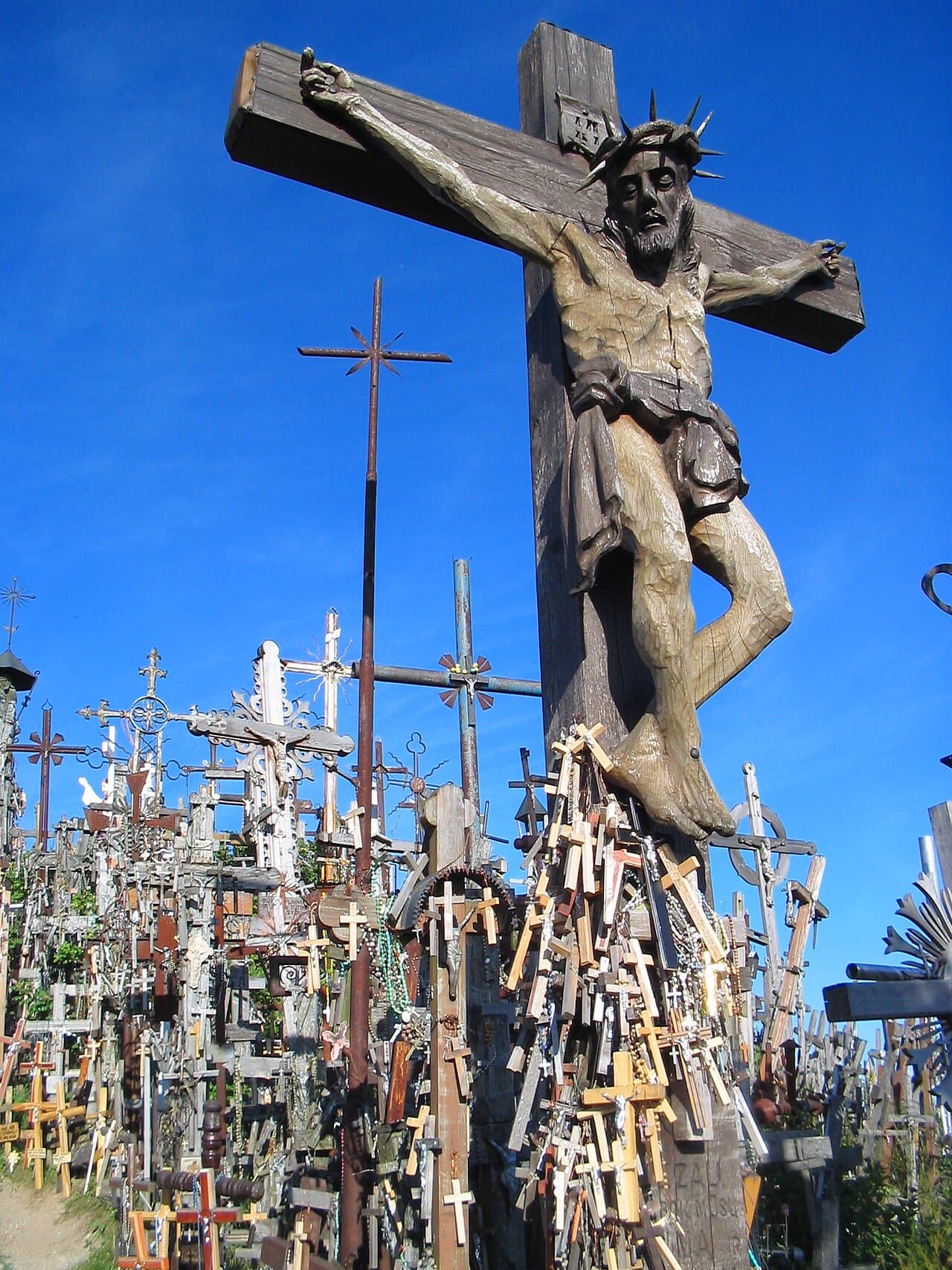
The Hill of Crosses is a unique and deeply significant pilgrimage site located approximately 12 kilometers north of the city of Šiauliai in northern Lithuania. Unlike traditional castles or fortresses, the Hill of Crosses is a symbolic place rather than a military stronghold. It is renowned for its extraordinary accumulation of tens of thousands of crosses, crucifixes, and religious icons left by Catholic pilgrims over many decades.
The origins of the Hill of Crosses trace back to the aftermath of the 1831 Uprising, a national revolt against the Russian Empire. It is believed that the first crosses were placed on the site of a former hill fort known as Jurgaičiai or Domantai. This location, once a defensive earthwork, transformed over time into a powerful symbol of faith and national identity for Lithuanians.
Historical and cultural significance
Over the years, the Hill of Crosses has evolved into a sacred space representing resistance, hope, and devotion. During periods of foreign occupation, especially under Soviet rule, the site was repeatedly bulldozed and cleared by authorities attempting to suppress Lithuanian religious and cultural expression. Despite this, the tradition of placing crosses endured, with pilgrims returning to restore and expand the collection.
Today, the site contains an estimated 100,000 crosses and religious artifacts, including statues of the Virgin Mary, carvings of Lithuanian patriots, rosaries, and miniature effigies. This dense layering of symbols reflects both personal prayers and collective memory, making the Hill a living monument to Lithuanian identity and Catholic faith.
Architectural and physical characteristics
Although not a castle in the conventional sense, the Hill of Crosses occupies the site of an ancient hill fort, which historically would have included defensive earthworks such as ditches and ramparts. The hill itself rises modestly above the surrounding landscape, providing a natural vantage point. The dense assemblage of crosses creates a striking visual landscape, with wooden, metal, and stone crosses of various sizes and styles densely packed across the hill.
The site is continually evolving as pilgrims add new crosses and religious items. The crosses range from simple handmade wooden crosses to elaborately carved monuments, reflecting diverse artistic traditions and personal expressions of faith. The atmosphere is one of solemn reverence, with pathways winding through the dense forest of crosses.
Pilgrimage and religious practices
The Hill of Crosses is a major destination for Catholic pilgrims from Lithuania and around the world. Visitors come to pray, leave crosses or rosaries, and participate in religious ceremonies. The site gained international recognition when Pope John Paul II visited in 1993, blessing the hill and encouraging the continuation of the tradition.
Annual pilgrimages and religious festivals are held here, drawing thousands of faithful. The site serves as a place for reflection, penance, and national pride, symbolizing the resilience of Lithuanian culture and Catholicism through times of hardship.
Preservation and current status
The Hill of Crosses is currently a protected cultural and religious landmark. It is maintained by local authorities and religious organizations who oversee its preservation while respecting its dynamic, living nature. The site remains accessible to visitors year-round, with no formal entrance fee, encouraging open access for pilgrims and tourists alike.
While it is not a traditional fortress or castle, the Hill of Crosses' location on an ancient hill fort site and its role as a spiritual fortress of faith and identity give it a unique place in Lithuania's cultural landscape.
Frequently asked questions (FAQ)
- What is the Hill of Crosses?
- The Hill of Crosses is a significant pilgrimage site located in Šiauliai, Lithuania, known for its thousands of crosses that symbolize the enduring faith and resilience of the Lithuanian people. This unique site has become a powerful symbol of hope and religious devotion, attracting visitors from around the world.
- When was the Hill of Crosses established?
- The origins of the Hill of Crosses date back to the early 19th century, with the first crosses appearing after the November Uprising of 1831. Over the years, the site has grown in significance, especially during the Soviet era when it became a silent protest against oppression.
- Can I visit the Hill of Crosses year-round?
- Yes, the Hill of Crosses is open to visitors year-round, allowing you to experience its serene atmosphere at any time. However, it's advisable to check local weather conditions and any travel advisories before planning your visit.
- What are the opening hours for the Hill of Crosses?
- The Hill of Crosses is accessible at all hours, making it convenient for visitors to explore at their own pace. However, visitor facilities may have specific hours, so it's best to check ahead if you require additional services.
- Is it possible to take photographs at the Hill of Crosses?
- Absolutely! Photography is encouraged at the Hill of Crosses, allowing you to capture the beauty and emotional significance of the site. Just be respectful of other visitors and the sanctity of the location while taking your photos.
- What is the best time to visit the Hill of Crosses?
- The best time to visit the Hill of Crosses is during the spring and summer months, from May to September, when the weather is pleasant and the landscape is lush. However, the site is beautiful in the fall as well, with colorful foliage enhancing the experience.
- Are there any nearby attractions to visit?
- Yes, there are several nearby attractions, including the city of Šiauliai, which offers various cultural sites, museums, and parks. Additionally, the nearby Rūta Chocolate Museum and the Siauliai Cathedral can enrich your visit to the area.
- What are the ticket prices for visiting the Hill of Crosses?
- Visiting the Hill of Crosses is free of charge, allowing everyone to experience this remarkable site without any financial barrier. Donations are welcomed to help maintain the site and support its ongoing preservation.
- Is the Hill of Crosses accessible for individuals with mobility challenges?
- The Hill of Crosses is generally accessible, with pathways that allow visitors to navigate the site. However, some areas may have uneven terrain, so it's advisable to plan accordingly if you require special assistance.
Photo gallery

Information
Loading map...
Visitor reviews
No reviews yet. Been here? Write the first review and help other travelers!
Write the first reviewVisited this castle? Share your experience
Your review helps other travelers and adds first-hand knowledge to our encyclopedia.



