Highlands Castle

Highlands Castle in Bolton Landing, New York
Bolton Landing, United States of America
Post-Renaissance (17th–18th c.)
Well Preserved

Highlands Castle is a distinctive and luxurious castle-like vacation rental estate located in Bolton Landing, New York, set majestically atop a mountain with breathtaking views of the surrounding landscape. This private estate, which has been a well-kept secret since its construction in 1982, offers a unique blend of grandeur and serenity, making it an exceptional destination for a wide range of special occasions and memorable experiences.

Architectural features and estate layout

The estate is composed of three main structures: the Main Highlands Castle, the Castle Cottage, and the Gatehouse. Each building is designed to evoke the charm and ambiance of a traditional castle, with architectural details that reflect a romantic and stately aesthetic. The main castle offers spacious accommodations including notable suites such as The King's Suite and The Royal Bedroom, providing guests with luxurious comfort and an immersive castle experience.

The property is perched on a graceful mountaintop, offering spectacular panoramic views that contribute to the estate's enchanting and tranquil atmosphere. The combination of its elevated position and castle-inspired architecture creates a distinctive landmark in the region.

Historical context and usage

Constructed in 1982, Highlands Castle was initially a private estate before opening to the public as a rental property in 2010. Since then, it has become a sought-after venue for a variety of events including family vacations, honeymoons, rehearsal dinners, proposals, anniversaries, birthday celebrations, engagements, bridal parties, girls' weekend getaways, corporate retreats, and photo or film shoots.

The estate's versatility and grandeur make it an ideal location for creating lasting memories in a setting that combines majestic architecture with natural beauty.

Location and accessibility

Located just three minutes from Lake George, the estate offers convenient access to beaches, restaurants, shopping, and local attractions. This prime location allows guests to enjoy both the peaceful seclusion of the mountaintop castle and the vibrant activities available in the nearby town of Bolton Landing.

Accommodation and guest experience

Highlands Castle can accommodate up to 21 guests across its three buildings, making it suitable for large groups or families seeking a unique and luxurious vacation experience. The estate emphasizes privacy and exclusivity while providing all modern amenities expected of a high-end rental property.

Guests can choose to rent individual suites or the entire estate, allowing for flexibility depending on the size and nature of the group. The castle's ambiance and setting provide an immersive experience that transports visitors to a regal environment while enjoying modern comforts.

Events and special occasions

The estate is popular for hosting a wide range of special events, from intimate celebrations to larger gatherings. Its picturesque setting and castle-like architecture make it a preferred choice for weddings, proposals, anniversaries, and corporate retreats. The estate's multiple buildings and spacious grounds provide versatile spaces for various event formats.

Summary

Highlands Castle in Bolton Landing is a remarkable example of a modern castle-inspired estate that combines luxurious accommodations, architectural charm, and stunning natural surroundings. Its unique position on a mountaintop with spectacular views, coupled with its versatility as a vacation rental and event venue, make it a treasured destination in the New York region.

Frequently asked questions (FAQ)

How do I book a stay at Highlands Castle?
You can book a stay at Highlands Castle by visiting their official website or contacting the property directly via phone. The estate offers options to rent individual suites or the entire property for groups.
What types of events can be hosted at Highlands Castle?
Highlands Castle is ideal for various events including weddings, anniversaries, corporate retreats, bridal parties, and family celebrations. Its castle-like setting provides a unique and memorable backdrop for special occasions.
Is Highlands Castle suitable for large groups?
Yes, the estate can accommodate up to 21 guests across its three buildings, making it perfect for large families, groups of friends, or corporate gatherings.
What amenities are available at Highlands Castle?
The estate offers luxurious accommodations with modern amenities, including spacious suites like The King's Suite and The Royal Bedroom, along with private grounds and stunning views.
Where is Highlands Castle located?
Highlands Castle is located in Bolton Landing, New York, just three minutes from Lake George, providing easy access to beaches, restaurants, and local attractions.

Information

Hill Castle

Current owner

Private owner

Address

19 Skyline Dr, Bolton Landing, New York, 12814, United States

Loading map...

Visitor reviews

No reviews yet. Been here? Write the first review and help other travelers!

Write the first review

Visited this castle? Share your experience

Your review helps other travelers and adds first-hand knowledge to our encyclopedia.
Write a review

(5/5)

0/2000 characters

Your review will be visible after admin approval

Nearby castles

16.5 km
Fort William Henry — United States of America castle

Fort William Henry

Lake George, United States of America

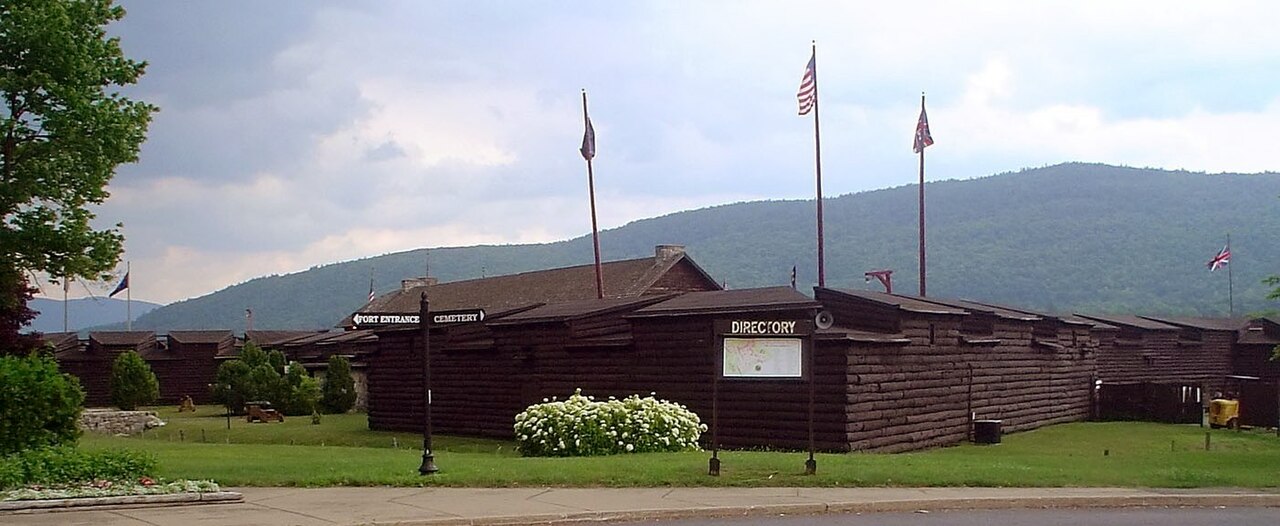
Fort William Henry is a historically significant bastioned fortress located at the southern end of Lake George in the province of New York, United States. Constructed in the 18th century during the post-Renaissance period, the fort played a crucial role in the French and Indian War, serving as a strategic British military installation on the frontier between British-controlled New York and French-held New France. Construction and strategic importance The construction of Fort William Henry was ordered in September 1755 by Sir William Johnson, the British Superintendent of Indian Affairs. The fort was designed as a bastioned fortress, a style that incorporated angled bastions allowing defensive cannon fire along the walls, reflecting the military architectural advancements of the period. Its primary purpose was to act as a staging ground for British attacks against the French-held Fort St. Frédéric on Lake Champlain, an important position controlling access to the interior of North America. Fort William Henry was part of a network of forts along the vital inland waterway connecting New York City to Montreal. This chain of forts was essential in controlling movement and supply lines during the conflict between Britain and France for dominance in the region. The fort's location at the southern tip of Lake George gave it a commanding position over the lake and surrounding territory, making it a key forward base on the volatile frontier. The 1757 siege and aftermath In 1757, the fort became the scene of a pivotal event in the French and Indian War when it was besieged by the French forces under General Louis-Joseph de Montcalm. After a sustained siege, the British garrison was compelled to surrender. The subsequent massacre of British prisoners by Huron warriors allied with the French marked a tragic and infamous episode in the war. This event gained further cultural significance through its depiction in James Fenimore Cooper's novel The Last of the Mohicans, which dramatized the siege and massacre, embedding Fort William Henry in American literary and historical consciousness. Naming and historical legacy The fort was named in honor of two British royals: Prince William, Duke of Cumberland, the younger son of King George II, and Prince William Henry, Duke of Gloucester and Edinburgh, a grandson of King George II and younger brother to the future King George III. This dual dedication reflected the British practice of honoring royal family members in military installations. Following the 1757 siege, the French destroyed the fort and withdrew from the site. Although other forts were constructed nearby in subsequent years, Fort William Henry itself remained abandoned and in ruins for nearly two centuries. 19th and 20th century revival and preservation During the 19th century, the ruins of Fort William Henry became a destination for tourists interested in the early colonial history of the region. The romantic appeal of the site was heightened by its association with the dramatic siege and massacre. Interest in preserving and interpreting the fort's history was renewed in the 1950s, leading to the construction of a replica fort on the original site. Today, the reconstructed Fort William Henry operates as a living museum, offering visitors an immersive experience of 18th-century military life. It is a popular tourist attraction in the village of Lake George, featuring reenactments, guided tours, and educational programs that highlight its architectural features and historical significance. Architectural features and design The original Fort William Henry was designed according to the principles of bastioned fortification, which was a dominant military architectural style in the post-Renaissance period. The fort featured angular bastions at its corners, allowing defenders to cover adjacent walls with cannon and musket fire, reducing blind spots and enhancing its defensive capabilities. The fort's walls were constructed primarily of earthworks reinforced with wooden palisades, a common practice in frontier forts where stone was less readily available. The interior contained barracks, officers' quarters, storage magazines, and a central parade ground. The fort's design balanced the need for strong defense with the practicalities of rapid construction in a remote wilderness setting. Cultural impact and tourism today Fort William Henry remains an important cultural landmark. Its story reflects the complex and often violent interactions between European colonial powers and Indigenous peoples during the 18th century. The site attracts history enthusiasts, scholars, and tourists who seek to understand the military, cultural, and social dynamics of early American frontier life. The living history museum provides a tangible connection to the past, with costumed interpreters demonstrating period crafts, military drills, and daily routines of soldiers stationed at the fort. This educational approach helps preserve the memory of the fort's role in shaping the history of the northeastern United States.

Post-Renaissance (17th–18th c.)
Details
21.6 km

Whitehall Castle

Whitehall, United States of America

Whitehall Castle in Whitehall, New York, stands as a remarkable example of late 19th-century military architecture, originally constructed as an armory in 1899. This imposing structure covers nearly 40,000 square feet and is renowned for its distinctive crenellated towers, which dominate the local skyline and serve as a key landmark in the town. The castle's robust brick and stone construction reflects the architectural trends of the period, combining functional military design with ornamental elements that evoke medieval fortifications.Architectural features and designWhitehall Castle's design is characteristic of late 19th-century armories built across the United States, blending Romanesque Revival and Gothic Revival influences. The castle features crenellated battlements atop its towers and walls, which were stylistic rather than defensive, designed to recall medieval castles and instill a sense of strength and permanence. The use of heavy masonry with brick and stone materials provided both durability and an imposing aesthetic.The castle's layout includes multiple towers of varying heights, connected by thick walls enclosing an expansive interior space originally intended for military drills and equipment storage. Large arched windows and doorways, along with decorative stonework, add to the building's historic character. Internally, the space was designed to accommodate the needs of the National Guard, including an armory drill hall, offices, and storage rooms.Historical context and usageConstructed at the turn of the century, Whitehall Castle served as an armory for the local National Guard units. Its establishment in 1899 reflects a period of increased military preparedness in the United States, with many such armories built to support local militia and National Guard operations. The castle's substantial size and fortified appearance symbolized civic pride and military readiness.After its military use, the building was repurposed as an athletics club, demonstrating adaptive reuse of historic military structures. In 1995, Whitehall Castle was listed on the National Register of Historic Places, recognizing its architectural significance and historical importance to the region.Current status and preservationToday, Whitehall Castle is a privately owned residence. While no longer open to the public, the castle remains a prominent feature of Whitehall's architectural heritage. Its preservation as a private home ensures the continued maintenance of its historic fabric, although visitors are asked to respect the privacy of the owners.The castle's location at 62 Poultney Street, Whitehall, NY 12887 situates it within the town's historic district, contributing to the area's cultural landscape. Its listing on the National Register helps protect the structure from inappropriate alterations and encourages preservation efforts.Significance and cultural heritageWhitehall Castle stands as a testament to the era of armory construction in the United States, embodying both the military history and architectural trends of the late 19th century. Its distinctive crenellated towers and robust masonry make it an architectural landmark in Whitehall, symbolizing the town's historical connection to military service and community identity.The castle's adaptive reuse over the decades—from armory to athletics club to private residence—illustrates the evolving relationship between historic structures and contemporary needs, highlighting the importance of preservation and respectful stewardship.

Post-Renaissance (17th–18th c.)
Details
38 km
Fort Ticonderoga — United States of America castle

Fort Ticonderoga

, United States of America

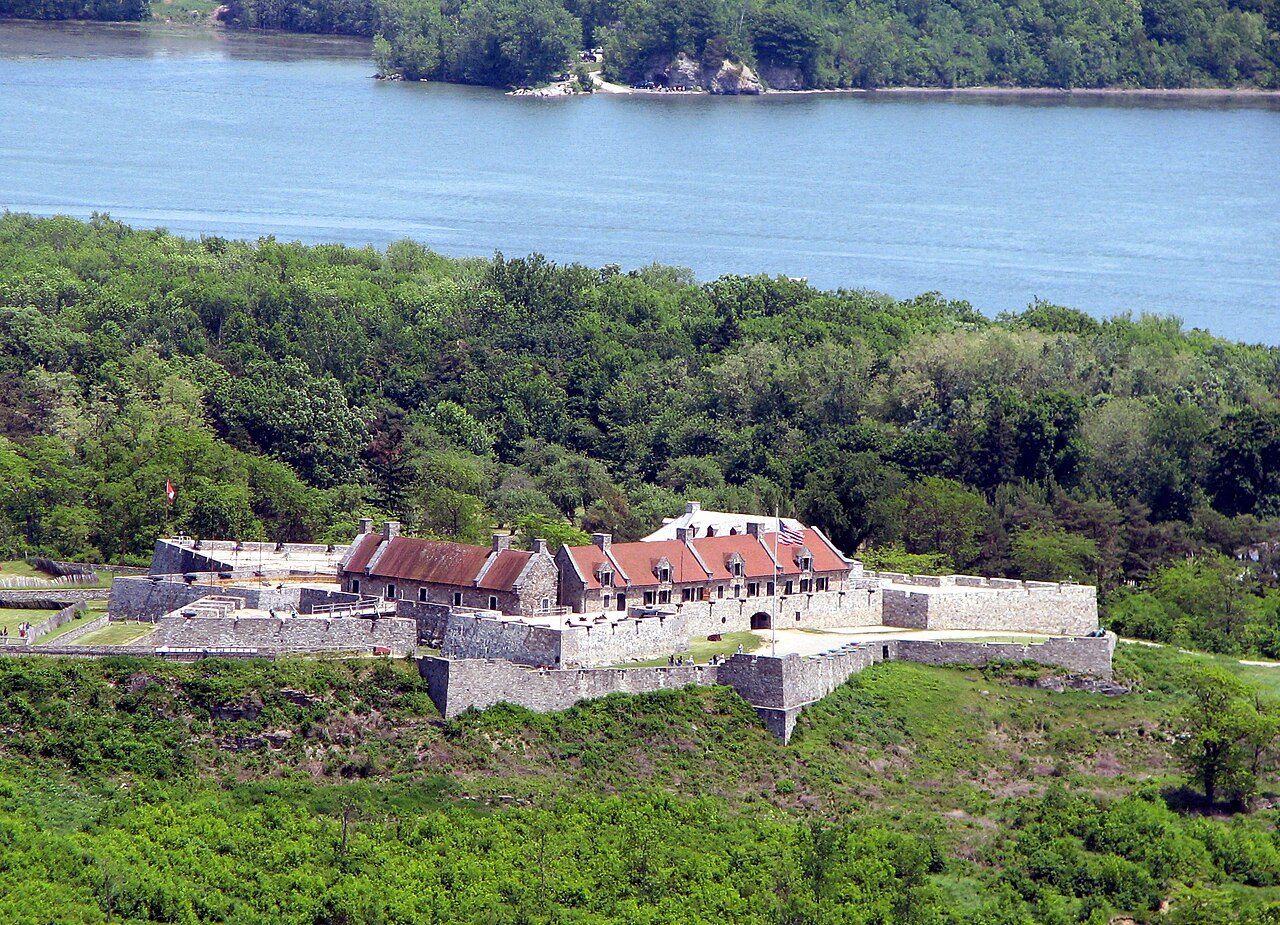
Fort Ticonderoga, originally named Fort Carillon, is a prominent 18th-century star fort located near the southern end of Lake Champlain in northern New York. Constructed between October 1755 and 1757 by the French-Canadian military engineer Michel Chartier de Lotbinière, Marquis de Lotbinière, it played a crucial role in the French and Indian War, the North American theater of the Seven Years' War. The fort's design reflects the bastioned fortress style prevalent in the post-Renaissance period, featuring angled bastions optimized for defense against artillery. The fort's strategic position controlled a vital river portage at the mouth of the rapid La Chute River, linking Lake Champlain and Lake George over a distance of approximately 3.5 miles (5.6 km). This location was essential for controlling trade and military movements between the British-controlled Hudson River Valley and the French-controlled Saint Lawrence River Valley. The surrounding Appalachian Mountains and the orientation of the lakes created natural barriers, making the narrow corridor commanded by Fort Ticonderoga a critical chokepoint in the region. Architectural design and features The fort exhibits the characteristics of a bastioned fortress, a design that emerged in Europe during the post-Renaissance era to counter the increasing power of cannon fire. Its layout includes star-shaped bastions that project outward from the main walls, allowing defenders to cover all approaches with overlapping fields of fire. The fort's walls were constructed with thick earthworks faced with stone, designed to absorb and deflect artillery bombardment. The main fortification includes several bastions, curtain walls, and a well-planned network of internal structures such as barracks, magazines, and powder stores. The fort's design prioritized both defense and the accommodation of a sizable garrison, reflecting its importance as a military stronghold in the contested borderlands of colonial North America. Historical significance in colonial conflicts Fort Ticonderoga was central to several key military engagements during the mid-18th century. The Battle of Carillon in 1758 saw approximately 4,000 French defenders successfully repel a much larger British force of around 16,000 troops. This victory underscored the fort's formidable defenses and strategic value. However, in 1759, the British returned with a reinforced army and captured the fort after the French garrison withdrew. The fort then became a British stronghold during the lead-up to the American Revolutionary War. Role in the american revolutionary war At the start of the Revolutionary War, Fort Ticonderoga was under British control. On May 10, 1775, it was seized by the Green Mountain Boys and other militia forces led by Ethan Allen and Benedict Arnold. This capture was significant for the American cause, as it provided a cache of artillery and a strategic position. Henry Knox famously transported the fort's artillery overland to Boston during the winter of 1775-1776, enabling the Continental Army to force the British evacuation of the city in March 1776. The Americans held the fort until June 1777, when the British under General John Burgoyne occupied the high ground above it, compelling an American withdrawal. In September 1777, a direct attack on the fort by about 500 American troops led by John Brown was unsuccessful against a smaller British garrison. Following the failure of the British Saratoga campaign, the fort was abandoned by the British and lost military importance. Post-war history and preservation After the Revolutionary War, Fort Ticonderoga fell into disuse and disrepair. Local residents scavenged building materials, and the fort was largely neglected. In 1820, it was purchased by a private family and gradually became a tourist destination, attracting visitors interested in its rich history. During the early 20th century, private owners undertook significant restoration efforts to preserve the fort's structure and historical integrity. Today, the Fort Ticonderoga Association manages the site as a museum, research center, and tourist attraction, offering educational programs and maintaining the fort's legacy as a symbol of colonial and Revolutionary War history. Geographical and cultural context The name "Ticonderoga" derives from the Iroquois word tekontaró:ken, meaning "it is at the junction of two waterways," highlighting the site's importance as a crossroads between major water routes. The fort's location in the narrow corridor between Lake Champlain and Lake George made it a focal point for control over the surrounding region during the colonial era and beyond. Today, Fort Ticonderoga stands as a well-preserved example of post-Renaissance military architecture in North America and remains a testament to the complex history of European colonization, indigenous presence, and the struggle for American independence.

Post-Renaissance (17th–18th c.)
Details