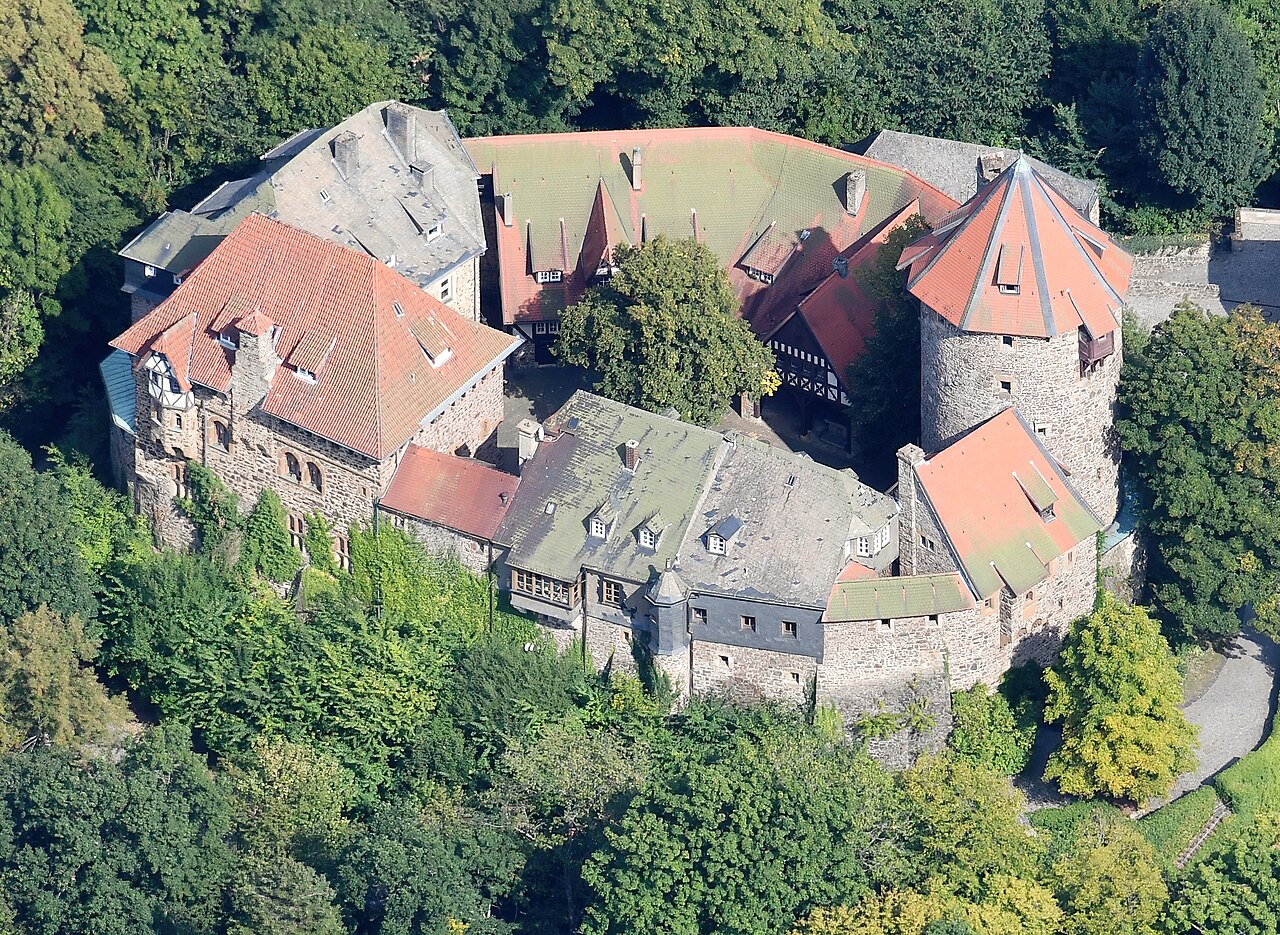
Castle Bring

Love island and castle bring in edersee, hessen
Edertal, Hessen, Germany
High Medieval (11th–13th c.)
Ruins

Love Island, located in Edertal, Hessen, Germany, is a unique site where natural beauty and medieval history intertwine. This small hilltop island in Lake Eder (Edersee) is famous not only for its scenic charm but also for the ruins of Castle Bring, a medieval fortress dating back to the 11th or 12th century. The castle's remains stand as a testament to the region's feudal past and its strategic importance overlooking the village of Bringhausen.

Historical background of castle bring

Castle Bring was originally constructed during the High Medieval period, around the late 11th to early 12th century. It served as a fortified residence for local nobility who exercised control over the surrounding lands and the nearby village of Bringhausen. Positioned atop a gently rolling hill, the castle's elevated location was ideal for surveillance and defense, providing clear views of the landscape and any approaching threats.

While the castle was relatively small compared to grander fortifications of the era, its strategic placement was significant for regional governance and protection. Over the centuries, Castle Bring likely underwent modifications and repairs typical of medieval castles but eventually fell into disuse and decay.

Transformation into love island

Between 1908 and 1914, the construction of a dam led to the flooding of the Edertal valley, creating the expansive Lake Eder (Edersee). This engineering project submerged vast areas, including the land surrounding Castle Bring. The hilltop on which the castle stood became an island, now known as Liebesinsel or "Love Island."

The island's isolation and the romantic ruins of the castle quickly attracted young couples seeking privacy and a picturesque setting for their meetings. Visitors accessed the island by swimming or rowing boats, a tradition that has endured over the decades. The combination of natural beauty, water, and historic ruins creates a uniquely atmospheric location cherished by locals and tourists alike.

Architectural features and the castle ruins

Today, only ruins remain of Castle Bring, but these remnants offer valuable insight into medieval fortification techniques and castle life. The ruins include parts of the defensive walls and foundations that outline the castle's footprint on the hilltop. The site is surrounded by dense trees, which partially conceal the remains and add to the romantic and mysterious ambiance.

Although detailed architectural plans of Castle Bring are scarce, typical features of such a castle from the period would have included a stone keep, curtain walls, and possibly a small courtyard. The castle's modest size suggests it functioned more as a local stronghold and noble residence than a major military fortress.

Cultural significance and visitor experience

Love Island is not only a place of historical interest but also a cultural landmark celebrated for its romantic associations. The island is a favored destination for couples and visitors who appreciate the blend of history, nature, and tranquility. Its accessibility by boat and the peaceful environment make it an attractive spot for day trips and picnics.

Visitors can explore the ruins and enjoy the scenic views of Lake Eder and the surrounding Hessen countryside. The site is a reminder of the region's medieval heritage and the transformative impact of early 20th-century engineering projects on the landscape.

Preservation and current status

The castle ruins on Love Island are classified as ruins, preserved mainly through their natural setting rather than extensive restoration. The site is maintained to allow safe visitor access while retaining its authentic medieval character. Efforts focus on protecting the ruins from further decay and managing the natural environment that surrounds them.

Love Island and Castle Bring offer a compelling glimpse into medieval life and the evolving relationship between human settlements and natural landscapes in Hessen. The site continues to inspire visitors with its combination of history, romance, and scenic beauty.

Frequently asked questions (FAQ)

What is the historical significance of Love Island and Castle Bring?
Love Island and Castle Bring has a rich history dating back to the early medieval period. It served as a strategic fortress and residence for local nobility, playing a key role in regional politics and defense.
When was Love Island and Castle Bring built?
The castle was originally constructed in the 12th century, with various modifications and expansions made over the centuries. Today, it showcases a blend of architectural styles that reflect its long and storied past.
Can I visit Love Island and Castle Bring?
Yes, Love Island and Castle Bring is open to visitors year-round. Guided tours are available, allowing guests to explore the castle's fascinating history and stunning architecture.
What are the opening hours for Love Island and Castle Bring?
The castle typically opens to visitors from 10 AM to 6 PM during the peak season. Hours may vary in the off-peak season, so it's best to check the official website for the most current information.
Is it possible to access Love Island and Castle Bring with public transport?
Yes, there are public transportation options available to reach Love Island and Castle Bring. Buses run regularly from nearby towns, making it convenient for visitors without a car.
What are the ticket prices for visiting Love Island and Castle Bring?
Tickets to Love Island and Castle Bring are reasonably priced, with discounts available for students and seniors. Children under a certain age may enter for free, making it an affordable family outing.
When is the best time to visit Love Island and Castle Bring?
The best time to visit is during the late spring and early autumn months when the weather is pleasant and the gardens are in bloom. These seasons also offer fewer crowds, allowing for a more enjoyable experience.
What nearby attractions can I explore when visiting Love Island and Castle Bring?
Visitors can enjoy several nearby attractions, including scenic hiking trails and local museums that showcase the region's history. The beautiful Edersee lake is also a short drive away, offering various recreational activities.

Information

Hill Castle

Loading map...

Visitor reviews

No reviews yet. Been here? Write the first review and help other travelers!

Write the first review

Visited this castle? Share your experience

Your review helps other travelers and adds first-hand knowledge to our encyclopedia.
Write a review

(5/5)

0/2000 characters

Your review will be visible after admin approval

Nearby castles

10.4 km
Hessenstein Castle — Germany castle

Hessenstein Castle

Vöhl, Germany

Hessenstein Castle stands as a remarkable example of a 14th-century hill castle in the German state of Hesse, embodying centuries of regional history, architectural evolution, and cultural adaptation. Situated near the small municipality of Vöhl, this fortress was originally constructed under the auspices of Landgrave Heinrich II of Hesse between 1342 and 1348, replacing the earlier Keseburg fortress destroyed in 1277. The castle occupies a strategic position on the southern ridge of the Keseberg hill, approximately 327 meters above sea level, overlooking the surrounding landscape and the Lengelbach stream to the south, which naturally demarcates its boundaries. The castle’s origins are rooted in medieval power dynamics, serving as a fortified administrative center for local bailiffs, known as Vögte. Its construction on the remains of the earlier Silburg fortification reflects the ongoing efforts of the Hessian nobility to consolidate territorial control during the High to Late Medieval period. Hessenstein Castle's robust stone masonry and defensive features exemplify typical 14th-century military architecture, designed to withstand sieges and assert dominance over the surrounding lands. Historical significance and ownership transitions In 1348, a pivotal moment in Hessenstein Castle’s history occurred when the Archbishop of Mainz compelled Landgrave Heinrich II to pledge the castle to the nearby Haina Monastery. This transfer marked the beginning of a close relationship between the castle and ecclesiastical authorities. Over subsequent centuries, the castle was managed by officials tied to the monastery, including ministeriales, unfree knights who served as castle administrators, blending secular and religious governance. The Protestant Reformation of 1555 brought significant changes to Hessenstein Castle’s role. It became the seat of the landgravial Amt Hessenstein, an administrative district governed by stewards or Rentmeister. This transition reflected broader shifts in political and religious structures across Germany, as the castle adapted to new administrative functions while retaining its strategic importance. By the 19th century, the castle's function evolved further, accommodating forestry officials. From 1890 onward, a district forester resided within its walls, highlighting the castle’s integration into modern state functions beyond military or administrative uses. 20th-century adaptation and modern use Hessenstein Castle experienced a new chapter in the 20th century when it was converted into a youth hostel in 1922, becoming the first of its kind in Hesse and among the earliest in Germany. Initially operated by the resident forester, the hostel aimed to provide affordable accommodation for young travelers, promoting outdoor education and cultural exchange. Between 1967 and 1970, extensive renovations modernized the hostel facilities while preserving much of the castle’s original 14th-century façade. Despite financial difficulties leading to a temporary closure in late 2024, the hostel reopened in 2025 under the auspices of the German Youth Hostel Association (DJH), continuing its longstanding tradition of youth accommodation. Since 2008, Hessenstein Castle has expanded its role to include a youth education center focused on nature, traditional crafts, and medieval heritage. Collaborations with environmental organizations such as NABU and the Nationalpark Kellerwald-Edersee emphasize ecological awareness alongside historical learning, integrating sustainable practices into the castle’s ongoing mission. Architectural features and preservation Location and structural layout Perched on a hilltop, Hessenstein Castle’s location was chosen for its defensive advantages and commanding views of the surrounding forested terrain. The castle complex includes a main building, a gatehouse, and an economic wing, all constructed primarily from medieval stone masonry that has been carefully preserved. The southern ridge position near the Lengelbach stream provided natural protection and delineation of the site. Medieval masonry and restoration efforts The castle’s stonework reflects typical 14th-century construction techniques, characterized by thick walls, narrow windows for defense, and robust fortifications. A fire during World War II damaged the economic wing, but it was promptly rebuilt in 1945 to restore functional use. Further structural connections were added in 1987 to unify the main building, gatehouse, and economic wing into a cohesive complex suitable for modern use. Modern adaptations and facilities Recent renovations completed between 2016 and 2017 focused on upgrading sanitary facilities and improving accessibility, ensuring the castle meets contemporary safety and comfort standards. Despite these modernizations, the preservation of the original masonry and architectural elements remains a priority, maintaining the castle’s historic character. Cultural and environmental significance Hessenstein Castle’s isolated location amidst the forests of Hesse places it along several notable hiking trails, including the Kellerwaldsteig and Barbarossaweg. These trails connect the castle to the natural landscape and encourage eco-tourism and outdoor recreation. The castle has earned recognition for its commitment to environmental stewardship. It holds certifications for sustainable education and conservation efforts, notably being designated by NABU Hessen as a "bat-friendly house" due to measures protecting local bat populations. This ecological focus complements the castle’s educational programs and reflects a harmonious integration of heritage preservation and nature conservation. Today, Hessenstein Castle continues to serve as a vibrant center for youth education, cultural heritage, and environmental awareness, embodying a unique blend of medieval history and modern ecological responsibility.

Late Medieval (14th–15th c.)
Details
13.4 km

Burg Naumburg

Naumburg, Germany

Burg Naumburg, historically known as Nuwenburc, is a significant hill castle located on a prominent ridge overlooking the old town of Naumburg in Germany. Constructed in the early 12th century by the noble family known as the Edelfreien von Naumburg, the castle is first documented in 1182. Its strategic position and robust fortifications made it a focal point of regional power and conflict throughout the medieval period. The castle gave its name to the settlement below, which emerged in written records from 1206 and was granted official town rights by 1260. The original owners, the Counts of Naumburg, are recorded from around 1170, highlighting the castle’s role as a noble residence and administrative center. After the death of Count Volkwin in 1265, the estate passed through various hands, including the influential Landgrave Heinrich I of Hesse and the Archbishopric of Mainz, whose competing claims led to armed conflict and the castle’s destruction in the early 1270s. It was, however, rebuilt, demonstrating its enduring importance. Medieval ownership and conflicts Throughout the 14th and 15th centuries, Burg Naumburg was subject to shifting ownership and political strife. By the mid-1300s, parts of the castle were pledged to the Counts of Waldeck and Thilo von Elben. In 1384, it became the property of the von Hertingshausen family, who maintained control for nearly 150 years. The castle endured a notable siege in 1400 when Friedrich von Hertinghausen was implicated in the assassination of Duke Friedrich I of Brunswick, yet the fortress withstood the attack. Renewed hostilities culminated in a joint siege by Mainz and Hesse in 1448, resulting in the castle’s capture. Despite this, the von Hertingshausen family remained residents until 1544, when the Counts of Waldeck redeemed the castle, ending that family’s tenure. Control reverted to Mainz by 1588 and remained so until the dissolution of the Holy Roman Empire in 1802. Destruction and decline During the Thirty Years’ War, Burg Naumburg suffered significant damage when it was set ablaze in 1626 by Brunswick and Hessian troops. This event marked the beginning of the castle’s decline, leading to its abandonment and gradual ruination. Over subsequent centuries, much of the castle’s stone was repurposed for rebuilding the adjacent town, a common fate for many medieval fortresses that lost military relevance. Architectural features and layout Burg Naumburg was originally designed as a hill castle with a hillside layout adapted to the ridge’s topography. Today, it is classified as a burgstall, indicating a former castle site with limited surviving structures. Remnants include traces of defensive walls and moats that once protected the fortress. Historical depictions and main structures A valuable 17th-century engraving, based on a 1605 drawing by Wilhelm Dilich, provides detailed insight into the castle’s original form. This illustration reveals a double palas, a large residential building typical of medieval castles, rising at least three stories high. The palas consisted of two adjoining buildings with steeply pitched hipped roofs. A distinctive stair gable extended along two floors on one end, serving as an external staircase. The castle featured a tall, rectangular bergfried, a defensive tower used for lookout and refuge. Facing the town were two small corner oriel towers known as Wichhäuser, projecting from the main building to enhance defense and visibility. The structure was reinforced by strong supporting walls, underscoring its military function. Additional defensive elements Along the longer outer side of the castle stood a separate narrow tower, possibly a stair tower, rising to at least four stories. This tower was hexagonal or octagonal in shape and topped with a pointed tower helmet, a characteristic medieval roofing style. The castle was enclosed on the town-facing side by a curtain wall or bering, which included a gatehouse controlling access. Each corner of this wall was fortified with small towers featuring gabled roofs, further strengthening the perimeter. Below the main fortress, on a spur of the hill, stood an additional building whose exact purpose is uncertain. It may have served as a forecourt, an economic yard for castle operations, or a defensive outpost guarding the approach to the main stronghold. Present condition and heritage significance Today, only fragmentary wall sections and moats remain at the Burg Naumburg site. Despite these limited physical remains, the castle’s historical importance is preserved through archaeological investigations and an information panel by the Eco Pfad Archäologie Naumburg. These efforts help visitors and scholars understand the castle’s architectural layout, its role in regional medieval politics, and its transformation across centuries. Burg Naumburg exemplifies the typical evolution of a medieval hill castle in central Germany, reflecting the complexities of noble power struggles, military architecture, and the impact of warfare on feudal strongholds. Its ruins and historical records continue to offer valuable insights into medieval castle construction, defensive strategies, and the socio-political landscape of the Holy Roman Empire.

High Medieval (11th–13th c.)
Details
14.4 km
Burg Lichtenfels — Germany castle

Burg Lichtenfels

, Germany

Burg Lichtenfels is a hill castle constructed in the 12th century during the high medieval period in Germany. It exemplifies the medieval fortification style typical of the era, built primarily for defense and control over the surrounding territory. The castle's elevated position on a hill provided a strategic vantage point for surveillance and protection against invaders. Historical context and construction The origins of Burg Lichtenfels date back to the high medieval era, a time marked by frequent territorial disputes and the rise of feudalism in Europe. Castles like Burg Lichtenfels were essential for local lords to assert control and secure trade routes. The castle was likely commissioned by a regional noble family seeking to establish dominance in the area. The 12th century saw significant advancements in castle architecture, including the transition from wooden motte-and-bailey structures to more durable stone fortifications. Burg Lichtenfels was constructed using local stone materials, with thick defensive walls and a compact layout optimized for defense. Architectural features Fortifications and defensive structures The castle's design includes robust curtain walls that encircle the inner courtyard, providing a formidable barrier against attackers. The walls are punctuated by towers positioned at key points to allow for flanking fire and improved visibility. These towers would have housed archers and guards responsible for the castle's defense. A gatehouse served as the main entrance, typically fortified with a drawbridge and a portcullis to control access. The castle's elevated location naturally enhanced its defensive capabilities, making direct assaults challenging. Residential and functional spaces Inside the walls, the castle contained a keep or donjon, which functioned as the last line of defense and the lord's residence. This central tower was the tallest structure, offering commanding views of the surrounding landscape. Additional buildings within the courtyard included living quarters for soldiers and servants, storage rooms, a chapel, and workshops. The castle's layout was designed to support a self-sufficient community during sieges. Strategic importance and historical role Burg Lichtenfels played a significant role in regional defense and administration during the medieval period. Its position allowed control over nearby roads and trade routes, contributing to the economic and military strength of its owners. Throughout its history, the castle likely witnessed various conflicts and changes in ownership, reflecting the turbulent nature of medieval German territories. Its preservation offers insights into feudal power structures and military architecture. Current condition and preservation Today, Burg Lichtenfels remains a well-preserved hill castle, with many of its original structures intact or partially restored. Visitors can explore the surviving walls, towers, and the keep, gaining a tangible sense of medieval life and defense strategies. The site is managed to maintain its historical integrity while accommodating tourism and educational activities. It stands as a cultural monument reflecting Germany's rich medieval heritage. Visiting Burg Lichtenfels The castle is accessible to the public, offering guided tours that highlight its architectural features and historical significance. Visitors can enjoy panoramic views from the castle's elevated position and learn about the medieval period through on-site exhibitions. Facilities may include informational signage, visitor centers, and occasional cultural events that celebrate the castle's history.

High Medieval (11th–13th c.)
Details