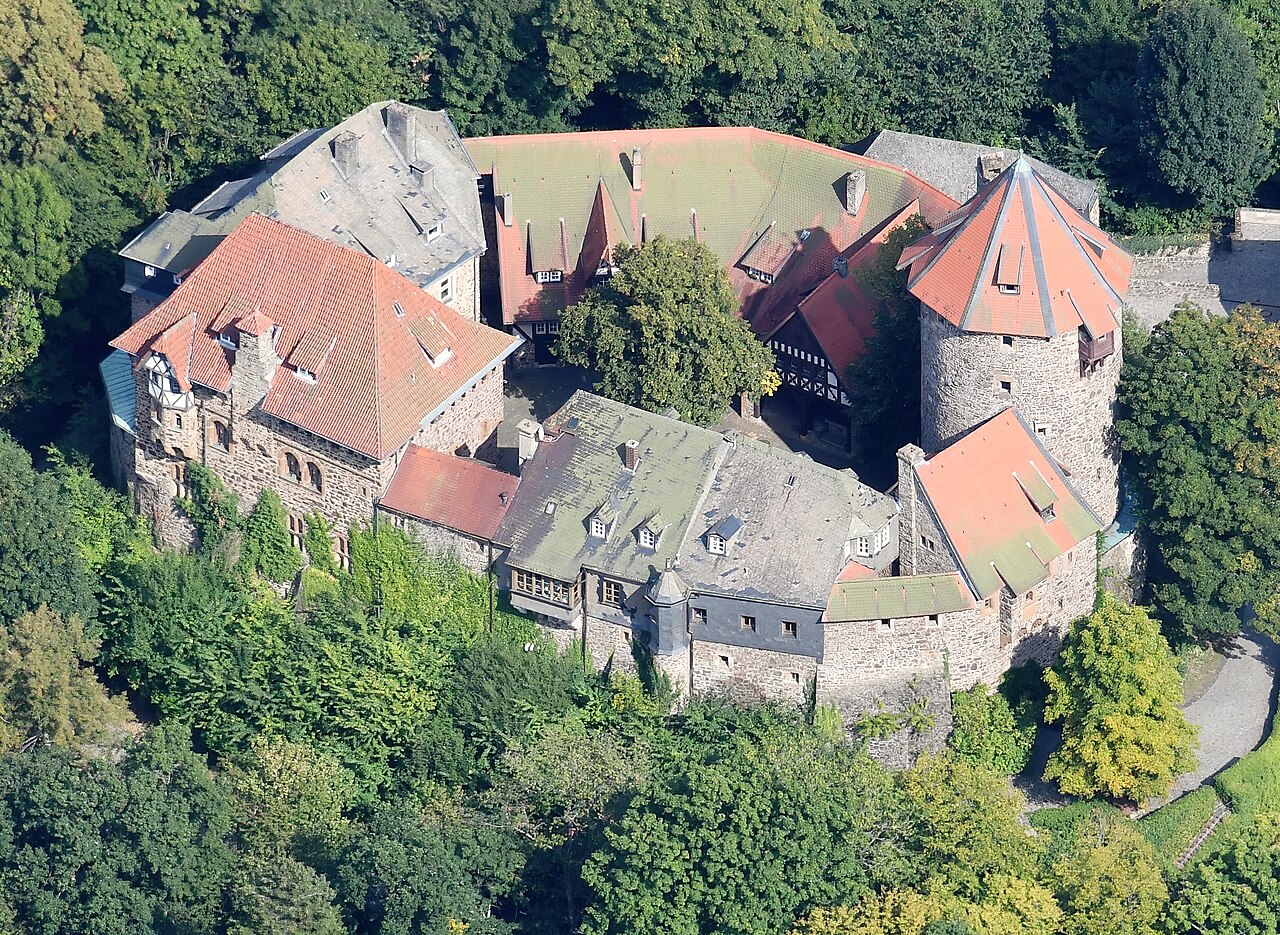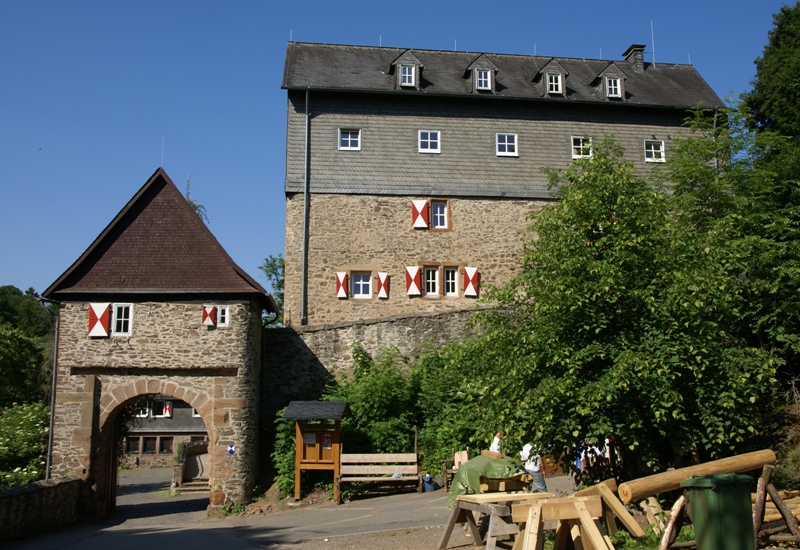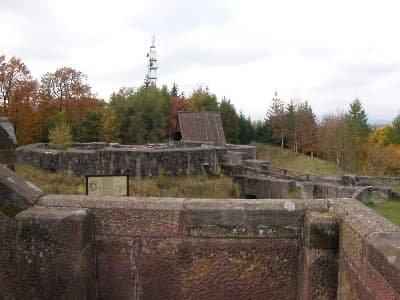
Eisenberg castle ruins
Eisenberg Castle (German: Burg Eisenberg) is a notable late medieval castle ruin located near the town of Korbach in the German state of Hesse. Founded in the 14th century, this castle occupies a strategic position typical of the period, serving as a fortified residence and defensive stronghold. Although the original founders remain unknown, its historical significance is closely tied to the regional noble families who controlled it over the centuries.
Historical background and ownership
The castle's earliest records place its construction in the 14th century, a time when many castles were built across the Holy Roman Empire to assert territorial control and provide defense against rival lords. By the 15th century, Eisenberg Castle came under the ownership of the House of Waldeck, an influential noble family in the region. From 1487 onwards, it served as the residence of the Eisenberg branch of the House of Waldeck, which maintained the castle until the branch became extinct in 1692.
During its occupation by the Waldeck family, the castle likely underwent modifications and repairs to suit the needs of its inhabitants and to adapt to evolving military technologies. The extinction of the Eisenberg branch led to the castle's gradual decline and eventual abandonment, resulting in its current ruined state.
Architectural features and layout
While much of Eisenberg Castle now exists only as ruins, archaeological studies and remaining structures provide insight into its original design. The castle was constructed following typical late medieval architectural principles, featuring defensive walls, towers, and a central courtyard. The use of local stone materials for construction would have provided robust fortification against attacks.
Key elements likely included a keep or donjon—a fortified tower serving as the last line of defense and living quarters for the lord—and curtain walls with battlements for archers and guards. The placement near Korbach suggests it was part of a network of castles controlling trade routes and regional power.
Defensive structures
The castle's ruins indicate the presence of thick stone walls and possibly a moat or ditch, common defensive features in late medieval castles. Towers positioned at strategic points would have allowed for surveillance and protection against siege warfare. Arrow slits and narrow windows would have been incorporated to enable defenders to repel attackers while minimizing exposure.
Residential and functional spaces
Within the walls, the castle would have housed a great hall for gatherings and administrative functions, as well as private chambers for the noble family. Service buildings such as kitchens, stables, and storage rooms were likely arranged around the courtyard to support daily life and the castle's self-sufficiency during sieges.
Significance in regional history
Eisenberg Castle played a role in the political and military landscape of Hesse and the wider Holy Roman Empire during the late medieval period. Its association with the House of Waldeck links it to a dynasty that held substantial power in the region, influencing local governance and defense.
The castle's decline after the 17th century reflects broader changes in warfare and noble residence preferences, as fortifications became less critical with the advent of gunpowder artillery and centralized state power increased. The extinction of the Eisenberg branch marked the end of its active use, leaving it to fall into ruin.
Archaeological research and preservation
Today, Eisenberg Castle stands as an archaeological site and ruin, attracting historians and visitors interested in medieval fortifications and regional history. Excavations and studies have helped to uncover the castle's layout and construction techniques, contributing valuable knowledge about late medieval castle architecture in Hesse.
Preservation efforts focus on maintaining the integrity of the remaining structures and protecting the site from further decay. Interpretive signage and guided tours may be available to educate visitors about the castle's historical context and architectural features.
Visiting Eisenberg castle ruins
The ruins are accessible to the public and offer a glimpse into medieval life and defensive architecture. Visitors can explore the remnants of walls and towers while enjoying views of the surrounding landscape near Korbach. The site provides an opportunity to appreciate the strategic importance of castles in medieval Germany and the legacy of noble families like the House of Waldeck.
Frequently asked questions (FAQ)
- How do I get to Eisenberg castle ruins?
- Eisenberg castle ruins are located just outside Korbach, Germany, making them easily accessible by car or public transport. If you're driving, take the B251 road and follow the signs to the castle. There is parking available nearby for visitors.
- What is the historical significance of Eisenberg castle?
- Eisenberg castle, built in the late 12th century, served as a strategic fortification and residence for the local nobility. It played a crucial role in regional defense and has witnessed various historical events over the centuries. Today, its ruins offer a glimpse into medieval architecture and history.
- When was Eisenberg castle constructed?
- The construction of Eisenberg castle began in the late 12th century, around the year 1180. It was built as a defensive stronghold during a time of political unrest in the region. Over the years, it was expanded and modified, reflecting the architectural styles of different periods.
- Can I explore the ruins of Eisenberg castle?
- Yes, visitors are welcome to explore the ruins of Eisenberg castle. While some areas may be restricted for safety reasons, many parts of the castle are accessible for wandering and enjoying the views. Be sure to wear appropriate footwear as the terrain can be uneven.
- Why is Eisenberg castle popular among tourists?
- Eisenberg castle is popular due to its rich history, stunning views over the surrounding landscape, and the charm of its ruins. It offers a unique opportunity for visitors to step back in time and appreciate medieval architecture. Additionally, its proximity to Korbach makes it an easy day trip for tourists.
- Is it possible to visit Eisenberg castle year-round?
- Yes, Eisenberg castle is open to visitors year-round, although some facilities may have limited hours during the winter months. The best time to visit is during the spring and summer when the weather is pleasant, and the surrounding nature is in full bloom. Always check local resources for any seasonal events or closures.
- What are the ticket prices for visiting Eisenberg castle?
- Visiting the ruins of Eisenberg castle is free of charge, making it an accessible attraction for all. However, some guided tours or special events may have a fee, so it’s a good idea to check in advance if you’re interested in a more in-depth experience. Donations are often appreciated to help maintain the site.
- What are the opening hours for Eisenberg castle ruins?
- Eisenberg castle ruins are generally open daily for visitors, but specific opening hours may vary depending on the season. Typically, the site is accessible from dawn until dusk. It’s advisable to verify the current hours before your visit, especially during holidays.
- Are there any nearby attractions to visit along with Eisenberg castle?
- Yes, the area surrounding Eisenberg castle boasts several other attractions, including the charming town of Korbach with its historic buildings and museums. Nature enthusiasts can also explore nearby hiking trails in the beautiful Waldecker Land region. This makes for a perfect day trip combining history and outdoor activities.
Photo gallery

Information
Loading map...
Visitor reviews
No reviews yet. Been here? Write the first review and help other travelers!
Write the first reviewVisited this castle? Share your experience
Your review helps other travelers and adds first-hand knowledge to our encyclopedia.