Hertník Castle
Hertník Castle stands as a notable example of a Renaissance fortress in Slovakia, with origins dating back to the mid-16th century. The castle was constructed between 1553 and 1563 on the site of earlier fortifications, reflecting the military and architectural needs of its time. It was established after the Hertník domain was granted to Baron Simon Forgac by Ferdinand I as a reward for his service in the Turkish wars, marking the castle's initial role as a military stronghold and noble residence.
Historical background and ownership
The castle's history is closely linked to the Forgac family from Jelenec (Gymes), who held the Hertník estate for over three centuries. The Forgacs were influential nobles who managed the domain and used the castle as the administrative center of their dominion for approximately 350 years. In the late 17th century, the castle suffered damage during a fire set by soldiers under Imrich Tokoli in 1679, but it was repaired by the century's end, demonstrating its continued strategic and residential importance.
In the 19th century, ownership began to shift. Stefan Forgac sold the estate's grange to Fridrich Leopold from Anhalt in 1857. The new owners, nobility from Desau, used the castle primarily for hunting visits rather than permanent residence. Entering the 20th century, the castle and surrounding lands were sold to the Magyar Fold company in 1906, which later sold the Hertník woods to Jewish traders who developed the forestry industry there, employing local workers.
By 1910, the castle and its lands became property of the Hungarian state. During the Second World War, Hertník Castle sustained damage but underwent repairs in 1952. Further restoration took place between 1960 and 1970, giving the castle much of its current appearance.
Architectural features and layout
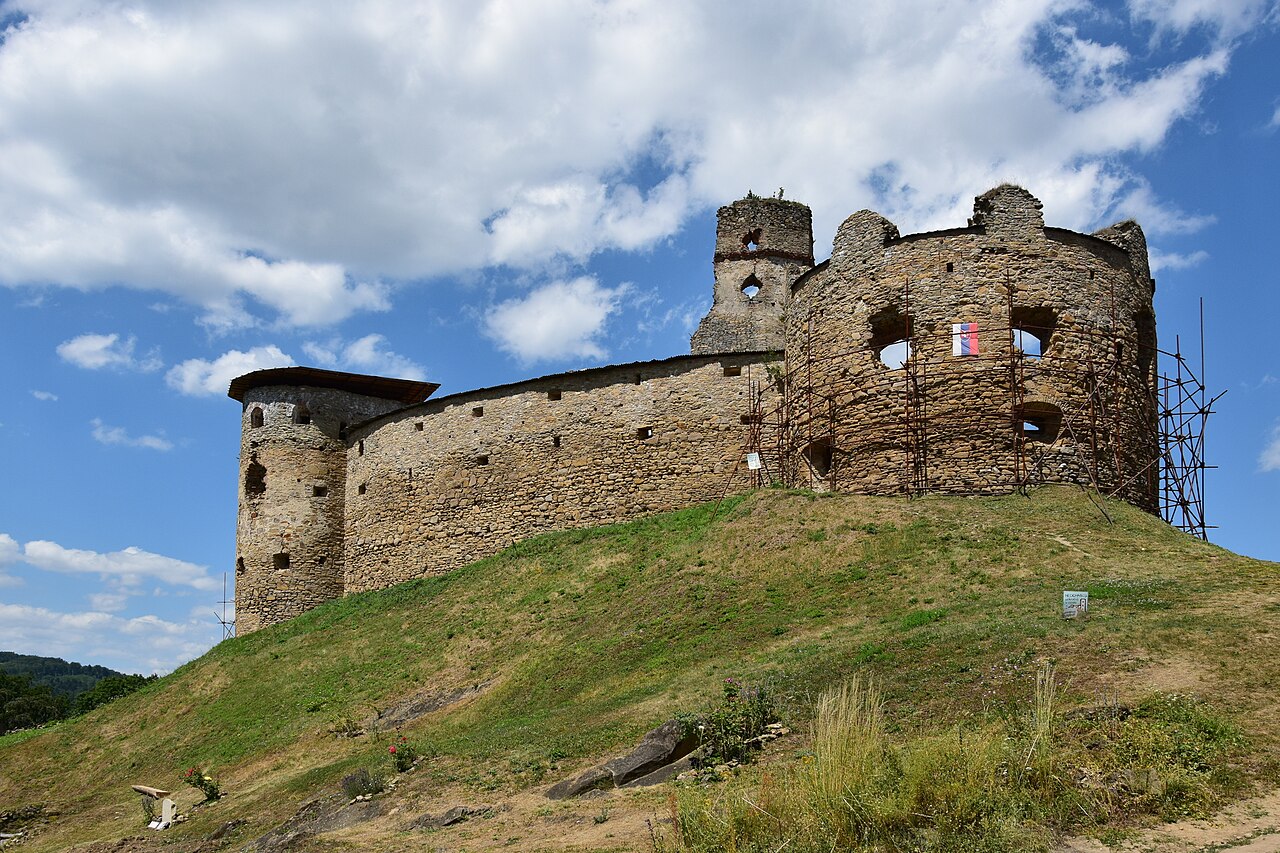
The castle was originally designed as a four-tower duplex building with a rectangular plan, a common Renaissance military architectural form aimed at defense and control. The central feature was a large courtyard enclosed by thick walls with a prominent gateway providing access. The defensive system included bastions strengthening the walls and a wide water moat encircling the complex, enhancing its protection against invaders.
This layout reflects the Renaissance emphasis on fortification adapted to the evolving artillery technology of the 16th century. The bastions allowed for better positioning of defenders and artillery, while the moat served as a formidable obstacle to attackers. The castle's design balanced residential comfort and military utility, typical of noble residences of the period in Central Europe.
Reconstruction and modifications
After its initial completion in 1563, Hertník Castle underwent rebuilding in the first half of the 17th century, likely to update its defenses and living quarters in response to changing military threats and architectural styles. The fire in 1679 caused significant damage, but the castle was restored by the end of the century, preserving its Renaissance character while possibly incorporating Baroque influences common in post-medieval renovations.
20th-century restorations aimed to repair war damage and stabilize the structure. The work between 1960 and 1970 was particularly important in shaping the castle's current form, ensuring its preservation as a historical monument.
Role in regional history and economy
Hertník Castle was more than a military fortress; it was the administrative center of the Hertník domain for centuries. The castle's owners managed extensive lands and forestry resources, which became economically significant in the 19th and early 20th centuries. The sale and development of the Hertník woods by Jewish traders and the Magyar Fold company highlight the castle's connection to regional economic changes, including industrial forestry and land ownership transformations.
The castle's decline in residential use by nobility in the 19th century reflects broader social changes, with aristocratic families reducing their presence in rural estates. The castle's partial use for hunting by the Desau nobility illustrates its shift from a defensive stronghold to a leisure property.
Preservation and current status
Today, Hertník Castle is recognized as a well-preserved Renaissance castle with significant historical and architectural value. Its restoration efforts have maintained the integrity of its four-tower layout, bastions, and moat, allowing visitors to appreciate the military architecture of the period. The castle serves as a cultural landmark in the Prešov Region of Slovakia, attracting interest from historians, architects, and tourists alike.
While not as widely known internationally as some other Slovak castles, Hertník Castle offers insight into the region's Renaissance fortifications and noble estate management. Its survival through wars, ownership changes, and economic shifts makes it a valuable case study in Central European castle history.
Frequently asked questions (FAQ)
- How do I get to Hertník Castle?
- Hertník Castle is located in Hertník, Slovakia, and can be accessed by car or public transport. The nearest city with regular bus services is Prešov, from where you can take a local bus or taxi to reach the castle.
- What is the historical significance of Hertník Castle?
- Hertník Castle dates back to the 13th century and played a crucial role in the defense against invasions in the region. Its history is intertwined with various noble families who owned and maintained the castle through the centuries, making it a significant landmark in Slovak heritage.
- When was Hertník Castle built?
- Hertník Castle was constructed in the early 13th century, primarily as a defensive fortress. Over the years, it underwent several renovations and expansions, reflecting the architectural styles of different periods.
- Can I take guided tours of the castle?
- Yes, guided tours are available for visitors to explore Hertník Castle. These tours provide insights into the castle's history, architecture, and the stories of its former inhabitants, enhancing the overall experience.
- Why is Hertník Castle considered an architectural gem?
- Hertník Castle showcases a blend of Gothic and Renaissance architectural styles, which is evident in its towers and fortifications. The castle's design not only served a defensive purpose but also displayed the grandeur of its era, making it a fascinating site for architecture enthusiasts.
- Is it possible to visit Hertník Castle year-round?
- Hertník Castle is generally open to visitors from spring to autumn, with limited access during the winter months. It's recommended to check the official website or contact local tourism information for specific opening hours and seasonal events.
- What are the ticket prices for visiting Hertník Castle?
- Ticket prices for Hertník Castle vary depending on the type of tour and age group. Discounts may be available for children, students, and seniors, so it's best to check the current rates before your visit.
- What is the best time to visit Hertník Castle?
- The best time to visit Hertník Castle is during the spring and autumn months when the weather is mild, and the surrounding landscape is particularly beautiful. However, summer also attracts many visitors due to the longer days and vibrant local events.
- Are there any nearby attractions to visit while at Hertník Castle?
- Yes, there are several nearby attractions, including the charming town of Prešov, which offers cultural sites and restaurants. Additionally, the beautiful Slovak Paradise National Park is within a short drive, providing opportunities for hiking and exploring nature.
Loading map...
Visitor reviews
No reviews yet. Been here? Write the first review and help other travelers!
Write the first reviewVisited this castle? Share your experience
Your review helps other travelers and adds first-hand knowledge to our encyclopedia.