Hermitage Castle
Hermitage Castle stands as a formidable medieval fortress nestled in the remote valley of Hermitage Water, part of the Liddesdale region in the Scottish Borders. Renowned for its sinister and atmospheric presence, the castle is steeped in a turbulent history marked by violent border conflicts, noble intrigues, and enduring legends. Its strategic location near the England-Scotland border made it a key military stronghold during the High Medieval period, witnessing centuries of warfare, shifting ownership, and architectural evolution.
The origins of Hermitage Castle trace back to the mid-13th century, around 1240, when Nicholas de Soulis constructed the initial fortress employing a Norman motte-and-bailey design. This early wooden structure was typical for Norman military architecture, designed for rapid defense and control over the surrounding territory. The castle's location in the desolate and rugged landscape of Liddesdale, an area notorious for lawlessness and border raids, underscored its importance as a defensive bastion.
Medieval origins and early history
The de Soulis family maintained control of the castle until the early 14th century. The castle's history is intertwined with dramatic episodes, such as the downfall of William de Soulis, who was accused of witchcraft and conspiracy against King Robert I of Scotland. While folklore suggests a gruesome execution by boiling at the nearby Ninestane Rig stone circle, historical records indicate he died imprisoned in Dumbarton Castle. This episode contributed to the castle's grim reputation within the "Strength of Liddesdale," a region infamous for violence and turmoil.
Capture by the Douglas family
In 1338, Sir William Douglas, known as the "Flower of Chivalry," seized Hermitage Castle in a military campaign that was marked by the imprisonment and death of Sir Alexander Ramsay of Dalhousie. The castle then became a key holding of the powerful Black Douglas family, who undertook significant rebuilding and fortification efforts. The stone fortress that largely survives today dates from this period and reflects the transition from wooden motte-and-bailey to a robust stone stronghold.
Architectural evolution and defensive features
The castle's architecture evolved to meet the demands of changing military technology and persistent border conflicts. Under the ownership of William Douglas, 1st Earl of Douglas, the fortress was strengthened to withstand the emerging threat of gunpowder weaponry. This included the installation of gun holes and the reinforcement of defensive walls, showcasing an early adaptation to artillery warfare.
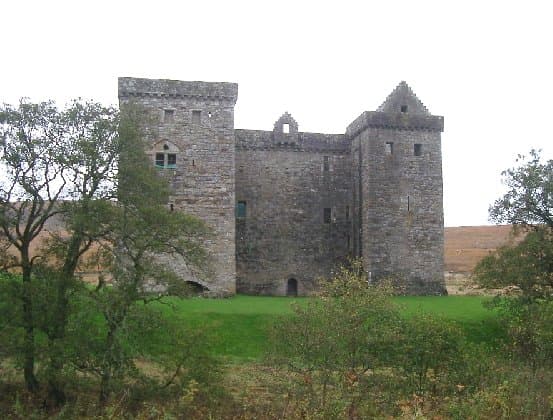
Hermitage Castle features a rectangular keep with thick stone walls, battlements, and narrow slit windows designed for archers and later firearms. The castle's imposing silhouette and sturdy construction contributed to its reputation as one of Scotland's most intimidating fortresses. Ancillary buildings within the castle complex supported its military function, though detailed records of their specific uses are limited.
Location and surrounding landscape
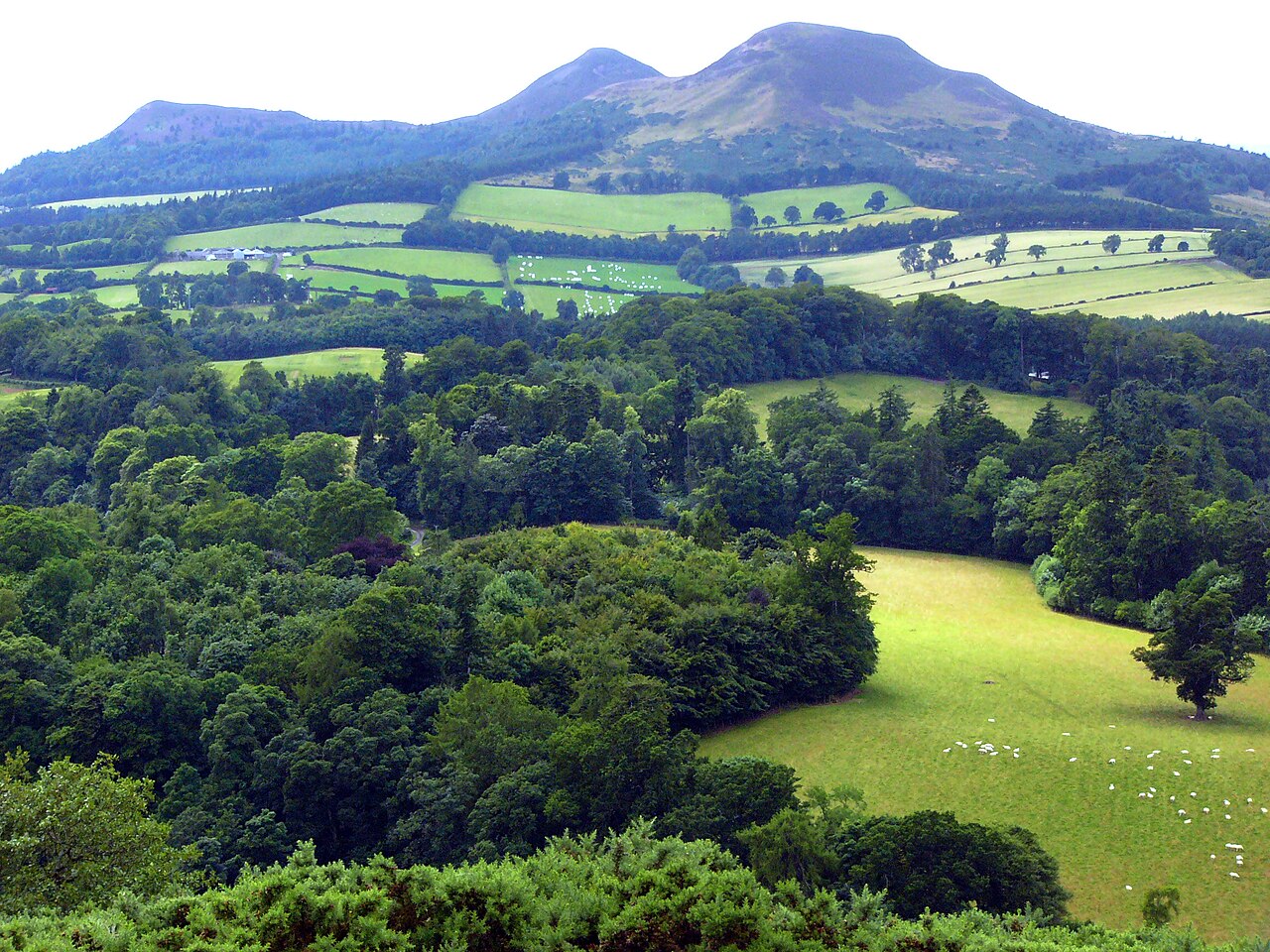
Situated deep in the Liddesdale valley, the castle is surrounded by ancient megalithic sites, including the Ninestane Rig stone circle, linking the site to prehistoric ritual landscapes. The remote and rugged terrain added to the castle's defensive advantage and its aura of mystery and foreboding.
Historical significance and notable events
Hermitage Castle played a central role in the turbulent history of the Anglo-Scottish border. Its ownership changed hands multiple times due to ongoing conflicts and shifting political alliances. After the Black Douglas family's fall from favor in 1455, the castle passed to the Red Douglas line and later to the Earls of Bothwell.
One of the most historically significant episodes occurred in the autumn of 1566, when Mary, Queen of Scots visited the castle to see her future husband, James Hepburn, 4th Earl of Bothwell, who had been wounded during battles with border reivers—lawless brigands notorious for raiding both sides of the border. This visit cemented Hermitage Castle's place in British history and added to its legendary status.
Following the Union of the Crowns in 1603, the castle's military importance waned, leading to gradual neglect and ruin. The property remained with the Scott family of Buccleuch until 1930, when it was transferred to public stewardship and is now maintained by Historic Environment Scotland.
Preservation and cultural legacy
Today, Hermitage Castle stands as a semi-ruined fortress that offers visitors a glimpse into Scotland's violent border past. Its preservation as a scheduled monument ensures protection of its remaining structures, including its thick defensive walls, towers, and battlements. Restoration efforts in the 19th century by the Duke of Buccleuch helped stabilize parts of the castle, though much of it remains in a romantic ruinous state.
The castle's dark history and imposing architecture have inspired numerous legends and ghost stories, including tales of the spirit known as Redcap Sly and haunting by Mary, Queen of Scots. These stories contribute to the castle's cultural significance and attract visitors interested in both history and folklore.
Hermitage Castle remains a powerful symbol of the lawlessness and conflict that shaped the Anglo-Scottish borderlands. Its enduring presence in the rugged landscape of the Scottish Borders continues to captivate historians, architects, and tourists alike.
Frequently asked questions (FAQ)
- How do I get to Hermitage Castle?
- Hermitage Castle is located in the Scottish Borders near the village of Newcastleton. It is accessible by car via local roads, with parking available nearby. The remote location means public transport options are limited, so driving is recommended.
- What is the historical significance of Hermitage Castle?
- Hermitage Castle played a key role in the turbulent Anglo-Scottish border conflicts during the High Medieval period. It was owned by powerful families such as the de Soulis, the Black Douglas, and the Earls of Bothwell, and witnessed notable events including a visit by Mary, Queen of Scots.
- Is Hermitage Castle open to visitors?
- Yes, Hermitage Castle is open to visitors during the summer season. It is managed by Historic Environment Scotland, which maintains the site and provides information to visitors. Check their official website for current opening hours and any visitor guidelines.
- What architectural features does Hermitage Castle have?
- Hermitage Castle is a stone fortress featuring a rectangular keep, thick defensive walls, battlements, narrow slit windows, and gun holes added in the 15th century to adapt to gunpowder weaponry. Its robust construction reflects medieval military architecture designed for defense and intimidation.
- Are there any legends or ghost stories associated with Hermitage Castle?
- Yes, the castle is reputed to be haunted by spirits such as Redcap Sly and Mary, Queen of Scots. These legends add to the castle's eerie atmosphere and cultural allure, making it a popular site for those interested in history and folklore.
Photo gallery

Information
Sources & official resources
Verify the information above using these authoritative references.
Loading map...
Visitor reviews
No reviews yet. Been here? Write the first review and help other travelers!
Write the first reviewVisited this castle? Share your experience
Your review helps other travelers and adds first-hand knowledge to our encyclopedia.