Héricourt Castle
Héricourt Castle, or Château d'Héricourt, is a significant medieval fortress located in the town of Héricourt in the Haute-Saône department of France. This late-medieval hill castle is perched on a limestone hill at the northern edge of the town, occupying an area of approximately 3,290 square meters. Its strategic position and robust construction reflect the military and noble functions it served over several centuries.
The castle's origins trace back to the 12th century, with the first documented mention in 1173, although it was likely built earlier by the Lords of Héricourt. Initially a symbol of feudal power, the castle underwent multiple changes in ownership and architectural evolution. In the early 14th century, it was acquired by Reginald of Burgundy, Count of Montbéliard, and later passed through marriage to the Margrave of Baden in 1332. By 1369, the Dukes of Habsburg took possession and enfeoffed it to the Lords of Neufchâtel in 1377.
Architectural evolution and military significance
By 1425, the castle had fallen into ruin but was meticulously rebuilt in 1427. The reconstruction featured a formidable defensive design comprising four large towers connected by solid ramparts approximately 12 meters high and 4 meters thick. Surrounding the castle was an 8-meter-wide ditch and a drawbridge, likely integrated into the town walls for enhanced protection.
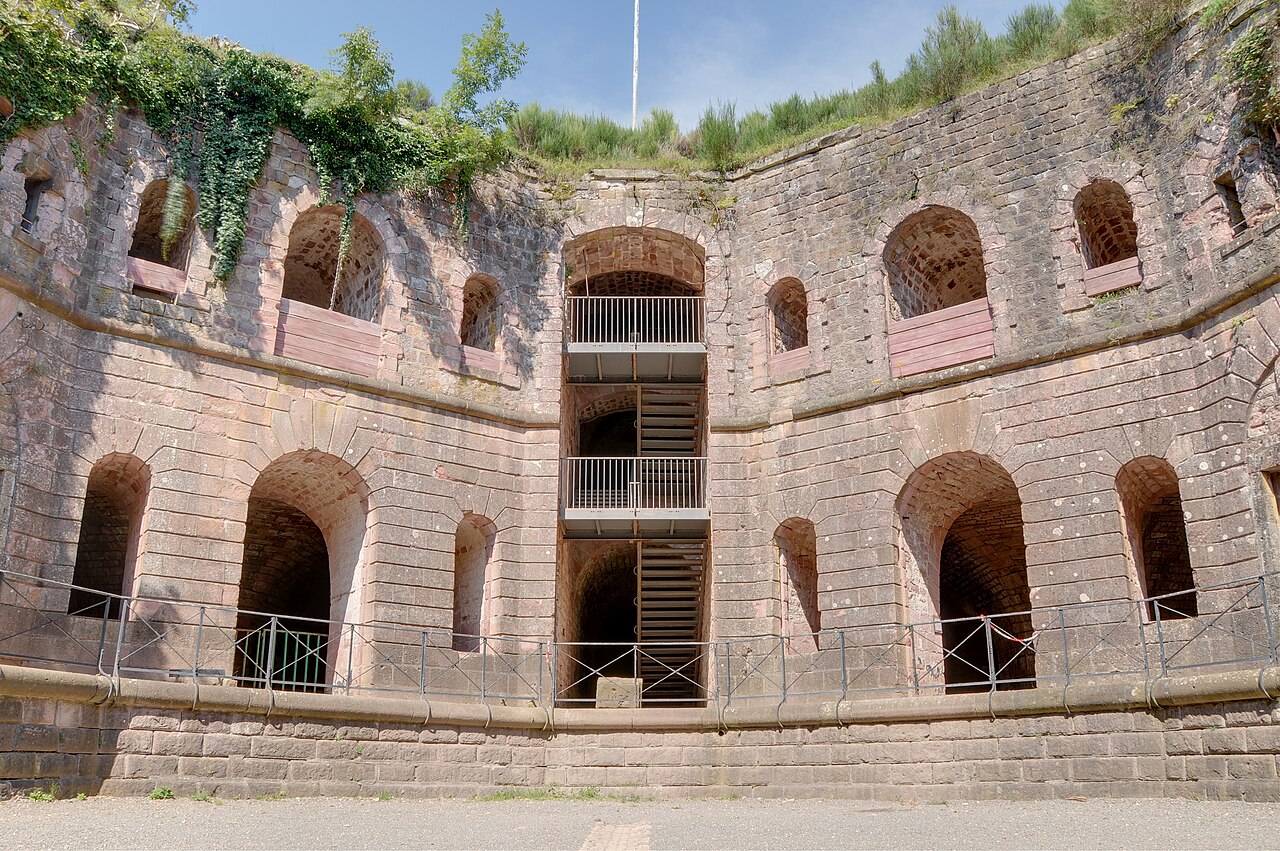
Historical records from 1561, during the military campaigns of Ulrich, Duke of Württemberg, describe the castle as being in excellent condition. It retained its four towers, contained fourteen well-furnished rooms, and was well-stocked with artillery, ammunition, and provisions. Notably, the castle housed a large cannon famously known as "la Bergère d’Héricourt." However, in 1588, the Count of Montbéliard ordered the demolition of three of the four towers, leaving only the present-day surviving tower, known as the "grosse tour" or "tour d’Espagne".
Cultural and residential role
Beyond its military importance, Héricourt Castle served as a noble residence and cultural hub. In the 1660s, it was the residence of the renowned composer Johann Jakob Froberger, who was employed as a music instructor to Sibylle of Württemberg, the dowager Duchess of Montbéliard and castle owner at the time. This period highlights the castle's dual function as a center of both defense and cultural patronage during the Renaissance and early modern era.
Structural features and defensive design
The castle's defensive architecture was sophisticated for its time. The stone walls rose to about 12 meters in height and were approximately 4 meters thick, reinforced by corner towers that provided strategic vantage points. The surrounding moat, fed by natural springs, was a vital defensive feature, complemented by a drawbridge and a double gate system controlling access.
Within the castle grounds was a deep well, 26 meters in depth and 2.5 meters in diameter, ensuring a reliable water supply during sieges. The surviving tower contains three levels, each with spacious halls equipped with fireplaces, indicating the blend of comfort and fortification. The castle once boasted fourteen richly furnished rooms, adorned with luxurious items such as silk beds and fine tapestries, underscoring its status as a noble residence.
Decline and preservation
During the 18th century, much of Héricourt Castle was dismantled, leading to the loss of many original structures. Today, only the "grosse tour" remains intact, standing as a testament to the castle's former grandeur. The site has been repurposed in part, with some areas used as a school. Its location between a church and a hospital car park makes the original layout challenging to visualize, yet the remaining elements offer valuable insight into medieval military architecture and noble life.
Recognized for its historical and architectural significance, Héricourt Castle was designated a protected historic monument in 1913. This status ensures the preservation of its remnants for future generations to study and appreciate.
Visiting héricourt castle today
Visitors to Héricourt can explore the surviving tower and appreciate the castle's strategic hilltop location. While the interior access may be limited due to its current use, the exterior structures and surrounding landscape provide a glimpse into the castle's medieval past. The juxtaposition of the castle ruins with modern town elements creates a unique atmosphere reflecting centuries of history.
Héricourt Castle remains a compelling destination for those interested in medieval fortifications, noble residences, and the cultural history of the Bourgogne-Franche-Comté region. Its enduring presence continues to evoke the complex narratives of power, defense, and artistry that shaped this part of France.
Frequently asked questions (FAQ)
- When was Héricourt Castle originally built?
- Héricourt Castle was likely constructed in the 12th century, with the first recorded mention in 1173. It was rebuilt in 1427 after falling into ruin.
- What architectural features define Héricourt Castle?
- The castle is characterized by its four large towers connected by thick ramparts, a wide surrounding ditch, a drawbridge, and a deep well within the grounds.
- Who were notable historical figures associated with Héricourt Castle?
- Notable figures include Reginald of Burgundy, Ulrich Duke of Württemberg, and the composer Johann Jakob Froberger who lived there in the 1660s.
- Is Héricourt Castle open to visitors?
- While part of the castle is used as a school and interior access may be limited, visitors can view the surviving tower and explore the exterior grounds.
- What happened to the castle in the 18th century?
- In the 18th century, much of Héricourt Castle was dismantled, leaving only one tower intact.
Information
Address
19 Rue de l'Église, Héricourt, France
Loading map...
Visitor reviews
No reviews yet. Been here? Write the first review and help other travelers!
Write the first reviewVisited this castle? Share your experience
Your review helps other travelers and adds first-hand knowledge to our encyclopedia.