Heiligenberg Castle
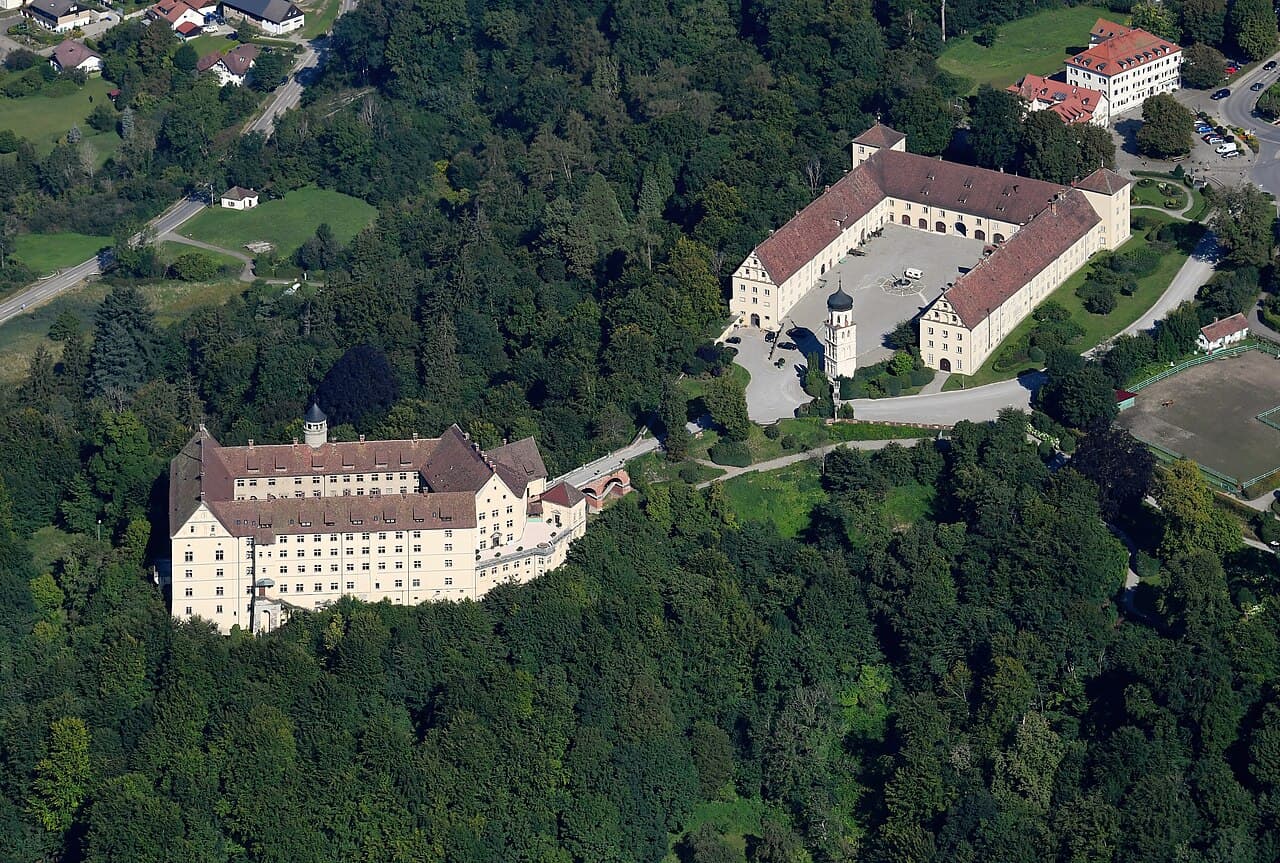
Heiligenberg Castle, known in German as Schloss Heiligenberg, is a prominent Renaissance-style hill castle located in Heiligenberg, within the Linzgau region of Baden-Württemberg, Germany. Positioned on a plateau approximately 730 metres above sea level, the castle offers commanding views over the Bodensee (Lake Constance) and the distant Alps. This elevated location was strategically chosen for defense and visibility, a common feature of hill castles built in medieval Europe.
Medieval origins and early history
The site of Heiligenberg Castle has a history dating back to the Middle Ages. Around 1250, Count Berthold of Heiligenberg established a burgh on this plateau, marking the castle's initial foundation. This early fortification was typical of the period, designed primarily for defense and control over the surrounding territory. In 1277, the castle was acquired by Count Hugo of Werdenberg, initiating a new chapter in its ownership and development.
Under the counts of Werdenberg-Heiligenberg, the castle underwent expansions and fortifications during the late Middle Ages, adapting to the evolving needs of feudal power and military technology. These modifications laid the groundwork for the castle's later transformation.
Transition to the house of fürstenberg and renaissance transformation
The castle passed into the hands of the Fürstenberg family through the marriage of Countess Anna of Werdenberg to Count Friedrich zu Fürstenberg in 1516. By 1535, the burgh was officially part of the Fürstenberg estates, where it remains to this day under the family's ownership.
Shortly before his death in 1559, Count Friedrich decided to remodel the medieval fortress into a more modern residence reflecting Renaissance ideals. The most significant rebuilding occurred under Count Joachim zu Fürstenberg (1538–1598), who between 1560 and 1575 transformed the late medieval burgh into a Renaissance schloss. This renovation included the creation of a Renaissance-style courtyard and the addition of an extended ballroom wing to the south, exemplifying the architectural trends and residential comforts of the period.
Architectural features and significance
Heiligenberg Castle is notable for containing one of the most well-preserved Renaissance halls north of the Alps. The castle's architecture reflects the transition from medieval fortification to Renaissance residence, blending defensive elements with elegant living spaces. The courtyard is a key feature, designed to provide light and air to the interior rooms and to serve as a formal outdoor space.
The extended ballroom wing showcases the importance of social and cultural functions in Renaissance noble life. The castle's design emphasizes symmetry, proportion, and decorative elements characteristic of the Renaissance style, distinguishing it from earlier medieval structures.
Location and current status
Situated on a plateau with panoramic views of the Bodensee and the Alps, Heiligenberg Castle occupies a commanding position in the landscape, which historically provided strategic advantages and today offers scenic vistas attracting interest from historians and architecture enthusiasts alike.
The castle remains privately owned and inhabited by the Fürstenberg family, which means it is not open to public tours or visitation. Despite this, its preservation contributes to the cultural heritage of the region and serves as an important example of Renaissance castle architecture in southern Germany.
Historical context of renaissance castles in germany
The transformation of Heiligenberg Castle during the Renaissance period reflects broader trends in German noble residences during the 16th century. As feudal warfare declined, many castles were remodeled into more comfortable and representative homes, incorporating Renaissance artistic and architectural principles imported from Italy and adapted to local traditions.
This shift included the introduction of ornamental courtyards, large halls for social gatherings, and enhanced living quarters, moving away from purely defensive designs. Heiligenberg Castle exemplifies this evolution, balancing its medieval origins with Renaissance refinement.
Frequently asked questions (FAQ)
- How do I get to Heiligenberg Castle?
- Heiligenberg Castle is accessible by car, with parking available nearby. If you prefer public transport, local buses connect to Heiligenberg from major cities in the region. A scenic hike from the village to the castle also offers beautiful views of the surrounding landscape.
- What is the historical significance of Heiligenberg Castle?
- Heiligenberg Castle dates back to the 13th century and played a crucial role in regional power struggles during the medieval period. Its ruins tell the story of the noble families that once inhabited the castle and its strategic importance in controlling trade routes. Today, it stands as a testament to the rich history of the area.
- When was Heiligenberg Castle built?
- Construction of Heiligenberg Castle began in the early 1200s, with significant expansions occurring in the following centuries. The castle showcases a blend of architectural styles that evolved over the years. Its enduring structure highlights the engineering skills of the time.
- Can I visit Heiligenberg Castle year-round?
- Yes, Heiligenberg Castle is open to visitors throughout the year, although some services may vary by season. It's advisable to check for any seasonal events or guided tours that may enhance your visit. Winter months may offer a quieter experience, while summer often features more activities.
- Why is Heiligenberg Castle a popular tourist destination?
- Heiligenberg Castle attracts visitors due to its stunning architecture, breathtaking views, and rich historical background. The castle's picturesque setting amidst the rolling hills of Germany makes it a perfect location for photography and exploration. Additionally, its proximity to the Bodensee (Lake Constance) enhances its appeal.
- Is it possible to take guided tours of the castle?
- Yes, guided tours of Heiligenberg Castle are available and provide in-depth insights into its history and architecture. Tours are typically offered during peak tourist seasons, and it’s recommended to book in advance to secure your spot. Self-guided tours are also an option for those who prefer to explore at their own pace.
- What are the opening hours for Heiligenberg Castle?
- Heiligenberg Castle typically opens at 10 AM and closes at 6 PM during the summer months, while winter hours may vary. It’s best to check the official website or contact local tourism information for the most current hours before your visit. Special events may also alter the usual schedule.
- Are there any ticket prices for entering Heiligenberg Castle?
- Entry to Heiligenberg Castle is generally free, making it an accessible destination for all visitors. However, certain guided tours or special events may have a fee. Always verify current pricing and any available discounts for groups or families ahead of your visit.
- What is the best time to visit Heiligenberg Castle?
- The best time to visit Heiligenberg Castle is during the spring and summer months when the weather is pleasant, allowing for enjoyable outdoor exploration. Autumn also offers beautiful foliage, adding to the picturesque scenery. Try to avoid peak tourist times for a more tranquil experience.
- What nearby attractions should I consider while visiting Heiligenberg Castle?
- While visiting Heiligenberg Castle, consider exploring the nearby Lake Constance, known for its scenic beauty and water activities. The charming towns of Meersburg and Friedrichshafen are also within a short drive and offer additional cultural and historical experiences. Hiking trails in the surrounding region provide excellent opportunities for outdoor enthusiasts.
Photo gallery

Information
Website
Visit websiteSources & official resources
Verify the information above using these authoritative references.
Loading map...
Visitor reviews
No reviews yet. Been here? Write the first review and help other travelers!
Write the first reviewVisited this castle? Share your experience
Your review helps other travelers and adds first-hand knowledge to our encyclopedia.