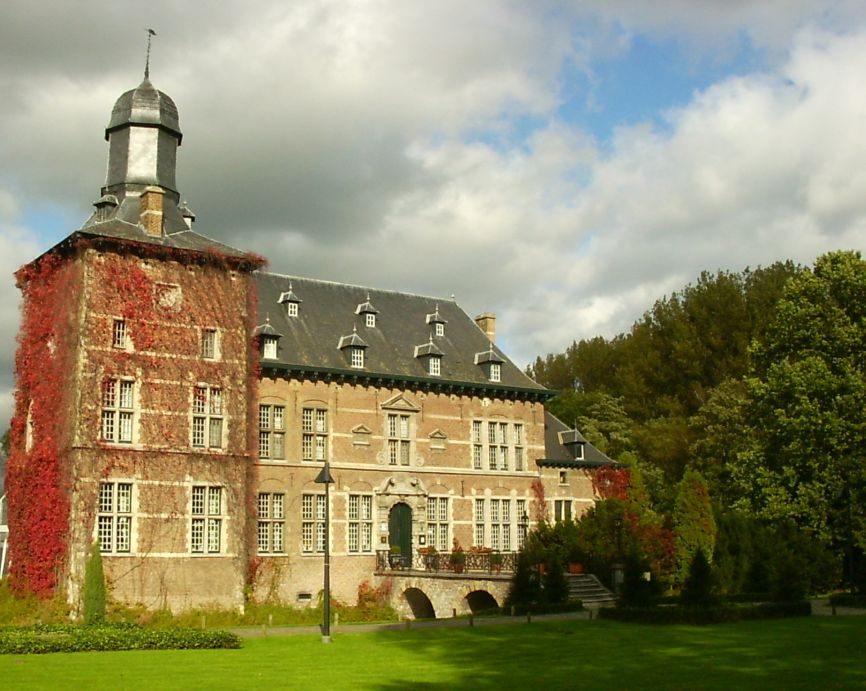
Heers Castle
Heers Castle, locally known as Kasteel van Heers, is a historic fortress located in the province of Limburg in the Flemish region of Belgium. This castle stands as a remarkable example of a Renaissance period stronghold with deep roots tracing back to the 13th century. Situated next to the village of Heers, it has witnessed centuries of conflict, noble lineage, and architectural evolution, making it a significant cultural heritage site.
Early history and medieval origins
The origins of Heers Castle date back to the medieval era, with the first documented mention of a castle belonging to the Lords of Heers in 1274. This early fortress played a strategic role in local power struggles and feudal conflicts. During the Awans and Waroux War in 1328, the original castle was destroyed by fire, a common fate for many medieval castles caught in regional disputes. It was subsequently rebuilt, demonstrating the resilience and importance of the site.
In 1362, the castle passed into the hands of the Van Rivieren family through marriage, marking the beginning of a long association with this noble lineage. By 1467, Raes van Rivieren, who became known as Raes van Heers, was the lord of the castle. His leadership was notably marked by his role in the Battle of Brustem, where he commanded a large militia of 12,000 civilians from Liège against the professional forces of Duke Charles the Bold of Burgundy.
The battle of brustem and its aftermath
The Battle of Brustem in 1467 was a pivotal moment in the castle's history. Despite the numerical advantage, Raes van Heers' forces were decisively defeated by Charles the Bold's army of 25,000 soldiers. Following the battle, Burgundian troops plundered and set fire to the village and castle of Heers, leaving it in ruins. Raes van Heers fled to the French court but was pardoned in 1477, allowing him to return and rebuild the castle. This reconstruction helped restore the castle's prominence in the region.
Architectural features and renaissance restoration
The castle's architecture reflects its turbulent history and Renaissance influences from the 17th century. The original medieval fortress was adapted and expanded, incorporating Renaissance design elements that emphasized both defense and residential comfort. The structure includes robust towers, fortified walls, and a strategic layout typical of Renaissance military architecture.
Despite its fortifications, the castle was not immune to the conflicts of the late 17th century. During the wars between the United Provinces and the forces of King Louis XIV of France, Heers Castle hosted a strong Dutch garrison in 1676. The castle endured a siege by French troops, during which two of its towers were destroyed. Although the Dutch forces initially repelled the French with reinforcements from Hasselt, the castle was eventually captured by the French later that year before being reclaimed shortly after. In 1681, German troops briefly occupied the castle.
Ownership changes and decline
The last Count of Heers, Henri-Oger van Rivieren, died in 1682. Despite having fourteen children, the family line began to dwindle and faced significant debt. To address these financial difficulties, the dilapidated castle was sold to the De Stockem family, who undertook restoration efforts to preserve its structure.
Through marriage, the castle passed to the Desmaisières family in 1859, who were its last private owners. In the late 20th century, the castle suffered from neglect as two elderly brothers of the Desmaisières family, living in separate wings, quarreled and ceased maintenance. This led to the castle falling into a state of near ruin.
Modern preservation and public access
Recognizing the cultural and historical value of Heers Castle, the Flemish government confiscated the property in 2007 to prevent further deterioration. The castle was consolidated and entrusted to Herita, a Belgian national heritage organization dedicated to the preservation of historic sites. Plans for restoration are underway to revive the castle's grandeur and ensure its survival for future generations.
Visitors can explore the castle by appointment, allowing access to its rich interior and history. The castle gardens are freely accessible during the day, offering a scenic view of the grounds and the castle's impressive silhouette. This accessibility helps maintain public interest and appreciation for this Flemish heritage landmark.
Historical significance and cultural heritage
Heers Castle holds a prominent place in Belgian history due to its association with significant historical figures and events. The castle's connection to Raes van Heers and the Battle of Brustem highlights its role in the regional power dynamics of the 15th century. Its repeated destruction and rebuilding reflect the broader conflicts that shaped the region, including the struggles between Burgundy, France, and the Dutch Republic.
The architectural evolution from a medieval fortress to a Renaissance castle provides valuable insight into changing military and residential needs over several centuries. As a preserved heritage site, it offers educational opportunities about feudal society, warfare, and noble life in Flanders.
Notable architectural elements
- Defensive towers: Originally numerous, though some were destroyed during sieges, these towers were key to the castle's defense.
- Fortified walls: Thick stone walls provided protection against artillery and infantry assaults.
- Castle gardens: Reflecting Renaissance tastes, the gardens complement the castle's stately appearance.
- Courtyards and residential wings: Designed for noble living and administrative functions.
Visitor information and accessibility
The castle is open for visits by appointment, allowing guests to experience its historical ambiance and architectural features. The freely accessible gardens provide a pleasant environment for casual visitors and locals alike. The site is an important cultural destination in Limburg, attracting history enthusiasts and tourists interested in Renaissance architecture and Belgian heritage.
Frequently asked questions (FAQ)
- How do I visit Heers Castle?
- Heers Castle can be visited by appointment only, allowing visitors to explore its historic interiors. The castle gardens are freely accessible during daytime hours for casual visits.
- What is the historical significance of Heers Castle?
- Heers Castle is historically significant for its association with Raes van Heers and the Battle of Brustem in 1467, reflecting its role in regional conflicts and noble heritage.
- When was Heers Castle originally built?
- The castle was originally built in the 13th century and has undergone several reconstructions, notably after destruction in the 14th and 15th centuries.
- Can I visit the castle gardens without an appointment?
- Yes, the castle gardens are freely accessible during daytime hours without an appointment, offering a scenic view of the castle grounds.
- Why did Heers Castle fall into disrepair in the 20th century?
- In the late 20th century, the castle fell into disrepair due to neglect caused by quarrels between the last private owners, leading to halted maintenance and deterioration.
Information
Sources & official resources
Verify the information above using these authoritative references.
Loading map...
Visitor reviews
No reviews yet. Been here? Write the first review and help other travelers!
Write the first reviewVisited this castle? Share your experience
Your review helps other travelers and adds first-hand knowledge to our encyclopedia.