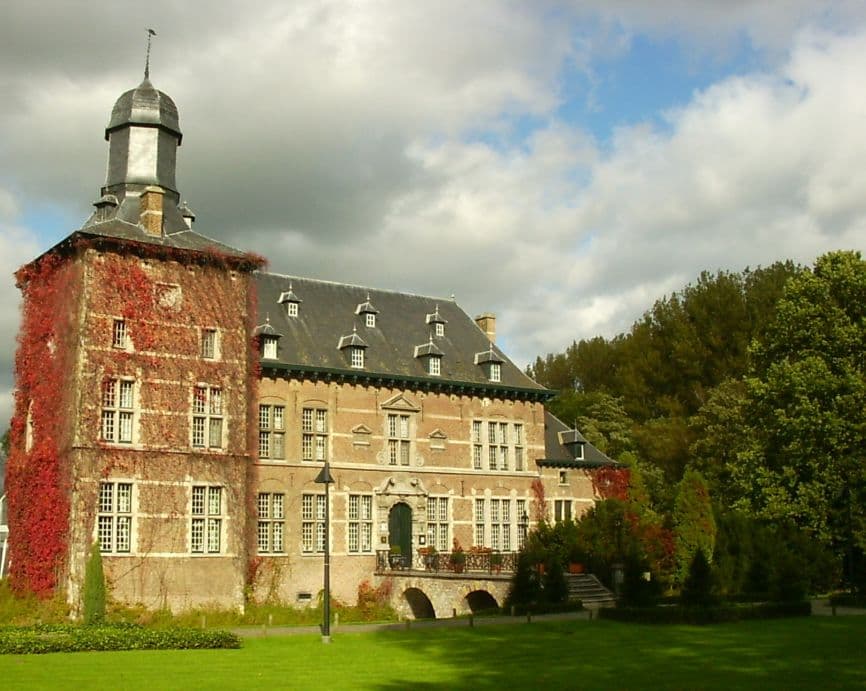
Rullingen Castle — Belgium castle

Rullingen Castle

Rullingen Castle in Borgloon, Belgium
Borgloon, Belgium
Renaissance (15th–17th c.)

Rullingen Castle stands as a remarkable example of a historic moated castle located in Borgloon, within the Limburg region of Belgium. Originating in the 12th century, the castle is believed to have been constructed by Eggebert, the first lord of Rullingen. This early medieval fortress laid the foundation for what would evolve into a Renaissance residence, reflecting the architectural and historical transformations of the region over several centuries.

Medieval origins and early construction

The initial structure of Rullingen Castle was typical of medieval fortifications, designed primarily for defense and control over the surrounding lands. The castle's location in the Meuse valley was strategic, providing both natural protection and access to important trade routes. The original medieval castle featured defensive elements common to the period, including thick stone walls and a moat, which was a crucial feature for protection against invaders.

Renaissance reconstruction and architectural evolution

In the 17th century, specifically around the 1630s, Rullingen Castle underwent significant reconstruction that transformed it into a classic Renaissance moated castle. This period saw the introduction of more refined architectural elements, blending defensive features with residential comfort and aesthetic appeal. The castle's moat, a defining characteristic of the Meuse valley castles, was maintained during this reconstruction, although it has been filled in more recent times.

The Renaissance style at Rullingen is evident in its balanced proportions and the integration of large windows, which contrasted with the smaller openings of the medieval fortress. The castle's layout was adapted to reflect the changing needs of its inhabitants, emphasizing both status and functionality.

20th-century fire and restoration efforts

A significant event in the castle's more recent history was the fire of 1920, which caused extensive damage to parts of the building. The fire necessitated a comprehensive restoration process that spanned from 1921 to 1935. These restoration efforts aimed to preserve the castle's historical integrity while repairing structural damage. The work included rebuilding damaged sections and restoring architectural details to maintain the castle's Renaissance character.

Current use and cultural significance

Today, Rullingen Castle serves as a hotel, offering visitors a unique opportunity to experience a historic castle environment combined with modern amenities. This adaptive reuse helps preserve the castle's structure and ensures its continued maintenance. The castle's setting in the Limburg region, known for its scenic landscapes and rich history, makes it a popular destination for tourists interested in heritage and architecture.

Architectural features and landscape setting

The castle's original moat, characteristic of many Meuse valley castles, was an important defensive feature, although it has since been filled in. The castle's stone construction, Renaissance stylistic elements, and its position within the gently rolling landscape of Limburg contribute to its picturesque appearance. The surrounding grounds and gardens complement the historic architecture, creating a harmonious blend of natural and built environments.

Structural layout and design elements

Rullingen Castle's design reflects the transition from medieval fortress to Renaissance residence. The castle's walls are robust, with remnants of defensive battlements visible in some areas. Large windows and elegant doorways introduced during the Renaissance reconstruction enhance the castle's aesthetic appeal. The interior likely features spacious halls and chambers adapted over time to suit residential needs, although specific interior details are not widely documented.

Historical context within the meuse valley

Rullingen Castle is part of a network of castles and fortified homes that historically dotted the Meuse valley, a region of strategic and economic importance. These castles served as seats of local power, defense points, and symbols of noble status. The castle's evolution mirrors broader regional trends in architecture and feudal society from the medieval period through the Renaissance.

Frequently asked questions (FAQ)

How do I get to Rullingen Castle?
Rullingen Castle is located in Borgloon, Belgium, and is easily accessible by car or public transport. If you are driving, there is parking available nearby. For public transport, you can take a train to the nearest station and then a short bus ride or taxi to the castle.
What is the historical significance of Rullingen Castle?
Rullingen Castle dates back to the 13th century and is an important example of medieval architecture in Belgium. It has played a significant role in the region's history, serving as a residence for noble families and a strategic fortification. Today, it stands as a testament to the architectural heritage and historical events of the area.
When was Rullingen Castle built?
Rullingen Castle was originally constructed in the early 13th century, making it over 800 years old. Its architecture reflects the styles and building techniques of medieval times, with later renovations adding to its charm. The castle has undergone several changes throughout the centuries, but it retains much of its original character.
Can I visit Rullingen Castle?
Yes, Rullingen Castle is open to visitors throughout the year. You can explore the grounds, enjoy guided tours, and learn about its fascinating history. Be sure to check the official website for specific visiting hours and any special events that may be taking place during your visit.
Why is Rullingen Castle a popular tourist attraction?
Rullingen Castle attracts visitors due to its stunning architecture, rich history, and picturesque surroundings. The castle is set in a beautiful landscape, providing perfect opportunities for photography and relaxation. Additionally, it offers educational tours that appeal to history enthusiasts and families alike.
Is it possible to host events at Rullingen Castle?
Yes, Rullingen Castle offers event spaces that can be rented for various occasions, including weddings, corporate functions, and private gatherings. The castle's enchanting atmosphere and historical significance make it a unique venue. It is advisable to contact the castle management for availability and specific arrangements.
What are the opening hours for Rullingen Castle?
Rullingen Castle typically opens its doors to visitors from 10 AM to 5 PM, but hours may vary depending on the season and special events. It is recommended to check the official website or contact the castle directly for the most accurate information. Planning your visit during weekdays can help avoid larger crowds.
What are the ticket prices for visiting Rullingen Castle?
Ticket prices for Rullingen Castle are generally affordable, with discounts available for students, seniors, and children. Family packages may also be offered, making it a cost-effective option for those visiting with loved ones. Check the castle's website for the latest pricing and any special offers.
What nearby attractions can I visit after Rullingen Castle?
After visiting Rullingen Castle, you can explore other local attractions such as the charming town of Borgloon, known for its beautiful landscapes and historic sites. Nearby, the Haspengouw region offers lovely vineyards and cycling routes. Don't miss the opportunity to visit the local markets and enjoy the regional cuisine as well.

Photo gallery

Rullingen Castle
Click to view

Photo by Paul Hermans at Dutch Wikipedia•CC BY-SA 3.0

1 photo • Click any image to view in full screen

Information

Sources & official resources

Verify the information above using these authoritative references.

Loading map...

Visitor reviews

No reviews yet. Been here? Write the first review and help other travelers!

Write the first review

Visited this castle? Share your experience

Your review helps other travelers and adds first-hand knowledge to our encyclopedia.

Write a review

(5/5)

0/2000 characters

Your review will be visible after admin approval

Nearby castles

4.3 km

Hoepertingen Castle

Hoepertingen, Belgium

Hoepertingen Castle in Belgium is a historic estate with origins dating back to the late 15th century. The earliest known reference to its predecessor appears in records from 1476, indicating the site's long-standing significance in the region. The castle as it stands today was constructed in the 17th century by Jan-Willem van Scharenberg, reflecting the architectural trends of the Renaissance period. Architectural design and style The castle is characterized by its distinctive U-shaped layout, a common design in Renaissance architecture that allowed for a central courtyard and enhanced defensive capabilities. One of the castle's most notable features is the corner tower, which originally served as a keep. This tower would have been the stronghold of the castle, providing a last line of defense and a vantage point over the surrounding lands. In 1763, Hoepertingen Castle underwent significant restoration, adopting elements of the Classicist style. This restoration introduced refined architectural details that softened the fortress-like appearance of the original Renaissance structure, aligning the castle more closely with the aesthetic preferences of the 18th century. The blend of Renaissance and Classicist elements gives the castle a unique character that reflects its historical evolution. Historical context and ownership The van Scharenberg family played a central role in the castle's history, with Jan-Willem van Scharenberg commissioning the 17th-century construction. The family's influence in the region was marked by their stewardship of the estate and their involvement in local governance. The castle's strategic location in Hoepertingen, Belgium, placed it within an area of historical significance, where many noble families established residences that combined both defensive features and residential comfort. Structural features and layout The U-shaped design of Hoepertingen Castle encloses a courtyard that would have served multiple purposes, including social gatherings, administrative functions, and possibly agricultural activities related to the estate. The corner tower remains a prominent feature, evidencing the castle's medieval origins despite later modifications. The castle's walls and overall form suggest a transition from purely defensive architecture to a more residential and representative function, typical of castles evolving through the Renaissance into the early modern period. The Classicist restoration likely introduced symmetrical elements and decorative motifs, enhancing the castle's visual appeal while maintaining its structural integrity. Preservation and current status Today, Hoepertingen Castle stands as a well-preserved example of a Renaissance castle with Classicist influences. Its partially restored condition allows visitors and historians to appreciate the layers of architectural history embedded within its walls. The castle's enduring presence contributes to the cultural heritage of the Limburg region in Belgium, offering insight into the architectural and social developments from the late medieval period through the 18th century. Visiting and cultural significance While specific visiting hours and public access details are limited, Hoepertingen Castle remains an important landmark for those interested in Belgian history and Renaissance architecture. Its combination of a medieval keep, Renaissance design, and Classicist restoration makes it a valuable study subject for architectural historians and enthusiasts alike.

Renaissance (15th–17th c.)
Details
5.6 km

Colmont Castle

Near Burchtstraat, Belgium

Colmont Castle, known locally as Kasteel Colmont, is a medieval fortress ruin located near the village of Kolmont in the province of Limburg, within the Flemish region of Belgium. This castle occupies a strategic position atop a natural elevation that was enhanced into a motte, a typical defensive earthwork of early medieval fortifications. The site offers a compelling glimpse into the military architecture and feudal conflicts of the high medieval period. Constructed likely in the 11th century, Colmont Castle was originally established to protect the southern border of the county of Loon. Its location on a raised motte provided a commanding view of the surrounding landscape, crucial for early warning and defense. The castle's design included an oval bailey encircled by a defensive wall, with a prominent ten-sided keep at its core. The keep had a circumference of approximately 47 meters and originally rose to an estimated height of 18 to 24 meters, though today only about 12 meters of the structure remain standing. Historical significance and conflicts Throughout its history, Colmont Castle played a role in regional power struggles. It was besieged in 1180 by forces loyal to the Prince-bishop of Liège, reflecting the tense relations between ecclesiastical and secular authorities in the region. The castle remained under the control of the Counts of Loon until 1206, when ownership passed to the Dukes of Brabant. Following this transfer, the castle gradually fell into disuse and began to deteriorate over the next two centuries. In 1488, the castle was refortified by Everard van der Marck, a nobleman opposing the authority of the Prince-bishop Jan van Horne. This renewed military significance was short-lived, as the castle was besieged again in 1489. After only a few days, the walls were breached, and the garrison surrendered. The Prince-bishop ordered the castle's dismantling in 1490, and by 1499, the nearby town of Tongeren had repurposed the castle's stones to repair its city walls, accelerating the ruin of the structure. Architectural features and layout The motte and bailey structure Colmont Castle exemplifies the motte-and-bailey type of fortification common in the early and high medieval periods. The natural hill was artificially raised to form a motte, upon which the keep was constructed. Surrounding this was an oval bailey, enclosed by a defensive wall likely made of stone and earthworks. The bailey would have housed auxiliary buildings and provided space for troops and supplies. The ten-sided keep The keep is a distinctive element of the castle, notable for its decagonal (ten-sided) shape, which is relatively rare among medieval keeps. This design would have provided enhanced defensive capabilities, allowing defenders to cover multiple angles and reduce blind spots. The keep’s walls, constructed of sandstone, were formidable, though now only fragments remain. The entrance was situated on the north side, but today it is sealed with a makeshift log door for safety. Present condition and access Today, Colmont Castle stands as a ruin and is part of a protected nature reserve that serves as a habitat for badgers. The site is off-limits to visitors to protect the wildlife, but the ruins can be viewed from a distance. The castle is accessible only by a strenuous uphill hike, which adds to the sense of discovery for those who approach the site. The bailey’s outline is visible primarily through the surrounding earthen walls, beneath which remnants of stone walls are believed to remain. Visitors who attempt to explore the area are advised to do so during the fall or winter months when the dense nettle growth subsides. The outer walls of the keep bear numerous 19th-century inscriptions left by previous visitors, indicating a long-standing interest in the castle’s remains. Recent efforts have cleared some undergrowth and trees, improving visibility and access to the ruins. Colmont Castle in the context of medieval fortifications As an early example of a motte-and-bailey castle with a unique ten-sided keep, Colmont Castle reflects the evolution of military architecture in the high medieval period. Its strategic location and robust design illustrate the importance of territorial defense in the feudal landscape of medieval Belgium. The castle’s repeated sieges and eventual dismantling highlight the turbulent political environment dominated by competing noble families and ecclesiastical powers. Though now a ruin, the site offers valuable archaeological and historical insights into medieval castle construction, defensive strategies, and regional power dynamics. Its preservation within a nature reserve ensures that Colmont Castle remains a significant cultural landmark while protecting local biodiversity.

High Medieval (11th–13th c.)
Details
5.8 km

Rijkel Castle

Dionysius van Leeuwenstraat, Belgium

Rijkel Castle, also known locally as Kasteel van Rijkel, is situated in the village of Rijkel within the Limburg province of the Flemish region in Belgium. This castle has a rich history dating back to the 13th century, initially serving as the residence of the Lords of Rijkel, who were first documented during this period. Originally, the site was not a castle but a manor farm, referenced in historical records from 1541 as the residence of the Bolle van Rijkel family, who acquired it in the 14th century. The transformation from a manor farm to a fortified castle-like complex occurred in the mid-17th century under the ownership of the De Hinnisdael family, who came into possession of the property through marriage in the early 1600s. Architectural evolution and features The De Hinnisdael family undertook a significant reconstruction and enlargement of the manor farm, converting it into a U-shaped castle complex characterized by its distinctive square corner towers. This design was complemented by a moat and a drawbridge, typical defensive features of the period, emphasizing both residential comfort and fortification. The castle's architecture reflects the high medieval period's evolution into a more residential and stately home, blending defensive elements with the aesthetic and functional needs of a noble family. The square towers at each corner provided vantage points for surveillance and defense, while the moat added an additional layer of protection against potential attackers. Historical ownership and decline By the early 18th century, Rijkel Castle was reported to be in a state of disrepair, indicating a period of neglect or reduced importance. Later in the same century, it was purchased and restored by Baron Pierre Antoine de Thiribu, whose family maintained ownership until 1831. The death of the last heir marked the beginning of a long period of vacancy for the castle. 20th-century restoration efforts and current status After standing empty for over a century, the castle was acquired in 1936 by the Association of Historical Belgian Residences, which carried out essential repairs but did not fully restore the structure. The property was transferred to the Limburg provincial authorities in 1965. Following the collapse of one of the towers in 1966, a comprehensive restoration was undertaken between 1972 and 1984 to stabilize and preserve the castle. Post-restoration, the castle served as office space for the provincial government until 2003, when it was sold due to maintenance costs. The new private owner had ambitious plans that ultimately did not materialize, leading to the castle's current state of vacancy and partial neglect. Evidence of unfinished work and occasional unauthorized use by squatters or local youth has been noted inside the structure. Architectural significance and cultural heritage Rijkel Castle stands as a notable example of a moated U-shaped castle with square corner towers from the high medieval period, adapted and expanded in the 17th century. Its defensive features, such as the moat and drawbridge, alongside its residential elements, illustrate the architectural transition from purely military fortifications to noble residences that combined security with comfort. Despite its current unused status, the castle holds cultural and historical significance within the Limburg region, reflecting the lineage of noble families and the architectural trends of the time. Its restoration in the late 20th century preserved key structural elements, although ongoing preservation challenges remain due to its vacancy. Visiting information and accessibility Currently, Rijkel Castle is not open to the public and cannot be visited. Its empty state and the halted restoration efforts have limited access and use. Visitors interested in the castle should monitor local heritage organizations or provincial announcements for any future developments regarding its preservation or public accessibility.

High Medieval (11th–13th c.)
Details

