Hedel Castle
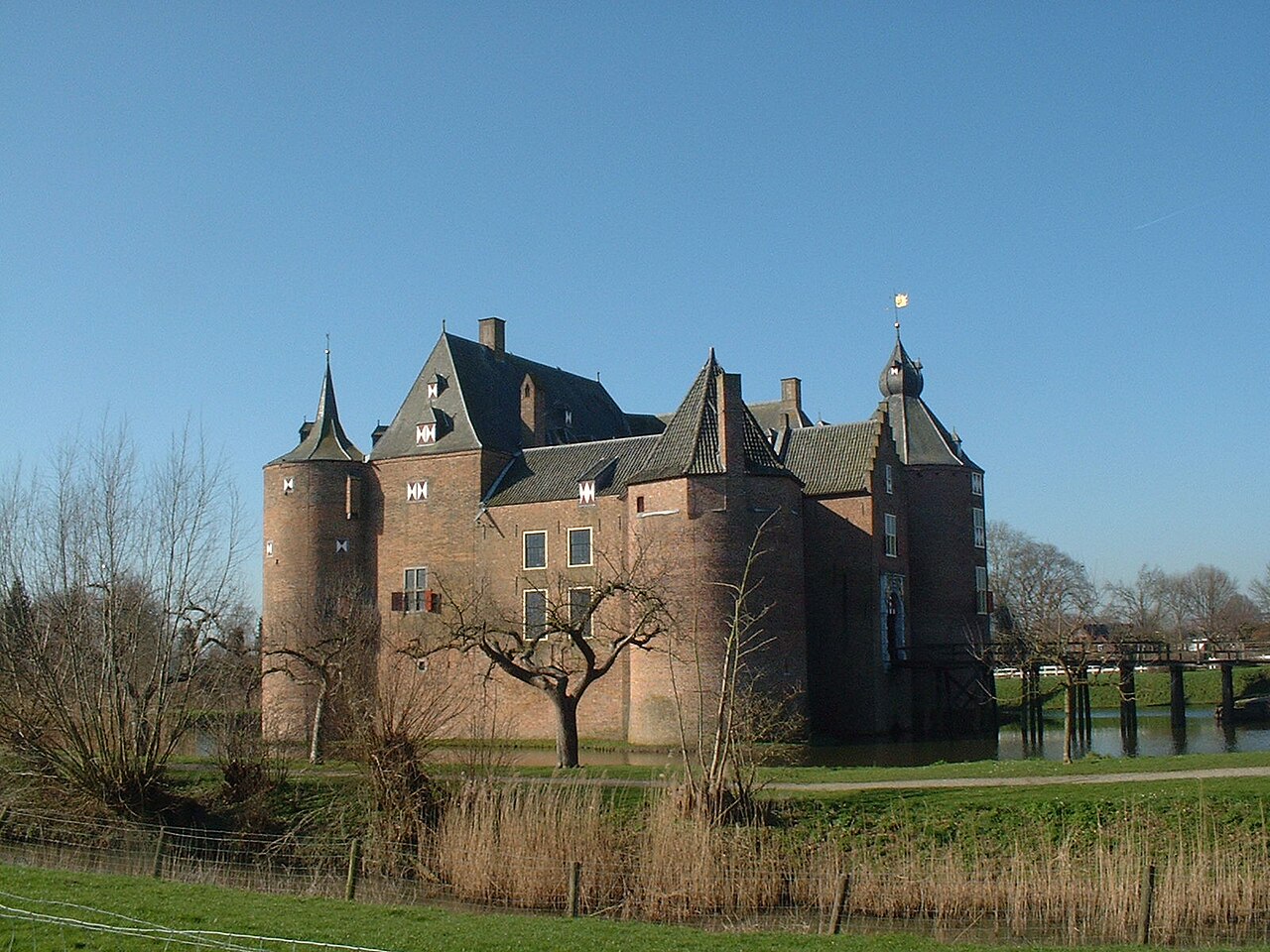
Hedel Castle, locally known as Kasteel Hedel or Kasteel Heel, stands in the heart of the village of Hedel in the Gelderland province of the Netherlands. This castle, with origins in the early 14th century, offers a glimpse into the turbulent medieval history of the region, marked by strategic military importance and architectural evolution.
Early origins and initial construction
The castle was founded by Willem van Cranendonck around the beginning of the 14th century. Initially, it likely took the form of a moated tower house, a common defensive structure during the late medieval period. This original fortification was designed primarily for defense and residence, featuring a surrounding moat that enhanced its protection against attackers.
Expansion under otto van der lecke
The subsequent lord, Otto van der Lecke, significantly expanded the castle's defenses and residential facilities. Through his marriage, Hedel Castle became linked to the powerful Bergh Castle, enabling resources and influence to be pooled. Otto added a curtain wall, two circular corner towers, and a gate building, transforming the site into a more formidable fortress. These additions reflect typical late medieval military architecture, emphasizing both defense and status.
Strategic importance and military history
Hedel Castle's location was of great strategic significance, situated near the borders of Brabant, Holland, and Guelders. This tri-border position made it a focal point in regional conflicts during the 14th and 15th centuries. The castle endured multiple sieges, reflecting the ongoing power struggles in the Low Countries during the late medieval era.
Sieges and ownership changes in the 16th century
By 1565, Count Willem IV, brother-in-law to the notable William of Orange, held lordship over Hedel Castle. He contributed to the castle's development by constructing a gallery in the courtyard, enhancing its residential and ceremonial functions. However, the castle's fortunes fluctuated during the Eighty Years' War. In 1572, the castle was seized by the Spanish general Alva. Dutch forces occupied it from 1578 until 1589, when Spanish troops retook it. The following year, Prince Maurice reconquered the castle and used it as his headquarters. At this time, his sister, Countess Maria of Nassau, served as Lady of Hedel.
17th-century expansions and later decline
In 1653, Maria Elisabeth, Princess of Hohenzollern-Hechingen, undertook further expansion by adding a new bailey to the castle complex. This addition reflected the continued adaptation of the castle to changing military and residential needs during the post-medieval period.
Destruction and preservation efforts
The castle's decline began in earnest in 1794 when it was besieged by French troops during the French Revolutionary Wars. The siege caused extensive damage, and by 1804 the remaining ruins were demolished. The bailey, which had survived until the 20th century, was destroyed during bombings in 1945 amid World War II.
Despite these losses, the castle's foundations were excavated and consolidated in 1981, preserving the remnants for public access. Today, visitors can explore the freely accessible archaeological site, which offers insight into the castle's historical footprint and architectural layout.
Architectural features and layout
Hedel Castle originally featured a moated tower house as its core structure, typical of late medieval castles in the region. The addition of a curtain wall and circular corner towers under Otto van der Lecke enhanced its defensive capabilities. The gate building served as a fortified entrance, controlling access to the inner courtyard.
The courtyard gallery constructed by Count Willem IV added a residential and ceremonial dimension to the castle, reflecting evolving noble lifestyles. The later bailey expanded the castle grounds, providing space for additional buildings and defensive works.
Cultural and historical significance
Hedel Castle's history encapsulates the complex political and military struggles of the Low Countries from the late medieval through the early modern period. Its repeated sieges illustrate the strategic importance of border fortresses in regional conflicts. The castle's connections to prominent figures such as William of Orange and Prince Maurice highlight its role in Dutch history.
Today, the site serves as a valuable cultural heritage location, offering educational opportunities about medieval fortifications, noble residences, and the historical dynamics of the Gelderland region.
Visiting hedel castle
The castle ruins are freely accessible to the public, allowing visitors to walk around the consolidated foundations and imagine the former grandeur of the site. While no standing structures remain, informational displays and the visible layout provide context for the castle's historical development.
Frequently asked questions (FAQ)
- How do I get to Hedel Castle?
- Hedel Castle is located on Kasteellaan in the village of Hedel, Gelderland, Netherlands. It is accessible by car and local public transport, with parking available nearby.
- What remains of Hedel Castle can I see today?
- Today, visitors can explore the consolidated foundations of Hedel Castle, which have been excavated and preserved as an archaeological site. No standing structures remain, but the layout and some features are visible.
- When was Hedel Castle built and by whom?
- Hedel Castle was built in the early 14th century by Willem van Cranendonck, originally as a moated tower house.
- Why was Hedel Castle strategically important?
- The castle was strategically located near the borders of Brabant, Holland, and Guelders, making it a key defensive site in regional conflicts during the 14th and 15th centuries.
- Can I visit Hedel Castle for free?
- Yes, the archaeological site of Hedel Castle is freely accessible to the public with no entrance fee.
Information
Address
Kasteellaan, Hedel, Netherlands
Loading map...
Visitor reviews
No reviews yet. Been here? Write the first review and help other travelers!
Write the first reviewVisited this castle? Share your experience
Your review helps other travelers and adds first-hand knowledge to our encyclopedia.