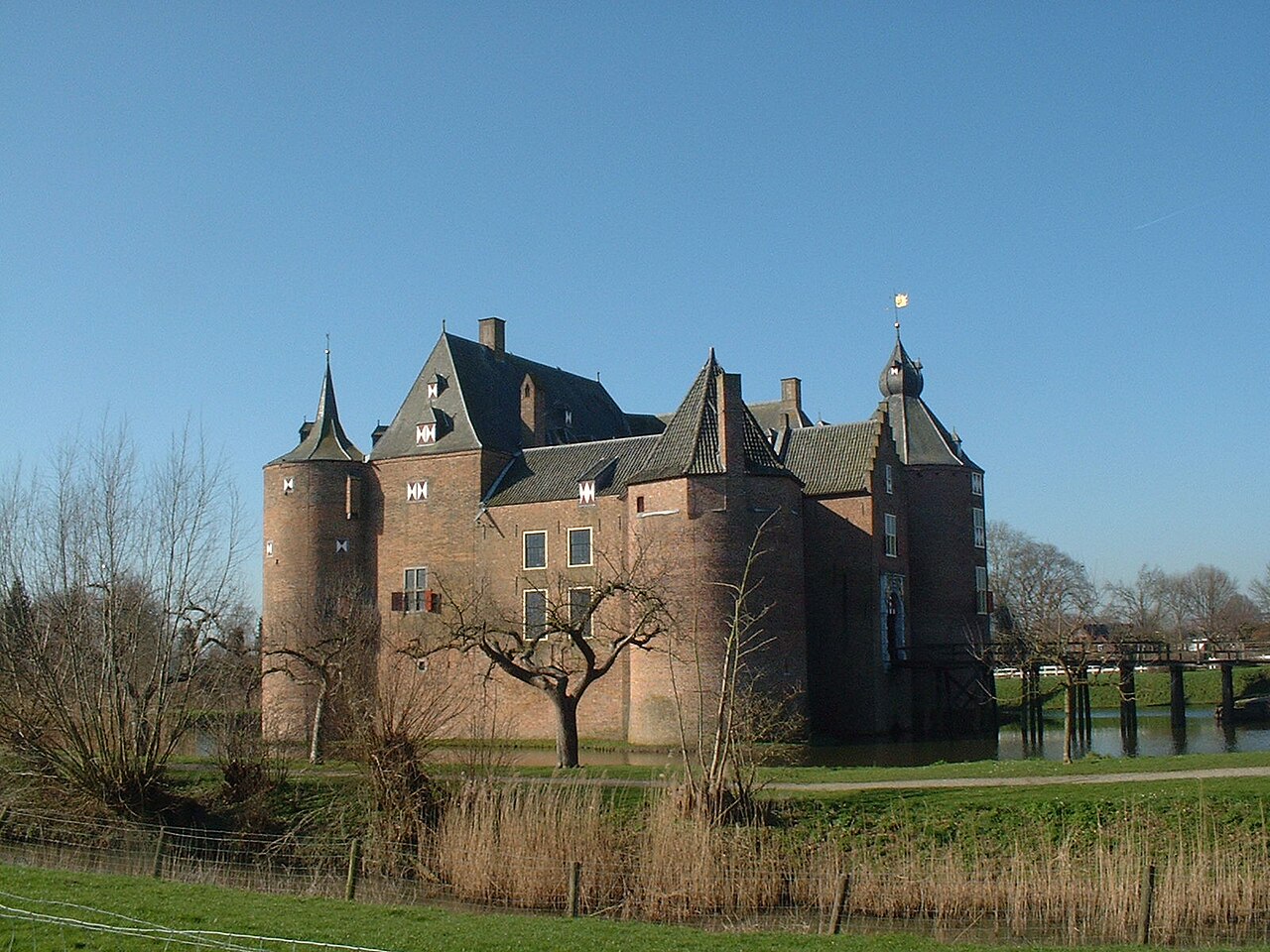
Fort Crèvecoeur
Fort Crèvecoeur is a significant bastioned fortress located near the city of 's-Hertogenbosch in the Netherlands. Constructed during the 17th century, this fortification exemplifies the military architectural style developed in response to the increasing use of artillery in warfare. The fortress was part of the extensive Dutch defensive network designed to protect key cities and strategic points during a period marked by frequent conflicts such as the Eighty Years' War and later European wars.
Historical context and strategic importance
Fort Crèvecoeur was built in the early 1600s as part of the Dutch Republic's efforts to consolidate its independence and defend its territory against Spanish forces and other potential invaders. The fortress's location near 's-Hertogenbosch, a city of strategic military and economic importance, allowed it to serve as a defensive stronghold controlling access routes and waterways in the region.
The fort played a role in various military campaigns throughout the 17th and 18th centuries, including sieges and skirmishes linked to the broader conflicts of the time. Its design reflects the principles of the trace italienne or star fort style, which aimed to maximize defensive capabilities against cannon fire with angled bastions and low, thick walls.
Architectural features and design
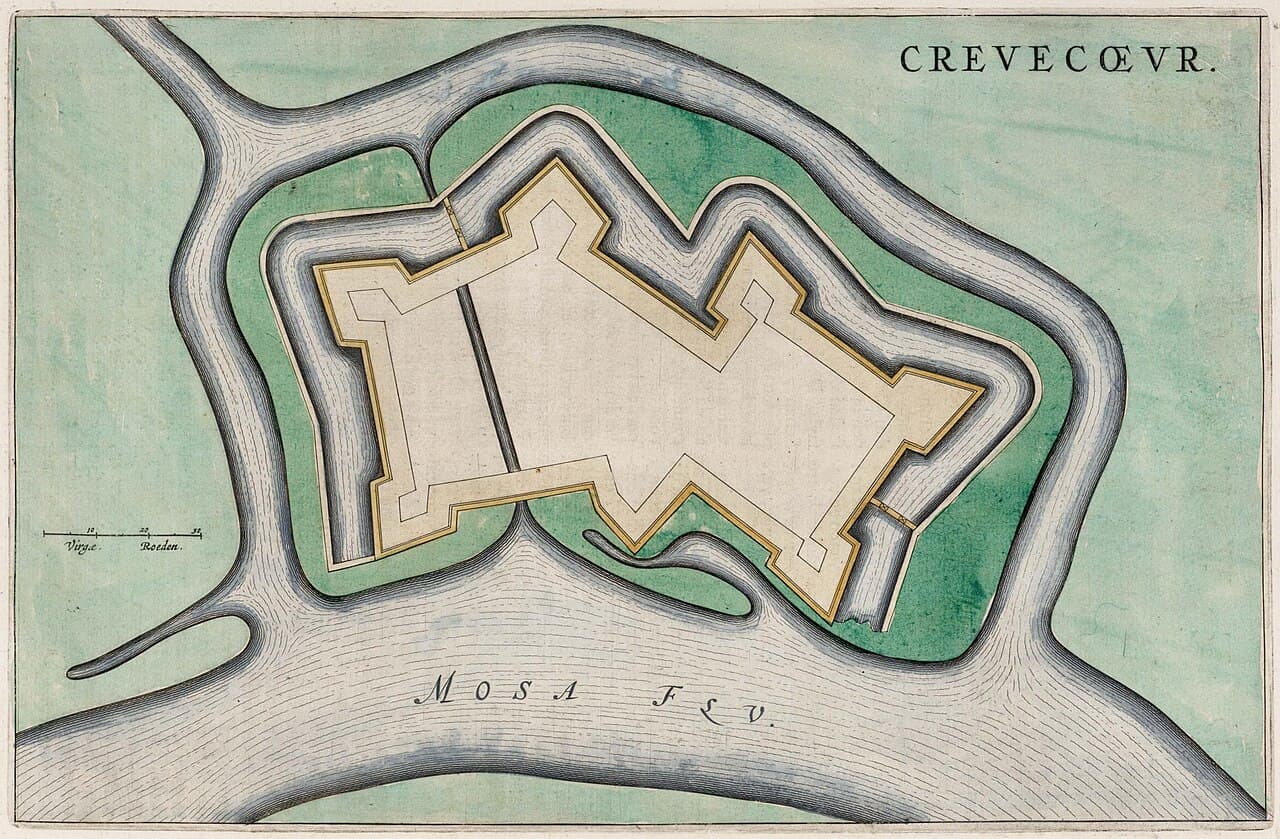
Fort Crèvecoeur is a classic example of a bastioned fortress, characterized by its angular bastions that project outward from the main walls, allowing defenders to cover adjacent walls with overlapping fields of fire. This design minimized blind spots and made direct assaults more difficult.
The fortress was constructed with thick earthen ramparts faced with brick and stone, absorbing and deflecting artillery shots. The walls were relatively low compared to medieval castles, reflecting the shift in defensive architecture necessitated by gunpowder weaponry.
Within the fort's perimeter, there would have been barracks, magazines for storing ammunition, and other military facilities necessary to support a garrison. The layout was carefully planned to facilitate defense, communication, and supply during prolonged sieges.
Later use and current status
Following its active military use, Fort Crèvecoeur eventually lost its strategic importance as warfare evolved and new defensive technologies emerged. Today, the site is primarily used as a military exercise terrain, preserving the historical footprint of the fortress while serving modern defense training needs.
Although the fort is not a major tourist attraction, its remains offer insight into the military engineering and historical conflicts of the Dutch Republic era. The site's preservation allows for study and appreciation of 17th-century bastioned fortifications and their role in European military history.
Legacy and cultural significance
Fort Crèvecoeur stands as a testament to the Dutch Republic's resilience and innovative military architecture during a turbulent period in European history. Its design influenced later fortress construction and reflects the adaptation of defensive strategies to the advent of gunpowder artillery.
While the fortress itself is no longer in active defense use, it remains a valuable heritage site for historians, military enthusiasts, and scholars interested in early modern fortifications and the Dutch struggle for independence.
Frequently asked questions (FAQ)
- How do I get to Fort Crèvecoeur?
- Fort Crèvecoeur is located in 's-Hertogenbosch, Netherlands, and can be easily accessed by car or public transport. If traveling by train, the nearest station is 's-Hertogenbosch, from which you can take a local bus or taxi to the castle.
- What is the historical significance of Fort Crèvecoeur?
- Fort Crèvecoeur was built in the 17th century and served as a key military stronghold during the Eighty Years' War. Its strategic location allowed it to play a vital role in the defense of the city and the surrounding region.
- When was Fort Crèvecoeur constructed?
- Construction of Fort Crèvecoeur began in 1629 and was completed in 1632. The fort was designed to enhance the military capabilities of the Dutch during a tumultuous period in European history.
- Can I visit Fort Crèvecoeur year-round?
- Yes, Fort Crèvecoeur is open to visitors year-round, but opening hours may vary seasonally. It is advisable to check the official website for the latest information on visiting hours and any seasonal events.
- Why is Fort Crèvecoeur considered an architectural gem?
- Fort Crèvecoeur is notable for its unique star-shaped design, which was common in military architecture of the time. Its well-preserved structure and the surrounding landscape offer a glimpse into 17th-century fortification techniques.
- Is it possible to take guided tours of Fort Crèvecoeur?
- Yes, guided tours are available for visitors who wish to learn more about the history and architecture of Fort Crèvecoeur. These tours are led by knowledgeable guides who can provide in-depth information and answer any questions.
- What are the ticket prices for visiting Fort Crèvecoeur?
- Ticket prices for Fort Crèvecoeur are generally affordable, with discounts available for students and seniors. Children under a certain age may enter for free, making it an excellent family-friendly destination.
- What is the best time to visit Fort Crèvecoeur?
- The best time to visit Fort Crèvecoeur is during the spring and early autumn months when the weather is pleasant and ideal for exploring the grounds. Additionally, special events and historical reenactments often take place during these seasons.
- Are there any nearby attractions to visit alongside Fort Crèvecoeur?
- Yes, nearby attractions include the historic city center of 's-Hertogenbosch, the St. John's Cathedral, and the Museum of the History of Science. These sites complement your visit to Fort Crèvecoeur and provide a fuller understanding of the region's rich history.
Photo gallery

Photo by Unknown authorUnknown author•Public domain
Information
Loading map...
Visitor reviews
No reviews yet. Been here? Write the first review and help other travelers!
Write the first reviewVisited this castle? Share your experience
Your review helps other travelers and adds first-hand knowledge to our encyclopedia.