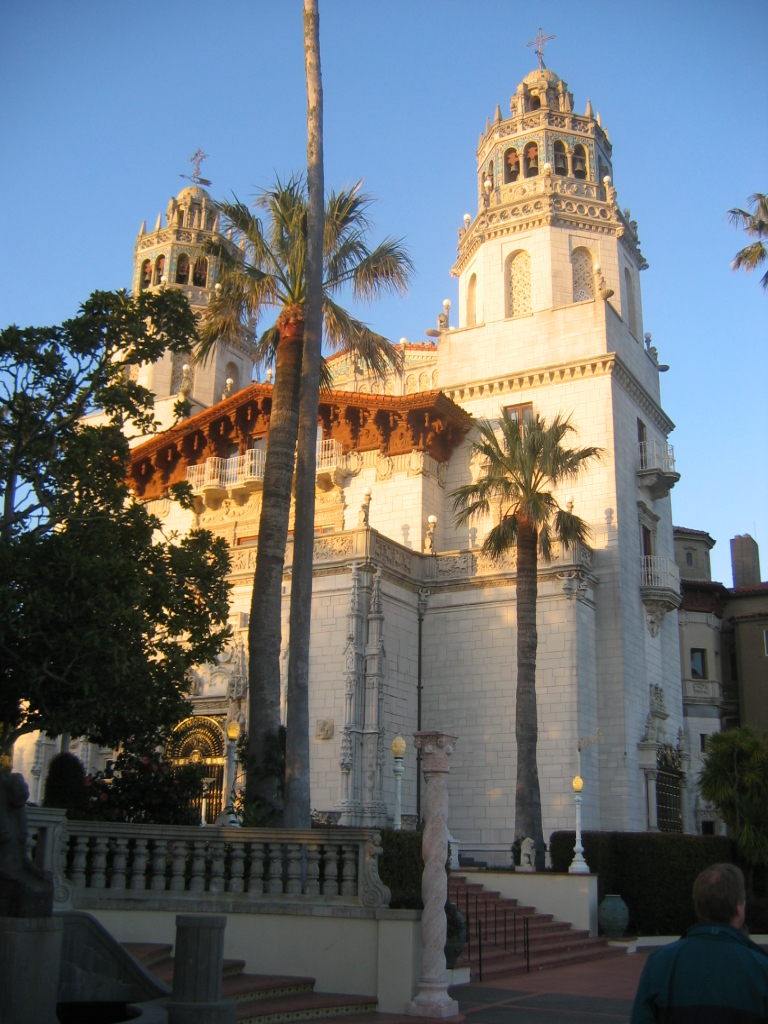
Castle Noland

Castle noland: luxurious chateau wedding venue in san luis obispo
San Luis Obispo, United States of America
Well Preserved

Castle Noland, also known as Chateau Noland, is a distinctive and luxurious chateau-style estate located in San Luis Obispo, California. Nestled in the heart of the renowned Central Coast wine country, this stone castle serves as an exquisite wedding venue and vacation rental, offering an enchanting blend of European-inspired architecture and the relaxed California lifestyle.

The castle's architecture is characterized by unique stone construction, featuring conical and dome-shaped hand-painted frescoed ceilings and artisanal murals that reflect the owners' travels across Europe. These artistic elements imbue the castle with an authentic old-world charm, making it a captivating backdrop for weddings, receptions, and special events. The expansive front lawns provide ample space for outdoor ceremonies and gatherings, enhanced by unrestricted views of the beautiful Avila Valley.

Location and surroundings

Situated along the scenic Highway 1, Castle Noland enjoys a strategic position between San Francisco and Los Angeles, making it easily accessible for visitors from major urban centers. The estate is surrounded by some of the Central Coast's most celebrated attractions, including the wineries of Edna Valley and Paso Robles, the sandy beaches of Avila Beach and Pismo Beach, and numerous hiking trails. This prime location allows guests to immerse themselves in the region's vibrant culture, from year-round festivals to farmers' markets in San Luis Obispo.

Architectural features and design

The castle's stone architecture is a key highlight, designed to evoke the grandeur and elegance of European chateaux. The frescoed ceilings inside the castle are hand-painted with intricate designs, showcasing the craftsmanship and artistic vision of the creators. The artisanal murals further enhance the interior spaces, creating a rich visual narrative inspired by European art and culture.

The estate's layout includes expansive lawns perfect for outdoor events, as well as intimate interior spaces that can accommodate a variety of functions. The combination of traditional stonework and artistic detailing makes Castle Noland a unique venue that balances historic aesthetics with modern luxury.

Events and services

Castle Noland is renowned for hosting a wide range of events, from weddings and honeymoons to corporate training sessions and yoga retreats. Its versatile spaces can be adapted for team building activities, charity events, family reunions, and holiday parties. The estate also offers wine tasting tours and engagement dinners, leveraging its proximity to some of California's premier vineyards.

Guests can rent Castle Noland through popular platforms such as Airbnb and VRBO, ensuring easy access for those looking to experience its unique ambiance for private stays or special occasions.

Visitor information and contact

The physical address of Castle Noland is 6445 Monte Rd., San Luis Obispo, CA 93401. For business correspondence, the mailing address is PO Box 3119, Pismo Beach, CA 93448. Interested parties can contact the estate via phone at 805-544-2042 or email at [email protected].

Castle Noland's website offers detailed information about availability, services, and booking options, making it a premier destination for those seeking a luxurious and artistically rich venue in California's wine country.

Frequently asked questions (FAQ)

How do I book Castle Noland for a wedding or event?
Castle Noland can be booked through its official website or via vacation rental platforms like Airbnb and VRBO. Early reservations are recommended, especially for weddings and large events.
What architectural styles are featured at Castle Noland?
Castle Noland showcases unique stone architecture with European-inspired elements such as conical and dome hand-painted frescoed ceilings and artisanal murals, creating a chateau-like ambiance.
Is Castle Noland suitable for family vacations?
Yes, Castle Noland is ideal for families seeking a luxurious vacation rental with ample space and access to nearby beaches, wineries, and hiking trails in the San Luis Obispo area.
What nearby attractions can I visit when staying at Castle Noland?
Guests can explore the wineries of Edna Valley and Paso Robles, the beaches of Avila and Pismo, local farmers' markets, and year-round festivals in San Luis Obispo.
Can I host corporate events or retreats at Castle Noland?
Absolutely, Castle Noland offers facilities for corporate training, team building, and business meetings, making it a versatile venue for professional gatherings.

Information

Palace Castle

Address

6445 Monte Rd., San Luis Obispo, CA 93401

Loading map...

Visitor reviews

No reviews yet. Been here? Write the first review and help other travelers!

Write the first review

Visited this castle? Share your experience

Your review helps other travelers and adds first-hand knowledge to our encyclopedia.

Write a review

(5/5)

0/2000 characters

Your review will be visible after admin approval

Nearby castles

67.3 km

Hearst Castle

San Simeon, United States Minor Outlying Islands

Hearst Castle, located on the central California coast in San Simeon, stands as a testament to the extravagant lifestyle of William Randolph Hearst, the influential newspaper magnate whose impact on 20th-century journalism was profound and controversial. Known for his flamboyance and grand vision, Hearst transformed what began as a modest bungalow on ranch land into one of the most opulent private residences in the United States. The estate, originally called La Cuesta Encantada or "The Enchanted Hill," evolved into a sprawling mansion boasting over 165 rooms and surrounded by 127 acres of meticulously designed gardens and terraces. The architectural mastermind behind this monumental project was the pioneering female architect Julia Morgan, who collaborated closely with Hearst to create a residence that was both a home and a showcase for his extensive collection of art and antiquities. Architectural style and design The design of Hearst Castle is a unique blend of medieval Iberian influences, characterized by vaulted ceilings, intricate cornices adorned with cherubs, and a variety of architectural elements sourced from different eras and styles. This eclectic approach was intentional, as Hearst's collection of art and artifacts spanned numerous periods and cultures, necessitating diverse room designs to complement and highlight each piece. The castle features grand banquet halls reminiscent of medieval times, expansive libraries filled with rare books, and richly decorated chambers that reflect Hearst's taste for luxury and historical authenticity. The integration of these elements results in a pastiche that is both harmonious and visually stunning. Facilities and grounds Beyond the main residence, the estate includes numerous amenities that underscore Hearst's lavish lifestyle. The grounds encompass exotic gardens, tennis courts, guest cottages, and stables where Arabian horses were bred, showcasing the magnate's passion for equestrian pursuits. The property also housed an exotic zoo, reflecting Hearst's fascination with rare animals. For leisure and entertainment, the estate boasts both an indoor pool and the famous Neptune Pool, an outdoor swimming pool that was constructed and remodeled multiple times to incorporate an authentic Roman temple facade imported from Italy. To support the remote location and extensive facilities, Hearst commissioned the construction of a dedicated power plant nearby, ensuring a reliable supply of electricity to the castle and its grounds. Additionally, the estate included an airstrip to facilitate easy access for the owner and his guests. Historical significance and legacy Hearst Castle is not only a symbol of personal wealth and taste but also a cultural landmark that reflects the ambitions and eccentricities of one of America's most powerful media figures. The estate served as inspiration for the fictional Xanadu in Orson Welles' film Citizen Kane, underscoring its place in popular culture. Today, the castle is recognized for its architectural innovation, artistic richness, and the remarkable story of its creation. It offers visitors a glimpse into the lifestyle of the early 20th-century elite and the vision of a man who sought to create a personal paradise through art, architecture, and nature. Architect Julia Morgan's contribution Julia Morgan, one of the first prominent female architects in the United States, played a crucial role in bringing Hearst's vision to life. Her expertise in blending diverse architectural styles and managing a complex, large-scale project was instrumental in the castle's completion. Morgan's work at Hearst Castle remains a highlight of her distinguished career and a milestone in American architectural history. Art collection and interior decoration Hearst's approach to collecting was guided by a preference for quality over quantity, resulting in a curated selection of precious sculptures, paintings, and decorative arts. Each room in the castle was designed to complement specific pieces, creating an immersive experience that showcases the breadth and depth of Hearst's acquisitions. The interiors feature a rich tapestry of styles, from Gothic to Renaissance influences, reflecting the historical periods of the artworks. This deliberate eclecticism enhances the castle's unique character and offers visitors a journey through different artistic traditions. Visiting Hearst Castle As a major tourist attraction, Hearst Castle welcomes visitors who wish to explore its magnificent architecture, extensive art collections, and beautifully maintained grounds. Guided tours provide insights into the castle's history, design, and the life of William Randolph Hearst, enriching the visitor experience. The estate's location on the California coast offers stunning views and a connection to the natural landscape that complements the grandeur of the man-made structures.

Post-Renaissance (17th–18th c.)
Details
69.1 km
Hearst Castle — United States of America castle

Hearst Castle

San Simeon, United States of America

Hearst Castle, formally known as La Cuesta Encantada (Spanish for "The Enchanted Hill"), is a remarkable historic estate located in San Simeon on the Central Coast of California. Conceived by the influential publishing magnate William Randolph Hearst and designed by pioneering architect Julia Morgan, the castle was constructed over an extended period from 1919 to 1947. Today, it operates as a museum within a California State Park and holds designations as a National Historic Landmark and a California Historical Landmark.The origins of the estate trace back to 1865 when George Hearst, William Randolph Hearst's father, acquired the original 40,000-acre property. The site known as Camp Hill served as a family camping retreat during William Randolph's youth. Following the death of his mother, Phoebe Hearst, in 1919, William Randolph commissioned Julia Morgan to create a more permanent and comfortable residence atop the hill, initiating the construction of what would become the present castle. Their collaboration spanned over two decades, with near-continuous building activity from 1920 until 1939, and a resumption after World War II until Hearst's departure in 1947.Architectural design and styleHearst Castle is classified as a hill castle due to its elevated position overlooking the Pacific Ocean. Its architecture is an eclectic mix, heavily influenced by European styles, particularly Spanish Revival and Mediterranean elements. The castle's design reflects the vision of Julia Morgan, one of the first prominent female architects in the United States, who integrated historic architectural components into a cohesive and grand estate.A defining characteristic of Hearst Castle is its incorporation of over 30 architectural elements imported from Western Europe. These include medieval ceilings, doorcases, fireplaces, mantels, entire monasteries, paneling, and even a medieval tithe barn. These elements were originally shipped to Hearst's warehouses in Brooklyn before being transported to California and integrated into the castle's fabric, creating a unique synthesis of historic and contemporary construction.Key structures and featuresThe estate features several notable structures, including the main building with its grand halls and living quarters, the Neptune Pool with classical statues and colonnades, and the Roman Pool, famed for its intricate tile work and vaulted ceilings. The castle also includes extensive gardens, guesthouses, and terraces that offer panoramic views of the surrounding landscape and ocean.Historical context and significanceOriginally intended as a family home for Hearst, his wife Millicent, and their five sons, the estate's social function evolved over time. By 1925, Hearst's marriage had effectively ended, and San Simeon became the residence of Hearst and his mistress, the actress Marion Davies. The castle became a hub for Hollywood's elite during the Roaring Twenties, hosting luminaries such as Charlie Chaplin, Cary Grant, the Marx Brothers, Greta Garbo, Buster Keaton, Mary Pickford, Jean Harlow, and Clark Gable. Political figures like Calvin Coolidge and Winston Churchill also visited, along with notable personalities including Charles Lindbergh, P. G. Wodehouse, and Bernard Shaw.Hearst's passion for collecting earned him the nickname "Great Accumulator." He amassed an extensive collection of art, antiques, and architectural artifacts. His assemblage included one of the world's largest collections of ancient Greek vases. The castle was intended as a "museum of the best things" Hearst could acquire, reflecting his desire to preserve and showcase cultural treasures.The estate's lifestyle and grandeur were famously satirized in the 1941 film Citizen Kane, directed by Orson Welles. The film's portrayal led Hearst to attempt suppression of the movie, highlighting the cultural impact and notoriety of the castle.Preservation and public accessIn May 1947, Hearst's declining health forced him and Marion Davies to leave the castle permanently. Hearst passed away in 1951, and architect Julia Morgan died in 1957. The following year, the Hearst family donated the castle and much of its contents to the State of California. It opened to the public in June 1958 as the Hearst San Simeon State Historical Monument.Today, Hearst Castle attracts approximately 750,000 visitors annually. The family retains ownership of the larger estate, which spans over 82,000 acres. Through conservation agreements involving the California State Parks Department and the American Land Conservancy, the natural and undeveloped character of the surrounding land has been preserved. The estate's setting has been praised by Bernard Shaw, who reportedly said it was "what God would have built if he had had the money."Visitor experience and amenitiesVisitors to Hearst Castle can explore the grand rooms, extensive art collections, and beautifully landscaped gardens. Guided tours provide insights into the castle's history, architecture, and the lives of its famous inhabitants. The site includes a visitor center with educational exhibits, a café, and gift shops.Accessibility and visiting hours vary seasonally, with tickets required for entry. The castle is a significant cultural landmark and a prime example of early 20th-century American aristocratic architecture, offering a unique glimpse into the lifestyle of one of the most powerful media figures of the era.

Contemporary (20th–21st c.)
Details
102.8 km

Knapp’s Castle

Santa Barbara, United States Minor Outlying Islands

Knapp's Castle stands as a striking ruin atop the Santa Barbara hills, offering visitors a unique glimpse into early 20th-century luxury and architectural ambition. Originally constructed in 1916 by George Knapp, the founder of Union Carbide, this estate was a symbol of wealth and innovation nestled in a secluded natural setting. Today, the site attracts hikers and photographers who are drawn to its dramatic stone remains and panoramic views. Historical background and construction The castle was built during the early 20th century when industrial magnates sought private retreats away from urban centers. George Knapp commissioned the estate to serve as a luxurious home reflecting his success in the chemical industry. The construction required significant effort, including the building of a new access road to reach the remote hilltop location. The estate featured five bedrooms, an organ room, and even an observatory, highlighting the owner's interest in both comfort and scientific pursuits. Architectural features and layout Although the original estate was designed with a lavish and secluded lifestyle in mind, its architectural style blended elements of early 20th-century residential design with castle-like stone construction. The use of stone masonry gave the home a fortress-like appearance, which contributed to its nickname "castle." The layout included multiple specialized rooms and expansive living spaces, designed to accommodate both private family life and social gatherings. The observatory was a unique feature, indicating Knapp's fascination with astronomy. The 1940 fire and subsequent ruin In 1940, only five weeks after George Knapp sold the property, a devastating forest fire swept through the Santa Barbara hills, destroying the wooden portions of the estate. The fire left only the stone skeleton of the castle intact, creating the dramatic ruins that remain today. This event marked the end of the estate as a private residence and transformed it into a historical landmark. Current status and cultural significance Today, Knapp's Castle is under private ownership, but the site has been designated as a county landmark, which prohibits any restoration or new development. The preservation of the ruins allows visitors to experience a tangible connection to the area's history and early 20th-century architecture. The site has become a beloved destination for hiking, photography, and outdoor recreation, offering stunning views of the surrounding landscape and a sense of historical mystery. Visitor experience and accessibility The castle ruins are accessible via hiking trails in the Santa Barbara hills, making it a popular spot for outdoor enthusiasts. The combination of natural beauty and historical intrigue provides a unique backdrop for visitors seeking both adventure and cultural enrichment. While the ruins are not restored, their preserved stonework offers a glimpse into the estate's former grandeur. Preservation challenges and future outlook Maintaining the ruins in their current state poses challenges due to natural weathering and the risk of further wildfires. However, the county landmark status ensures protection from demolition or alteration. The balance between preserving the site's historical integrity and allowing public access continues to shape its management. Knapp's Castle remains a poignant reminder of early 20th-century ambition and the impermanence of even the grandest human constructions. Its ruins continue to inspire visitors with their haunting beauty and the story of a once-luxurious retreat lost to fire.

Post-Renaissance (17th–18th c.)
Details